

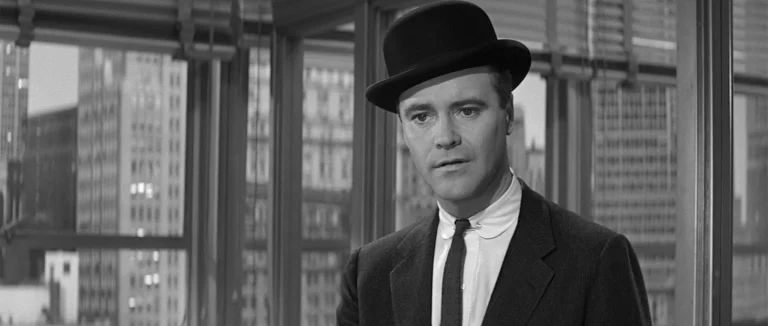
©Courtesy of Metro-Goldwyn-Mayer Studios Inc. All Rights Reserved.
Whenever movie lovers or film critics decide to rank the best actor in the history of movies, it is unlikely that Jack Lemmon will make the cut. Definitely At least not in the first place or in the top three. Usually the highest spots are taken by Marlon Brando, Jack Nicholson, Daniel Day-Lewis, Laurence Olivier, Robert De Niro and so on. Powerful performers, undoubtedly the best of the best. But would have any of them been able to play Lemmon’s iconic roles with the same result? I sincerely doubt it. While these actors needed characters that could let them explore their being “something else” compared to what we see as normality, Lemmon could evoke depth, reality and most importantly emotional power while developing absolutely ordinary men. And that is a type of performance that no one else could give.
Even if Jack Lemmon showed this unique ability from the early roles in his career, winning an Academy Award as best supporting actor for Mr. Roberts (1955) by John Ford and Melvin LeRoy, the turning point of his career was, without any doubt, working with Billy Wilder. Their first and most famous collaboration, Some Like It Hot (1959), is a perfect narrative mechanism for a slapstick comedy, but it is with The Apartment (1960) that Lemmon found the character that would fit him perfectly: C.C. Baxter is in fact a man without quality, an ordinary employer who “rents” his apartment in the Upper West Side to his colleagues in order for them to enjoy a “nice time” with their mistresses.
This role, magnificently written by Wilder and I.A.L. Diamond – is developed by Lemmon with complete knowledge of the human being he was going to play: the actor works only with the undertones, showing the nice sides as much as the flaws of such a complex personality. C.C. Baxter is in fact a man who is not completely aware of being estranged to a society where success counts more than anything else. He pretends to be always – or almost always – in a good mood because otherwise he would be forced to face his loneliness, his alienated life in a metropolis that doesn’t facilitate human connection at all. The Apartment and its main characters are under many (too many) aspects incredibly contemporary because they show the other face of the coin when we think about “American Way of Life”, something that Wilder and Lemmon would continue doing in the next decades with The Fortune Cookie (1966), Front Page (1974) and Buddy Buddy (1981), helped by the best possible sidekick Walter Matthau.
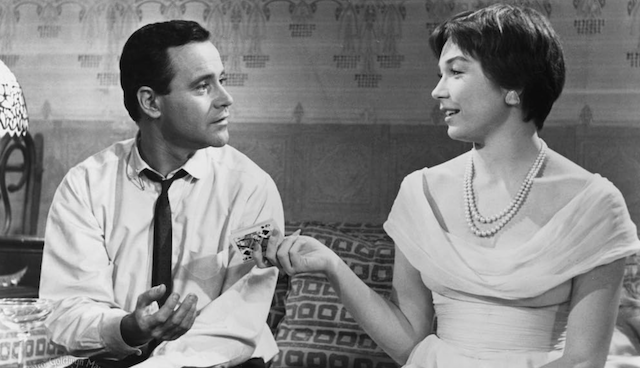
©Courtesy of Metro-Goldwyn-Mayer Studios Inc. All Rights Reserved.
The Apartment
Thanks to The Apartment, Jack Lemmon delivered one of the most nuanced and moving performances in the history of American cinema, as much as his co-star Shirley MacLaine. After that masterwork, the actor kept acting in roles that were able to show his unique craft in making ordinary people valuable, complex, and lovely in their own specific way. In the ‘60 he achieved it using the tone of comedy, with the wonderful exception of Days of Wine and Roses (1962), directed by Blake Edwards. The hit of that decade was without any doubt The Odd Couple (1968) by Gene Saks, where once more Lemmon and Matthau convey two characters that any of us could easily meet at the grocery store or on a subway ride during rush hour.
The end of the ‘60 and the beginning of the next decade exposed the “dark side” of America; the Vietnam War, social upheaval culminating in 1968 protests, Charles Manson killings, and the Watergate political scandal in some ways ended the glorious season of classic comedy. That didn’t stop Jack Lemmon from giving voice to the problems and concerns of the everyday man. On the contrary, his (mostly) dramatic performances from the 1970s showed even more explicitly bittersweet figures incapable of dealing with all the social, psychological, emotional challenges of an even more alienating society.
From The Out of Towers (1970) by Arthur Hiller to Save the Tiger (1973) by John G. Avildsen – for which Lemmon won the Academy Award as best actor in a leading role – from The Prisoner of Second Avenue (1975) by Melvin Frank to Tribute (1980) by Bob Clark, the actor portrayed with silent intensity and quiet despair a series of men, husbands or fathers whose struggle was mostly interior, caused by those shortcomings and weaknesses in which we can recognize ourselves. Almost as an artistic reaction to the loss of common values in the world surrounding his characters, Lemmon started also showing a bitter awareness about the social and political contradiction of those times with two movies that represent once more his greatness. In The China Syndrome (1979) by James Bridges he plays with unbelievable intensity the supervisor of a nuclear energy plant who is concerned about the violation of safety standards. Another common man who has to face in this case something way bigger than a common issue.
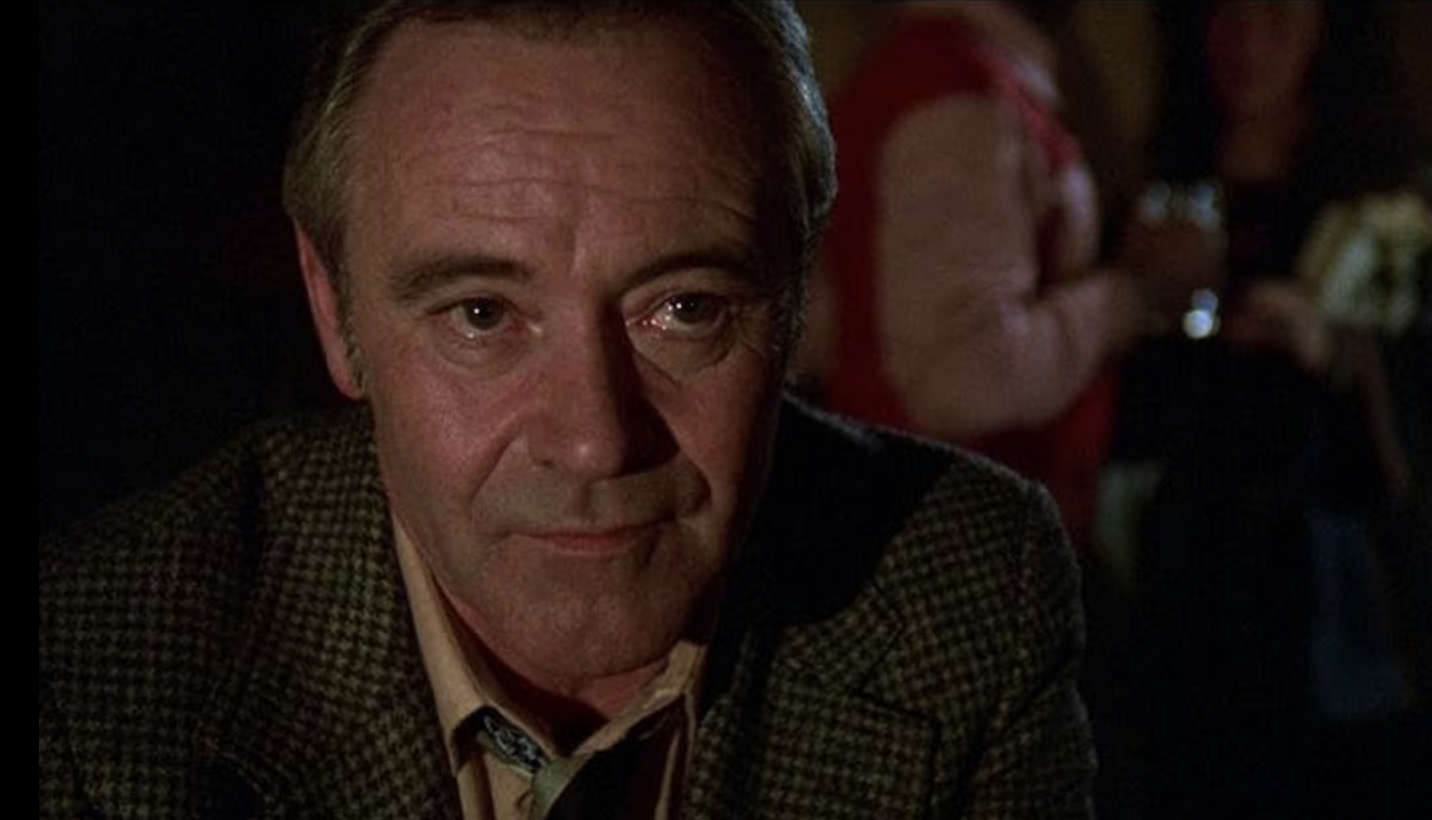
©Courtesy of Columbia Pictures
The China Syndrome
The peak of Lemmon’s dramatic career is Ed Horman, the protagonist of Missing (1982) by Costa-Gavras. Horman is an honest, conservative entrepreneur who travels to and through Chile after the 1973 coup looking for his estranged and now disappeared son. This is a man who emblematically represents the average American law-abiding citizen, someone who never questioned his own government and its institution before their agendas affected him. Lemmon portrays this character with a restraint that makes his narrative arc, his journey into disbelief and mistrust of his own values, so intense and believable that it is almost impossible not to stand for Ed, even if he, and many like him, are in the end the reason why America did what it did.
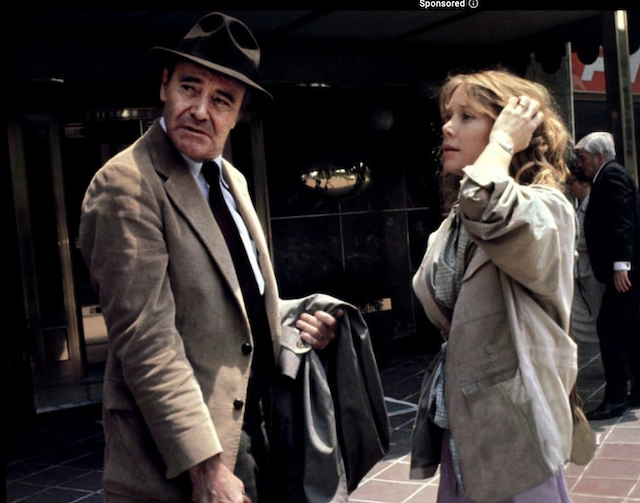
©Courtesy of Universal Pictures
Missing
There is nothing more intense than seeing the tragedy behind the smiling mask of a comedian, and Jack Lemmon was able to do it with the realism of a great, great actor. Even if the last part of his career was built mostly on shallow comedies, another couple of incredible performances like Glengarry Glen Ross (1992) by James Foley or the astonishing monologue in Short Cuts (1993) by Robert Altman reminded us that Jack Lemmon had made us all laugh about men and issues whe should have been instead serious about.
Starting May 16, Film Forum will commemorate Jack Lemmon’s career with a two-week retrospective screening most of the movies noted in this article, complete with special guests introducing the actor’s best works. Jack Lemmon 100 – he was born in Massachusetts in 1925 – is an incredible opportunity to immerse yourself in the art of an actor that gave voice to a kind of person rarely brought to the big screen in Hollywood movies, at least not with such realism and sincerity. No other actor before or after him has been able to achieve that, and for so long. In our opinion some performances by Gene Hackman, Dustin Hoffman in Kramer vs Kramer (1979) by Robert Benton, or Paul Giamatti in Sideways (2004) by Alexander Payne have followed that path, but that’s basically it.
So if your favorite actor ever is Brando, De Niro, Day-Lewis, I have nothing to say about it. I, too, love them and their legendary characters. But at the end of the day my mind and, most importantly, my heart keeps coming back to C.C. Baxter, that little man with his drenched coat, waiting under the rain for his apartment to be empty. A hero? Unlikely. A villain? Certainly not. Just an ordinary man I could truly relate to…
If you like the articles, share your thoughts below!
Check out more of Adriano’s articles.
Here’s the trailer for The Apartment: