

©Courtesy of Happinet Phantom Studios

Interview with Writer/Director Chie Hayakawa
Q : Directing children is a daunting task, especially when dealing with serious topics like this one. How did you approach Yui Suzuki(She was eleven years old when she shot this film), the main actress faces the sexual predator in the scene? Did she (Yui Suzuki) understand what was going on?
Chie Hayakawa : I had to be careful during the sexual predator scene, so I contacted an intimacy coordinator and a psychologist to help me decide on the movements beforehand and ensure that Yui did not do anything she did not want to do, we had them communicate closely with each other in advance, so they became very close like brothers and sisters, and that is how we proceeded with filming.
Q : The visuals and music were magical, and they worked well with all sensitive characters. Can you talk about the music?
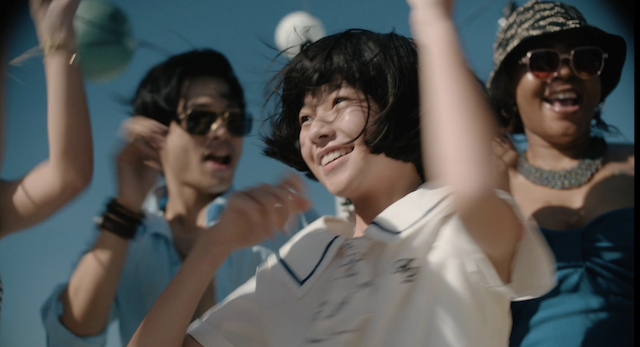
Chie Hayakawa : The film “Plan 75” had the same composer, but we chose not to use music to progress the story. I restricted the addition of music to scenes where Fuki (played by Yui Zuzuki) was envisioning the world or when she was contemplating things alone.
Q : I intend to talk about some particularly intense scenes in the film, a VHS tape that turns out to be an essay and a fantasy. The second thing you do is push her towards a child predator. I was questioning these two extremes because the rest of the narrative was emotionally and sensitive, but it has a totally different texture.
Chie Hayakawa : In the second scene, when she first meets the college student, and (at that time) Fuki does not receive much attention from her parents, and he is the only one who listens to her and is interested in her, it is very natural that her heart is attracted to him.
In my opinion, it’s common for people to be drawn to someone who listens and is interested in them or the mysterious man who talks to Fuki at the garbage dump, girls of that age are exposed to such a little danger. (Fuki herself) She doesn’t understand it yet, but she’s still next to that danger. I wanted to show that she was brought to a college student’s house for his convenience, and even though she was not hurt, being told to leave for his convenience was very damaging to her dignity.
Although she didn’t comprehend it, my objective was to portray her as a woman who has been hurt, not just as a child but also as an adult, as I believe this is an excellent illustration of how women’s dignity can be violated.
©Courtesy of Happinet Phantom Studios
Q : I am fond of the way you introduce your film with violent scenes(It depends on your view of the opening), as was the case with “Plan 75” and now here too. Why do you start with the opening shot and then transition to a more delicate narrative?
Chie Hayakawa : I wonder why? (LOL) Although my daily life is peaceful, I have always had a feeling that there is something really terrible, violent, and terrifying right under my feet since I was a child. I have a habit of including something like that in my films.
Q : Could you talk more about the magical element of the film? I’m accustomed to coming-of-age movies that are very natural and real, but this adds another layer.
Chie Hayakawa : It’s natural for children to be attracted to things they don’t understand, which is why I included it in the film. It could be a healing experience for them to escape painful realities and reality.
Q : Do you think that applies to both adults and children or is it just the way they think?
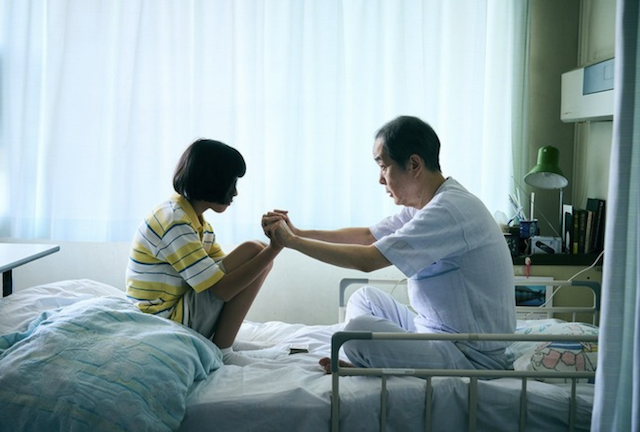
Chie Hayakawa : I believe that adults are too realistic to believe in those things due to their increased knowledge. Perhaps they are both adults, and the father tries to believe in a miraculous drug that can cure cancer, while the mother also undergoes palm reading.
Q: Can you talk about the mother? Because it’s a very interesting role in because she feels obviously guilty, but she can’t do anything that she wants to do.
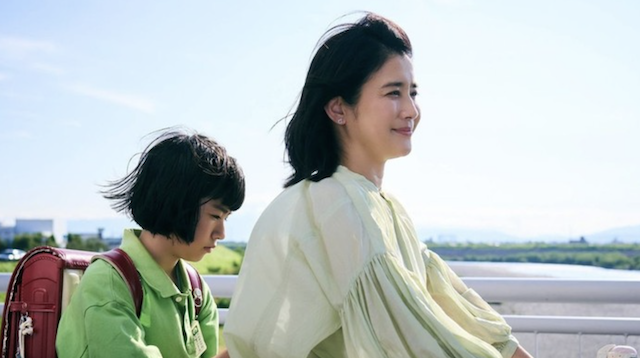
Chie Hayakawa : Although she is often angry and frustrated, I didn’t want to portray her as simply a bad mother. My objective was to depict her as a mother who is not flawless, but still somewhat human. Since I am now closer to the age of my parents and mother at that time, as well as having children of my own, my perception of mothers has changed. I believe that I can portray the characters with more intimacy and tenderness than I did as a child.
©Courtesy of Happinet Phantom Studios
Q : If I can make a joke, it’s lovely that you gave her such a good looking lover, you know.
Chie Hayakawa : When the attractive man arrives to visit her (mother), the children(Fuki) will witness the most disgusting and uncool aspect of her.
Q : Can you tell me something interesting about your intergenerational communication? You’re very skilled at it. Can you let me know when you start developing the story? What are your strategies for resolving intergenerational conflicts?
Chie Hayakawa : Although my previous movie, “Plan 75,” is set in the near future, my intention was to portray today’s society. I have no problem with current stories, but I had to set the story in the 80s this time. My childhood inspired me and provided the perfect setting for the story.
Q : What do you envision as the impact of your cinema on Japan’s understanding of its issues and culture? You dealt with aging inflation in your first feature, but now you’re dealing with solitude. Do you think solitude is a problem for many Japanese people?
Chie Hayakawa : But to tell the truth, my first film, “Plan 75,” was an issue-driven film, so this time I wanted to make a more emotionally-driven film that was completely different from that. So I had almost no desire to say anything about society or to depict it.
Q : The autobiographical, usually a filmmaker creates a film, and everything based on his or her life, obviously your previous film, “Plan 75” isn’t autobiographical, but this one kind of touches your personal experience as a child and as a mother and there’s a person that takes care of older people, can you comment about that?
Chie Hayakawa : My childhood is the inspiration for the film, but it’s not a true biopic; the episodes are completely fictional. I gained an understanding of the emotions I experienced and started creating new episodes.
Q: Did you define this movie as a necessary one that you needed to see? You are discussing emotions. Was it a healing experience? It was something that was necessary. What were your expectations from the movie and what were your objectives?
Chie Hayakawa : Initially, I wasn’t conscious about writing the script, but as I went through the production and filming period, I remembered many things, and I think the process itself became a healing experience or a way to forgive myself.
Q : It seems to me that both this film and “Plan 75” are dealing with grief, perhaps even anticipating it. I’m curious how you see two films conversing with each other.
Chie Hayakawa : Certainly, in both of these films, death is always in sight, isn’t it? I wasn’t consciously aware of that, but when I thought about why I chose to depict death in my films, I realized that my father had cancer for 10 years when I was a child, and I was between the ages of 10 and 20. Living with individuals who are nearing death during their most sensitive period has had a significant impact on me.
Q : The teacher demonstrates more than Fuki when she listens to her talk about her father’s death just before the end of vacation. There is something wonderful, sad, and funny about this scene.
Chie Hayakawa : That English teacher is not a big part of Fuki’s life. The person with whom she has a relationship shows great empathy for her and cries for her during a 10 minute English conversation every week. 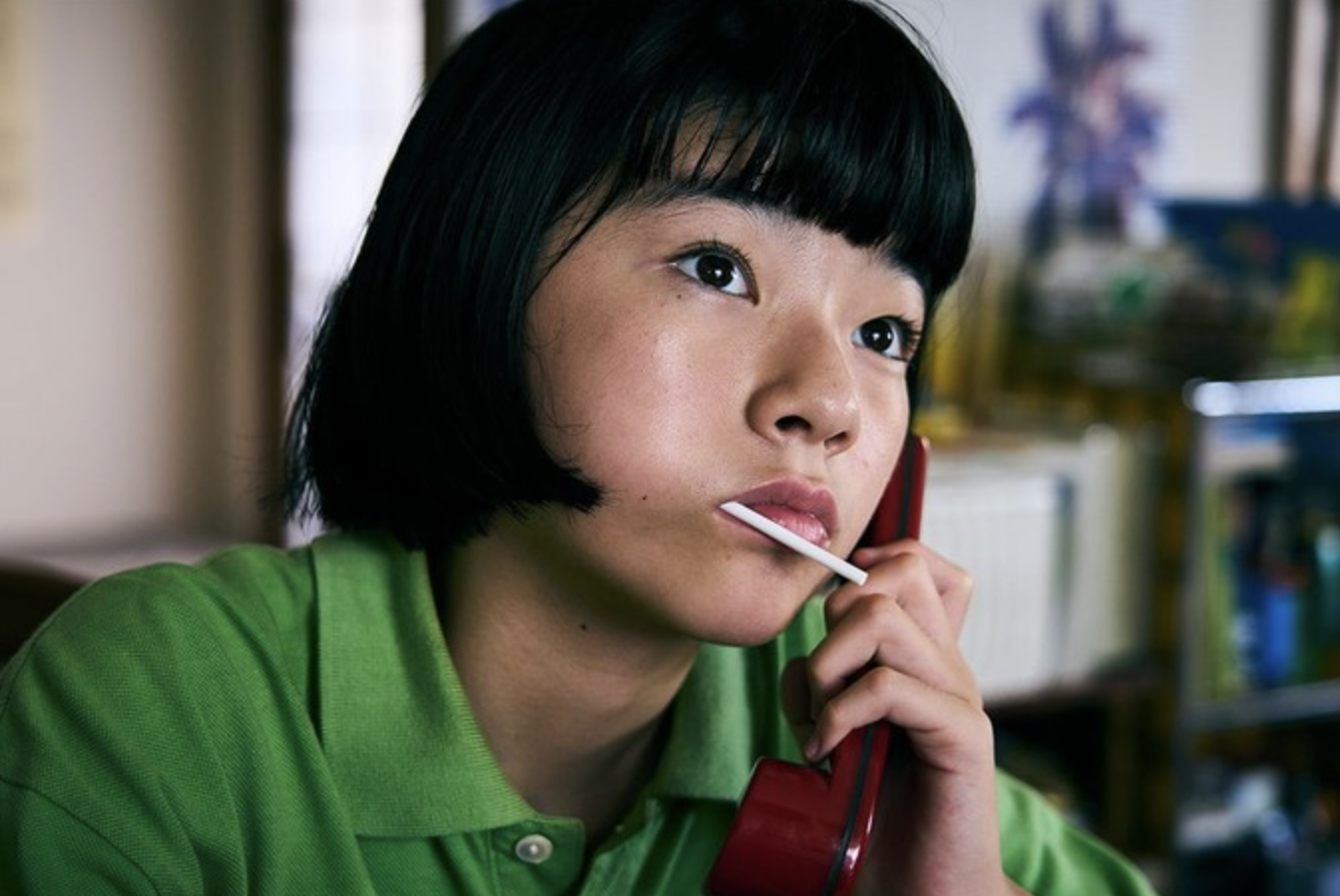
©Courtesy of Happinet Phantom Studios
If you like the interview, share your thoughts below!
Check out more of Luis’ articles.
Here’s the trailer of the film.