

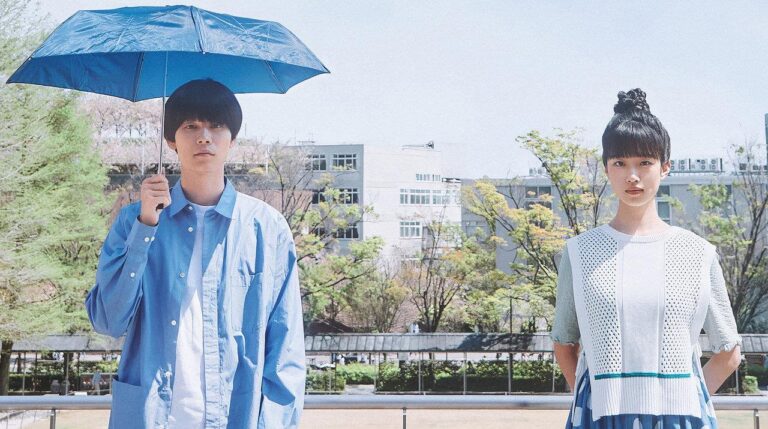
The word Serendipity stands for “the faculty of making fortunate discoveries by accident,” it’s basically a blessing in disguise. The film directed by Akiko Ohku seems to explore the darker aspect of life’s fortuitous events. The destinies of the characters involved in the story, rather than finding something good accidentally, traverse unexpected sorrows and someway try to give meaning to them.
She Taught Me Serendipity adapts the novel of the same name by Shusuke Fukutoku, following the day to day life of Toru Konishi (Riku Hagiwara), an introverted university student. He very sweetly and bashfully bonds with the girl he fancies in college, Hana Sakurada (Yuumi Kawai), who is an outcast, like him. In all of this there is also Sacchan (Aoi Ito), Konishi’s colleague at the hot baths, who will have an influential role in the perception of the multifacetedness of serendipity.
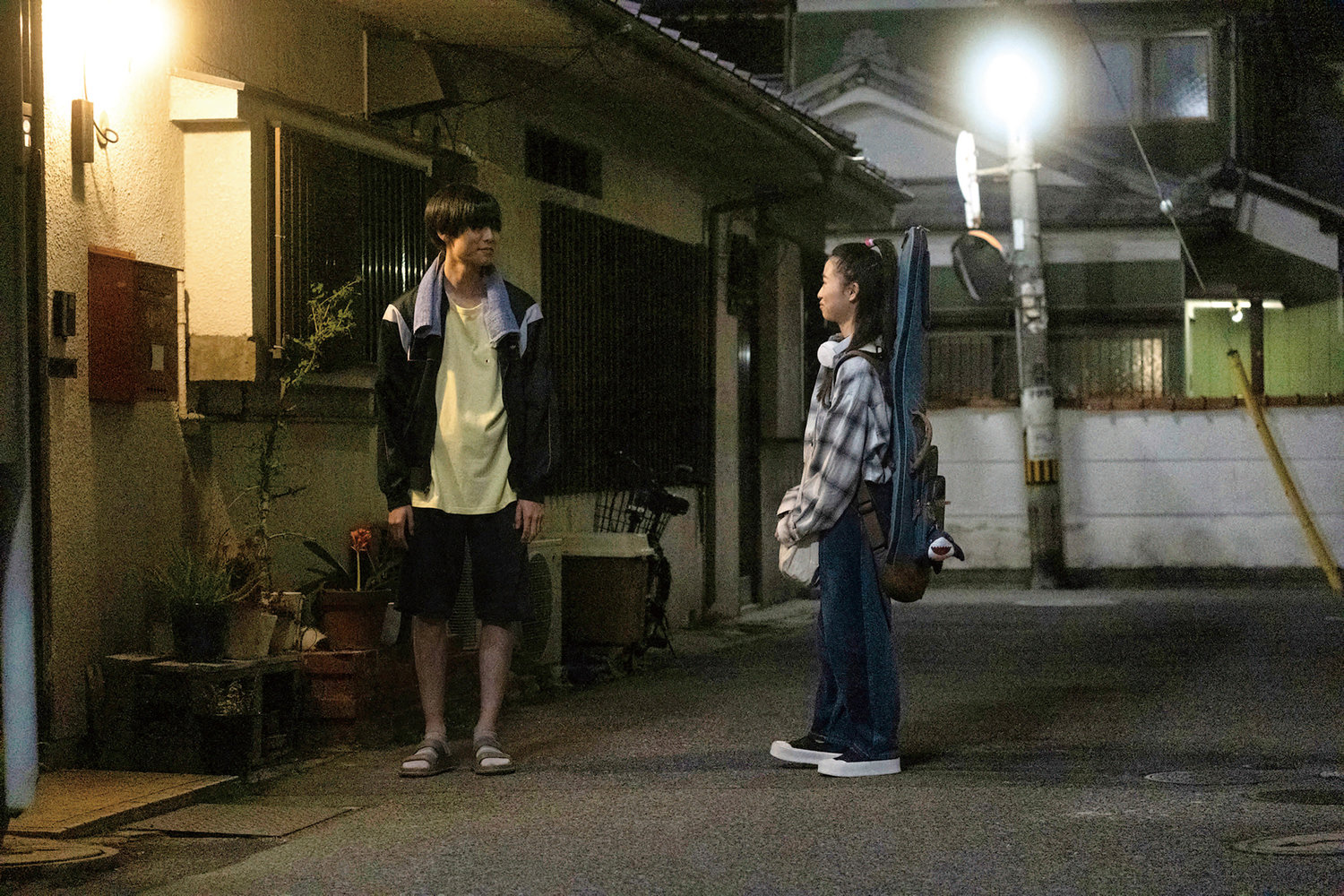
The film seems to be a coming-of-age tale about puppy love, but as it unfolds it assumes darker tones of unrequited love and fateful occurrences. The picture subtly grasps the sublimity of life’s fleetingness. The dialogues, penned by Shûsuke Fukutoku, fuse philosophical considerations with visceral pain. Just like in the real world, existence can switch from instances of lightheartedness to an abyss of loss. She Taught Me Serendipity reaches a decisive narrative turning point, which will trigger Konishi to confront his emotional growth and the title of the film will acquire a new meaning.
The concept of Serendipity was brought to the silver screen, by Western cinema with the eponymous 2001 rom-com starring John Cusack and Kate Beckinsale. Amongst various plot twists, the couple spent time at the famous Serendipity3 in New York, characterised by the restaurant‘s famous Frozen Hot Chocolate. The star-crossed lovers had to go through a series of hurdles before conquering their happy ending. On the other hand, She Taught Me Serendipity has a bittersweet finale. Furthermore, the Nipponic movie is more rigorous in retracing the origins of this concept-idiom. In fact, the film repeatedly evokes the Persian fairy tale The Three Princes of Serendip, set in present day Sri Lanka, that in ancient times was known as Serendip. In this fable, three princes by “accidents and sagacity” discerned the nature of a lost camel, which is the source of the word serendipity later coined by Horace Walpole.
Akiko Ohku’s idea of Serendipity is portrayed as a catalyst for personal growth, to explore new horizons, and appreciate life’s preciousness. This entails the inclusion of misfortunes that may arise on one’s existential journey. Her directorial style genuinely reflects the multiform evolution of life. In fact, the initial scenes are in 4:3 format, they then expand to full screen, and along the way there’s also the use of split-screens and dreamlike sequences. The mundane blends with the character’s subjective flux of the mind, as they live in the material world and perceive it through their individual perception.
Actors Riku Hagiwara as Konishi and Yuumi Kawai as Hana create some likable outsider characters, who try to navigate the hardships of life, it doesn’t seem to be a coincidence that they are both studying philosophy. They confide their vulnerabilities to one another. His security blanket is an umbrella, hers is wearing her hair in a bun. Hani’s favourite spot is a museum that celebrates women through history, but she also likes to be domestic, since her hobby is to remove lint from the washing machine. Konishi is a gentle soul, who nevertheless is too self-absorbed, to realise how he can unwilling cause sorrow to a peer. The real misfit who stands out in the movie is Sacchan, played by Aoi Ito. The heartbreaking monologue she delivers condenses the melancholic struggles of teenage emotions.

Language assumes an important role in the film as we get acquainted with the family vocabulary that the characters have used in their households, with terms such as “happy-why” and “you-know-you,” that are decipherable only within the respective family unit. A serendipitous coincidence in this domain is that Konishi and Hana share a phrase that they both heard at home: “today’s sky is my favourite,” This becomes an emblematic expression, that makes spectators ponder upon how relatives live on through us and how their words resonate with our present.
The soundtrack alternates minimalist compositions by Tai Matoyoshi with the piece Hatsukoi Crazy by Spitz — that becomes pivotal in the film’s plot, amplifying the dualism between hope and disillusionment. In She Taught Me Serendipity, music becomes therapeutic: one character asks “ever maxed the volume on your tv?” which is something which will be put into practice as a healing process.
She Taught Me Serendipity premiered at the 2024 Tokyo International Film Festival and is currently part of the 2025 Japan Cuts line-up. This ambitious motion picture gently interweaves the frailty of circumstances with human resilience, making us reflect upon the importance of taking responsibility for one’s actions and the wounds we involuntarily inflict on others.
Final Grade: B+
Check out more of Chiara’s articles.
Photo Credits: IMDb