

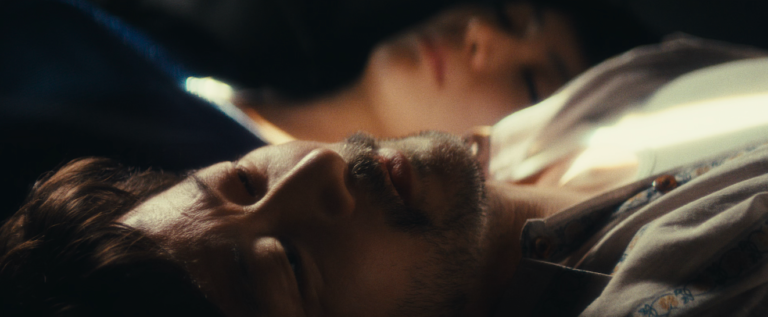
British, film director Mark Gill — after an Academy Award and BAFTA nomination for his 2014 short The Voorman Problem and after his feature debut with England Is Mine — returns to the silver screen with an exquisite piece. Ravens instills magic realism in a biopic about Japanese photographer Masahisa Fukase.
Gill’s second feature premiered at the 2024 Austin Film Festival, winning the Marquee Film Audience Award. That same year, it also screened at the Tokyo International Film Festival and is currently part of the 2025 NYAFF line-up. The film stars Golden Globe winning actor Tadanobu Asano as the photographer whose art was heavily influenced by themes of isolation and personal tragedy.
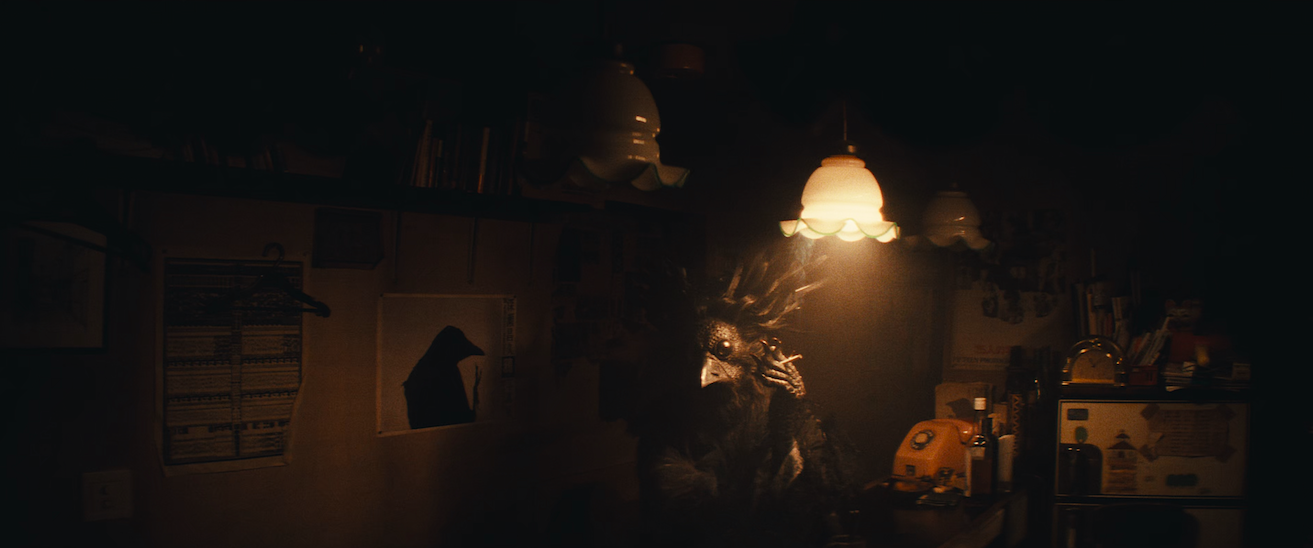
The movie highlights the making of his seminal photographic work Karasu (Ravens), which remains one of the most influential photo-books in history. The ingenious narrative device is that Fukase embodies the bird of prophecy with his craft, and is actually accompanied throughout the film by a raven-alter ego who acts as his conscience. If ravens were believed to connect the material world with the world of spirits, Gill’s film translates this into visuals, through the conversations between a tormented human and an otherworldly creature. The mythological figure appears during Masahisa Fukase’s most insecure moments and is voiced by Jose Luis Ferrer. This entity can be seen and heard only by Fukase and their symbiotic relationship is fully clarified with Fukase’s 1982 statement: “I have become the raven, I am the raven.”
Ravens is set in the later years of Masahisa Fukase’s life, eviscerating his tumultuous relationships and creative struggles, as his failing marriage to Yoko causes feelings of loneliness and artistic torment. Mark Gill’s exploration of suffering artists was well forged with his 2017 feature, about the early years of English singer-songwriter Morrissey. His sensibility to these themes is enhanced in Ravens, as he approaches the complex figure of Masahisa Fukase in a somniative way.
The film does not shy away from putting in question the genius of the Japanese photographer. It doesn’t glorify him. His creative brilliance is exposed, as much as his all-consuming demons. Fukase is constantly in need of validation from his father Sukezo (Kanji Furutachi), who ran a successful photo studio in Hokkaido’s small town of Bifuku, and wished his son to follow in his footsteps. But young Fukase wanted to prove that “photography can be art,” becoming part of the vibrant avant-garde that flourished in post-war Japan.
The paternal figure haunts the artist throughout his life, as his words ominously echo in his mind: “If you reached nothing by the age of forty, the honorable thing is to kill yourself.” In point of fact, the opening scene is set in 1992, when Fukase is ready to take his life precisely because he feels unaccomplished. In Ravens it is palpable that Masahisa feels crushed by the patriarchal traditions of Japan, but only when it suits his ego. Actually, he becomes indulgent in these ideas when his wife and muse Yoko Wanibe (Kumi Takiuchi) overshadows him and he claims that “a woman’s place is not to embarrass her husband.”
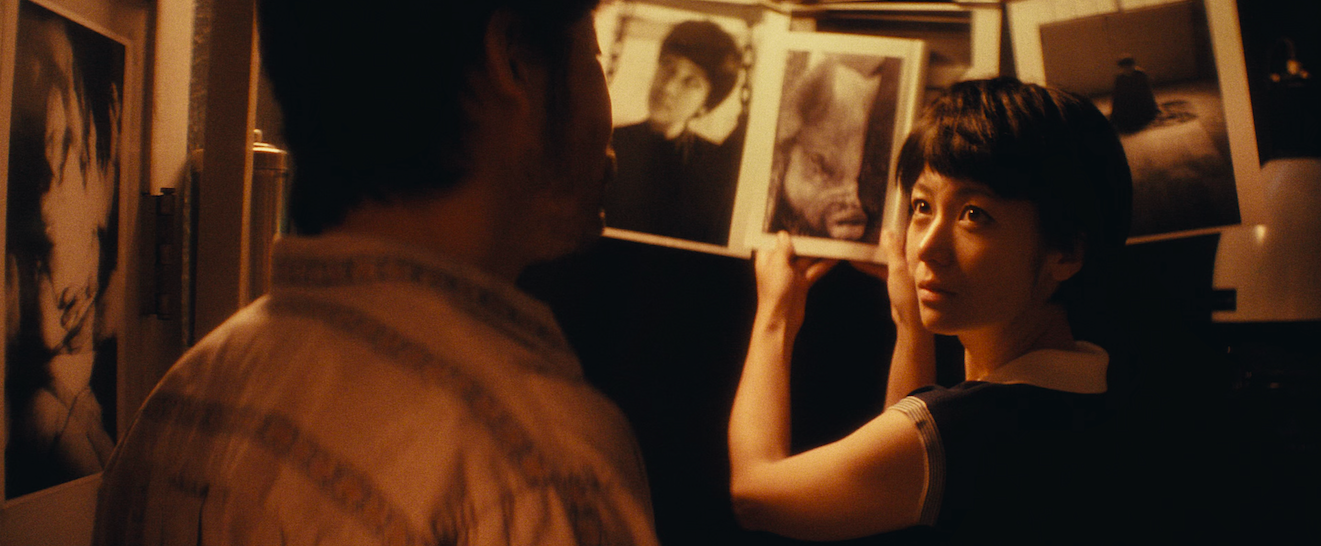
The storytelling jumps back and forth in time, travelling to the Fifties and Sixties, following his artistic growth and the blossoming romance with the aspiring classical Noh theater actress. Yoko becomes his muse, and in order to support her ambitions he compromises his artistic integrity, working as a commercial photographer. During this time the raven acts as voice within, who scolds him for putting on hold his true aspirations by telling him “a part-time dreamer is no dreamer at all.” Nevertheless his artistry breaks through the constrictions of the commercial assignments he receives. An example is given when he asks the female model, in a vacuum cleaner sales shoot, to hold the house appliance like a rock star playing a guitar.
Fukase eventually embarks on a rewarding artistic path that leads him to prestigious exhibitions, including MoMa in New York. However, life’s circumstances plunge the artist in a boozy and hopeless existence. He comes to an understanding that his creative force is devouring him. “Whatever I love, photography kills,” he says. The reviews about his pictures, in hindsight, could be applied to his “occult taste for the dark and the frightening.” His style seems to pre-determine a life of affliction. Gill stages this very well, by showing Fukase surrounded by clutter and chaos, as if he were holding a mirror up to his nihilistic mind.
When all is lost he returns to his family in Hokkaido. Instead of finally finding peace, his life comes to a jarring halt when he hits his head and is hospitalised. This defines his gloomy destiny for the rest of his days.
The heterogenous score reinforces the discombobulation of the artist, featuring the Koto Song by Dave Brubeck; Hey Chance! by Takeshi Terauchi and The Bunnys; The Cure’s Pictures Of You; the Velvet Underground & Nico’s I’ll Be Your Mirror and Venus in Fur. Whilst, the cinematography by Fernando Ruiz contributes to nourishing the dreary mood of this dark fantasy. Ravens is much more than a simple biographical drama. Mark Gill presents an existential filmic reflection, inspired by true events.
Final Grade: B+
Check out more of Chiara’s articles.
Photo Credits: © Vestapol Films, Ark Entertainment, Minded Factory, Y house, Katsize Films