

©Courtesy of Multitude Films
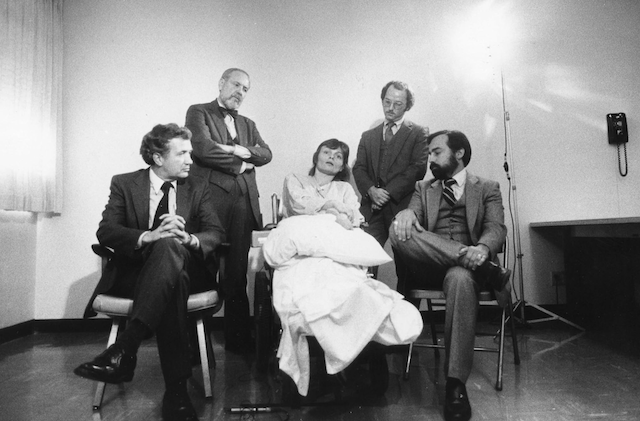
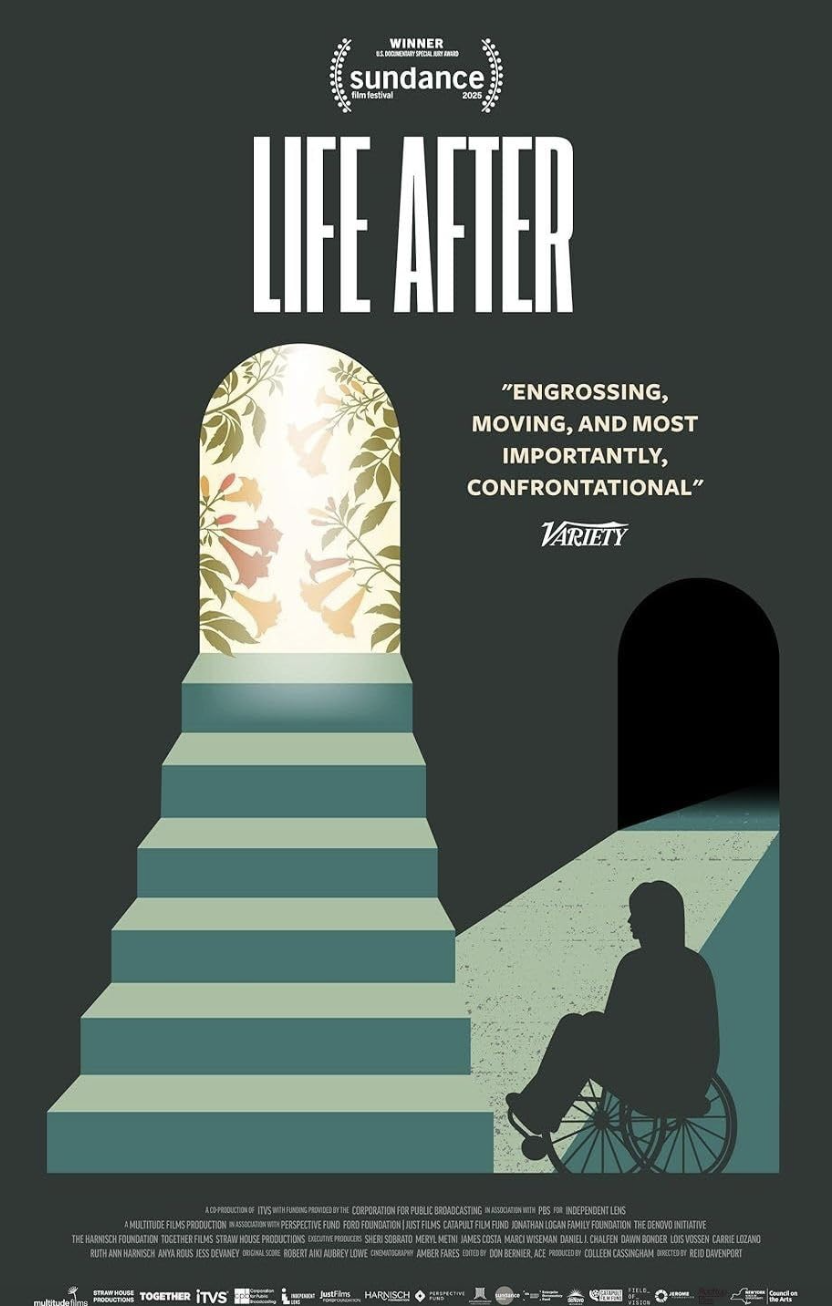
In 1983, a disabled Californian woman named Elizabeth Bouvia sought the “right to die,” igniting a national debate about autonomy, dignity, and the value of disabled lives. After years of courtroom trials, Bouvia disappeared from public view. Disabled director Reid Davenport narrates this investigation of what happened to Bouvia and her story’s relevance today. LIFE AFTER coalesces the missing voices of the disability community in the contemporary debate about assisted dying. Davenport looks at the ways that disabled people have and continue to die prematurely–whether murdered by a hospital in the case of Michael Hickson in Texas, or with the support of parents and community in the case of Wisconsin teen Jerika Bolen. Davenport’s exploration brings him to Canada, where safeguards have been lifted to allow disabled people unprecedented access to Medical Aid in Dying (MAID), even if their deaths are not reasonably foreseeable. In Ontario, Davenport interviews disabled computer programmer Michal Kaliszan, who contemplated MAID when his only alternative was entering an institution. In a society where ableism and poor healthcare can limit options, the autonomy of a disabled individual is often compromised. LIFE AFTER demonstrates how assisted dying may not represent choice when oftentimes it is seen as the only option.
Director : Reid Davenport
Producer : Colleen Cassingham
Distributor : Multitude Films / Independent Lens
Production Co : Multitude Films
Genre : Documentary
Original Language : English
Release Date (Theaters): Jul 18, 2025, Limited
Runtime : 1h 39m
©Courtesy of Multitude Films
Exclusive Interview with Director Reid Davenport and Producer Colleen Cassingham
Q : I had a chance to see this film at the Sundance Film Festival. I was really moved and I did want to talk to you guys for a long time. Reid, you did talk about in TED Speech that you are encouraged to write an article in a local newspaper back then. What did you write about back then, and how did you make the transition into filmmaking?
Reid Davenport : Yeah, I was a journalism student as an undergraduate, and I actually made a film as an undergraduate. And after I graduated, I really couldn’t make a career out of journalism. And I knew that I really liked making documentaries, like I did as an undergraduate. So I went back to film school to get my MFA in documentary film.
Q : I see. So that was actually a trigger point for you to go into filmmaking. That’s interesting. In Japan, assisted suicide is outlawed under the article of 202 penal code. And even though historically assisted person to commit suicide by performing Seppuku in the history of Edo period, but it’s still actually outlawed in Japan.
But in this country, there are 12 states are not illegal, it’s actually allowed in U.S. So I’m curious to know what’s your personal opinion on so many different states have a different perspective and point of view to execute a certain thing in each state instead of having one decision as a country?
Reid Davenport : So I think if I understood your question correctly, I think we are trying to tell anybody what they can and can’t direct their own bodies, I think we are simply saying that as long as there is racism and ableism and casteism, a sister-son poses a clear and dangerous threat to people who are already marginalized.
Q : I see. What’s your opinion, Colleen?
Colleen Cassingham : I agree with Reid. I think, you know, neither of us are really interested in taking a stand on state by state legislation about whether or not it should be passed for terminally ill people. We’re really galvanized around starting a conversation about how other things in society need to change in order to better support disabled people.
So that assisted dying isn’t posed as the only quote unquote choice that they have. So I think it’s bigger, the conversations we’re raising are bigger than simply be assisted dying legislation passed. It’s really about how we reorient our values and our systems of care and our attitudes toward disability in order to insist on the dignity of everyone in life and not just in death.
Q : Right. But ironically, those choices often happen to be belonging to the government or institutions, it’s not like individual people. So it’s really conflict against that. I value your opinions and understanding what your perspectives are and everything, but those choices are often not by those individuals, often those choices are belongs to government or state legislature, it’s really like a paradox. How frustrating for you guys to have those decisions?
Reid Davenport : I think the answer is that, yeah, the individual doesn’t really have a choice, because they haven’t forgiven any other choice, or they’ve given a choice to leaving a nursing home, or living after poverty, that’s not really a choice.
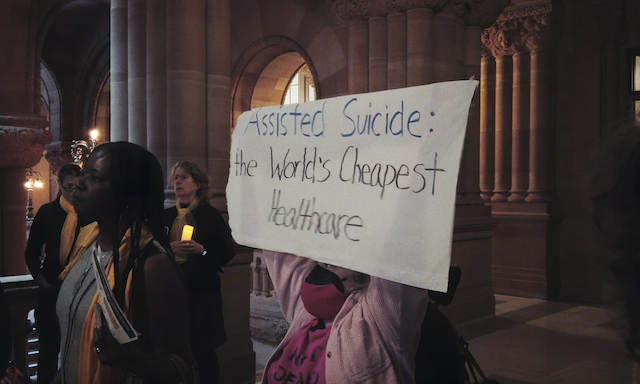
Colleen Cassingham : You’re right that it’s governments who are limiting people’s autonomy by doing things like we’ve just had in the US, by passing a budget bill that strips healthcare for millions of people. That’s dangerous on its own.
We’re going to see people die because of that. And if assisted dying is expanded alongside the trend of austerity and the dismantling of a social safety net, then then it’s even more explicitly forcing people to make choices that are not ones of true autonomy, but of desperation. You’re right.
©Courtesy of Multitude Films
Q : Right. Elizabeth’s mother and her stepfather, they put Elizabeth into the institution called Angel View, even though Elizabeth’s sister Teresa talked about the condition of their home back then, which was probably worser than the institution. So the institution is better than actually their home. But Reid, you pointed out that segregation is part of the trauma being disabled. Do you think Elizabeth’s perspectives or ideas of assisted suicide coming from when she felt like abandoned in the institution?
Reid Davenport : Yeah, it’s a great question. I think I feel a little bit uncomfortable trying to discern how she got from early to be, but I do know that was one of the key traumas in her life and then there was unnecessary surgeries, being distributed against graduate school using a brother or losing a brother in their 20s. She went through a lot and certainly being in a decision was one of the things that have been shaped her and maybe put a lot of weight on her.
Q: Okay, I was just wondering that most of the media didn’t cover Elizabeth after Mike Wallace’s interview in 1997. Well, obviously some people wanted to respect Elizabeth’s choice, but what do you think they don’t have that much of media exposure after the Mike Wallace’s interview?
Reid Davenport : I think because she wanted to live. I mean, a disabled person who wants to live isn’t usually….It’s only if she wanted to die and she had the self-awareness that she did when she belonged. That’s a news story.
Q : Right. Michal Kaliszan(Most of his life, his primary caregiver was his mother) in his cases after his mother passed away, well, luckily he had a job, and he was be able to support himself financially, but getting a service to his needs is very difficult because they cut down the time that he was only allowed to get support from a certain time in a week. How those hospitals and institutions were able to support those people who didn’t have a family member or people to get those assisted services like that? Did those situations change over the course of years?
Reid Davenport : I think it’s changed very little. I think it just remains awfully underfunded and that people and their families don’t get the care that they need.
Q : In the film, 14 years old Jerika Bolen(who suffered from spinal muscular atrophy type 2), she’s really a young kid but she made a choice to die right after when she had a prom party. In the state of Wisconsin would allow a child to make a decision, so do you think that’s too hard to make a decision like that in a such a young age?
Reid Davenport : I don’t think any kids should have access to that or whether or not the parents would sign off on that.
Q : Right…After seeing this film, I personally learned a lot of things about assisted suicide and also people with disability. What are the things that you learned after making this film that you think you might apply into your life?
Reid Davenport : I think that I feel that disabled people are based in—I don’t think I realize truly the amount of people who are placed in such dire positions throughout the U.S and Canada, and therefore I feel a greater sense of urgency that a lot of things need to change.
Q : Right. How about you, Colleen?
Colleen Cassingham : Yeah, working on this film totally changed my perspective completely, not just about my stance on assisted suicide, before I started working on this film, I was in agreement with I thought it was a personal choice and a right that we should insist on. And my opinion is now much more complicated.
And then the other piece is that it reframed my understanding of disability as a natural part of the human experience. And in working with Reid and in making this film, I definitely came face to face with my own biases and the ableism that we’re really all swimming and we’re all socialized with. And so it’ll be a continuous journey to keep unpacking that and keep countering that, and to realize that. And yeah, just to remain committed to like changing the systems that impact to disabled people first, just as much a part of the fight that I’m committed to myself and everyone I love.
Q : And this will be the last question. This film is showing at Sundance Film Festival and other film festivals as well. How was the receptions like during those festival circuits and response to your film?
Reid Davenport : I’ve been really grateful and surprised at how many people come up to me who understand it, who understand that we are not necessarily engaging in this cultural battle where society puts disabled people is missing on with our individual values and I think people really understand that I do fire up about it.
Q : Thank you so much for your time, and really appreciate your taking time to talk to me. I appreciate it.
©Courtesy of Multitude Films
If you like the interview, share your thoughts below!
Check out more of Nobuhiro’s articles.
Here’s the trailer of the film.