


Human dominion on Earth is epitomised by the Anthropocene. Our species has become the main cause of all the phenomena that have warped the balance of organisms, land, water, and the atmosphere.
If the dark side of mankind has channeled its rationale to exploit the resources of the Earth, the bright side has encouraged the creative field to serve as a clarion call for the urgencies of our time. In the field of motion pictures, there’s a growing number of cinematic tales that spread awareness on the ecological and social impact of the climate crisis.
Four films in particular, that have been traveling across the international festival circuit, have potently captured the issue in question. The audiovisual journey starts in the United States, it proceeds through Oceania, it traverses Asia and concludes in the Old Continent, specifically in a tiny Italian village.
The Ancient Greeks defined the ‘affairs of the cities’ the decision-making of selected groups concerning the activities on the distribution of resources, i.e. politics. If cognitive abilities and language have crowned humans as the superior species, the way we put them to use is catastrophic. The film that effectively captures how politics are being put in practice in a destructive way is the investigative documentary The Snake and The Whale, that has recently been at the 2025 SiciliAmbiente Film Festival and is also part of the Greenpoint Film Festival line-up.
The title plays on the ambiguity of two animals competing against each other, but the snake in question is the vicious, slimy and venomous human corruption. Over the past 50 years, four federal dams impounding the Lower Snake River in Washington State have been identified as the cause for the demise of all of Idaho’s anadromous fish, that are a vital component of the food chain of orcas — that are on the brink of extinction. What is bewildering is that this ongoing ecological disaster is done in the name of grain that travels by barge. The wheat, besides having the river as a course of transportation, also travels by railway, an option which surely could be implemented. It’s beyond belief that in the 21st century the economic sustainability of Washington’s crop farmers hasn’t considered an alternative to what is annihilating the marine fauna in the area.
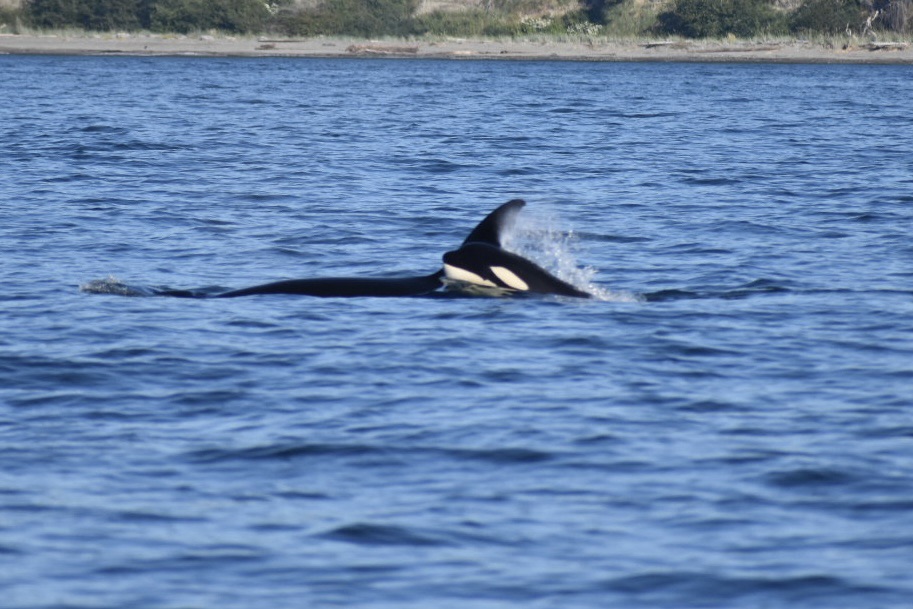
The beating heart of The Snake and The Whale is the investigative journalist and director of the film John Carlos Frey, who valiantly does not give up on holding those in positions of power to account. He does not hold back in exposing the lies of the Army Corps of Engineers, the Bonneville Power Administration, and some members of Congress, who insist on what they define as strategic importance of the dams for the region’s economy and energy.
The film produced by Scott Levy and Mary Grant — besides shining a light on a propaganda machine that works to keep the public in the dark — celebrates the symbiotic relationship that exists between orcas and some of the region’s inhabitants. The empathy that emerges reiterates the importance of interconnectedness amongst all Earthlings.
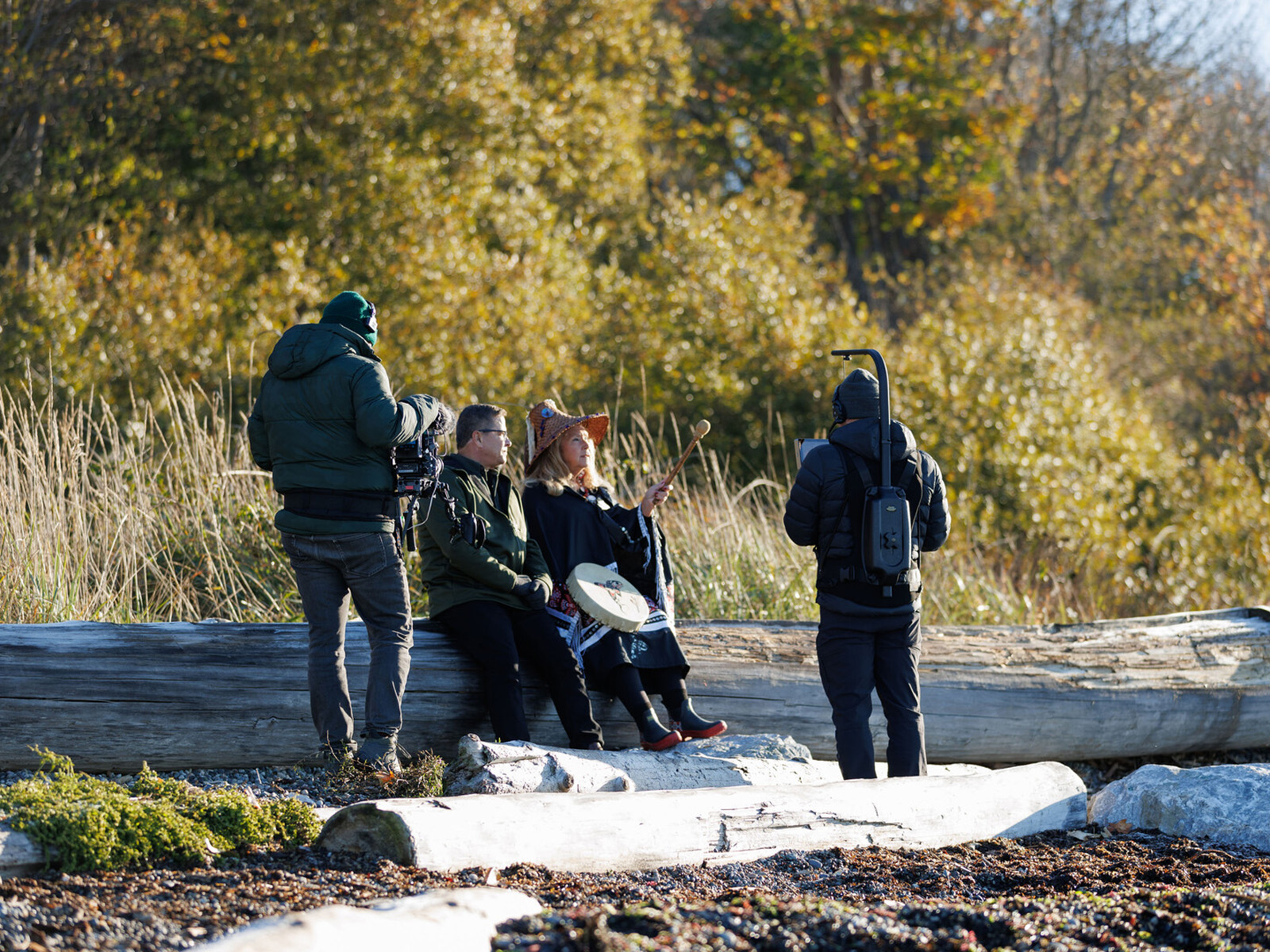
There’s another film that exposes a habitat that has been compromised, and in this case is at risk of disappearing forever. OCEANIA: journey to the center, shot over the course of eight years by director Natalie Zimmerman, has been at the Ischia Film Festival, Mill Valley International Film Festival, ECOador Film Festival, and Frome Climate Film Festival.
The documentary begins at the centre of the planet on a coral atoll that is expected to become uninhabitable by 2030, due to rising sea levels and temperatures brought by climate change. We are in Kiribati, and follow the day to day struggles of a mother and her adult son, who strive to preserve their culture, that has been tainted by colonisers since the mid-1800s.
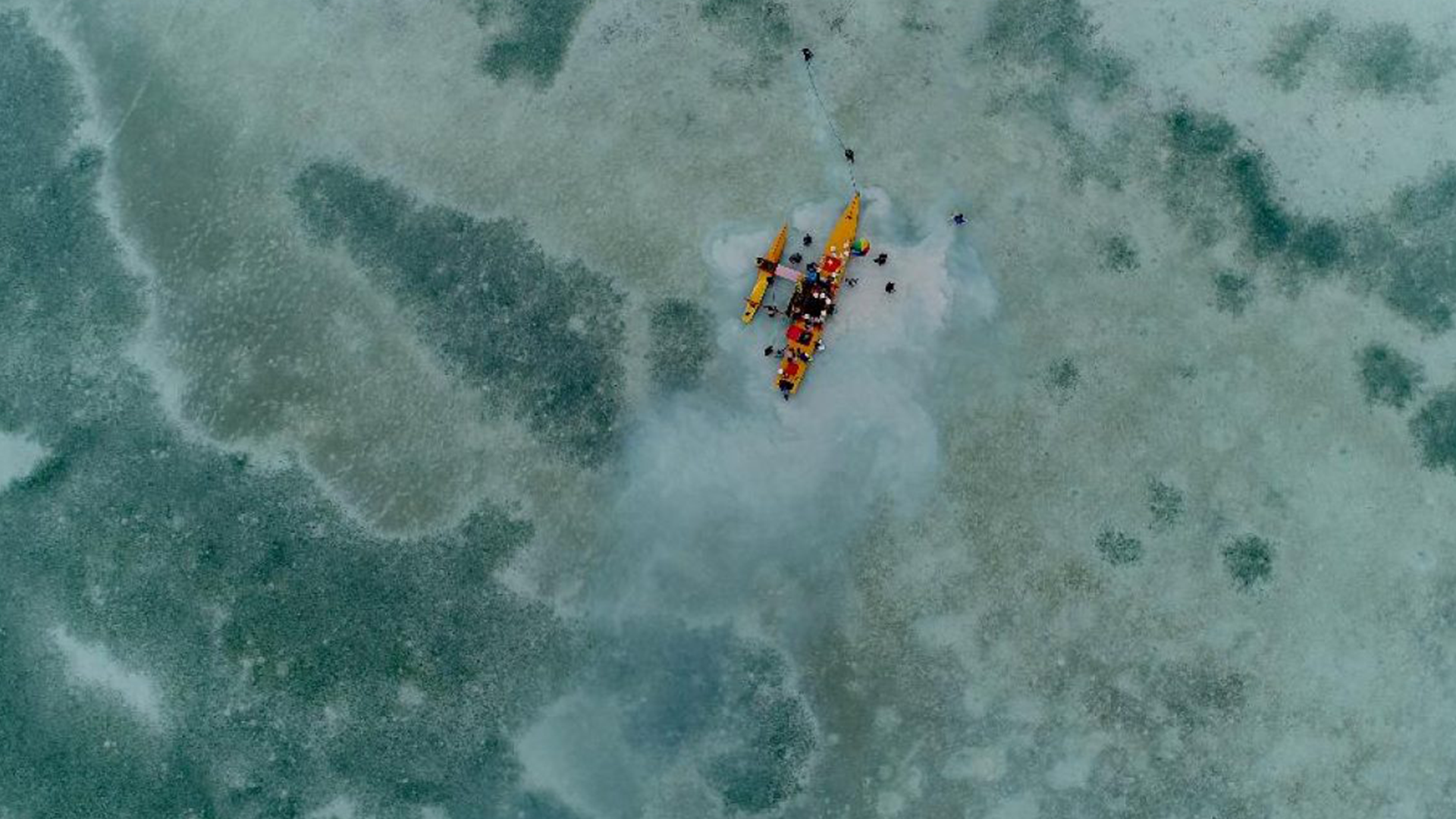
This lyrical documentary, co-written by Tekinati Ruka, presents for the first time on the silver screen the concept of climate change refugees. The havoc inflicted on the indigenous culture and the environment is shown through multiple perspectives pertaining to scientific data, historical background and philosophical reverberation.
OCEANIA: journey to the center is a visual elegy, a story of cultural survival, and a profound cry to the world. It’s an experiential opportunity to ponder upon the need to take action to save a community that struggles to stay afloat.
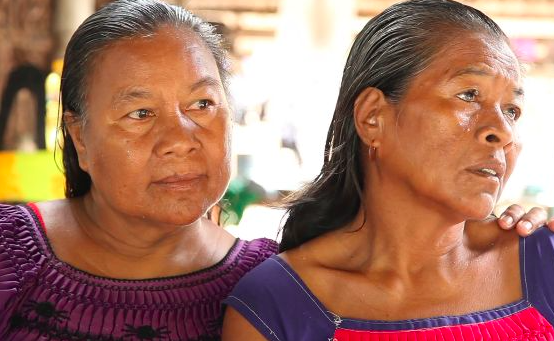
Another film presented at the Ischia Film Festival, which was also featured at the Okinawa Pan Pacific International Film Festival, the Saudi Film Festival, the Gijon International Film Festival and the Toronto Japanese Film Festival is River Returns, directed and edited by Masakazu Kaneko. This delicate fairytale, that shifts from period piece to fantasy, blends legend and time travel to reflect upon the environmental crisis and loss of values.
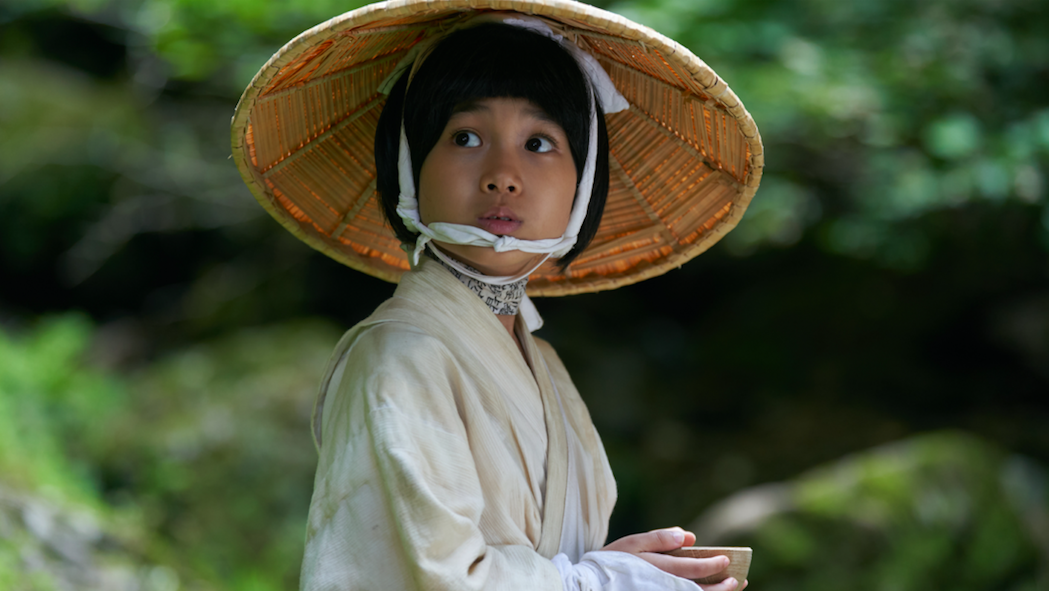
The story begins in the late summer of 1958, and is seen through the eyes of a young boy named Yucha, who lives in a riverside village that is constantly threatened by typhoons. The child gets acquainted with a flood legend, which has long been passed down through the community from a Kami-Shibai (paper theatre) storyteller. The tale involves a couple of star-crossed lovers from an unsaid period of time: Oyo and Saku. According to the legend, the broken-hearted girl drowned herself in a lagoon and her grief caused great floods every few decades ever since. Yucha has the chance to set things right, with a special ritual. His mission to restore harmony sets an example to reinstate a sense of care towards our planet and all its past, present and future living beings.
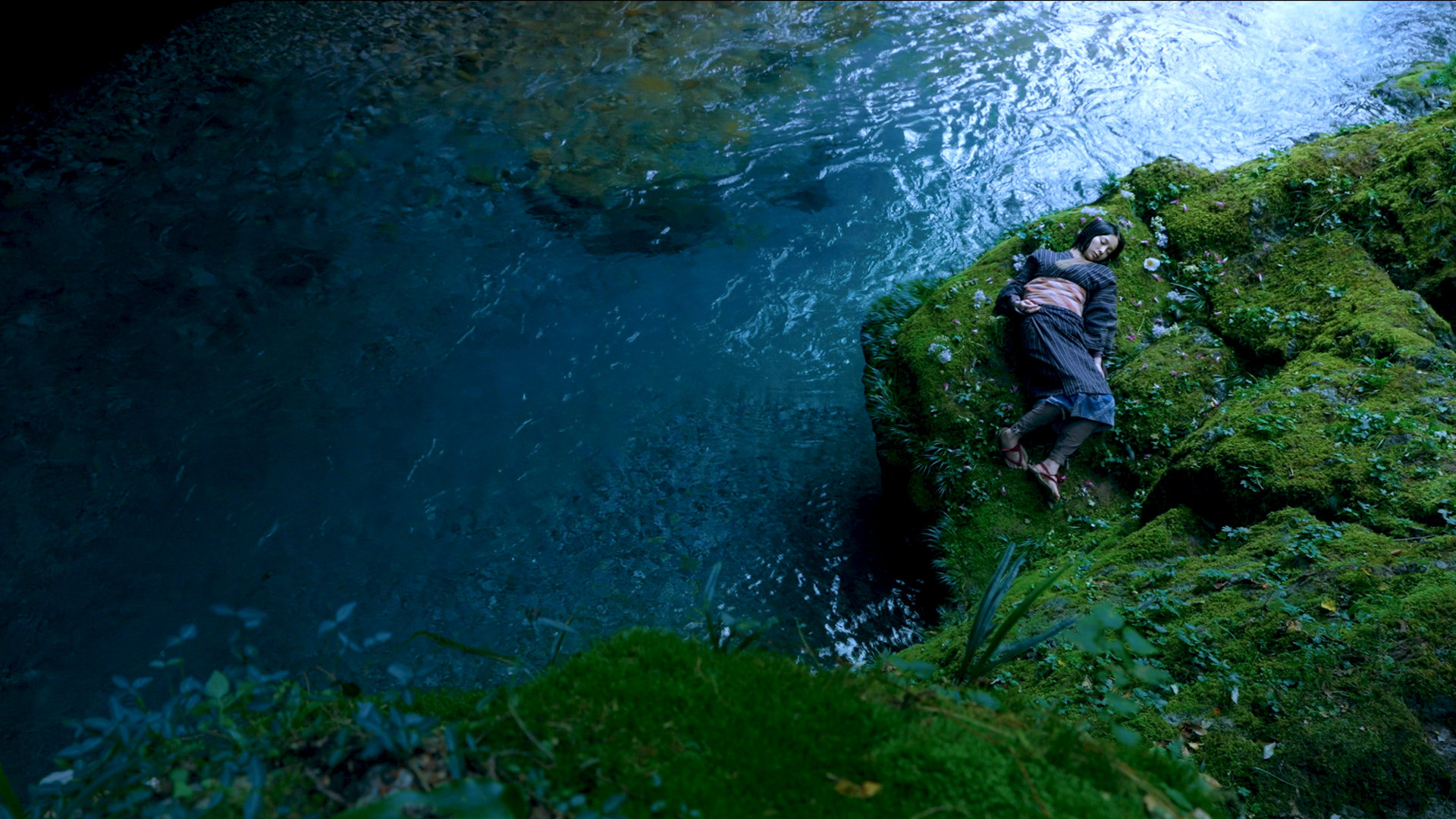
River Returns, also mentions how men in Yucha’s time are drawn towards speculative construction, and are willing to disfigure the naturalistic surroundings. Through a fabulist narration, the film provides insight on the way Japan’s mountains were home to diverse forest ecosystems, which are an essential source of water and a primary element for life. Nature’s bounty has been jeopardised by the advent of modernisation, through the deforestation enacted to provide timber. If Heraclitus believed in the idea of panta rhei — that everything flows — the film shows the process of change through a flux of water reprised by the innocent “new” generation of the post-war period. Thus, Yucha becomes the inspirational role model to follow in order to save our world.
When it comes to the preservation of communities from man-inducted disasters, another film that powerfully captures this — and has conquered the festival circuit far and wide — is The Moon Beneath The Water directed by Alessandro Negrini.
This docu-dream depicts a beguiling portrait of the community of Erto, an Italian village in the Dolomites, that 60 years ago suffered a huge human provoked hazard: the Vajont disaster. On the evening of October 9th of 1963, 260 million cubic metres of rock broke off from the top of Monte Toc (nicknamed by locals The Walking Mountain, due to its tendency to experience landslides), on the border between Veneto and Friuli Venezia Giulia, falling into the reservoir of the Vajont Dam. This structure had been completed in 1959 to obtain hydroelectric energy from the various basins present in the area. It was one of the biggest in the world at the time, and still is one of the tallest in the world. The disaster produced an enormous wave of at least 50 million cubic meters of water, and the flooding destroyed several villages in the valley, killing almost 2,000 people. As a consequence a third of the population of Longarone, the largest village downstream of the dam, perished.
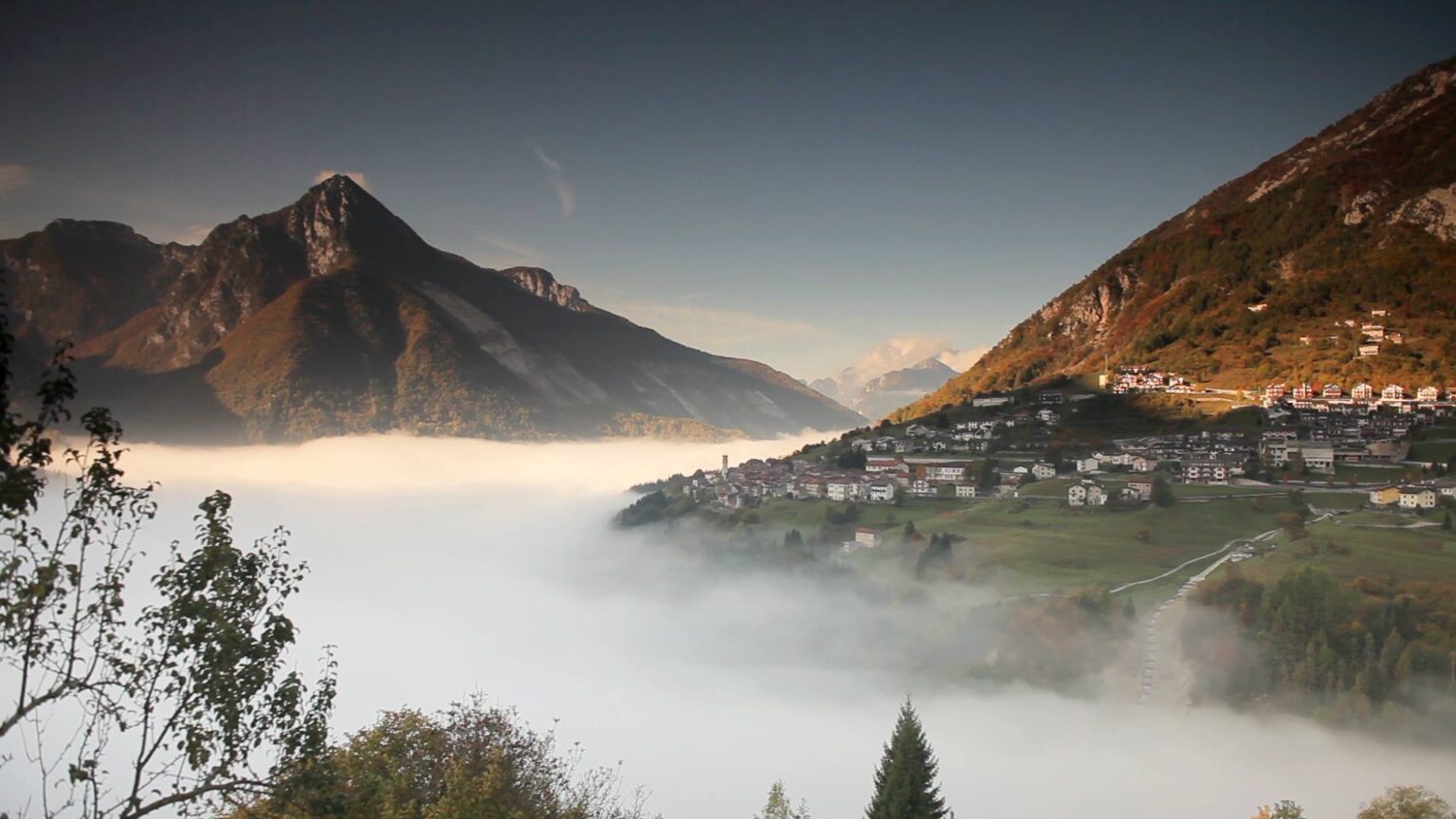
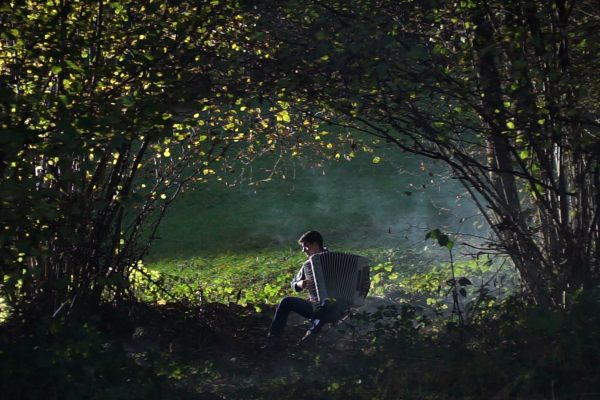
Over the past 10 years, director Alessandro Negrini has filmed the mayor fighting together with his people, reclaiming their right not to be abandoned by the national institutions. The cinematic voyage is lead by the most influential overseer of all: Mother Nature. The environment is one with the community, that is dedicated to create a work of art out of the nefarious dam. The collective efforts come to life as a mosaic, characterised by single portraits that denounce with poetic harshness a tragic moment in history, that today is trying to be exorcised by the resilience of Erto’s inhabitants.
The Moon Beneath The Water coalesces exquisite black and white footage with vintage coloured recordings, accompanied by the honeyed narrating voice of Maria Pia Di Meo — the Italian actress who has dubbed the likes of Meryl Streep, Barbra Streisand, Audrey Hepburn, Julie Andrews, Joanne Woodward, Julie Christie, Jane Fonda, Faye Dunaway, Vanessa Redgrave, and Catherine Deneuve, to mention a few. Contemporary interviews transform into visionary portraitures of men captured in oneiric desolation. The cinematography of the film seems to have jumped off a Claude Monet canvas, as it gets lulled by sounds of a music box or the songs of French channsonier Gilbert Bécaud, through a Felliniesque approach that glorifies magical realism.
The film by Alessandro Negrini goes full circle with the journey that began with The Snake and The Whale, where dams have proven to cause more pain than benefits. As the moon — epitome of purity and inspirer of delicate souls — is submerged by the ripple effect of mankind’s wrongdoing, causing the dissipation of a community and landscape, just like in OCEANIA: journey to the center. Eventually, nature’s ability to endure and survive allows everything to glide and find a transformative circulation, just like in River Returns. Thus, The Moon Beneath The Water keeps shining through, even when it’s drowned by an avalanche of adversities. After all, with its discreet grace, the moon is capable of making waves and affect our tides. This serves as a reminder of how in the darkest of settings a discreet presence can serve as a propulsive force, one we can all emulate.
The craft of moving pictures can be essential to compose a choir of voices, that chants in unison a song of resistance. Therefore a multitude of films — made by cineastes from different parts of the globe — can nurture the collective unconscious, triggering the human race to embark upon the most important journey for our planet, that of healing. One that will make our species sympathetic enough to be worthy of the name human “kind.”