

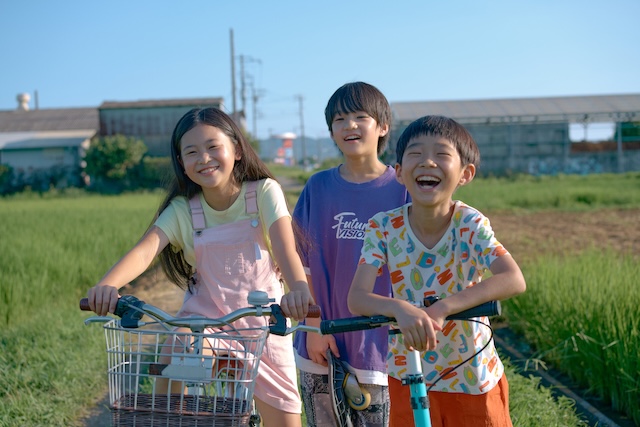
© 2025 HDY production committee
“How Dare You”?A quirky grade schooler develops a crush on his schoolmate, she gives an impassioned speech about saving the environment in this winningly observant and bittersweet cautionary tale.
Grade schooler Yuishi becomes infatuated with schoolmate Kokoa when she gives an impassioned class speech about saving the environment in the spirit of Greta Thunberg. Soon after they team up with the class troublemaker, and Yuishi finds himself both on a self-righteous crusade of activism and in a precocious love triangle. When the trio’s antics escalate to unexpected consequences they must all own up to the cold, hard truth. Director Mipo O proves not only her insightful sense of humor, but also a knack for getting naturalistic performances out of her young cast. With its cleverly wry script that takes on both huge moral issues and murmurs of the heart from a child’s viewpoint, “How Dare You?“ is a winningly observant and bittersweet cautionary tale for both young and old alike.
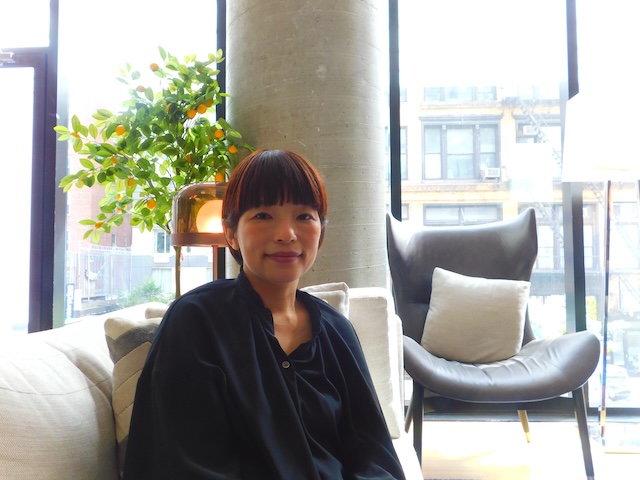
Photo by Nobuhiro Hosoki
Q : Mipo-san, when you were in college, you edited a video that lasted three minutes using equipment and it ended up winning the jury prize at Nobuhiko Obayashi’s film festival(Called “Ashibetsu Film School, Where Stars Fall). After that you went his office to work. What did Nobuhiko Obayashi teach you as a film director during that time, and how did it affect your current film production?
Mipo O: I worked at Director Obayashi’s office for five years, and then I wrote my own screenplay and made my feature film debut with “Yomoyama Blues,” which won the Sundance-NHK International Filmmaker Award. Director Obayashi writes his own screenplays, shoots his own films, and edits them himself. I think that’s the ultimate form of independent filmmaking.
As a filmmaker, I truly aspired to see him do everything himself. That approach is deeply ingrained in me even now. In the beginning, I wrote scripts on my own. After having children and comprehending the importance of objective viewing, I now collaborate with screenwriters on scripts and handle editing myself. To achieve a more objective perspective, I work closely with an editor using this approach. I believe that approach is more suitable for me.
I believe that the editing techniques I learned from Director Obayashi were utilized effectively, particularly for this children’s film. Director Obayashi’s cuts are highly detailed, which can be chaotic at times, but his work meticulously assembles fragmented visuals and sounds as though it were a piece of puzzle.
We shot the visuals and sound separately in this case to depict children. Even though they were recorded together on film, during filming, I was standing next to the camera giving directions and such, so the most effective visuals and sound include my voice, which cannot be utilized. So we record the sound separately afterward, and editing it is extremely challenging, carefully combining the best visuals with the best sound and connecting them is exactly the kind of filmmaking I learned from Director Obayashi’s approach, and I feel that it’s really being put to use now.
Q: You have collaborated with screenwriter Ryo Takada three times in the past, but was the catalyst for starting production on this film the fact that you also have children, and that this served as a starting point for the project? Could you tell us about the circumstances leading up to this?
Mipo O: Originally, female producer Wakana Kanno was inspired by Greta Thunberg’s words to come up with the English title for this film, “How Dare You?” The Japanese title is “Futsū no Kodomo” (Ordinary Children). After seeing her speech at the United Nations, I thought, “Who is this incredible child with such a powerful impact?” It became a global movement, but on the other hand, in Japan, such children probably wouldn’t emerge in this culture.
Well, Japanese culture is conservative, and education is also one-sided, with everyone following the crowd. Last year, the documentary film “The Making of a Japanese” was shown around the world and was viewed with great interest.
So, inspired by Greta’s “How Dare You?,” she (Kanno) wanted to make a film about Japanese children that included aspects of Japanese education. Screenwriter Takada joined the project, and since he also has children, they discussed how to create an interesting film about children. I was invited to join the production team.
The guiding principle for the three of us was Sean Baker’s “The Florida Project.” That film is truly wonderful, depicting children in their natural, unfiltered state, colorful and enjoyable to watch. But at its core lies the harsh reality of social poverty issues, and the final scene confronts us with that reality, leaving us with a heavy sense of weight as the film ends.
Such a film has the ambition to inspire, like Greta Thunberg’s movement, but on the surface, it’s very friendly. In other words, it’s a multifaceted film, and among the production team, “There aren’t any children’s films like that in Japan, are there?” After that, we talked about how children’s films in Japan tend to be a bit sad, or even if they depict social issues, films with child protagonists that are praised at the Cannes Film Festival or elsewhere are somehow a bit dark or one-dimensional in their emotions.
Personally, after having and raising children, I realized that children only see what’s right in front of them, and no matter the environment, they somehow manage to live happily every day. The underlying emotions are, of course, something adults notice, but they’re layered in a multifaceted way. I felt like we could create a children’s film unlike anything that’s been done in Japan before, so I decided to take on the challenge.
Q : Have there been any sections of Takada’s script that You have incorporated into your daily routine with your children?
Mipo O: There are many. For example, the children’s individual actions were based on episodes from our own children’s lives, and we actually held auditions for children in a workshop format. During the workshop, we observed the children’s various behaviors and reflected them in the script, adding and revising it as we went along.
In the final scene, there are numerous adults present, and the way the children interact with them, the conversations I have with my mom friends in daily life, or the fact that Yu Aoi has been portraying the protagonist Yui’s parents since the beginning, the final scene only features the parents of the other children. It feels like a revelation, like, ‘Oh, that’s what their parents were like,’ which is what I feel every day with my children.
My child is 10 years old now, so they only play with other children. However, I still wonder what their parents are like, and I find myself curious about that when I see my child’s friends. It’s interesting that when I meet them in person, they are different from what I imagined, and those types of things are evident in the movie.
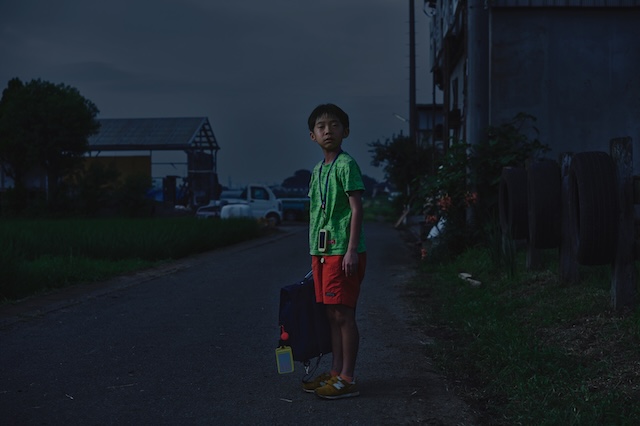
© 2025 HDY production committee
Q: Tetta Shimada, who portrays Yuishi, has appeared in the movie “Call Me Chihiro” and various dramas, but he exudes a sense of childlike innocence and spontaneity.
Mipo O: I myself have seen his work, and last year, he also appeared in my first film in nine years, “Living in Two Worlds.” He came to the audition as the protagonist’s childhood friend, and he was just this kind of child you can’t help but keep your eyes on. Children’s auditions typically involve everyone memorizing their lines properly, staying calm during waiting times, and probably taking lessons to look good regardless of who is watching.
But he (Shimada) was a bit restless, which was actually interesting, so I ended up talking to him a lot. Moreover, his parents are truly wonderful. They don’t spoil him but fully support him, and he seems to have been raised with a lot of love, which gives him a stable mindset.
Although the child may face various stressors during the long filming process of the main character, I believed that he had the potential to be the main character and the center of the movie, which was one aspect of it.
Q: In the opening shot, there is a scene where Shimada got into the elevator and went out to get some insects, which was filmed in one take. You have shot various works such as commercials, after viewing just one take, it’s apparent that this is a children’s movie. But how did you and the cinematographer capture that footage?
Mipo O: I always write the script with a clear image of the film’s entrance (opening) and exit (ending) in my mind. However, for this film, I wanted to start and end with a close-up of this child (Yuishi) in the same size, facing forward.
I framed the first shot in an elevator with the title, but it’s not clear what Yuishi is thinking from his face. Except for the final scene, the cinematographer and camera crew and I worked together to achieve this plan after discussing it. I was looking for a change in his expression that would indicate that he has grown, even if he hasn’t made much progress.
Q : As you mentioned earlier, you cast the workshop students. In the film, there are scenes where they read their compositions and have discussions, which creates a strong sense of unity among the class. I get it that this was the outcome of the workshop, but what was done specifically with the children to establish a common understanding?
Mipo O: We had many children participate, and we didn’t just select the smartest kids for the roles. In fact, during my time studying and now at my children’s school, there are no children who are chosen exclusively by their intelligence.
The diversity of kids is what makes it intriguing. Even chaos is part of daily life. There have been instances where fights have occurred during the workshop.
The staff becomes more bothered by fighting kids as everyone gets along better. If they believe a kid is going to fight, they might deliberately not cast them out or cut them out.
Even the most difficult kids were included in this movie because that’s what makes them so appealing. We selected many children who would not normally be selected or would probably fail an audition, and I believe that has contributed to a more natural scene in a positive way.
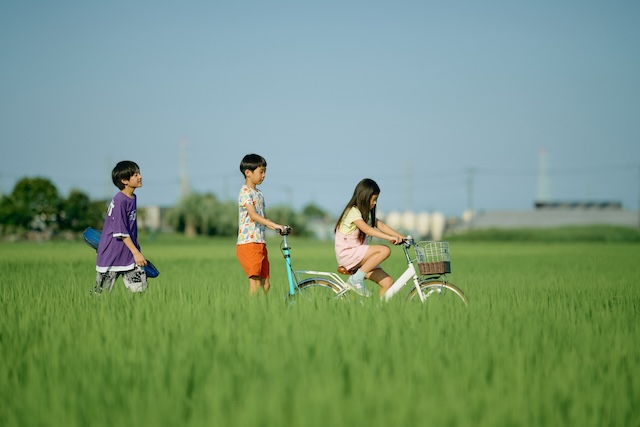
© 2025 HDY production committee
Q: It was interesting to me that there were always one student in the class who seemed more mature than the others, a role model student, a bully, and a boy who idolized a popular girl. In my opinion, these characters were very relatable. What kind of discussions did you have with writer Takada to develop these characters?
Mipo O: Yes. Regarding those three, there’s a Japanese children’s book called “The Slip-shod Three”(Zukkoke Sanningum), I imagined that and thought a cliché triangle would be fine. From that cliché, I wanted to explore a certain universality or, in a way, bring it to a superficial expression. So, the initial goal was to start with something everyone could see and get hooked on, like the “The Slip-shod Three,” but then develop it into a drama that doesn’t end there. That was always the aim with writer Takada.
Q: This movie is particularly interesting because after the children remove the fence and let the cows escape, the three children who let the cows escape attend a meeting with their parents. The parents of these three children are very diverse, however the mother played by Takiuchi is the one who imposes her own view without adequately hearing her children’s arguments, and the one who only listens to her children and ignores the opinions of others, and the one played by Yu Aoi is the opposite, someone who takes into account the viewpoint of children before making a judgment. The fact that each mother is unique is what makes it intriguing. Their educational values are conveyed through their actions, which is also fascinating. What aspects did you concentrate on when depicting these parental approaches and their perspective?
Mipo O: Despite their apparent differences, I felt that those three mothers were all reflected in me personally. My approach to it was based on that mindset. Everything had a resonant impact on me.
When you become a parent, you don’t suddenly become a perfect person. You constantly struggle with your own rigid values while raising your children. They all stated that it was all about them. As my friends and many adults watched the movie, they all stated that it was very intriguing because it felt like they were themselves. The human charm is a result of that, which is what makes it interesting. The movie portrays an imperfect child, but the adults around them are also imperfect, and no one is perfect.
While each one is unique, you can feel each one within yourself. It is my wish that after viewing it, both adults and children will feel a little more comfortable. There are no perfect people in this world; we are all ordinary people.
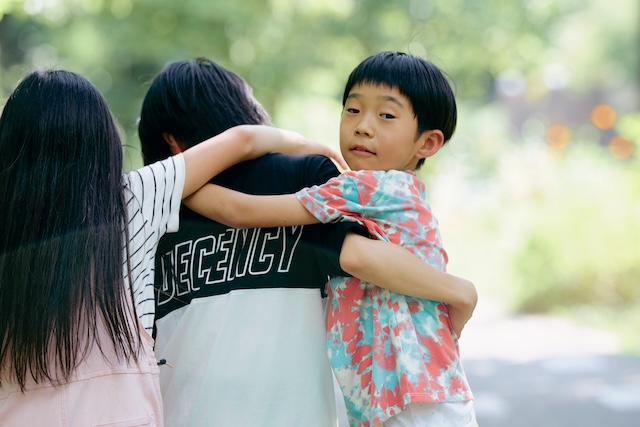
© 2025 HDY production committee
If you like the interview, share your thoughts below!
Check out more of Nobuhiro’s articles.
Here’s the trailer of the film.