

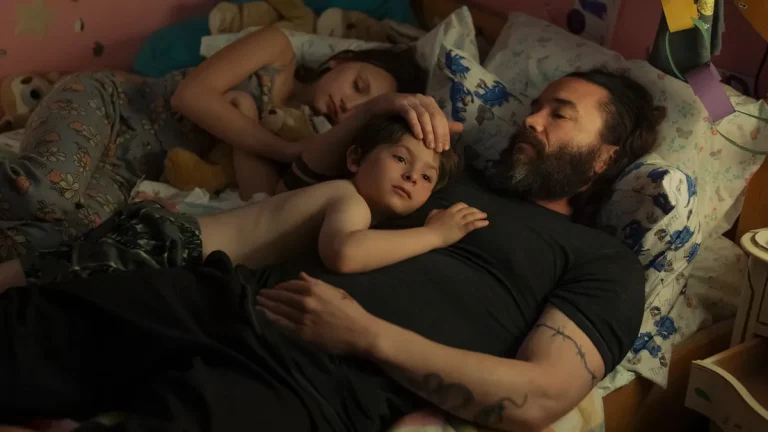
@Courtesy of HBO MAX
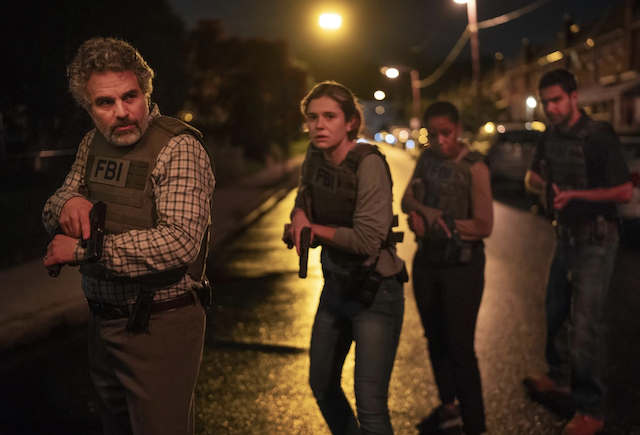
Q: Tom and Emilia, how difficult was it to master that dialect?
Emilia Jones: It was hard but fun, we had a great dialect coach called Susanne Sulby and she really helped us. I did Zoom lessons for five months prior, then I flew out to Philly two weeks before we started shooting, and Susanne and I went around bars in Delaware County, and listened to people talking, befriending the locals. I have loads of videos, recordings on my phone of how people from Delco speak. I made friends with this amazing person called Eileen Dolly, she helped me a bunch too. It’s not just an accent, it’s an energy that I noticed from when I was going around bars.
Tom Pelphrey: Susanne was incredible. Then one of the girls who worked on the crew put me in touch with her cousin, he has the full accent and he loves football. So we started talking about football. He knew partially I wanted to listen to how his sounds were. But after a while, we got so engrossed in the conversation that he could really relax.
Q: After the success of Mare of Easttown, what did you think about as a follow-up and what led you back to this region and this world?
Brad Ingelsby: It’s always about characters for me. I don’t think I ever had an idea as to what would be next. Everything I’ve written in my life has come from characters. I knew that probably we couldn’t do a whodunit again, that was the engine we used in Mare. When I came up with the characters for Tom and Robbie, I felt like well, maybe the tension could be a collision course. So once I started to put those pieces together, I wanted to tell another story in Delco. It’s the blood in my veins, it’s the people I know, and it’s people I care about, and it’s the way I grew up.
I wanted to make sure I was telling it with the same level of complexity and care that we did in Mare. I was okay embracing Delco again, I just had to figure out what the draw would be for the audience. Once we got these two guys on opposite sides of the law, I felt like that it was a different tension, it could be equally potent and it’s a testament to the actors we have, because you care about every one of the characters in the show so much. Once I was able to get the structure down, I was confident that I had a good set of characters and a real engine at the core of the story.
Q: I’ve seen Taks described as cat and mouse. Do you see it that way?
Brad Ingelsby: A little bit, I think it is. It is a chase in a way. But what I hope separates the show is the level of care we give to all the characters: you care about everybody in the show, not just the cops but also the criminals and the bad guys. So I think in a way it is a cat and mouse, but it’s also a drama about lives under pressure, people who are backed into a corner, who don’t have choices. As an audience you don’t have to agree with all the decisions that are being made on screen, but you can understand why they’re being made.
Q: Was the challenge of Task less about good versus evil and more about asking the audience to empathize with characters involved even when they are at their most flawed?
Brad Ingelsby: Absolutely. It’s something that, as a writer, you’re always trying to modulate. It’s possible for many things to exist. It’s possible that Maeve resents Robbie all the time, and it’ s possible that she also loves him. That’s what we’re trying to do with the characters, is not to paint someone as good or bad, but to understand how these decisions are made. We were always trying to lead with compassion and empathy for everyone. It’s like trying to get to the heart of complex characters. Because people are really complex. That’s a goal that I try to achieve as a writer.
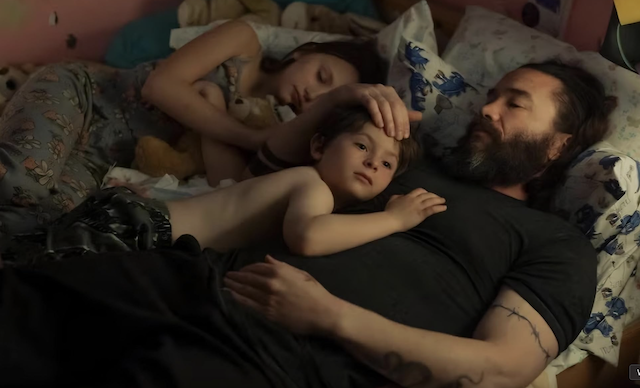
@Courtesy of HBO MAX
Q: How do you find these locations, and what was it like to act in them too?
Tom Pelphrey: Every day on set, I’d take out my phone and take a picture of something, because I was so blown away by the specificity and the detail.Some of our light switches in the house had little googly eyes, eyeballs, just tiny, tiny ones. Light switch, you know, and I thought: “This is a house full of kids!” So much of the detail that they put in was never gonna make it into the show, but they did it anyway.
Emilia Jones: It’s such a lovely house to film in. Yeah, I remember when I first saw it, I was like: “Why does Maeve wanna leave so bad? It’s so nice, I love it.” All of our big, big scenes were all in one week, because we were filming at that house. It was very location-based, the shooting schedule. One of the weeks in the house, it was just so intense. We had all of our scenes, it was quite nice, because we were just in that head space for the whole week. I was absolutely shattered by the end of it, but I was so grateful.
Brad Ingelsby: I’ve got to give credit to Keith Cunningham and Edward McLoughlin who worked with us on Mare of Easttown. They care so much about the details. All the things aren’t gonna make it on screen, but they have it there anyway, and they have it there because it makes the actors feel like: “This is your house”. An actor can seep that in, it just matters to them.
Q: How did you like shooting in the Philadelphia area, and did anything about being in that area surprise you?
Emilia Jones: I loved filming in Delco because it felt really authentic and it’s always nice when you get to film where exactly the show or film is set. It really helped me with the accent and the energy just being there.
Tom Pelphrey: I loved it. I was in heaven. It was so great to be back on the East Coast. I grew up in Jersey not too far away from there and I loved every minute of it.
Brad Ingelsby: I mean, it’s my house. I got to sleep in my own bed every night. One of the things I love most about making these shows is how much the people in Delco and Philly and the areas really appreciate it. It’s part of why we try to get it right, you feel like a certain debt to these people.
Tom Pelphrey: There would be a lot of days where people would be out on their porch watching us film and they were excited about what we were doing. They’d get quiet when we were filming and then just say: “Good job” or whatever at the end. You really felt embraced by the community that we were filming in a way that you don’t always get.
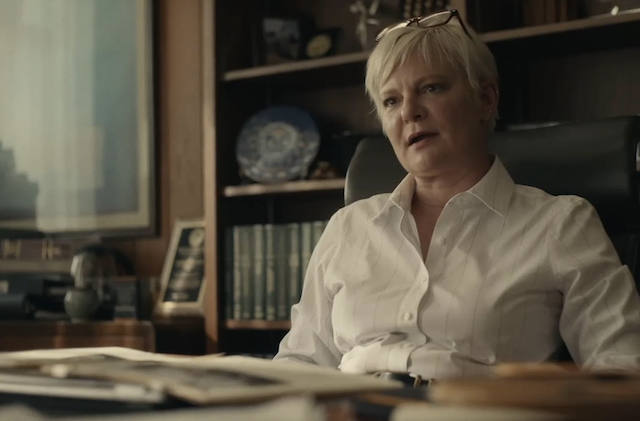
@Courtesy of HBO MAX
Q: You have created the scariest villains I’ve seen in years in this motorcycle gang. How did you come up with that?
Brad Ingelsby: There was a gang when I was a kid that I would hear stories about, they were called the Warlocks. I don’t know if they really still exist anymore, but in the 70s they were like a motorcycle gang. I used a lot of tech advisors, I would ask them questions about the gang. I wanted to understand them as characters, give them the same layers and complexity that I was trying to give these guys in the show. It was a balancing act. Trying to make them relatable, but also scary.
Q: Was there a moment during filming when you felt that the character began to influence your personal life or worldview? How much closer or perhaps further did your character become to you?
Tom Pelphrey: I felt instantly connected with Robbie having just become a father myself. It’s so weird you immediately feel emotional. I knew for sure something that I had only imagined before. Which is that I will do anything for my child. Anything. To get to play Robbie, where everything he’s doing is for the sake of his children, you don’t have to blink. I don’t need to research that. I need to spend time thinking about it, I just know in my bones that that’s the truth. That was helpful.
Q: How did you balance the tension between intimate family drama and the suspense of the larger narrative?
Brad Ingelsby: That was tough. That was the biggest challenge in Mare too. We talked about it every day on set: a big part of that was leaning into the everyday humor that everyone sees in their life. Again, I start from a place of character. For me, Mare was a character study. It was about a woman who wasn’t going to face the death of her son. Task is the same, it’s a character drama. In terms of Robbie, it is a story of sacrifice. In terms of Tom, it’s a story of forgiveness and acceptance. That’s really something I’m always mindful of as a writer, to have moments of both.
If you like the interview, share your thoughts below!
Check out more of Above the Line vs Below the Line Video Review
Here’s the trailer of Task: