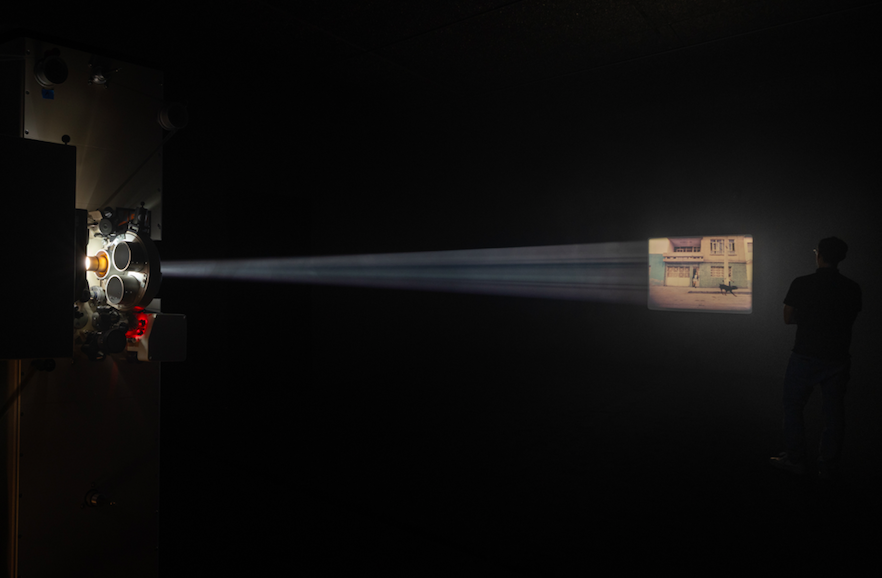

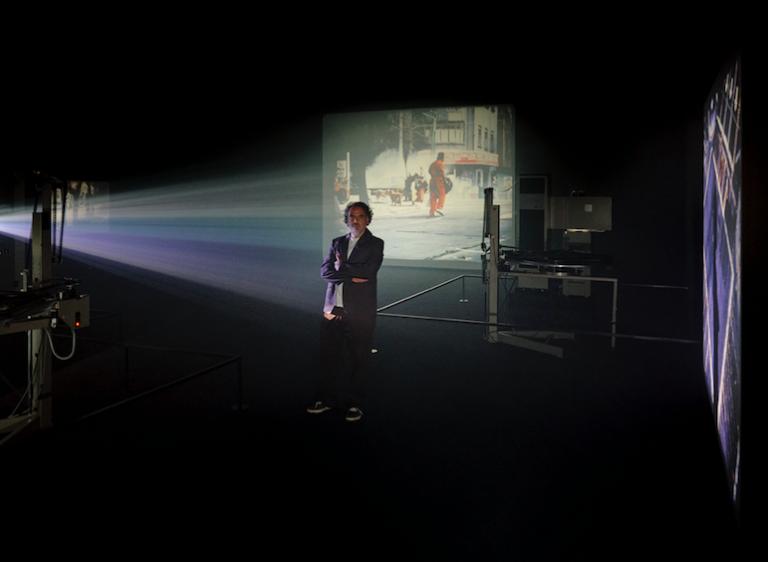
The Academy Award-winning Mexican filmmaker Alejandro González Iñárritu has marked his third collaboration with Fondazione Prada. Sueño Perro: A Film Installation by Alejandro G. Iñárritu is a multi-sensory exhibition rooted in the intersection of cinema and visual art, where old film reel catapults those who live in the digital era to a time of unpixelated beauty.
The first collaboration of Iñárritu with Fondazione Prada was in Seoul in 2009 and Milan in 2016 with the film programme Flesh, Mind and Spirit. Whereas the second collaboration occurred in Milan in 2017, with the experimental VR installation Carne y Arena, which was part of the official selection of the 2017 Cannes Film Festival and was awarded a special Oscar by the Board of Governors of the Academy of Motion Picture Arts and Sciences.
This third exhibition celebrates the 25th anniversary of Amores Perros (2000). Iñárritu’s legendary debut feature brings to light never-before-seen footage through a series of phantasmagorical projections, along with a photographic chronicle of the filmmaker’s nation at the time he shot his first motion picture. Wandering through Sueño Perro is like falling down a rabbit hole of wonder and self-discovery, as Iñárritu announces: “This is like a game I prepared for you to be surprised, to play with the shadow, the light, the screen.”
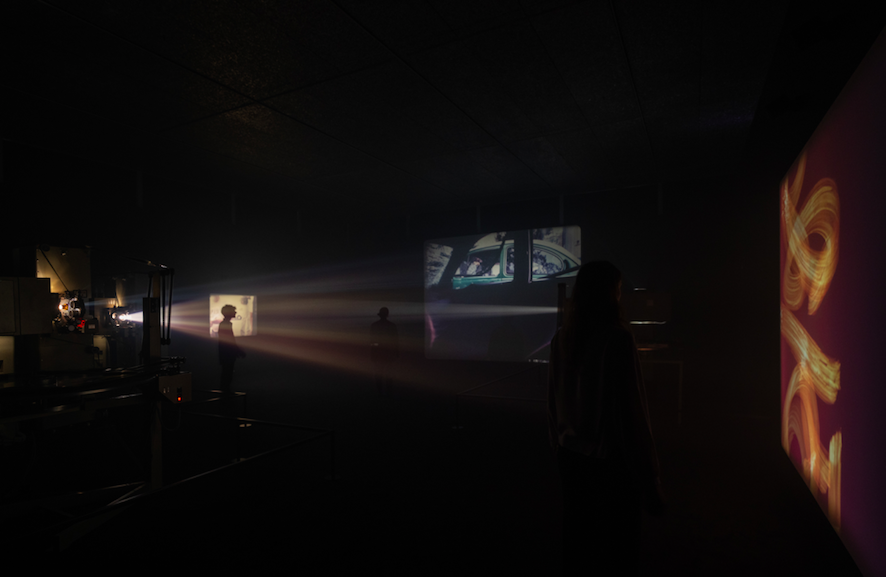
Thus, on the ground floor of the building, visitors explore a labyrinthine path immersed in a thin mist, illuminated by 35mm analogue projectors, casting a continuous stream of newly juxtaposed fragments from Amores Perros. These gritty vignettes, once abandoned on the cutting room floor and conserved for a quarter of a century in the film archives at the National Autonomous University of Mexico, capture the charged and interconnected sociopolitical realities of Mexico City, still relevant decades later. A soundscape produced specifically for the installation reverberates throughout, permeating the atmosphere, conveying a sense of oneiric mysticism.
This is a genuinely phenomenological journey that awakens the senses, that have so far been dormant in the age of artificial intelligence and digital over-saturation. Our sensory skills are reawakened by slates, celluloid scratches, light flares as reels flow, inviting visitors to step into a man-made, tactile and analogue landscape of memory, where the past flickers just out of reach.
Iñárritu expresses his reverential homage to the materiality of the 35mm medium and the effect he was hoping to achieve on viewers: “I wanted to make a very sensorial, physical experience of images that can be perceived also when you move around them and you can make your own narrative, by visiting the rooms in the order you choose. We cannot underestimate the power of the 35mm, which is closer to the way we see life than the pixels we use today, the same goes for the projector. For the young generations to see these amazing machines projecting the light, as when cinema was invented, is beautiful.”
This work of visual poetry that expresses itself through physical grain, flicker, and warmth has been the outcome of a team effort that lasted for almost 7 years, as the filmmaker explained: “It’s been a long process to explore what was within a film I made 25 years ago. I had shot at the time 1 million feet of reel and at the end of the day the film is 2 hours and 37 minutes, which is about 50 thousand feet of reel. So 1% of footage was used. I was watching with different eyes and interest the material when I was editing. I chose parts of footage that would serve the story. But today I wanted to serve the material flowing freely, with no narrative attached. The things I left out at the time, are very rich in a different way today. I can compare it to when a child is born and the placenta is left out, but there’s a lot of richness to be explored there too, in that ghost material.”
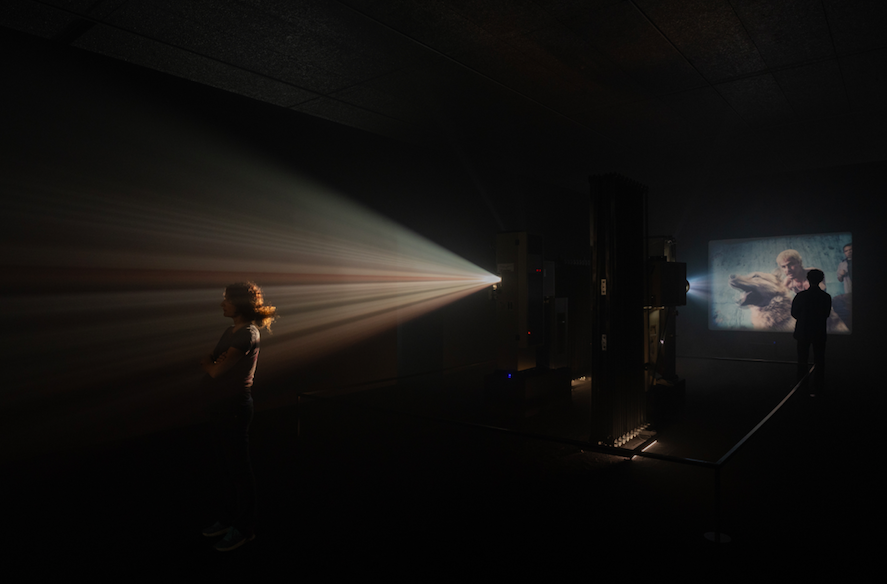
The raw power of these forgotten images allowed Iñárritu to reimagine their impact through a mosaic of celluloid and sound. However, he underlines how he does not get overwhelmed by nostalgia, but rather uses recollections to ponder upon our times. The Mexican filmmaker clarifies: “I think that when you get older, life starts to become cyclical with events that you start revisiting. There’s a sensation of separation in a kind of perspective that draws you to be more interested not in the truth, but in something that can be found beyond. In my last films I’ve been more focused on this, exploring my own reality. The person that made Amores Perros doesn’t exist anymore, that is why I called the exhibition ‘Sueño’ (dream). I don’t like to revisit the past, because it’s gone. I don’t like to re-cut the film into the ‘director’s cut’ — what’s done is done. It represents who I was. What I did with this exhibition was to visit the past in the light of the present, to leave something for the future. This is a new work, extracted from a previous work.”
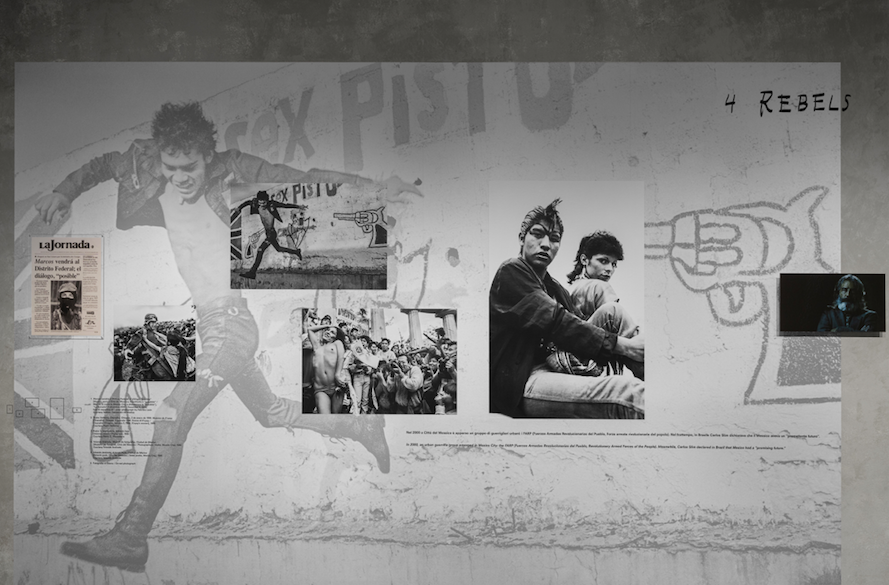
The second floor of the exhibition immerses visitors in a different kind of audiovisual display, conceived by the Mexican writer and journalist Juan Villoro. Titled Mexico 2000: The Moment That Exploded, it offers a vast display of press clippings and documentary photographs by Paolo Gasparini, Graciela Iturbide, Enrique Metinides, and Pedro Meyer, among others, selected by Pablo Ortiz Monasterio. This allows to grasp a sense of the cultural, social, and political contexts of chaotic and intense Mexico City at the beginning of the new Millennium.
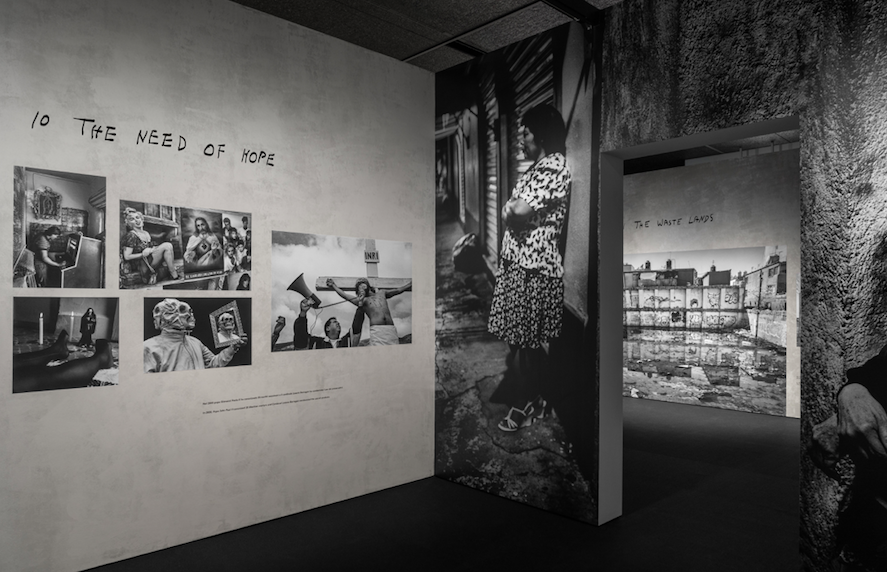
In this space, the mosaic acquires a socio-anthropological form that maximises all the flavors of the soul that Mexico has to offer. As Iñárritu underlines: “In Mexico we have the tradition of muralism, this is what this installation is about, as series of murals that reflect Mexican maximalism. We are not minimalistic. We like guacamole and spice. ”
At the end of the day, Sueño Perro allows us to explore the maximalism of the cinematic craft. We may ponder on the multitude of films that can be contained in a single motion picture. This mental exercise grants us the opportunity to time travel in the realm of moving images.
On the occasion of the exhibition Sueño Perro, Fondazione Prada’s Cinema Godard programme dedicates the section #Soggettiva to the filmography of Alejandro G. Iñárritu. In fact, on September 19th the director will lead a masterclass moderated by Paolo Moretti and introduce the screening of Amores Perros (2000). The September programme also includes 21 Grams (2003), Babel (2006), Biutiful (2010), Birdman (2014), and The Revenant (2015).
Sueño Perro premiered at Fondazione Prada in Milan — where it will run from September 18th 2025 until February 26th 2026 — and will be on view in prominent international institutions, including LagoAlgo in Mexico City (from October 5th 2025 until January 4th 2026), and The Los Angeles County Museum of Art (LACMA) in spring 2026.
The enduring themes of love, betrayal, and violence — part of the filmography of the Mexican Oscar-winning director — find a state-of-the-art mise-en-scène with Sueño Perro: A Film Installation by Alejandro G. Iñárritu. As stated by Miuccia Prada, President and Director of Fondazione Prada, “With this project, we aim to open new perspectives on Iñárritu’s work and on a film that, from its very start, combined the force of realism with the density of symbolism. Twenty-five years after it was released, Amores Perros continues to speak to the present and to capture, with visual and emotional power, the full complexity of the world we live in.”
Photo Credits: Fondazione Prada – Cover photo: Marta Marinotti
Check out more of Chiara’s articles.