

@Courtesy of Warner Bros.
Q: This movie was quite a journey. You worked on it for several years, you wanted some big car chases. At what point in the journey did you feel like, “Okay, I locked it. I found the story. I know what this is”?
Paul Thomas Anderson: I never felt that way. I felt that we had more to get started with than less to get started with. I might’ve been noodling around with this and writing it for 20 years, but Benicio came in to do his sequence and we wrote the best sequence in the movie in a day and a night at dinner, really. So it’s always evolving. We have our premise, we have our story points, we have our characters, but there has to be room for discovery, within reason. We had enough foundation and enough emotional plot work to get gambling, to go to the table and start playing.
Q: How did you go about balancing those big action moments with some of the quieter character-driven moments?
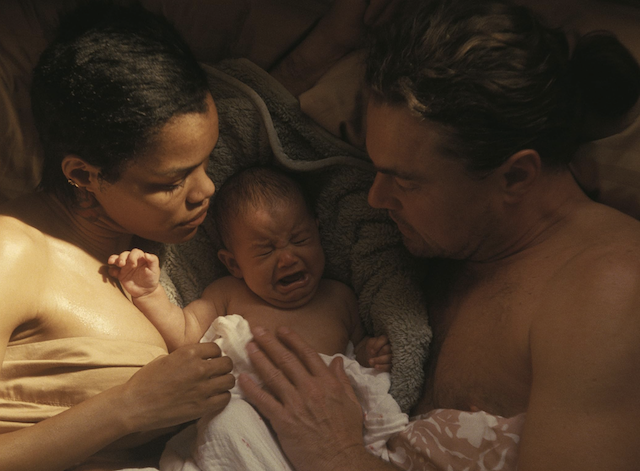
Paul Thomas Anderson: They’re all the same really. We started in a little cabin in the woods with Leo and Chase, a location so small that there could only be four of us to fit comfortably. We were doing the center of the story first, it was a magical way to start to get to know the two people who were going to be our central protagonists, the people that you’re going to root for in this film. Then in the afternoon we’d go off and start to get our feet wet shooting some cops chasing them. We just kept gathering momentum. We were led by our incredible producer and assistant director, Adam Somner, who has no shortage of experience doing large-scale action work, from Black Hawk Down to Gladiator. He knows how to do this stuff. Wherever I might’ve been inexperienced, he was incredibly experienced, he knew how to move all these pieces around. When you do a scene at a kitchen table, you can walk away very satisfied that you’ve done a great day’s work. It’s different when you’re out there on the roads, shooting cars, driving fast. It’s not as satisfying, but it’s pieces that when you get to the cutting room will hopefully cut together and be very exciting for an audience.
Q: Did you learn anything new about yourself as a filmmaker, making one of those big action sequences?
Paul Thomas Anderson: I learned that it’s a lot more boring than it looks when you see it on the film. It certainly doesn’t give you the intense satisfaction that it does working hand-to-hand in a scene with actors, that’s the most fun that you can have and the most satisfying.
Q: What was it about the role that drew you to it and said: “Yeah, this is going to be the role. This is going to be the movie where I work with Paul?”
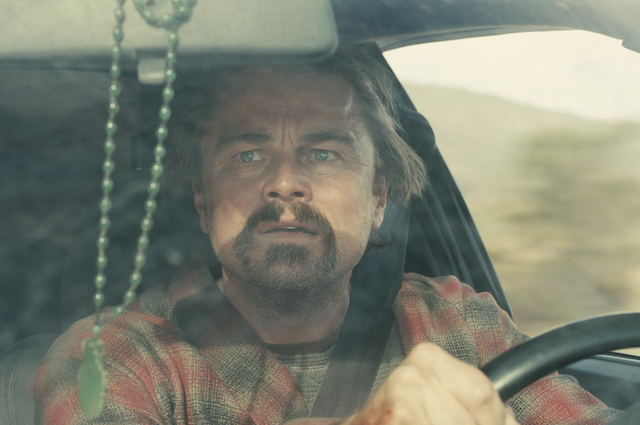
Leonardo DiCaprio: I guess the humanity of the character in a strange way. You have an incredibly flawed protagonist and unexpected choices. But the character evolved as the movie went on. We put ourselves right up to the point of a very dramatic turning point in the movie and made real decisions on the spot. I love the premise of somebody that you think is going to be this hero, that’s able to resurrect and use the tools from his revolutionary past to become the ultimate hero. But his real heroism is the idea that he just keeps relentlessly moving forward to protect his daughter. I love the idea that you also expect that this character’s going to use massive espionage skills, but he cannot remember the password. It’s just a brilliant setup for what is ultimately a very flawed hero dynamic. It was a blast to make the movie. It was great to go on that journey and discover it as we went along.
@Courtesy of Warner Bros.
Q: Is it more freeing as an actor to play someone who’s messy and disheveled?
Leonardo DiCaprio: I would definitely say so. I would lie if I didn’t say that The Dude was an influence on this character in a modern-day context. I was also talking about Dog Day Afternoon with Pacino, that fanaticism that he has to get back and save the person that he loves. I love this slice of life where you find Bob and Willa at the beginning of this movie. It’s not this utopian happy village set up. It’s a father struggling with his daughter. She’s of a different generation, he’s completely disconnected from her. He’s a disaster of a father, and then all of a sudden he’s put into this wild circumstance to try to save her. It’s just a beautiful bit of writing.
Q: How does it feel for your first feature film role to be under the tutelage of Paul Thomas Anderson against these veterans of the industry?
Chase Infiniti: More than anything, it’s just an honor. They were all so kind and so helpful because I was very nervous, especially going into my first day. They all created a space where I felt comfortable to explore with them and show up for the scenes with them. I’m just overall grateful for the experience and everyone’s help.
Q: How did you channel that energy into your performance instead of allowing it to overwhelm you?
Chase Infiniti: It helped me focus on the scene more because I wanted to make sure that I was a great scene partner for Leonardo DiCaprio, Regina Hall, Sean Penn, Teyana Taylor, Benicio Del Toro. I wanted to make sure that I showed up for them in the scene. So I was honing in on that energy as opposed to letting my nerves take advantage of me.
Q: Was there a note that Paul gave you that helped unlock the character for you?
Chase Infiniti: The most helpful thing Paul told me was just to not think about it and do it again, to trust my instincts with it.
Paul Thomas Anderson: I think that Leo and I were more nervous than she was, honestly.
Leonardo DiCaprio: Just from a third party being able to watch these two, it was almost like a coach and a boxer. They had a shorthand and I was watching off camera as these two, Paul would be like: “Do this a little…” And she would. They had this unspoken trust in one another that was magic to watch.
@Courtesy of Warner Bros.
Q: You said this was the quietest role of your career. I’d love for you to expand on that a little bit: what was the challenge that brought you as an actress?
Regina Hall: Paul told me it was a grounding character. For me it was really important to just figure out the importance of the role that Deandra serves in the film with Willa and with the story as a whole. Paul is able to create worlds in his films that you become immersed in when you’re watching, and yet they have this quality that feels so humanistic, so real, so grounded. And so I think that’s what Deandra serves. She has to take this beautiful little girl and do the best she can to keep her safe. She tries to keep the French 75 grounded in the beginning, and that’s how she serves the ultimate goal of the movie, which is to save Willa.
Q: Sean, can you talk about discovering the character and how did you work with Paul to figure out who this guy was and how you were going to become him?
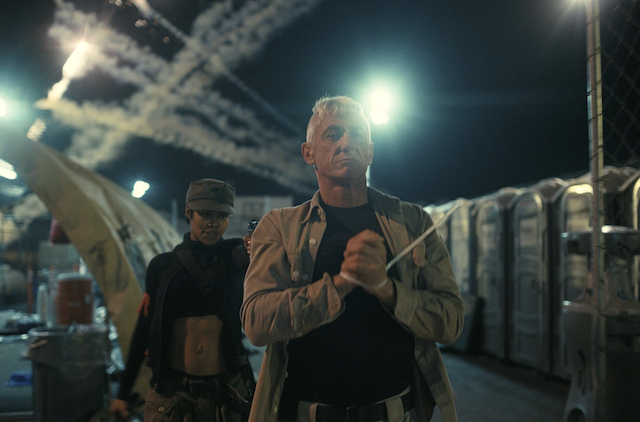
Sean Penn: When I read the script the first time, I started giggling at about page three and then I didn’t go very many pages where that didn’t happen. It occurred to me having worked briefly with Paul, but knowing Paul a long time and having great faith in him, he would find the tone and the approach. You find which instruments he wants around and pay attention, and he’ll give you either those little looks or he’ll say, “I’m going to pretend I never saw that.” It’s always very clear. Then you move on to another approach. There was music I could hear in the script when I read it and I danced to it and he monitored the energy ups and downs. It turned out the way that we worked.
Q: Do you draw inspiration from a name like Perfidia Beverly Hills.? She has so much conviction in it: were you influenced by what you bring to the performance based on her name?
Teyana Taylor: I love the name Perfidia. Paul played a Spanish song called “Perfidia,” and they pretty much talked about how she wasn’t shit. And I was like, “Oh wow, this song is great. I love it.” I drew inspiration from that because when you hear this record, she is selfish and she is a massive manipulator, but at the same time, she’s also really badass. We don’t always agree with the things that she does, but we see a woman in survival mode, we see a woman show up for herself, which is a rare thing because we’re forced to be strong. We’re forced to be all we got, especially as mothers. So to see a woman say, “I’m standing up, no matter the cost of it,” meant a lot. I drew that inspiration really from the song and the conversations that me and Paul had.
Q: How did you prepare for those different demands that the role presented you?
Teyana Taylor: I wasn’t prepared for the running. I wasn’t. The running whooped me, I must say. It really did. But what I loved about it is it put something in me. I had a point to prove, and I knew I wanted to get the shot done. I made a promise to Paul: “You ride with me, I’m riding with you.” The best preparation is just being there and getting a beautiful shot.
@Courtesy of Warner Bros.
Q: Benicio, was there something you learned about your character that helped you understand who he is and what he’s about?
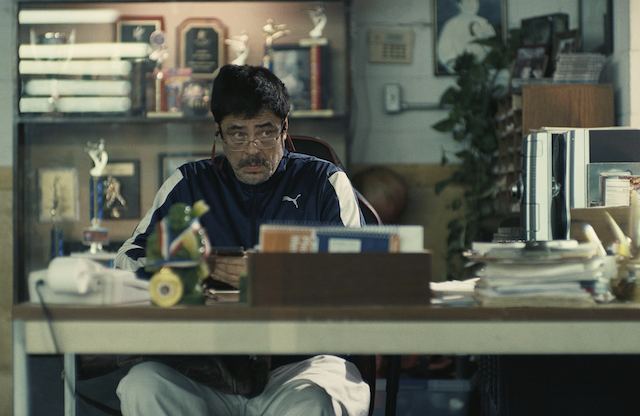
Benicio Del Toro: I learned that my character was a fan of Rocket Man. He takes a little piece with him when he does the selfie with him, a memento. It’s not hard for me to play because I’m actually a fan. I have to thank Paul for the part, but also for being in a movie with two of my oldest heroes in Hollywood, Sean Penn and Leo. So I’m a fan, and that was something that I got and I just ran with it.
Q: Can you talk about working with Leo? He’s high up in this anxiety driven state, while Sensei is just chill ocean waves. That’s a great contrast between the two of you in more than a sequence. Could you talk a little bit about filming those?
Benicio Del Toro: I take it from the writing. Paul wrote the line, ocean waves, and somehow I understood it. Leo brings tons of energy, so I just danced with it and stayed. I was the anchor in some ways, even though the scenes were packed with movement. We’re going through my house and everything is moving. So it made it a lot of fun. I had very little time, I came in when they’ve already shot a lot, I didn’t know what to expect. Leo is extremely funny off camera, he’s funny on camera, but he’s very funny off camera and Paul loves a laugh. It just made it really relaxing and really fun to try and do things, take chances and come up with ideas and throw them there. Paul allowed me to throw some things on the table and it was just joyous. Paul loves the process of the actors, he enjoys the actor’s process.
Q: Leonardo and Chase, was there a specific key that unlocked your understanding of your characters and their relationship dynamics?
Leonardo DiCaprio: We talked about these chemistry reads that we had on, but we knew that the central heart and the core of the film was Willa’s journey. This film rides or dies on her performance. Needless to say, she did a phenomenal job. Paul doesn’t really do an audition process. The idea of this generational gap between the two characters in those chemistry reads really came to fruition. Here you have a guy that’s completely disconnected from the modern world in all respects, and of course we’re going to find him a third of the way through the story having an argument with his daughter. He doesn’t understand her, but they’re all they have. These workshops that we had, we secured who these people were.
Chase Infiniti: Just us getting to know each other in general was a big help. And just having conversations with Paul, like Leo was saying, those are probably the things that helped us. I feel like I can’t say anything to top what you just said.
Q: Can you share with us the most interesting and fulfilling experience you had working with this cast, and the most challenging part of working on this film?
Leonardo DiCaprio: It was the camaraderie that we all felt, being able to have this opportunity. I just felt immediately like a team and the ease of being able to work together. The malleability, the flexibility that Paul creates as an ecosystem on set, the ownership that he gives us as our characters to pivot and take a turn. Oftentimes with writer-directors, they’re stuck in their own head for exactly how they want a film to be, especially if a film like this, Paul’s been thinking about for 20 years. With these workshops, with the ability to work with the French 75, with Benicio coming in, we took turns. We went on different avenues because he felt, “I’m going to wait until these actors come in, embody the characters, and we’re going to go with the flow.” The location scouts that he did beforehand and our ability to work with non-actors: there were real shop owners, real soldiers, real correction facility people, corrections officers, nurses. It almost felt like doing a documentary simultaneously, because those locations informed the narrative and the culture of what this movie and who our characters were.
@Courtesy of Warner Bros.
Q: Is there a most challenging part of working on this film?
Paul Thomas Anderson: I think back to the experience, it was just joy to go to work, frustrating to go to sleep and exciting to wake up the next day for another day’s work. It was long. I suppose I could try to find something challenging about it, but to get to the end of the experience I felt like we left it all on the playing field. It is a very satisfying feeling.
Q: You’ve portrayed very grounded characters in past productions. Does Sensei Sergio share any similarities with your previous roles?
Benicio Del Toro: Yes and no, I guess. Every character is different because it’s a different story and you’re working with different actors. I do think that there is maybe a connection with maybe characters I’ve played before. I played Che Guevara, there’s a little bit of that. But every character is different. Every story is different. Every director is different.
Q: I admire the way you create a very specific physicality for the characters that you play. What went into your choices for Perfidia?
Teyana Taylor: It took a lot of conversations between me and Paul to build Perfidia’s layers and create this color palette. That’s how I like to work when I’m diving into a character. What is her color when she’s upset, what is her color when she’s selfish, what is her color when she’s seductive, what’s her color when she’s a baby mama? That’s how I get ready for it, it really helps me. It was also easy to tap into the fact that Paul was shedding light on postpartum depression, which is a very, very real thing that is not often spoken about.
Paul Thomas Anderson: I want to say something about her preparation: she’s really good because she’s a director, she knows when an accident has happened and it’s a gift, and you got to listen to it. We were shooting some camera tests and she came in, she had broken a nail and she had a band-aid. We were shooting with that, we both fell in love with it. That’s not a broken nail. That’s a gift. That’s it. That happened right there. Her eyelashes had been messed up. We had one bad eyelash. She said, “Well, that’s it too.” You have a plan, but you have to be ready to receive and look for the opportunities, because they’re there in front of you if your eyes are open. I found that very early on with Teyana. She was thinking like that. And that was the key to working together.
@Courtesy of Warner Bros.
Q: Sean, you have some really great moments with her early on in the film. What was something that she gave you as a scene partner that really helped inspire you and bring you closer together?
Sean Penn: Fierce is her, there’s nothing she can’t do and do quickly. It was almost a sporting event. This was also true with Chase: when you talk about accidents, it wasn’t on my mind that she was going to escape my grasp in that scene when I’m running after her. Just wicked instincts, great instincts.
Q: Chase, did it feel like a sporting event? Did that feel the same way, that scene? What was your perspective on it?
Chase Infiniti: I had an idea that the entire run was going to be one because I had done about four months of mixed martial arts training ahead of time, but I didn’t anticipate the nerves of walking into scenes like that. But that was just another added plus that I got to work with.
Q: What are your challenges and key elements you had to nail it to become Willa?
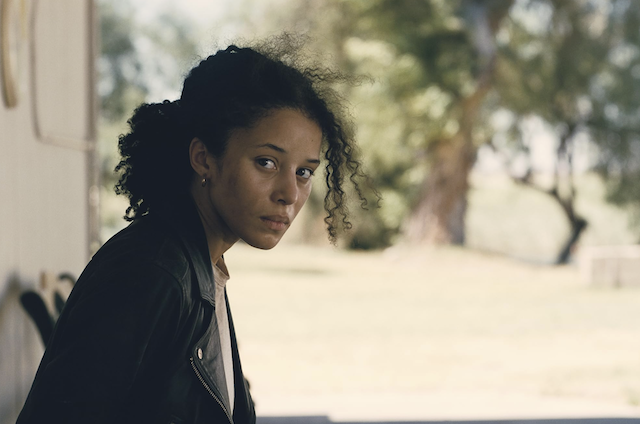
Chase Infiniti: I wanted to hone in on her feeling of not fully knowing a bit of her story. That, regardless of any relationship that she has with a character, any storyline thing, that really helped me drop into her, as opposed to just relying on the martial arts training, even if that’s a physicality that really helped. But honing in on that and having those conversations with Paul to understand Willa, from how he wrote her to bringing her to life, those two things were very helpful.
Q: Was there something that inspired you working with Chase as a feature film debut?
Regina Hall: Chase is delightful. The first day working with her and the first day that we actually read together, she was so special. She maintained such an innocence that was so important for Willa because you want to protect that. You want to save, you need the girl that everyone wants to save. But she’s also a tough girl. There’s the other side, and you have to believe that.
@Courtesy of Warner Bros.
Q: Many of your films explore resilience and human struggle. How does One Battle After Another continue or challenge that theme for you?
Leonardo DiCaprio: It was only until the last few weeks that we realized Bob’s heroism and his sheer act of moving forward, of not giving up. I love that concept, it’s only now I really grasp the power in that, of being there for his daughter, and her being affected by his choices. The fact that his past is coming back to haunt him, and now it’s passed on to the next generation. That trauma. Paul wrote a beautiful ending in that respect, of what this next generation’s going to have to deal with. Everything about this movie is made to have that communal, theatrical experience happen, and I hope that people go see this movie in the theaters. It’s shot in VistaVision. It’s made to have that communal experience with a bunch of other people in a theater.
Q: How would you describe the experience of Vistavision, and how that enhances the experience of watching it in a theater?
Paul Thomas Anderson: Well, 3D without the glasses. It’s big, it’s present. It’s a wonderful format that can do both things. And by both things, I mean it can get you inside the actor’s faces and their performance in a way that most traditional cameras can’t, and it can throw you into an action sequence in a way that most traditional cameras can’t. It’s a larger camera negative. It was good enough for Alfred Hitchcock in North by Northwest and Vertigo and all these terrific films. It was good enough for John Ford in The Searchers, all these fantastic classic films that use this format that we not only associate with brilliant performances, but true cinematic experiences. So that’s the technology that we were working with. As ancient as it is, it never should have gone out of style, and it’s really nice to see it back and resurging. The point of it is to see it gigantic and loud because it’ll deliver.
Q: Can you talk about some of the themes that are explored in this film? What is this film truly about, for you?
Regina Hall: There are so many themes. What Paul is able to do is to take themes that could normally be controversial, certainly divided. He can find humor in the absurdity of things, which he did in this. It’s about love. It is about family. It doesn’t have to be a blood family, although this one exists. The French 75 is a family. Connection, commitment, revolution.
Teyana Taylor: I agree with Regina. I think it’s funny. I think in the theater when you’re watching it, you get to laugh with us, you get to cry with us, you get to feel with us. It’s very raw, and I hope that this movie really creates a lot of healthy dialogue, and a lot of necessary conversations that need to be had.
Q: But did you scout locations with the car chase in mind, or did you come up with the idea for that scene after discovering the location?
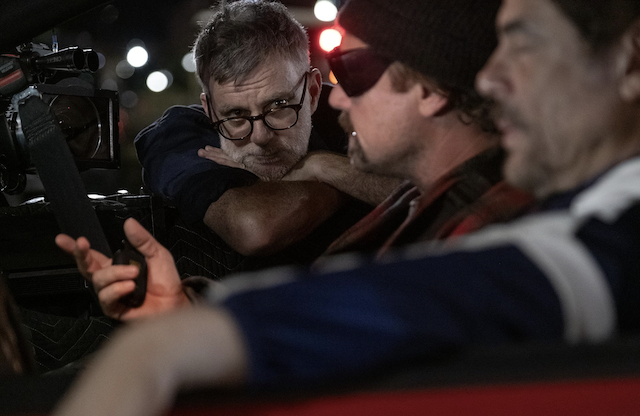
Paul Thomas Anderson: We had our heroes out on the road, and we knew we were in the desert. That’s where the journey has taken us, and that’s where the journey is going to culminate, and that’s where it’s going to end. We ended up quite close to the finish line of starting to film, we ended up about an hour east of Borrego Springs, right near the Arizona border. You could feel collectively in the car that we were all excited by this stretch of road. The best part of the idea, without giving too much away, is that it created the most important thing for the story, which was an opportunity for Willa to take advantage, and take control of her story, and take the high ground. It’s very thrilling going through those roads and everything else, but the best part is the opportunity for her to turn the tables. That’s the part I love about it most. I think that’s why it resonates.
Chase Infiniti: Doing that car chase sequence was really fun to do because tracking emotionally where Willa starts, and then ends up, was very fun to find. It was a fine line that I had to tread, with Paul we had our little moments in between conversations of tracking it together, but finding that line was very cool.
Q: Could you please talk about how you use music in your films? Is it always both the song’s ability to invoke time and place?
Paul Thomas Anderson: I work with Jonny Greenwood, it’s an ongoing collaboration. He was involved from the very beginning, and had this script for a long time, so he’s been writing music. The important part is for the actors hearing the music. We would be able to play the music that he was writing along with the images. So everybody starts to get a sense and understanding of the tone. It helps push us all along on a similar journey. It makes it exciting, too. It’s always helpful to have something like music to grasp onto. We all can understand it, we can all feel it, what the rhythm is, what the melody line is. Jonny’s music is always unique and always special. We had that music down in El Paso, that long piano piece. We would watch dailies, and I would play that music along with it, what the tension was going to be, and what we needed to sustain. So it’s a tremendous luxury to work like that, and it’s because Jonny’s usually steps ahead of us, responding to dailies that he’s getting, or the script, or anything else.
If you like the interview, share your thoughts below!
Check out more of Adriano’s articles.
Here’s the trailer forOne Battle After Another: