

©Courtesy of Netflix
“Alice in Borderland” : Two reluctant allies must compete in brutal games in a parallel version of Tokyo, which is the main focus of the popular Japanese series. Each game is represented by the suits of playing cards to indicate its difficulty and how much time players can stay in Borderlands.
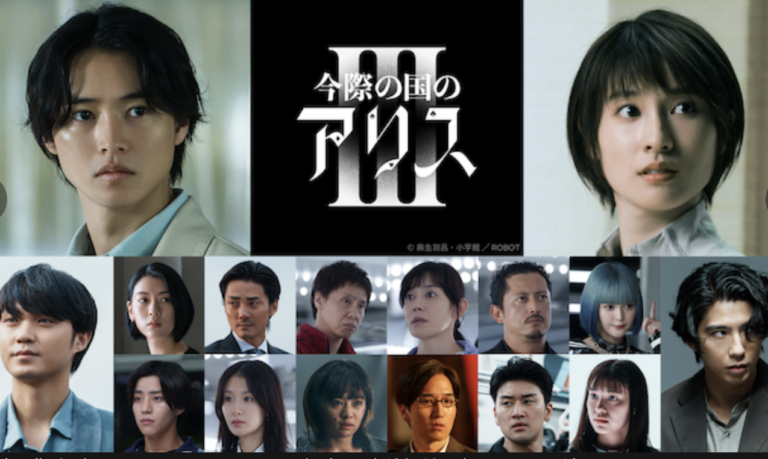
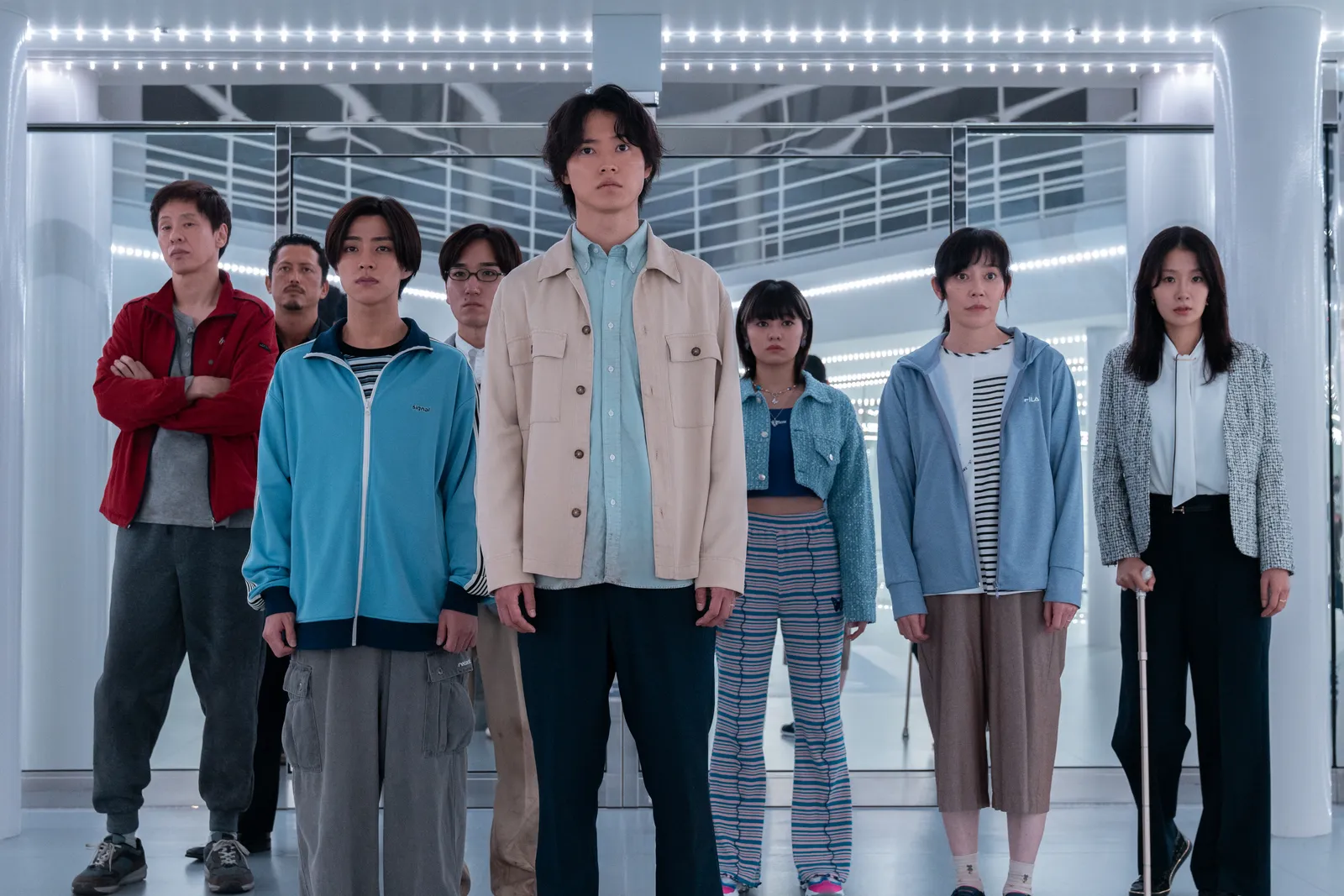
The third season of “Alice in Borderland” will dramatically shake up the main cast, with several new stars joining in confirmed and undisclosed roles. However, lead Kento Yamazaki will be back as gamer Ryohei Arisu as well as Tao Tsuchiya as his love interest and ally in the Borderlands, mountain climber Yuzuha Usagi. Also returning will be Hayato Isomura as Banda, Katsuya Maiguma as Yaba and Ayaka Miyoshi as Ann.
Netflix’s official synopsis for the new season reads: “After Usagi is abducted and left unconscious by a mysterious scholar obsessed with the afterlife, Arisu returns to the perilous Borderland to save her. “Teaming up with new players, they must face the yet-unseen Joker stage in a desperate bid to find a way back to their original world.”
 ©Courtesy of Netflix
Q: The ‘Alice in Borderland’ series is presented as a game and unfolds its story. Yet, similar themes — human conflict, psychological warfare, camaraderie, and hostility — have repeated throughout history. What do you believe is the factor that attracts so many fans worldwide to this series?
Shinsuke Sato: The subject matter is the fundamental questions of life and death, the decisions made at the very edge of survival—whether to live or die. Should you sacrifice others in order to save yourself? Is it acceptable to survive on your own and sacrifice your friends? Without survival, nothing can begin, isn’t it? Throughout this series, the protagonists are continually faced with ultimate choices, make their decisions, and persevere.
The act of surviving becomes a source of guilt. The protagonists struggle and move forward within that narrative as they are constantly exposed to these truly ultimate questions about the essence of life. This resonated deeply with a theme that is universally shared by people all over the world, in my opinion. I believe that this death game story from Japan truly touched on something universal in terms of its theme.
Q : The series provides us with a gradual understanding of the conditions in this ‘Imawa no Kuni (Borderland)’ world, such as how individuals arrive at different times, plants grow at different speeds, only vintage cars operate, and organisms decay faster. What new information about this world should we pay special attention to in the third series?
Shinsuke Sato: Well, regarding the rules of the world, we didn’t establish any new, special rules specifically for Season 3. We structured it so that a new journey begins within the existing rules and the world we’ve built up until now. So, we didn’t create new rules, but within that framework, we crafted it so that problems never faced before and stories that couldn’t have happened before would unfold.
Q: Alice and the Rabbit save each other’s lives, provide food, hunt prey, and in Season 2, they even soak in hot springs together. Their relationship gradually deepens. What aspects of their development do you find particularly compelling in this Season 3?
Shinsuke Sato: The original work covers up to Season 2, but there are a few hints in the source material about elements that could be considered a sequel. Specifically, it mentions that Alice and the Rabbit got married.
While this isn’t depicted in the original material for Season 3, there is actually a single episode serving as a sequel where Alice plays a small game. Within that episode, it was revealed that Alice and the Rabbit were married. Our Season 3 builds upon that setting. So, while Seasons 1 and 2 focused on the gradual growth of their relationship from their first meeting, this season takes place right after they got married and started living together. Amidst that, they must return to the “Imawa no Kuni(Borderland),” setting the stage for an entirely new story. Up until now, I think the two of them had little to lose. This time, however, the story progresses amid the fear that they might lose various things—their relationship, the happy married life they dreamed of, and more. That’s the completely new aspect here.
©Courtesy of Netflix
Q: In Series 1, there’s a scene where Alice gets punched by Aguni, and she says, “Don’t you dare underestimate a living human being,” then fights the martial arts faction and Aguni. From that moment on, I personally felt like Alice started to become the true leader. From the director’s perspective, how do you think Alice has grown throughout the seasons so far?
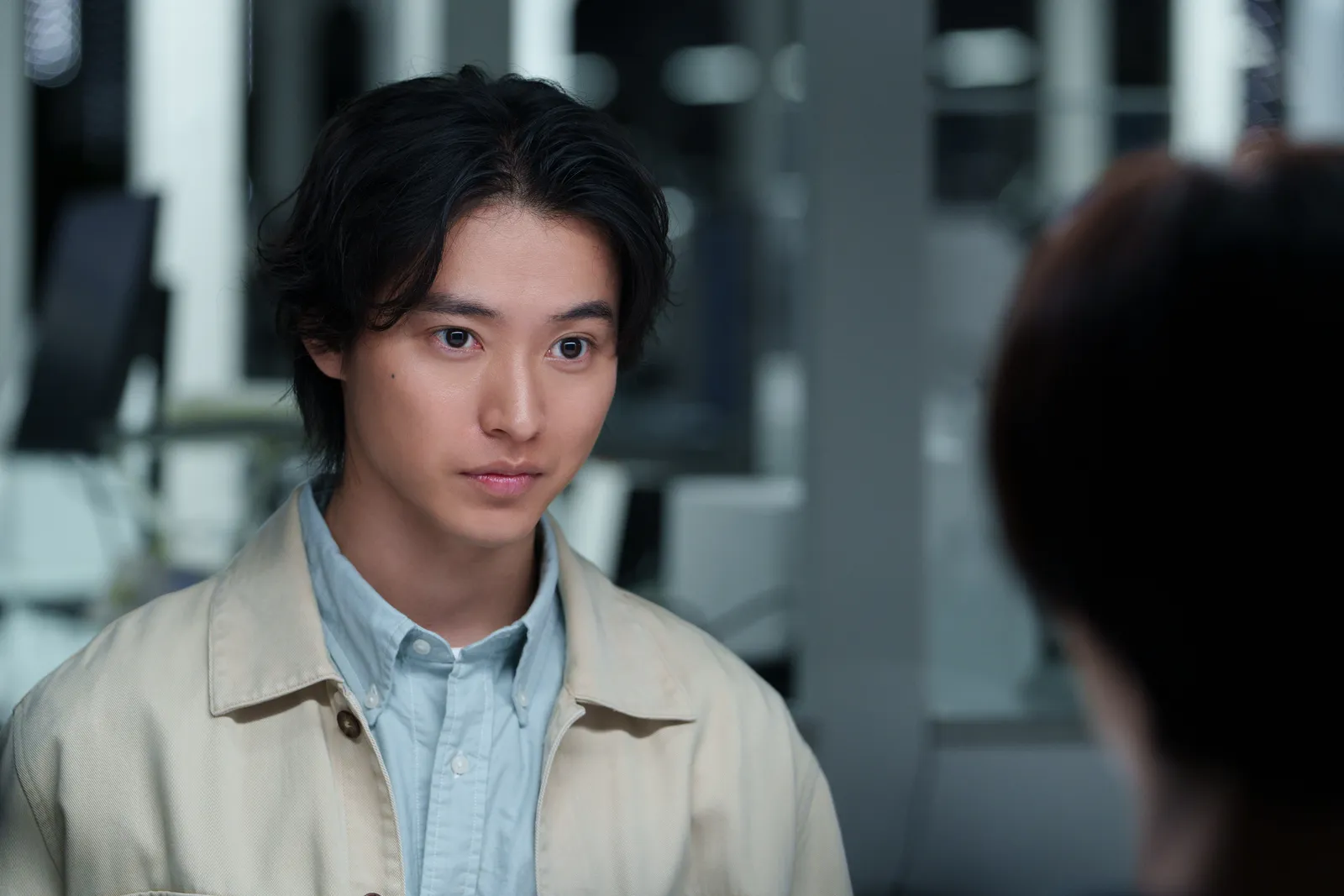
Shinsuke Sato: That’s right. At the very beginning, he was just an ordinary college student, a young man living within a moratorium. But then, perhaps not entirely by his own design, he ended up bearing various burdens. By the end, he had found his own answers to questions like why we live, or how we live alongside others, and he survived this game. I think that journey was depicted up through Season 2. That growth, depicted slowly and carefully over the long two seasons, was really Alice’s story of growth, I think.
It was a story where overcoming one problem only led to new challenges arising in different situations. It wasn’t that overcoming one major obstacle, like his declaration during the battle with Agni, meant everything was resolved. By Season 2, he was still tormented by his trauma and other issues, barely managing to escape that world in the end. I think it depicted his gradual growth as a human being through overcoming repeated hardships.
So, it seemed like he had overcome many problems. However, in Season 3, he loses all memory of it once again. That’s the interesting part. When he returns to reality, all memories of the “Imawa no Kuni(Borderland)” vanish completely. He undergoes personal growth again, maturing as an adult. He works as a counselor to help mentally ill people and disaster victims, or he chooses the path of marriage, seeking to be blessed with new life.
Having grown toward these new paths, he tries to live as an ordinary person. But then he returns to the “Imawa no Kuni(Borderland)”, and all his past memories come flooding back. Only this time, he’s not facing them as someone who’s already overcome them. Instead, he’s confronted with new problems—problems he must overcome, or the fear of losing the happiness he’s gained. It feels like he’s now facing a new kind of struggle.
Particularly this time, since the Rabbit faces problems he hasn’t resolved before, it leads to the question of how to save him—not Alice overcoming it herself, but how to help someone else overcome it. Right now, Alice is being used as a symbolic character, but I think the ultimate theme here is something many people face as they live their lives: how to clear the successive problems that come their way. I feel like this work is depicting that very thing.
Q: Within the series, the deserted Shibuya Scramble Crossing evokes films like 28 Days Later…, while the interactions between Chota and Karube bring to mind Stand by Me. Are there any American or foreign films that influenced the director—perhaps not directly, but where you feel their influence is reflected in this series?
Shinsuke Sato: Honestly, I never really had a specific film I watched or studied intently. I get asked this all the time—“Do you have any particular goals?” or “Is there anything you specifically studied?”—but the truth is, I don’t. That said, I grew up watching American films, and living in Japan, I was also exposed to a lot of European and Asian films. Back in the 80s when I was a film buff, or rather, films from before my high school days—I was baptized by Hollywood blockbusters. But it wasn’t just that. In Japan, there was the mini-theater boom, where European and Asian films became a huge craze.
I was exposed to those too. And Japan has so many classic, incredible films. I’ve lived my life watching all of these, so I suppose you could say they’ve all blended together into one. That said, you’re absolutely right that there are many films depicting a world where everyone has disappeared. The way they’re portrayed varies quite a bit depending on the era. We did analyze those, researching them with the art department, figuring out how we could realize that vision within our own work.

If you like the interview, share your thoughts below.
Check out more of Nobuhiro’s articles.
Here’s the trailer of the film.