

@Courtesy of Netflix
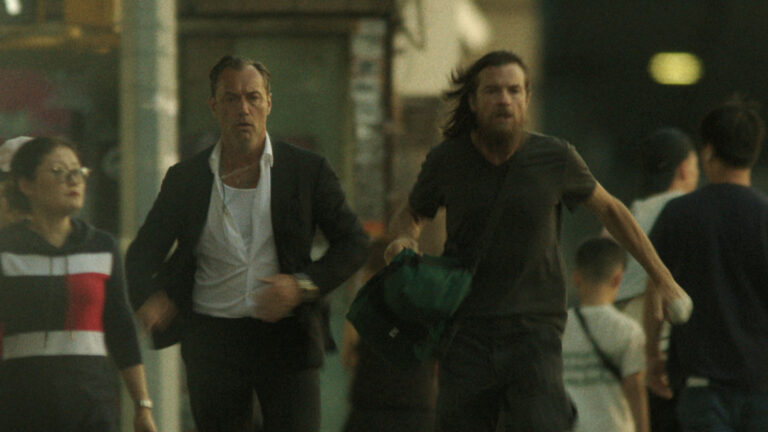
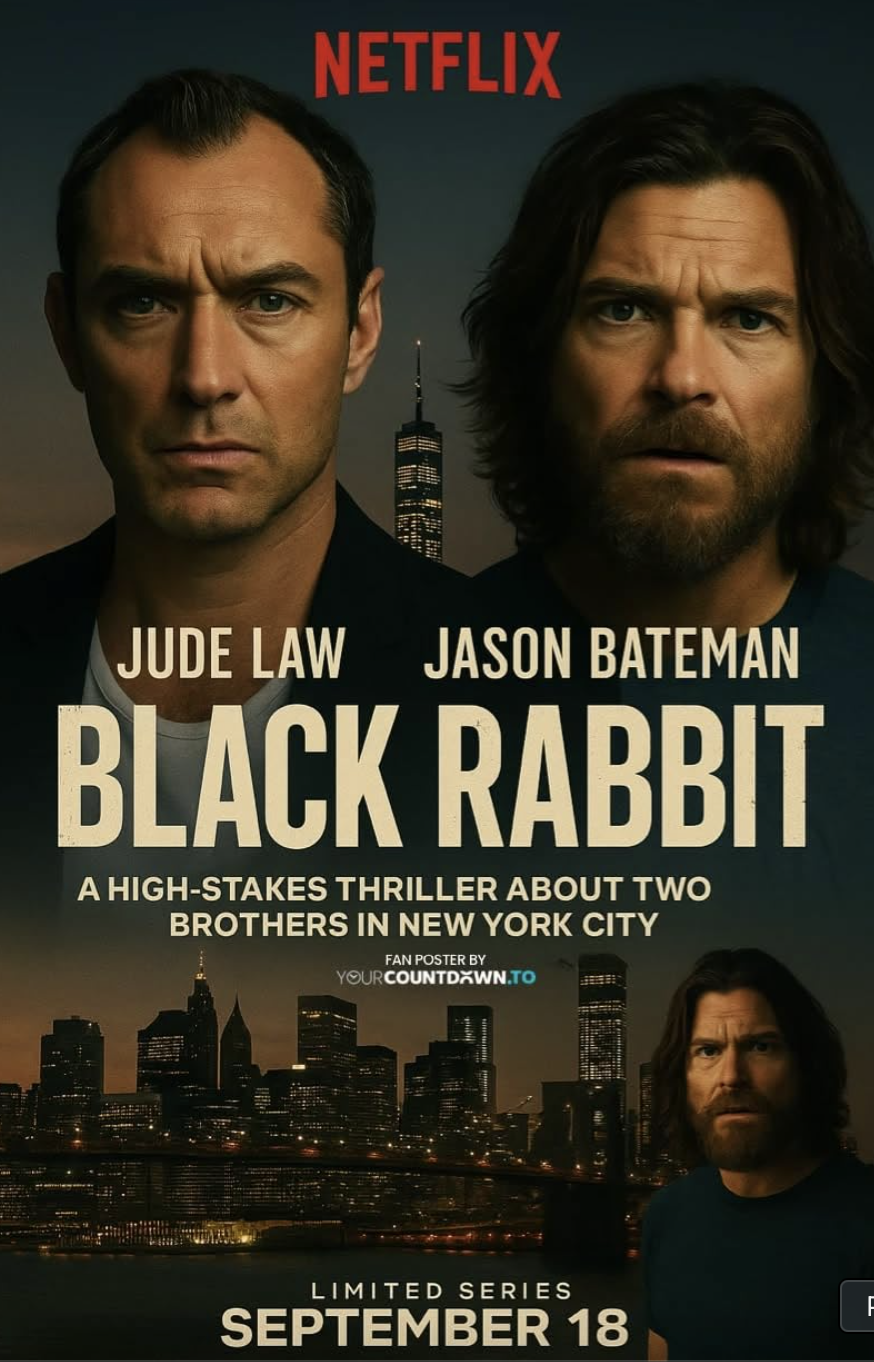
Black Rabbit : When the owner of the hottest restaurant in New York allows his troubled brother to return to the family business, he opens the door to old traumas and new dangers that threaten to bring down everything they’ve built.
Creator : Kate Susman, Zach Baylin.
Executive Producer : Zach Baylin, Jude Law, Jason Bateman, Ben Jackson, Michael Costigan, Andrew Hinderaker, Justin Levy, David Bernon, Erica Kay, Kate Susman, Zac Frognowski
Network : Netflix
Rating : TV-MA
Genre : Crime, Drama, Mystery & Thriller
Original Language : English
Release Date : Sep 18, 2025
 @Courtesy of Netflix
Press Conference With Stars Jude Law, Jason Bateman and Creators Kate Susman, Zach Baylin
Q: The series had its premiere at TIFF, congratulations. What was it like to watch the episodes with an audience at the festival?
Jason Bateman: It’s very nice. We’re making it for an audience, so it’s always nice to see how it plays for an audience. In Toronto they seemed to love it a lot. We also did our premiere in New York. They also seemed to eat it up, and thankfully found some of the comedy that we tried to hide in there a little bit, which is a good little counter-balance to the danger, the grit and the grime that runs throughout it.
Q: New York is a big part of the show, you guys shooting on location really elevates the tone and the feel of the series. What are the challenges and the benefits of shooting in New York?
Kate Susman: You get so much bang for your buck, many of the scenes we’re out really running and gunning on the streets of New York. The people and the noise and the grime and the cars and the cabs and all that, you couldn’t build that anywhere else. It gives a real richness, adds to the suspense of the show. But it’s challenging of course. It was a big shoot, but we feel really lucky we had an incredibly nimble team. Everyone is pros and willing to dig in. We feel very lucky to have been able to shoot in New York. It doesn’t always happen that way, everyone didn’t take for granted that we really got to use real locations. Our location manager, Paul Eskenazi, made everything happen for us that we dreamed of.
Zach Baylin: It was really important to the authenticity of the show, to feel that the characters who Jason and Jude were portraying were really grounded in the specifics of, you know, that they grew up in Coney Island. We were able to shoot at a great bar in Coney Island on the boardwalk. Abbey Lee’s character, Anna, we talked a lot about what neighborhood did she live in? What would her commute be? What park bench would she stop at on the way back from work or the grocery store?
Q: Jason and Jude, did you ever think you’d be walking along the highway in New York in your underwear?
Jude Law: It was something I’d always hoped would happen.
Jason Bateman: It was a box checked for us. It was fortunate that it was a little bit off the highway. It wasn’t as scripted, and it was kind of a nice, warm night. So, it was convenient for us to be in our underwear.
Q: What was the genesis of Black Rabbit? What topics and themes did you want to explore with the project?
Zach Baylin: We lived in New York for almost 20 years, a lot of our time while we were there was spent at restaurants and research in bars for the show. We wanted to try and explore both the ambition of a place like Black Rabbit, and the veneer that is the circus that gets put on every night. The kind of people who try to mount that circus every night. That’s where Jake and Vince were born out of. We also were very interested in trying to explore this familial relationship. Stories about brothers are very important to me, classical narrative that I think everyone can relate to. There was so much there to unpack that we were excited about.
 @Courtesy of Netflix
Q: Vince and Jake’s relationship feels like a push and pull between love and rivalry and survival. How did you guys work together to develop their dynamic as brothers?
Jude Law: So much of it was on the page. We were very lucky to be involved, both of us, as producers early on. We were fortunate to be working with a team of writers who were very inclusive. We had time to share ideas and have input that detailed their relationship. That dynamic was very much at the heart of the story. As soon as we sort of started putting it down and acting it out, it felt very comfortable between the pair of us as actors. It felt like it was a great map, a great script. We both like the opportunity to play within that and push each other. Once you get comfortable in that, there’s no end as long as it can withstand you pushing at the edges, it keeps growing. That’s what’s so interesting. It’s not like they’re best buddies or new acquaintances. They go right back. They’ve known each other all their lives, and that’s at the heart of why they put up with each other to the lengths that they do.
Jason Bateman: Jude is made of the stuff that can be helpful when you’re having to play scenes where we are screaming at each other. If you have half a heart in you, you feel weird and bad about screaming about somebody in a very believable way. But if you have a great connection with somebody, you know you’ve got a lot of bank with them, and you don’t feel bad about telling ’em to go eff themselves. That kind of connection, you use that as brothers would. You can fight as much as you want, and you’re never gonna break up. You’re always gonna be brothers. And then when we’re playing the scenes of connection and deep empathy, that’s also easy because of what I said. There’s just a natural affection that we have for each other.
Q: And Zach and Kate, what was your process like in shaping the final vision of the show with Jason and Jude? Was there a particular scene or episode that was the toughest to crack?
Kate Susman: It was a collaborative process from the very beginning. We were lucky enough to begin working with Jude and Jason even before we’d written a single page. All of us were aligned on where we wanted to go, and Zach and I had a pretty clear idea of what we wanted the story to be. That was thrilling. We knew these characters inside and out, and we rehearsed them, and we had them on the page, and then I remember so clearly the first couple days on set and seeing Jason step into the role of Vince, and Jude, Jake, and all of a sudden, you’re like: “Wow, that’s who this person is.” I didn’t know who they were until I saw these guys embodied them and made them so much more charming and funny and easy to identify with.
Zach Baylin: Like Kate said, it was a collaborative effort. We had this incredible luxury of getting to continue to write as we were seeing their performance. And having so much trust in Jason as a director to be able to really shepherd the whole thing. It becomes something so much bigger than you can do on your own when you allow other voices to impact it. Your question was what was the toughest: they were all, it was all hard, but it all came out organically.
Q: These two brothers are so different. What was the thing that helped you connect with them despite their very different ways of living life?
Jason Bateman: Zach and Kate did all the tough stuff. Filling a blank page and deciding where these points of connection are and under what guise, is the brilliance and the tricky part of writing. There’s a moment when you look at somebody across from you that you’re speaking with, there is just an undeniable connection or not that you have. There’s an agreement you have, an agreement to participate in a connection and exercise your skills. Depending on how much you’re willing to participate in that will yield a connection and a dynamic that you then share. Jude’s incredibly generous and skilled as a person, but then also his skills as an actor and a professional on set, makes for a great partnership.
JUDE: There’s also a historical trauma that they share, which is revealed. You know there’s something like that in their past, you understand why they have this extra layer of protection over each other.
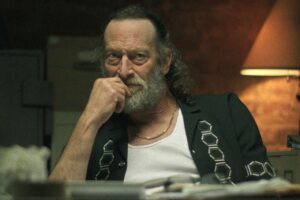
Q: You have assembled an incredible cast, including Oscar winner Troy Kotsur who’s so great as the crime boss, Mancuso. Can you tell us a little bit about the casting process and your vision for Troy’s character?
Zach Baylin: We actually met Troy a couple years ago, doing press for when he was doing CODA. I fell in love with him, both as a person and performer. We were asking Troy what he wanted to do, and he mentioned to us he would like to play a bad guy. We had that in our back pocket for a while, and when we started to write the role of Mancuso, we didn’t tell Troy that we were doing it, but it was written for him in the long shot that he would actually say yes.
Kate Susman: That character has so much range in it. He’s obviously the heavy, but he has this almost fatherly, avuncular type of relationship with the guys. We wanted to work with him because we knew he had both sides of that. He’s a really big, imposing figure, but he’s also like this really teddy bear-ish person.
 @Courtesy of Netflix
Q: Jason and Jude, how would you describe your experience working with Troy as a scene partner?
Jude Law: It was an extraordinary experience.There’s something in stillness on film that has incredible impact. He has this presence, this stillness that is so confident. The first time I encountered the characters, he welcomed me with open arms and a smile. It’s the ability to flick, It’s fun to be able to throw yourself out there, flicking from warmth to confrontation. But I’ll be lying if I didn’t say going into that bunker always felt pretty intimidating.
Jason Bateman: Jude raised up a good point about the stillness. Troy and I had a lot of conversations early on about what his version of this character was going to be. Specifically how that would relate to his unique circumstance as a performer without the use of his voice. That is one of the tools that we use. I assured him that he need not compensate for the fact that he’s not speaking in order to communicate the weight and the severity of that character. I assured him that as a director, as someone who’s gonna be choosing the shots, the length of them, the angles, how much we’re gonna stay on him while he’s signing versus how much we’re gonna stay on him when he’s listening. That he need not do much at all because I would make sure that there is a severity intact there without him having to help the audience at all. He was really excited about that, about being able to really penetrate the relationship with his son in the way that one would with a son. You don’t need to say or behave or act that much. Your son knows you pretty well. I told him we’d capture that. We’d preserve that. It’s just an incredible performance.
Q: Jason and Jude, you both star in the series but also serve as executive producers. How important is it for you at this stage of your career to be involved not only in front of the camera, but also behind the camera when working on a project?
Jude Law: It’s a wonderful experience. I’ve only really been doing it recently. I love the opportunity to see something that you believe is being realized. Help guide that, bringing on, supporting the right people, building and collecting the family as you do so. Leading from the front with a great spirit and not putting up with any assholes. Not including any assholes from the get go. It allows me to get involved in projects or characters that maybe otherwise I wouldn’t be, because otherwise sometimes as an actor for hire, you’re waiting to be cast in roles that other people just perceive you in. With this you’re starting at the beginning. You hold the reins a little firmer.
Jason Bateman: All four of us are attracted to things that are a little bit more challenging than some of the stuff that has a lot of success. And to hit that smaller target sometimes, you need every single department doing really good work and rowing in the same direction. If you’re privileged to be on board with something early on, you can have a hand in casting every part and crewing up every position, dealing with marketing downstream that properly represents that which you’ve captured. All of those things matter if you’re trying to hit a smaller target. We certainly were lucky enough to get the folks that we wanted, just a bunch of incredible people contributed to this.
Q: The show centers on a complex relationship between brothers. As writers and creating the show, what inspired you to make sibling dynamics the emotional core of the series?
Kate Susman: It’s the most formative relationship most people have. It’s the person that’s known you your entire life. We were really interested in family dynamics, who you are with your sibling, the way that they see you in the way that’s inescapable. Patterns that you establish from when you’re young and you can’t break in some instances. And then when two people grow in different ways, what brings them back together and what pushes them back apart?
If you like the interview, share your thoughts below!
Check out more of Adriano’s articles.
Here’s the trailer for Black Rabbit: