

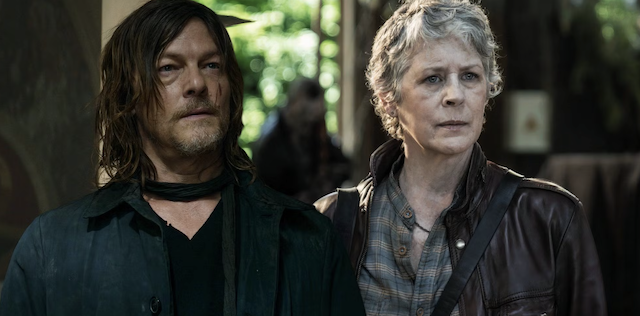
Balancing morally ambiguous faults with loyal resiliency is often one of the most heroic ways for a skilled survivor of a traumatic event to become – and stay – a fearless leader. The titular character of The Walking Dead: Daryl Dixon is one such reluctant but bold leader. Norman Reedus, who portrays Daryl, courageously battles any obstacle he faces, and protects the connections he forms, on his continued journey to safely return home.
Besides playing the eponymous character on The Walking Dead: Daryl Dixon, Reedus also serves as an executive producer on the horror series. He served as a producer alongside Greg Nicotero, who also worked as a director. They were joined by fellow executive producer David Zabel, who’s also the showrunner of the fifth spin-off television series in The Walking Dead franchise. Scott M. Gimple serves as the Chief Content Officer of the Walking Dead Universe.
The current third season of The Walking Dead: Daryl Dixon follows Daryl and Carol (Melissa McBride) as they leave France together. Meanwhile, Laurent (Louis Puech Scigliuzzi) and Ash (Manish Dayal) embark on a plane back to America, as Daryl and Carol are looking for another way to return home.
After taking the Channel Tunnel, the duo end up in London. In the ruins of England’s former capital, they meet Julian (Stephen Merchant). He promises to bring Daryl and Carol on his sailboat across the Atlantic Ocean back to the United States.
Reedus, Gimble, Nicotera and Zobel generously took the time to talk about starring in and producing the drama’s current third season during a press conference at this month’s New York Comic Con. The Walking Dead: Daryl Dixon will air the finale of its seven-episode third season this Sunday, October 19 on AMC. The network has announced that it has renewed the zombie apocylopsie-driven series for a fourth and final season.
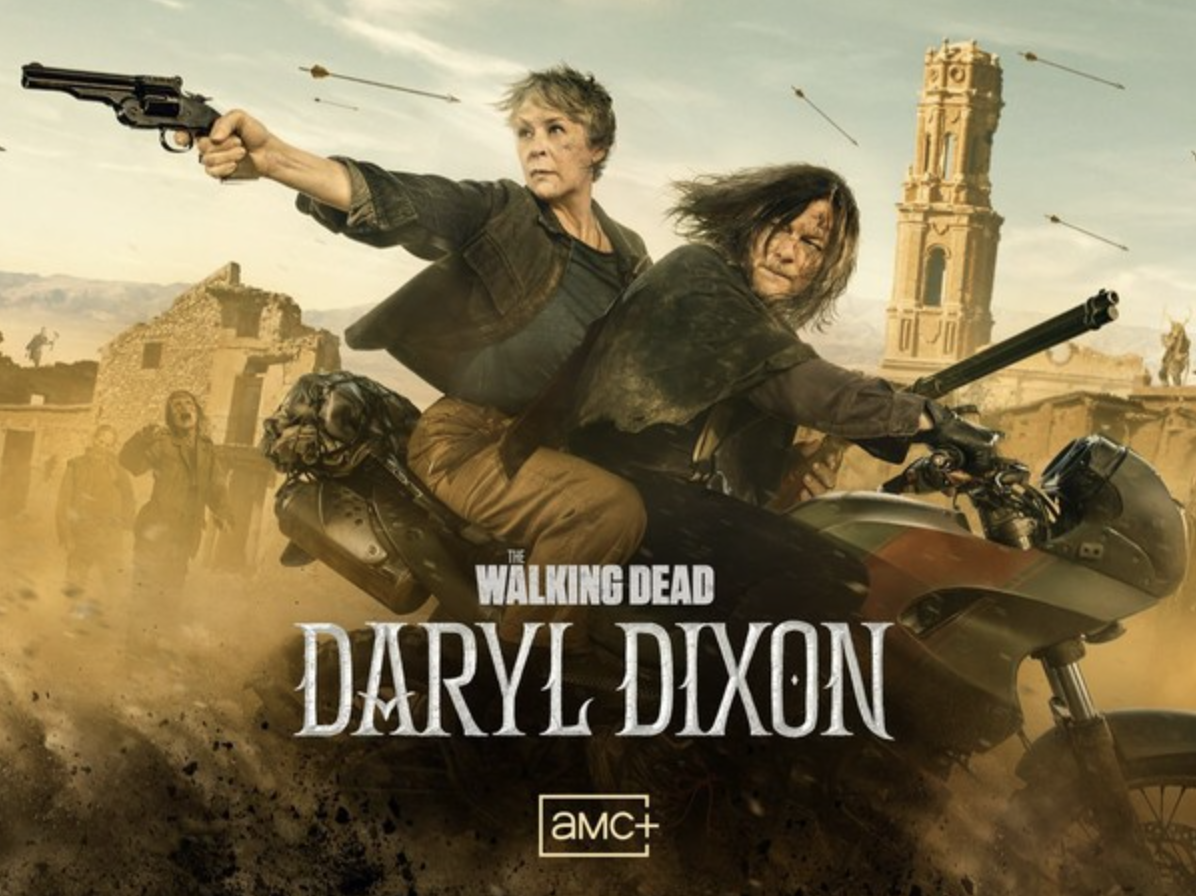 ©Courtesy of AMC
Q: When this season fades to black, what questions do you hope linger in the silence?
Norman Reedus: There’s dialogue introduced coming out of the Chunnel that says, “Look, all we do is run and fight. There’s got to be a better way to live.”
As the characters get older and the world gets more settled in the apocalyptic situation, there are people around us that are making it work. That storyline really goes into, and sets up, the next season. That’s the biggest idea I can think of right now.
Q: The Walking Dead television universe has had multiple spin-offs. Are you worried about it getting franchise fatigue?
Greg Nicotero: In a brief way, no. We’ve been trying to make these shows as different from each other as possible. At its height, The Walking Dead was making 42 hours of television a year. We’re now making decidedly less. People complain about it to me. We do want to make more in the future.
Right now, we’re going through this fourth phase of emphasizing these classic characters in very different circumstances. We hope to mix that up with some experimental, new characters…and make the stories as different as we can.
If you look at Daryl Dixon, Dead City and The Ones Who Live, they’re very different shows. What they have in common is basically the characters that people love. But the shows have very different stories and values.
Q: The Walking Dead: Daryl Dixon is shot on location in Spain and France. How does filming the project on location influence the shoot?
Norman Reedus: They really love the show in Spain, and in Europe in general. They freak out for it. So people love to go to work everyday. They talk about what we’re doing. They’re excited about what we’ve done.
It feels a lot like the earlier seasons of the flagship show. I’ve been chasing that lightning in a bottle feeling ever since.
Q: Norman, there’s a recent scene in The Walking Dead: Daryl Dixon that seemingly pays tribute to your film series, Boondock Saints. Was that moment purposely included on the show?
Norman Reedus: I told them that people were going to see that reference! We’re in talks now about making another Boondock Saints, and have been for awhile. We’re discussing the possibility of making a bigger budgeted version of what we’ve already done. But when we shot that moment for the show, I said, “People are going to say that it’s a reference to The Boondock Saints.”
Q: Daryl and Carol have both experienced quite a journey over the past decade-and-a-half. How do you explain the enormous longevity and popularity of these two characters over the course of the franchise?
Norman Reedus: Well, Daryl’s a character who doesn’t lie, and is now someone he’s proud of being. Both of these characters are victims of abuse, which is the common thread that brought them together in the beginning.
You can hire any two actors to play characters who are that close, but you wouldn’t necessarily feel it like you do with Daryl and Carol. I think we’ve earned that, as we’ve worked together side-by-side for a long time. So I think it’s a very genuine, earned relationship. That closeness is automatically going to be in every scene we do. It’s gotten to the point that I try to fight it, but it’s impossible.
Scott M. Gimble: I would say that in a lot of ways, Daryl and Carol are the joy of television. It was a discovery along the way, but when they did their first scene together, we couldn’t believe it. You can’t plan those discoveries in television.
Norman Reedus: In our first scene together ever on the original show, Melissa McBride, as Carol, was supposed to pickax her husband, and I liked her. I didn’t really know her yet. I kept dipping the pickax in more and more blood and guts, so every take would be worse and grosser. Finally, she just goes, ‘Give me that!’ I was like oh, I like this girl.
Q: Scott, you’ve divided some of the most popular characters from the comics into the different television series. Is there any plan of reconnecting them in some way on screen, whether on the shows or in the movies?
Scott M. Gimble: Well, we’ve moved toward focusing on the television shows. The movie business changed so much, even while we were working on the films.
In terms of bringing all the characters together, that’s a dream. It’s not a dream that can’t happen, but right now, that idea is just in the lab, but you never know what could happen. It’s definitely something that we’re going to try someday.
Q: The latest episode was really emotional, but had a couple of funny points in it. How did that come about? Were there also plans to touch on different civilizations that are kind of isolated, but haven’t really seen yet in the Walking Dead universe yet?
David Zabel: There were a bunch of elements that came together on that episode. One was that we knew that we were filming in Spain, where all the Spaghetti Westerns were made.
So Jason and I, who write a lot of the episodes together, wanted to do one that really leaned into the Sergio Leone of it and used the location. We just thought it was a cool idea to say, what would happen if Sergio Leone made an episode of The Walking Dead with Daryl Dixon? That was a cool notion.
So we combined that with the idea of finding pockets in the apocalypse that we hadn’t told stories about before. That included diseases that aren’t necessarily out of control now, but could get out of control 12 or 13 years into the apocalypse. That’s how we came up with the idea of the leper colony.
But Jason and I sat down and watched Once Upon a Time in the West and a couple of other Sergio Leone movies. We were like, “Okay, how would Sergio Leone make a zombie story in our world?”
Q: There are moments when fans are disheartened because you kill off a beloved character. Which has been the one that’s been the hardest for each of you?
Scott M. Gimple: For me, Isabelle was a tough one because she was bringing amazing things to the show. Norman and Clémence (Poésy, who played Isabelle) were also great together. But there were a bunch of reasons why that story had to go that way.
This is a road show, so unfortunately we’ve had to leave some characters behind. We’ve had great actors play these really interesting characters. So there are many times that we’re like, “We kind of want to keep them around!” But we have to move on and keep the reality of the world, in terms of the dangers, risk and threat of death.
David Zabel: It’s funny; most of the deaths on this show, most of them were done by other humans; they weren’t done by zombies. I think that’s important.
For me, Hershel’s death was really powerful. They were trying so hard to stop it.
It’s always difficult because because you can’t talk about the script until the actors got the phone call from Scott or somebody saying, “This is going to be your last episode.”
One day, Scott (Wilson, who played Hershel) came up to me and said, “They’re fattening me up.” I was like, “No, no.” Then about two days latter, Scott said, “Scott Wilson’s about to go.”
If you really look into the stories, you can see it coming. The characters will all of a sudden have a lot of dialogue and speeches about their life, as well as a lot of screen time.
Q: All of the shows throughout the Walking Dead franchise have featured a lot of props. Are there any props from the sets you have taken?
Greg Nicotero: There’s a catalogue of props that’s 600 pages long. I looked through it, and it was a trip down memory lane. While I was looking at it, I thought, I remember picking that prop, and putting the blood on that piece of wardrobe. So I had a really unique reaction to it.
I’m a collector, too, so I’ve kept things from the set. For people to have the opportunity to keep something from the set that means something to them is amazing. You’re capturing the essence of something you love in a physical piece, which is amazing.
Q: Is the Walking Dead: Daryl Dixon Season 3 finale going to offer any closure?
Scott M. Gimple: You will get some closure! You’ll feel as though you got to the end of a journey by the end of Season 3 for both Daryl and Carol. You’ll also kind of see France and Spain coming together in ways that are both happy and scary. That means there will be some good and bad things from France and Spain that melt together.
So I think you’ll feel the culmination of that in the upcoming fourth season of The Walking Dead: Daryl Dixon. That’s the trick of it – that there will be a satisfying resolution to this four season story.
That’s been our focus for months, and we’re about to shoot the last two episodes of the series (for the upcoming fourth and final season). We have a really good set up that will make the audience think, this was a great journey that I went on for four years. Something changed and happened, but still got resolved. There’s a horizon that I can still imagine in the future.
If you like the interview, share your thoughts below!
Check out more of Karen Karen Benardello’s articles.
Here’s the trailer of the series.