

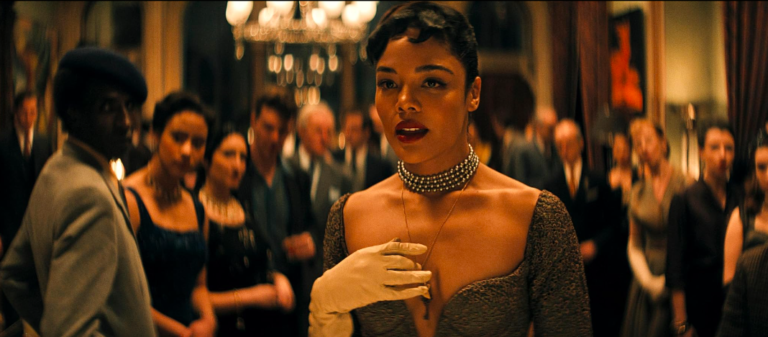
The film written and directed by Nia DaCosta reimagines the play by Henrik Ibsen, Hedda Gabler. Just like the Norwegian stage drama, the film portrays the experiences of the daughter of a general, who is trapped in a marriage and a house that she does not want.
Hedda shows the titular character, played by Tessa Thompson, navigate the social engagements of the vast estate of her new husband, the academic George Tesman (Tom Bateman). The story unfolds as they organise a lavish party in the attempt to climb the social ladder of their unyielding aristocratic circle, to allow Hedda’s husband to secure the prestigious professorship he’s vying for. The challenge becomes more demanding when the rival for the post turns out to be Eileen Lovborg (Nina Hoss), Hedda’s former lover, who is currently in a relationship with Thea (Imogen Poots). The former Miss Gabler, now Mrs Tesman, will enact a diabolical plan to ensure her husband’s position. Hedda Gabler’s thirst for control, within the confines of her property, transpires also when she interacts with the character of Judge Roland Brack (Nicholas Pinnock).
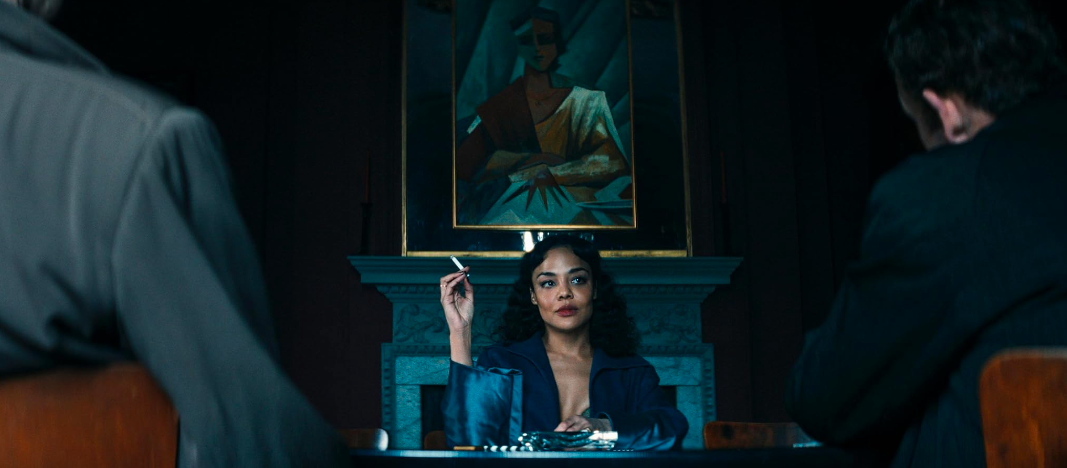
In this screen adaptation, Nia DaCosta preserves the ruthlessness of Ibsen’s careerist and manipulative woman. However, the film director takes artistic license in changing several elements of the original story, to modernise it. For instance, the setting is changed from 19th century Oslo to 20th century England. There is also the gender swap of the character Hedda wants to neutralise: Eilert Lövborg becomes Eileen. These variations, along with having Hedda played by a woman of colour, fit the story very well. But they do not compensate a mise-en-scène that pushes to a Manichean depiction of its Lady Macbeth-like protagonist. Hedda is pure evil, she uses sexuality, power games and sharp wit to pursue what she wants. She has no compassion. Hedda embodies the stereotype of the monster, and does not display facets that make her a more complex and fascinating character.
Hedda’s self-affirmation is shown through her despicable actions and by the way she unabashedly handles her late father’s collection of pistols. Hedda shows an imposing model of violent control that is usually associated with toxic masculinity, and she doesn’t carry out her devising traps and subterfuges to assert her gender, but rather to destroy any being who can constitute a hurdle to her ultimate goal. This is why Hedda does not come across as a feminist manifesto, but rather as a celebration of the Tradwife. This 21st century Hedda plots Machiavellian schemes to help her husband’s career, to the point of pushing another woman to take her own life.
Throughout the film, Tessa Thompson’s performance leads the way, as the rest of the talented cast seems a mere adornment to her return to the scene with Nia DaCosta — who chose her for her directorial debut with the 2018 film Little Woods. Besides Tom Bateman, Nicholas Pinnock, Nina Hoss and Imogen Poots, Hedda’s social milieu is brought to life also by the characters of Professor Greenwood (Finbar Lynch) and his wife Tabitha (Mirren Mack), who makes no secret of her voluptuous appetites when it comes to David (Jamael Westman).
This debauched and decadent society gets its social commentary through Bertie, an estate cook played by Kathryn Hunter, who almost in a decontextualised soliloquy verbalises the inconsistencies, oddities, and vices of those she has served during her life. This is the instant in which audiences can perceive the Norwegian playwright’s critical approach to the bourgeoisie and its inherent contradictions, that are conveyed in the cinematic adaptation.
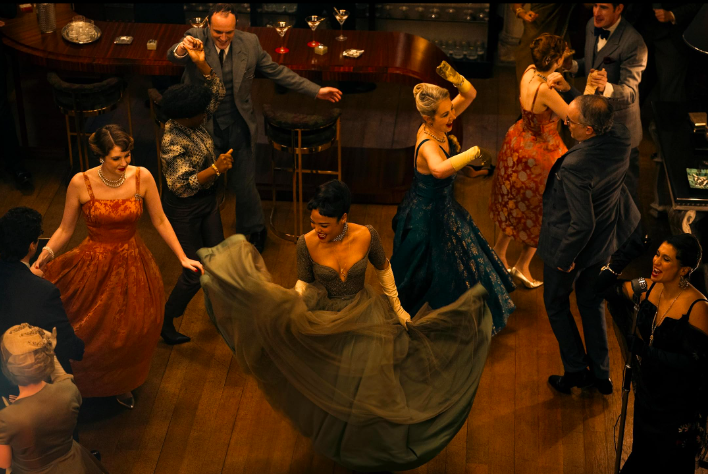
In terms of the look of the film, Sean Bobbit’s cinematography paints an atmosphere of murder-mystery, that enhances Cara Brower’s production design from the Fifties and the Art Deco period. Lindsay Pugh’s costumes add glamour to the visuals of the narrative, that acquires an eerie vibe with the wildly percussive rhythm of Hildur Ingveldardóttir Guðnadóttir’s music.
The extravaganza displayed in this modernisation of Henrik Ibsen’s play rewrites the avouchment of a dysfunctional ego. Yet, the changes that align with topics of our era make viewers wonder whether they make the revamped oeuvre a work of inclusivity or of tokenism.
Final Grade: B-
Photos credits: IMDb