
©Courtesy of GKIDS
©Courtesy of GKIDS
“Little Amélie or The Character of Rain” : Exclusive Interview with Co-Director Maïlys Vallade
Q : The film based on the book, “The Character of Rain” written by Amélie Nothomb, what was the element that stood out of her book that you and co-director Liane-Cho wanted to make a film about?
Maïlys Vallade : It was really a power of description in the book, everything in the imagery. I think for me, it was really the gaze, shy gaze, and a very specific narration in the book and a very atypical truth about so many themes, and it was pretty challenging to adapt.
But yes, it was really atypical point of view of age from zero to three. And, how she(main character Amélie) can manage with death and grief as themes and this relationship that we were in common with co-director Liane-Cho(Han Jin Kuang) to find a way to bring forward this relationship between Nishio-san and Amélie and the relationship that Amélie built. It’s the foundation of identity. It’s so special for me and very important to understand the moment you can lose your idealization and your identity. They are so difficult in life and how you can going through this and how you can accept things in life.
Q : This film set in August of 1969 in Japan, it’s quite different where we are now. So what kind of research you and co-director Lione-Cho did in order to tap into your mindset of 1969 in Japan?
Maïlys Vallade: A lot of documentation from our writer Aude Py, we made a lot of research about a specific place and typical Japanese traditional house. And also Japanese garden and the furniture in the house because they(Amélie’s family) are Belgium family, they are expatriate, so we must to find a specific furniture at the end. So we can add this specific Japanese house, which isn’t simple. We really wanted to find the good objects, it wasn’t possible to find the same furnitures in the market in Japan as the situation of expatriate back then. Yes, and it was really challenging. So we made a data tablet where we can see all the geographical places that was in the movies.
Yeah, with all the specific plants and fish that exist in that (particular) sea, when they go to the beach. And we also found in a free market in France that photo album from a Japanese family of that specifically fits that era. We didn’t know them(family that shot those photos), but it was a big treasure for us because there is so many atypical photographies and attitude how they could see themselves at the time.
And of course in the film, it’s the life of author Amélie Nothomb and her family, but it was very ethical reason that she didn’t want to be part of this film. She was okay about us making the film. But she told us that, she didn’t want to interfere with the education of grandchildren. So she made us a free ways to adapt the movie. It was nice, but sometimes we really want to have the details of her life at this really specific place in Kansai region, their house and the street.
It’s a little documentary film made by Laurelinne Amanieux and Luca Chiari, friends of family on her childhood. And where she reconnected with her nanny Nishio-san 30 years after her childhood. And in that documentary, we can find many photography of her at that age, and and I made a credit for those photographies in the film, it was a gift for Amélie Nothomb because it was a very great production about her own real photographies in her childhood.
 ©Courtesy of GKIDS
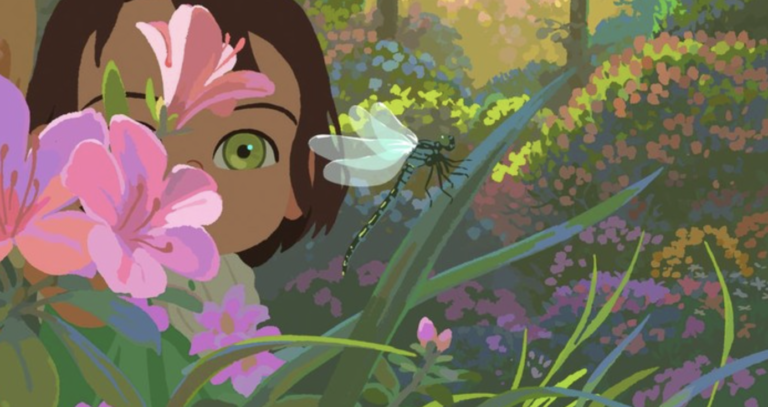
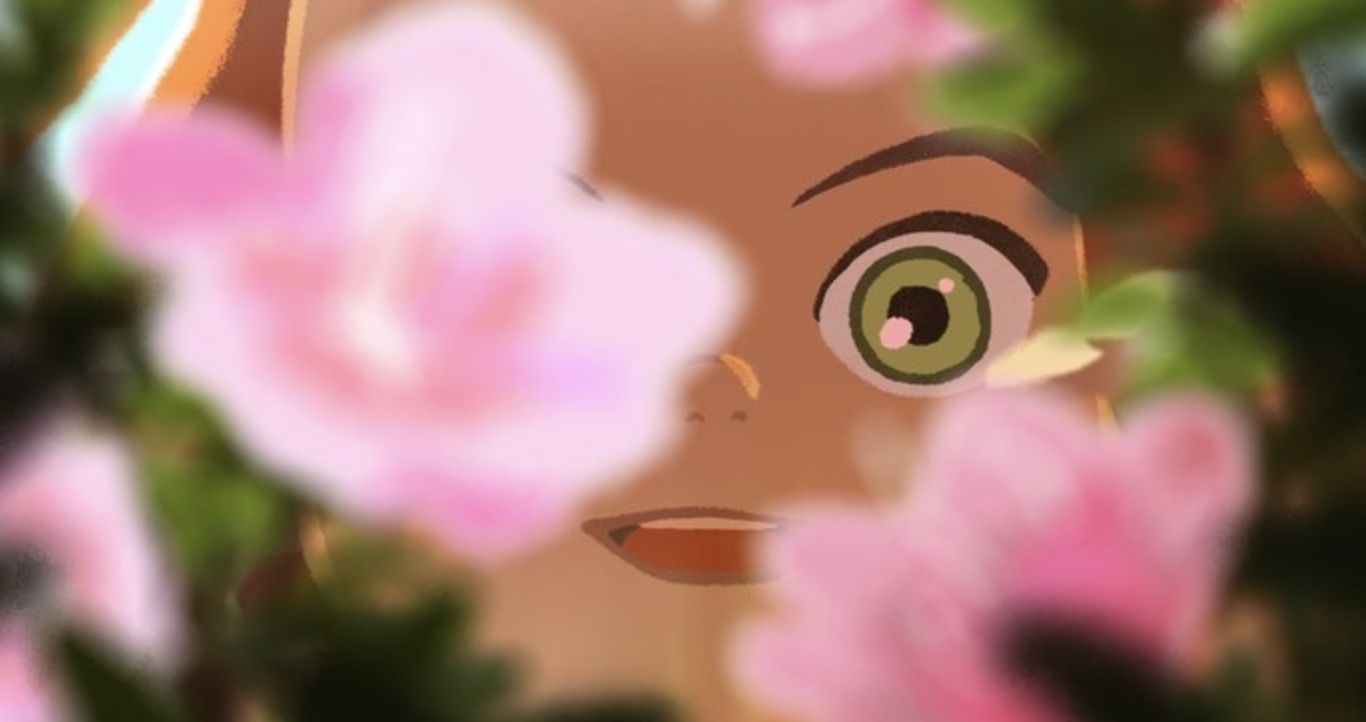
Q : When I saw the drawing of the characters in the film which was reminded me of the painting of the post impressionist, not so much detail like a Japanese animation, but the characters really fits well with the ambience and the background of this film. So, could talk about the choice of the colors and made it look like a post impressionist? How did you map out the drawing with the co-director, Liane-Cho?
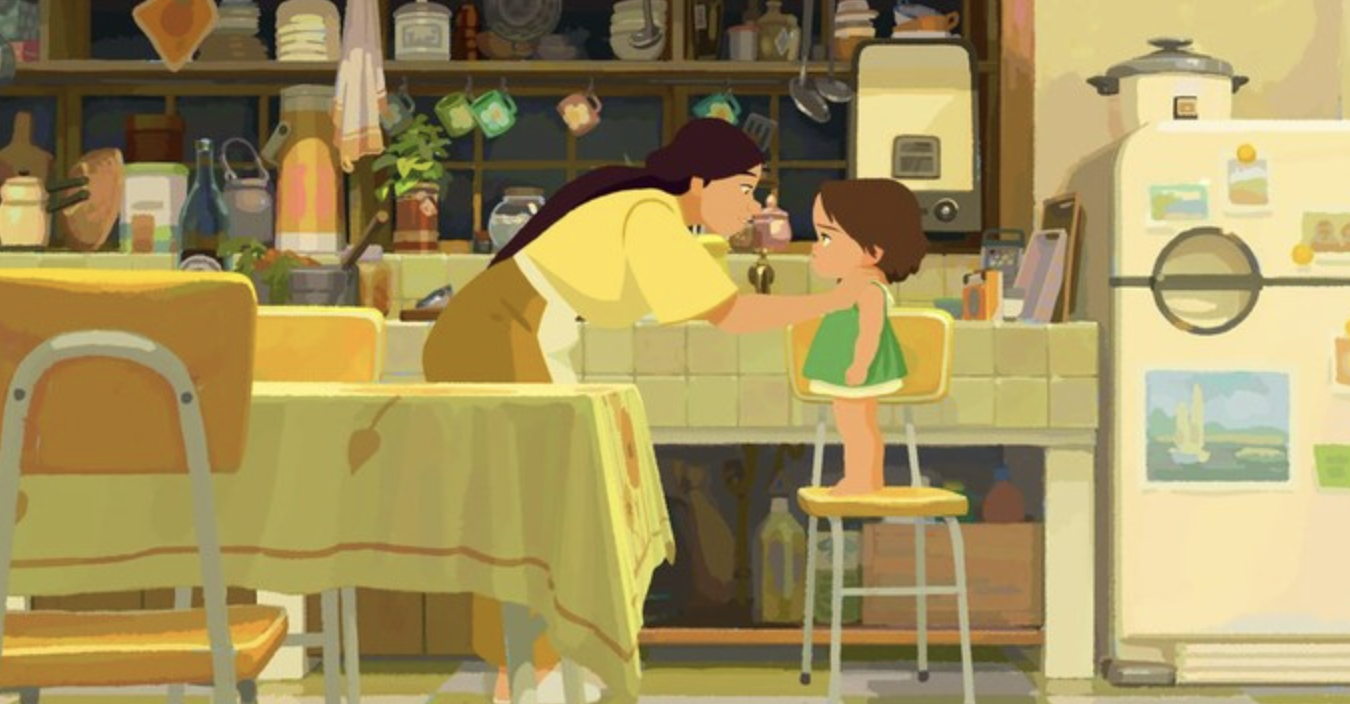
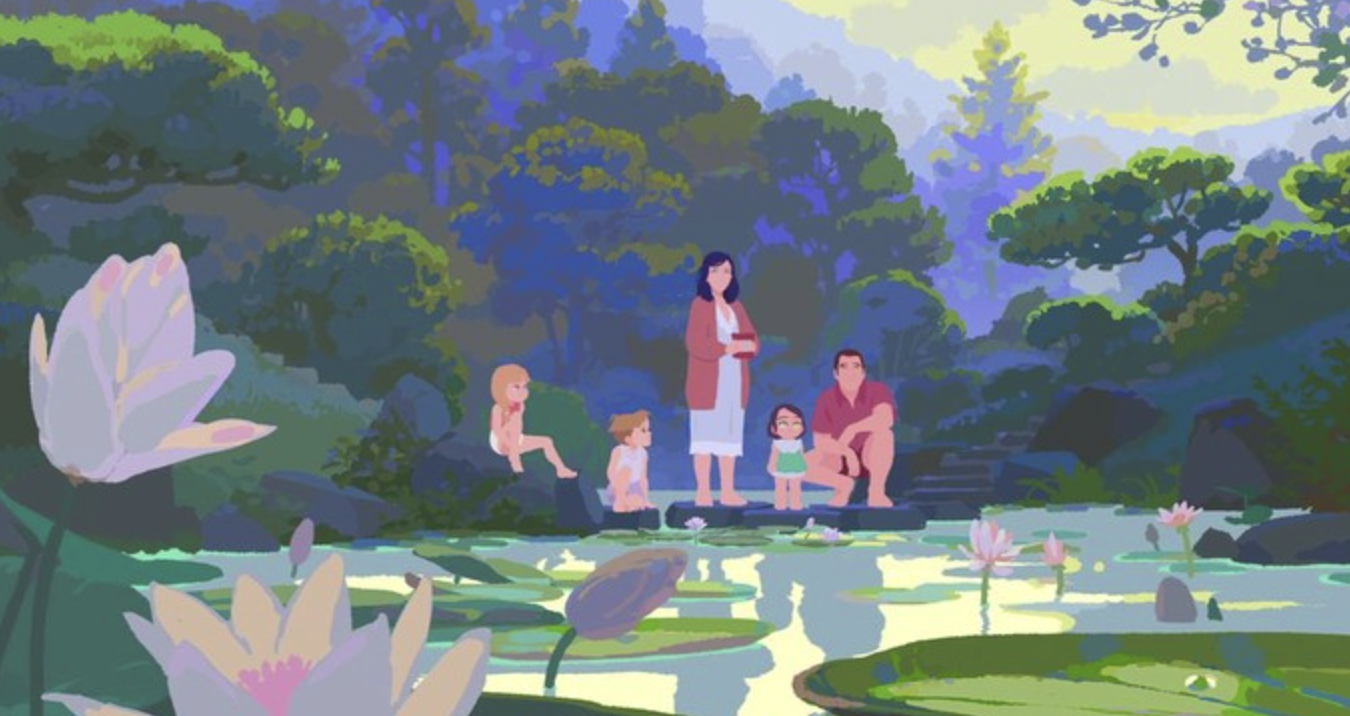
Maïlys Vallade : It was very good drawing made by our color artists, Rémi Chayé and Eddine Noël(screenplay and production designer) in the beginning, we really want to have a this specific grounding. We worked on many movies before. We have a very specific pipeline that we know very well. And we really want to go far, more depth narration by using this specific pipeline that we know very well. And yes, we are really in love with the Japanese movement. And it’s post impressionist time and we love the work of Henri Rousseau(a French post-Impressionist painter in the Naïve or Primitive manner) in France, it’s in connection with Japanese artist too. There is many, he used very pastel colors, very light. With the simplification that you have with traditional Japanese illustration, the team is in love with the work of Henri Rousseau and communication with Japanese artist. And it’s really continuation of that. And to use is a very pastel color and very intense little touch to express the euphoria of the young child gaze at that time, to be in her emotion through the movie.
In a specific timeline, we have 50 sequences with very different mood in each sequence, and we made a timeline for us to understand in what moment we use specific lights where we use for what intention in every scenes, it was really precise to be in the mood of family. Of course, also with the sun is a big importance through the seasons because we are working on years like a long journey. But to have all the specific sensation of the season, different season we are going through, the perception of family can be transformed with phantasmagoria(The word “phantasmagoria” has been commonly used to indicate changing successions or combinations of fantastic, bizarre, or imagery). It can be explosive like a very electric colors.
Q : Could you talk about the Amélie’s relationship with Nishio-san? Because, “Ame” means “Rain” in Japanese. She teaches how to write the Chinese character of “Ame”(Rain)in the window. And also she teaches about the effect of nuclear weapon while she was cooking. Those are very interesting sequences to teach kids through the perspectives of adult.
Maïlys Vallade : Yes, it was the most challenging sequence for us. Because we need to find a good balance. In the beginning of the movie, we made a grownup movie, not a child movie. This book was a bestseller from 2000, many people faced an adaptation hell and to be agreed all together of what we really want in the intention of the scene was pretty challenging to accord. And finally we really want to have this family, a target from grownup to children. And that is the most difficult way for adaptation because Amélie Nothomb describes many things in the book. At this moment, she was named “Ame”(rain). We must to find way to be very playful, you see the height point of view of family. How can Nishio-san connect with Amélie for the first time in the living room. In the book, this first sequence very important for the staring point of their relationship.
And how one grown-up can connect with a child and we have a reading of Yokai(Means “Monster” in Japanese) book with her(Amélie), it was the beginning and it help us to find a way to find the other sequences which was always very empathic to be close with a child. And this was very specific moment, it was a storyboard artists in the team, she had a great idea to just write on the glass window and how we can make a good situation to do a breath on the glass window(While it’s raining, so it steams the window that can write the character), to reveal the character frame of “Ame”(rain). We can show this to a little girl on the spot.
And also in the cooking scene. What was great for us that the kitchen was the place for an initial sign in the house. It(Describing the experience of Nuclear Weapon) was very gruesome moment in the book. It’s really not the same as movie, she described very difficult things like she find pieces of her parents on the ground and we can’t show it like that. We have to find a way more intimate approach, but we are not Japanese, so we want to be careful with that because it’s so traumatic, and so sensitive for Japanese people, right? So, Nishio-san is the positive key for how to handle grief and adapt a little bit detachment of situation(The experience of Nuclear Weapon), without betraying the story either. To stay true to the story, but have a little bit of detachment. She described it in a simple way, and what was difficult was because we choose to talk about this in the movie, it’s not exactly the same in the book.
(While they’re shooting)We find this celebration of “Obon”(Obon is a fusion of the ancient Japanese belief in ancestral spirits and a Japanese Buddhist custom to honor the spirits of one’s ancestors. This syncretic folk Buddhist custom has evolved into a family reunion holiday during which people return to ancestral family places and visit and clean their ancestors’ graves when the spirits of ancestors are supposed to revisit the household altars) in the Japanese culture, and it was really a good moment for us, we had this experience of “Obon” which is not in the book, we lived that, it was a real experience for me.
So, we talk about this celebration of “Obon,” which gave us a little smoothing out the handling of this pretty challenging moment of talking about the grief. And this bittersweet situation with Nishio-san, in the movie, I think it’s really about our sensation and our way to explain the thing which is always with very tender but still with intensity and very true. And Nishio-san also takes Amélie very seriously. She never considers her(Amélie) less because she’s a child. She speaks to her as a real person.
 ©Courtesy of GKIDS
Q : So this film won the audience award at the Annecy International Animation Film Festival which was considered as Academy Awards for Animation. Could talk about the receptions that you got from the best film released at another international film festival within the past year and people around the world for this film?
Maïlys Vallade : It was really exciting for us because we were considering this film as an animation film, but also for a little bit like live action film. In San Sebastian International Film Festival, we were in Peal category(The best film released at another international film festival within the past year) and it was a very huge experience because we were the only animation film there and we won the best European film there. It was very warm reception at the screening. Many people connect with the story, especially this year in 2025 with all the things that’s happening. And it was very important for them(audiences) to express that they need this movie for the empathy connection for the childhood memories.
And how we can connect with childhood again. And also film won the Audience award at the Annecy International Animation Film Festival was so surprising for us, and so great. We saw movie with the audience and it’s really touching because we made this with bi love and empathy. We really want to make a good thing for the world, we want to give more sweetness to the world, so we were connected with the audience and it was great.
 ©Courtesy of GKIDS
If you like the interview, share your thoughts below!
Check out more of Nobuhiro’s articles.
Here’s the trailer of the film.