

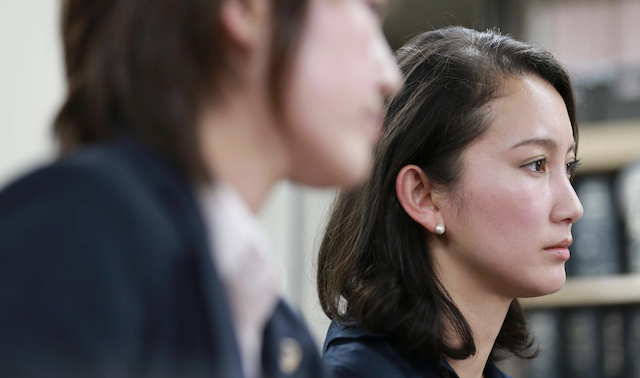
Japanese journalist Itō Shiori will release her documentary, Black Box Diaries, in her native Japan for the first time on December 12. The film will premiere at T·Joy PRINCE Shinagawa in Tokyo. The movie has not yet screened in her home country because it received controversy over its alleged use of footage without consent, Unseen Japan is reporting.
The feature had its world premiere at last year’s Sundance Film Festival. It then went on to screen at more than 50 international film festivals, including SXSW and Hot Docs in Toronto.
MTV Documentary Films then officially distributed the project in the U.S. in October 2024. The feature also earned a spot on this year’s Academy Award shortlist for Best Documentary Feature.
Black Box Diaries chronicles Itō’s experience as a sexual assault survivor and her pursuit of justice. Toei Agency, which will distribute the movie in Japan, said the new Japanese version reflects feedback from people involved in the case.
Black Box Diaries follows Itō’s journey from that night in 2015. It documents her investigation into her own case and her determination to seek justice. The film combines personal narrative with investigative reporting. It offers viewers an intimate look at the challenges of confronting institutional silence in Japan.
The documentary specifically follows years of legal battles, public debate and growing awareness of how Japan’s justice system treats survivors. The debut marks a major milestone for Itō, whose story pushed the country’s #MeToo movement into the public spotlight.
In the movie, Itō shares how former TBS journalist Yamaguchi Noriyuki sexually assaulted her on April 13, 2015.
In a civil lawsuit seeking damages, the Tokyo District Court ruled on December 18, 2019 that Yamaguchi must pay Itō 3.3 million yen in compensation. The court acknowledged that Itō had not consented to the act and had no motive to make false claims.
The presiding judge noted that public interest and social purpose motivated Itō’s actions. The court further pointed out inconsistencies in Yamaguchi’s testimony and dismissed his countersuit for defamation.
Itō’s decision to publicly identify herself furthered her effort to challenge long-standing social taboos surrounding rape and victimhood. After four years of legal battle, Itō won her case.
Following its international success, Black Box Diaries has drawn both praise and scrutiny. Besides being shortlisted for this year’s Oscars and dozens of festival screenings, the film also received positive reviews. Audiences around the world have expressed their appreciation for the movie’s raw honesty and cinematic storytelling.
However, the documentary has also faced criticism for using materials without permission. Former civil case attorney Nishihiro Yoko noted the the film included hotel surveillance footage provided under the condition that it be used only for trial purposes. Critics have also noted that the featured contains audio and video of police officers discussing the investigation, and phone recordings with lawyers involved in the civil case.
The controversy emerged shortly after the project’s international screenings. As a result, Japan saw an increase in renewed discussion about documentary ethics and privacy. Critics argued that even socially important films must follow accepted standards of consent and transparency.
Supporters, meanwhile, said Itō’s documentary shares information on systemic failures. The film points out how those missteps often discourage survivors from reporting the crimes committed against them.
In response, Itō issued an apology on her official website on October 25 for including footage in the movie that she didn’t receive consent for. That footage include clips of a taxi driver who didn’t agree to appear in the film. The filmmaker apologized to the driver and his family.
In her statement, Itō described the driver as “an irreplaceable witness who saw both the victim and perpetrator at a crucial moment just before the assault, and who cooperated with the judicial process.” She further wrote that “my apology was accepted, and I was granted permission to use a new version of the scene.”
Toei Agency has said that it completed the version of the documentary it plans to release in Japan “after making some revisions and adjustments based on feedback from those involved.” The decision to revise the movie reflects Itō’s stated goal of respecting those connected to the case while preserving the integrity of her story.
Itō’s attorney commented, “We obtained consent where necessary or deleted the footage when consent could not be obtained. We cannot discuss individual cases due to confidentiality obligations toward the other parties.”
Itō also released a statement expressing her intent behind making the documentary. “This film documents the reality I faced in Japan immediately after the assault. The arrest was stopped at the last moment, and the evidence and testimony were blacked out. Still, I connected the fragments of truth I gathered to make this work.
“Please, for a moment, forget my name and watch it as if it were the story of someone close to you. If the same thing happened to you or someone you love, what would you believe, and how would you act?
“I believe that even a small conversation after watching can break the silence, protect someone else, and slowly change society,” the filmmaker added.
The helmer’s statement reflects the larger purpose of the project. She hopes it will encourage dialogue about sexual assault, violence and justice in Japan. Itō hopes Black Box Diaries will bring about a call for social reflection.
If you liked this article, please share your comment below.