

@Courtesy of 20th Century Studios
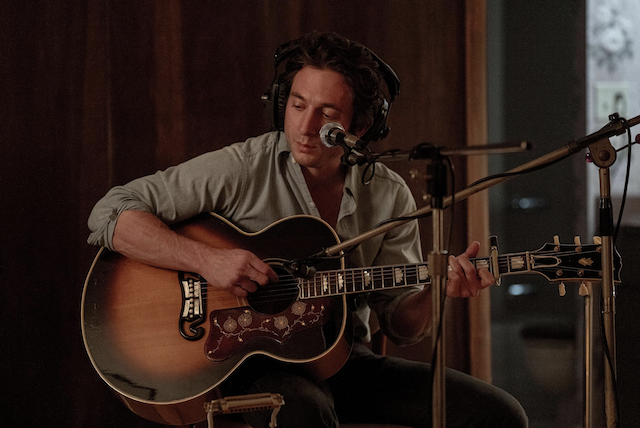
Q: You have been undoubtedly approached many times throughout your life with people wanting to make a biopic about you. Why was this the story and the time that you wanted to do it?
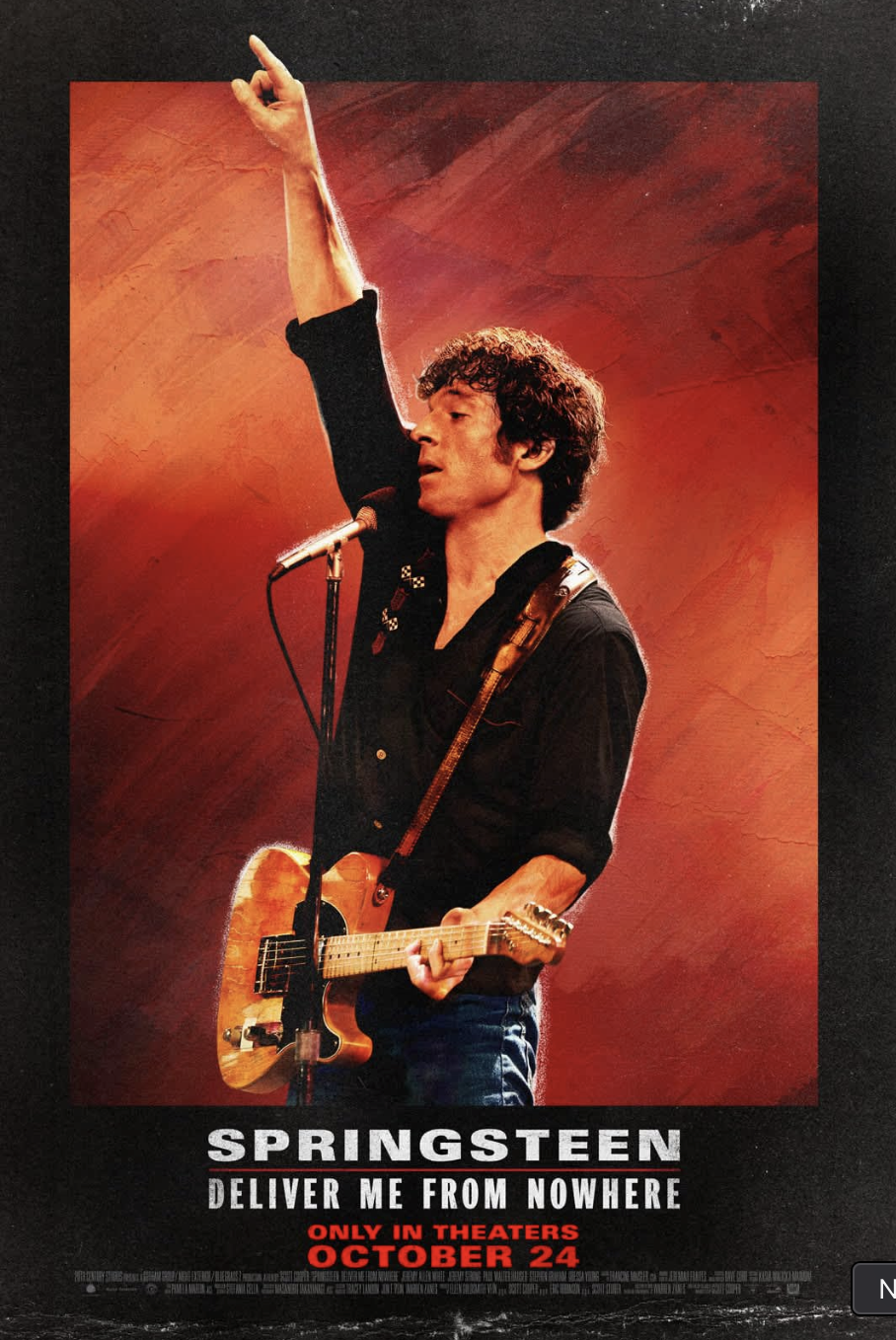
Bruce Springsteen: I like the idea that it is not quite a music biopic. It’s actually a character-driven drama with some music. That appealed to me. It’s only a small slice of a period of time in my life when I was 31 and 32, and I was going through some difficult times. I met Scott Cooper along with Warren Zanes, the writer of the book: we sat around and talked for an afternoon. I got a feeling from Scott that he knew exactly the kind of picture that he wanted to make. It was very in line with the type of record that Nebraska was. It was a studio picture that felt like an independent picture. I knew from Scott’s films that he had a real talent for capturing blue-collar life. Which I was, despite some of the success I’d had: I was still really living in New Jersey in the community that I grew up in.
Q: What do you remember about that initial conversation?
Scott Cooper: The album Nebraska means so much on a personal level. It’s anxiety inducing. Bruce put me at ease, he is so incredibly kind, and decent, and humble, and relaxed, and confident in a way that comes from years of expressing yourself that he made me feel right at home. I don’t even think we talked about what film I wanted to make for the first hour or so. We talked about movies, we talked about life, talked about New Jersey, and cultural events.
And then eventually we got down to the business of the type of film that I wanted to make is exactly what Bruce Springsteen said. I said: “I want to make it in the same vein as you made Nebraska”. Minimalist, no gloss, very stark, camera will not look away. And Bruce said to me something that I have not forgotten: “You know, the trutSpringsteen Deliver me from nowhere1h about yourself isn’t always pretty. And I want you to tell the truth.” And I think I have. My hope is that people will think they’re coming into a movie about Bruce Springsteen, and they’ll leave thinking it’s a story about themselves. Quite sadly, Bruce Springsteen’s relationship with his father is far more universal and relatable than I could have ever imagined.
 @Courtesy of 20th Century Studios
Q: How did you prepare for Jon Landau’s role?
Jeremy Strong: . What I wanted to capture was the depth of Jon’s devotion to Bruce, to the artist, to the overall musical spiritual project that has spanned 50 years. The depth and incisiveness of his understanding. When you get to know Jon Landau, he’s a brilliant guy, he’s like a sonar operator that hones in on deep signals from the depths. He transcends producer, manager. He’s more of a partner in crime.
Bruce Springsteen: When I got together with Jon, you know, there were two things he said to me: “I’m here to help you do what you need to do.” In a business where people think everything revolves around them, that was quite a revolutionary comment. And the other thing he said was: “Of course, we’re looking for our success. But more than this, it is about your happiness.” He’s stood by me and stood by those comments for 50 years.
Q: On the set, what was that experience like for you? What was one of the kind of subtle things you learned about Bruce Springsteen that you were able to incorporate?
Jeremy Allen White: We spent a little bit of time together prior to filming, but because we didn’t know how much Bruce Springsteen and Jon were going to be around, that was kind of the time we had. In that first week, I was really excited to have Bruce Springsteen around, but also a little bit intimidated. I was very head down, trying to do justice to the story and to Bruce. There was a lot of permission there, it felt good that he was there as a guide. At the end of many days, Bruce would send a message about a particular moment that he found honest, and they carried me so much. The whole time I was making this movie, I was really pushing and searching, and it was so wonderful to have Bruce’s support.
Bruce Springsteen: Jeremy was so generous because I figured: “Damn, I’m being obnoxious sitting here! Not only does the poor guy get to play me, he has to do it while I’m sitting on it, on the other side of the camera.” So he was very generous with his tolerance of me on the set.
Q: Knowing you were going to be tackling another music-related movie, did you know if it would have been easier because of your previous experience, or were you anticipating difficulties?
Scott Cooper: Both Crazy Heart and this movie are about the search for truth and authenticity. When I wrote the character of Bad Blake that Jeff Bridges plays, he was an amalgam of Waylon Jennings, Townes Van Zandt and Kris Kristofferson. But when you’re approaching a story about Bruce Springsteen, the bar is significantly higher because of what Bruce means to so many. Having seen him surrounded by 80, 90, 100 thousand people, I know that people have ownership of Bruce Springsteen. I know that he has moved them and touched them in ways that few people have.
@Courtesy of 20th Century Studios
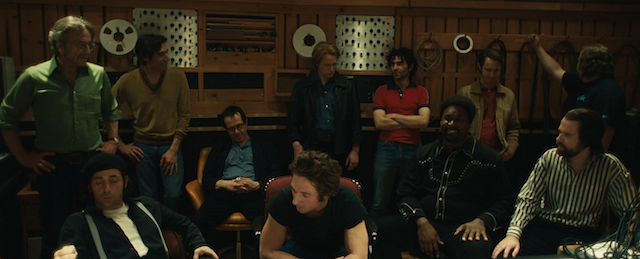
When you’re making a film about him, so many people have a version of the film that they would like to see: Is it the Born to Run story? Is it the Castiles or Steel Mill days? Is it Born in the U.S.A.? Is it something later in Bruce Springsteen’s life? We’ve chosen to tell a very painful chapter in Bruce Springsteen’s life, one that’s incredibly under-reported. If you read Bruce Springsteen’s incredible autobiography, Born to Run, you’ll see that most chapters are quite lengthy about his life, except for Nebraska, which is a page or page and a half. For a record to mean so much to me on a personal level and come to me at just the right time in my life, I knew how to tell that story. I also knew that both Bad Blake and Bruce Springsteen Springsteen are stripping everything away, stripping themselves bare in a search for truth and honesty. And that was my guiding principle for both movies.
Q: After playing such intense and conflicted characters like Kendall Roy in Succession and Roy Cohn in The Apprentice, what was it like stepping into the role of Jon Landau, someone who’s calm, grounded, and genuinely supportive?
Jeremy Strong: It’s a real counterpoint to some of these other roles and a great leavener. Spending time in the orbit of Bruce Springsteen and Jon is spending time in a column of light, you can’t not be uplifted by it, by their body of work and by their spirit. It’s almost an evangelical project to me, the gospel that they carry through the world is a gospel of love and unity and hope and dreams. I was so grateful to have been given that chance. As an actor, you want the possibilities of transformation and risk. Carl Jung said: “Only that which is really ourselves has the power to heal.” It’s why I love this movie, because it’s about that. It’s about finding what is really yourself and having the courage to confront and heal those wounds, put them into your work, repair that through your work. It was a great tonic and an enormous, indescribable privilege.
Q: Which kind of conversation did you have about finding the balance between the physicality of the concerts and the restricted body language of a man stuck in his private life?
Jeremy Allen White: I don’t think we talked about that.
Bruce Springsteen: No. The truth is, Jeremy has been very modest about his preparation because he came in fully prepared. He asked me one or two questions. I had no idea what his preparation had been. And when day one came, he went onto the set and started his performance. I just watched in amazement. He came in totally prepared and didn’t need me very much.
Jeremy Allen White: In the beginning, you were so generous with your time, but I felt like I didn’t want to bother you. I feel regretful about some of the approaches. We didn’t talk about those things. I just watched him for a long time. We got together when we were in London. I asked a lot of things about more specific moments in the road trip going across the country, and why this period, why this film. Most of my focus in speaking to Bruce was about the headspace of that time. As he shared with me his headspace during that time, that was something I was familiar with. So I ran with that. I thought: “That was a similarity between the two of us, let me just run with this for a while.”
Bruce Springsteen: Jeremy does not attempt to imitate the way I actually look or sound, he just really inhabited the essence of my character and brought the rest of himself to it, which I was very thankful for.
@Courtesy of 20th Century Studios
Q: Your films often explore the darker edges of human nature and the cost of personal sacrifice. How did this new story allow you to continue or challenge those recurring themes in your work?
Scott Cooper: I’m always drawn to ordinary people who find themselves in somewhat extraordinary circumstances. Bruce Springsteen is, if you’ve gotten to know him as well as I have now, an incredibly ordinary man who struggles with the same things that we all struggle with. A man who’s so open and vulnerable about those particular struggles. I knew that terrain from my other films, that’s why I have been, quite frankly, drawn to Bruce’s work. I would listen to Nebraska, or Tom Joad, or many of Bruce Springsteen’s records while writing other screenplays. His lyrics are so cinematic. Landscapes, characters that I know, silence, stillness, which I value in my films. The challenge is: how do you tell a story about someone who means so much to so many people in a story in a way that they don’t expect or perhaps may not want? This is a very personal story for me. It speaks to some other characters in my films. It tells the story of someone who is incredibly honest and always searching for the truth in his work.
Q: Before coming into this project, did you have any emotional connection with Bruce Springsteen’s music? And do you have a best friend like Jon Landau that supported you all the way?
Jeremy Strong: I did have a connection. Nebraska is a talismanic album that I’ve listened to most of my life. My best friend, my best man at my wedding, played a Bruce Springsteen song in the church in Copenhagen when I got married. So there was a whiff of destiny about being part of this. The thing I really knew about Bruce Springsteen, and less so about Jon, was just how much they give. I believe in that, I believe in giving a thousand percent. Somebody said: “Bruce Springsteen plays every show like it’s his last show at Madison Square Garden, and if you’ve ever seen him play, that is true.” This isn’t a job, this isn’t a business, this is a reason to live. And that’s what this art form is for all of us on this stage. My connection with Bruce Springsteen was preexisting, and it’s deepened, and I’m going to carry it with me for the rest of my life.
Bruce Springsteen: The way that Jon and I always looked at what we did was a vocation. It’s a dedication to something, ideals that means something. Jeremy got so deep that I guarantee he knows more about my music right now than I do. One of the loveliest things he did was he called me one night, and we were about to do a very important scene in the film, which is the bedroom scene between Jon and I. And he asked me, “What’s the song you’d play for someone if you wanted to save their life?” And I thought about it for a while, and we came up with Sam Cooke’s Last Mile of the Way, and brought it into the film the next day. And, Scott Cooper, who is one of the most generous collaborators I could ever imagine, said, “Yeah, let’s give it a go. Let’s try it.” And it turned into one of the loveliest scenes between Jon and I in the film. Jeremy’s approach to his work is extraordinary.
Q: How did you navigate the tension and chemistry between your characters, especially when working within Scott Cooper Cooper’s intense psychological tone?
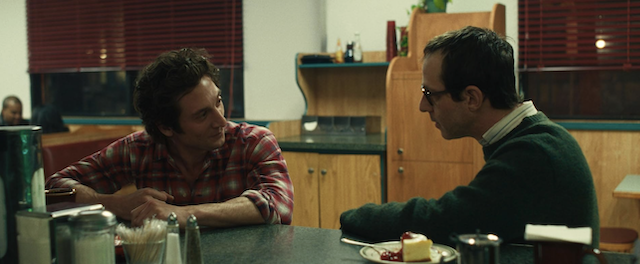
Jeremy Allen White: It wasn’t that intense. It felt profound and dropped in when we were in the moment, when we were in the environment that Scott Cooper gave to us. I’d been an admirer of Jeremy’s for a long time, when I learned Jeremy was going to do it, I was excited. But we hadn’t really spent time together before we got together to shoot one of the first scenes, which was one of the diner scenes. I trusted that he had an understanding of the relationship, and I trusted that his understanding would be similar to my own because of Scott Cooper’s words, and Jon, and Bruce. It felt very easy to me.
Jeremy Strong: I agree. There was an ease to it. I’ve admired the hell out of Jeremy, I think he’s a fearless actor, a bone marrow honest actor. There’s a natural affinity between us. I just knew that he might work in a similar way, approach it in a similar way. I knew he would be committed. I’m not a great believer in talking about these things. You just enact a dynamic and try to embody something. Scott Cooper creates a container where that’s possible. There’s a feeling of encouragement, just creating that container where you’re encouraged to take risks, where there’s no such thing as failure. That’s not an easy thing to create, but Scott is expert at that.
Scott Cooper: When you cast actors, then you have to provide them an atmosphere in which they can take big risks, be fearless and feel incredibly safe. Safe on the day that you’re shooting it, safe when you’re cutting it, the performances. And as a director, you have to know with great specificity exactly what moments you are going to use within a take. Because almost never you use an actor’s entire take. So you have to find and be paying very close attention to every moment. And when you have actors as good as these, it makes my job very easy.
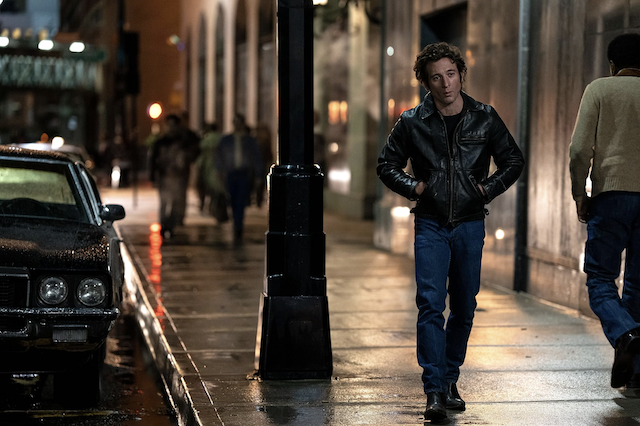
@Courtesy of 20th Century Studios
If you liked the interview, share your thoughts below.
Check out more of Adriano’s articles.
Here’s the trailer for Springsteen: Deliver Me From Nowhere: