

@Courtesy of Netflix
Q: Which are your characters and how are you related to them?
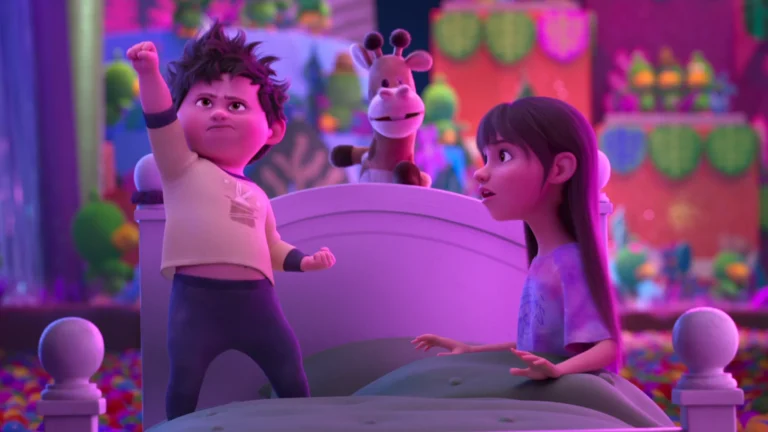
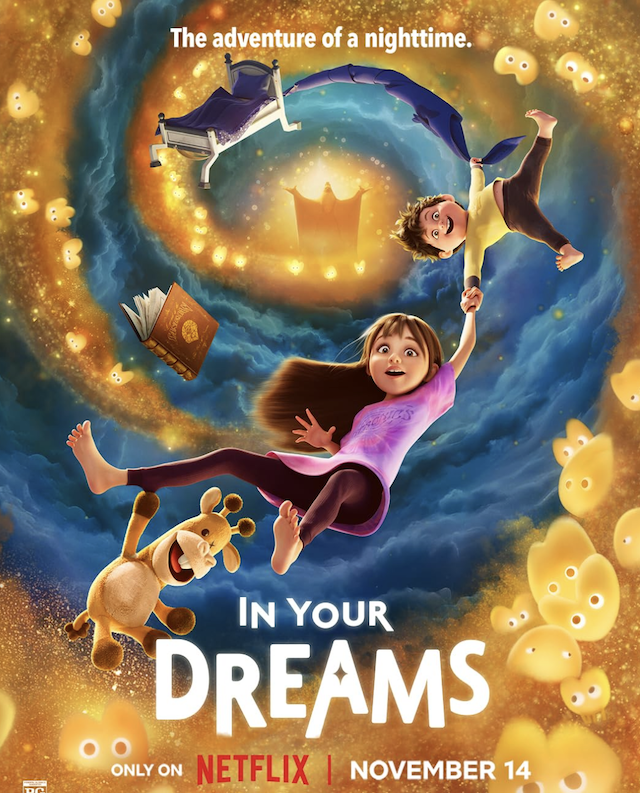
Jolie Hoang-Rappaport: Yeah. My character is Stevie. She is this self-described fixer. She always wants to fix everything. She’s noticed a little tension between her parents, and thinks that if she can find the Sandman, he can grant her one true wish, that she can fix her family. But as she goes on this journey, she starts to realize that maybe not everything in life can go exactly the way we planned. Maybe that’s okay. Especially when she has her family to support her. She also thinks Elliot is really, really annoying.
Elias Janssen: Elliot is just super high energy, crazy funny. He loves magic, as you could tell from his magic pajamas. He’s like your typical younger brother, he really looks up to Stevie, he just wants to spend time with her, hang out with her. I can relate to him in that way, because I also have two older siblings, so I know what that’s like.
Q: Tell us a little bit about the origins of In your Dreams. I believe there were some autobiographical elements involved.
Alex Woo: In 2016 I left Pixar and I started this small little animation company called Kuku Studios. We spent the first year just dreaming up ideas for TV shows and movies that we wanted to make, that we wanted to see, that we felt like nobody else was making. One of the ideas was a movie about the world of dreams. We got really excited about that. The challenge with a movie about dreams is that anything can happen, and when anything can happen nothing really means anything. We had to find a way to ground it with a real-world, human story.
That’s when I thought about this thing that happened to me when I was maybe six or seven years old. I woke up one morning and I found my mom at the front door with her bags packed.She had to gently explain to me and my brother that she was going away for a little while. She had to figure things out for herself and her family. It was really scary for us. This movie is very much about me reconciling and dealing with the fact that life is not perfect. That there’s a lot of messiness in life. But there’s also beauty in that. It’s a combination of this really intimate, personal story with this big, adventurous, fantastical, spectacular world of dreams.
Q: Baloney Tony is like yourself. Have you long wanted to play a one-eyed, cold cut slinging, stuffed giraffe? And where does he rank instantly on your list of favorite characters?
Craig Robinson: Number one, clearly. And thank you. That is amazing to hear. We found a character in the room. We were cracking jokes back and forth. And Alex let us improv. I’m excited for people to see it. It was fun being Elliot’s best friend. And the enemy of joy.
Q: You guys are the all-American mom and dad: loving, gentle, hard-working, conflicted at times. Who inspired your voice roles? And did you look at your own parents at all? Any famous screen moms or dads that you guys looked to for inspiration here?
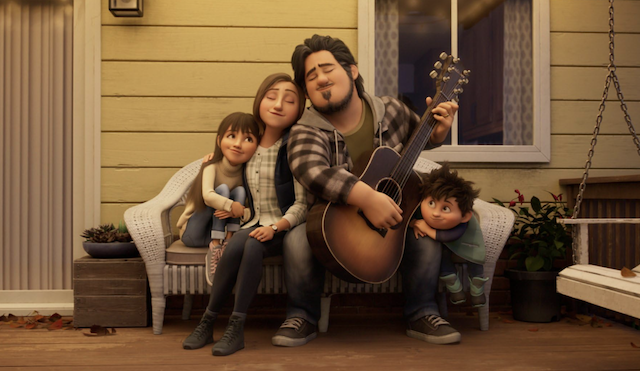
Simu Liu: I don’t know if I was inspired. I’m a big, big fan of the animation genre in general. In approaching this character of Dad, I think in this film he is actually a kid on the inside. I almost feel like he’s actively resisting this idea of growing up. He’s very much passionate about his music career, he’s at a place where he doesn’t want to let it go. He’s being faced with this pressure to be realistic and face reality. Accept responsibility for the whole family. That’s where I approached it. I really wanted to bring out his child-like quality.
Cristin Milioti: I don’t think I based her on anything. It was more like being a part of this story and the many iterations that it took.
@Courtesy of Netflix
Q: Nightmara’s intentions are unknown. Tell us a little bit about how fun this character was to sink your teeth into.
Gia Carides: Nightmara was amazing because we really created her in the studio. Alex had incredible ideas. In the beginning, they weren’t sure whether she was going to be a character that we saw. So, I came in a few times and worked with Alex and recorded various different scenes, and ended up creating this really beautiful character. It was very exciting. She is the voice of the nightmares, the fears, the anxieties, and she confronts the kids. She was just a glorious character to bring to life. She’s not in the movie a lot, but when she shows up, it makes an impact. And it was really fun to voice her.
Q: What was your favorite dream or nightmare sequence to voice, and did it remind you of any of your own dreams at all?
Jolie Hoang-Rappaport: My favorite one was the one where they’re fighting Frank, the Gia Carides teddy bear. They’re flying around on the bed, and they’re trying to attack him. When I read it in the script, it’s hard to visualize what it’s going to look like. But then when I went back to like re-record it, they played the animation for me. And I saw how larger than life it was. The comedic timing that they had. That was fun.
Elias Janssen: I love all of the dream scenes. But I remember one of the first when Elliot’s bed comes to life and they’re flying through the sky. The scene really sticks out to me because it just shows how creative these dreams can be. Elliot is just really excited, and it shows his personality.
Q: Are the two children characters named after some iconic musicians?
Alex Woo: Elliot was named after Elliot from E.T. Mom and Dad, Michael and Jennifer, had a band called the Hypsonics. They formed it when they were in college, they had a hit album. Then with their sophomore effort, they just didn’t hit the same level of success that they did with the first one. And then they had kids, things started to change for them. It made sense to me that, especially with their first born, they would name her after somebody that they really admired. Stevie Nicks is obviously an amazing musician, and she has that very famous song, Dreams. It just felt so appropriate to name Stevie after Stevie Nicks.
Q: How did you two like being in this band? Hypsonics.
Simu Liu: We didn’t know it was called the Hypsonics until pretty recently. We signed on four years ago. And we’re not recording our lines with anybody. The lines are changing. The scenes are changing. The ending of this movie changed at least four or five times over the course of the entire process. Our names changed. Our band name changed.
What was the most challenging or rewarding part about conveying a parent’s emotional struggles? Particularly within a fantasy adventure like this?
Cristin Milioti: The most challenging part would be to know how to calibrate it. The way an animated film is made, it’s so many years. It’s such an interesting process: you record something and then you don’t return to it for like four or five months. You have to get back into that mind frame. It’s constantly changing. Which is so cool. And so rare. You would never get to do that on a live action movie.
Simu Liu: This is gonna sound cliche, but I believe acting is reacting a lot. It’s hard when you don’t have anything to react to. Most of my initial work as dad was done not with Cristin, but with Alex voicing my wife.
Alex Woo: And Cristin is a much better actress than I am.
@Courtesy of Netflix
Q: Baloney Tony is hilarious, but also an emotional guy through the chaos. Did you always know how much heart this stuffed giraffe would have? Or did that come as a surprise while recording?
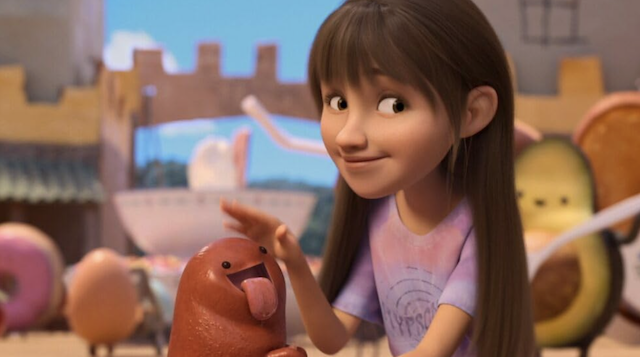
Craig Robinson: It came as a surprise. I did not know. Like I said, we found everything in the room. I didn’t go in thinking, I gotta bring that heart. We just rolled it out there. You naturally bring that heart.
Q: Speaking of Baloney Tony, what was the inspiration behind his design?
Alex Woo: He’s a giraffe, but he doesn’t really look that much like a giraffe. That was intentional. We wanted him to look like one of those cheap plushies that you get at a state fair that’s not really well made. We thought it’d be funny to have a janky stuffed animal. That was the inspiration for Baloney Tony, this idea that even though your stuffed animals are these things in your life that are so gross and messy and imperfect, you still love them. That was a metaphor for the larger theme of the film.
Q: Did the experience of making this movie make you look at or analyze your own dreams any differently?
Gia Carides: I do dream quite a bit, but no. I don’t really know how to answer that question. It’s really fascinating, the journey of the characters.I really enjoyed watching it and watching them in their dreams, but I don’t know what it did for me and my dreams exactly.
Q: Did it make anyone else rethink their dream process, maybe remember dreams?
Alex Woo: When we started the movie, we gave everybody on our crew a dream journal, and we had them write down all their dreams, as much as they were willing to share. A lot of the dreams in the film were actually based off of dreams that our crew wrote down. The naked dream is a dream that I have all the time.
@Courtesy of Netflix
Q: Can anyone share a recurring dream that they have?
Gia Carides: I do have a recurring anxiety dream where I’m about to do a play that I did in Sydney, which was The Marriage of Figaro. Lots of words, beautiful play. And I did it when I was 22. In this dream, I’m doing the play again and I’m really relaxed. And somebody says: “We’re on in 30 minutes. You should put your makeup on.” There was a lot of makeup in the play. I’m hurrying with the makeup, and then I’m literally like: “Wait a minute, what’s the first line?” And I’m in complete anxiety, and I cannot remember one word of the play.
Simu Liu: I have a really similar one, but it’s way more boring. I’m back in high school but I’m my adult self, which is really weird. There’s an assignment or a test that I haven’t studied for. I have no idea what it’s about. I haven’t studied for it. And if I don’t pass it, I won’t graduate.
Q: Were there some cinematic influences? You mentioned the character influences, but to the story itself?
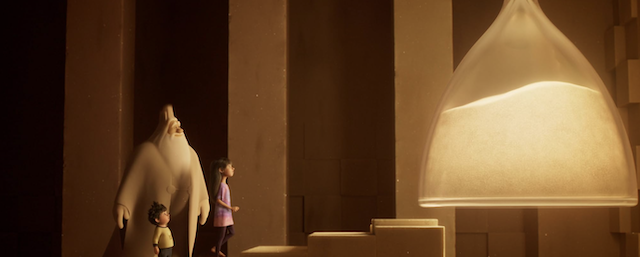
Alex Woo: I grew up in the ’80s, so I’m a big ’80s movies fan. Obviously E.T.: there’s a shot where they’re on the bed flying over that big moon, that’s taken straight from E.T. I was a big Labyrinth fan, so the sandcastle was really inspired by that movie. Goonies was a big movie for me. Having the film be centered on these two kids and the adventure that they go on was very much inspired by Goonies. Back to the Future is one of my all-time favorite movies. The song, Mr. Sandman, is from that film. I had to put it in this movie.
Q: What was it like to riff and play with lines in the recording booth to develop Baloney Tony’s unique humor?”
Craig Robinson: It was so much fun being Baloney Tony because he’s so silly. He lent himself to being silly. The dynamic with the kids was awesome. And then you got the Laser Fart, it was all great.
Q: How much did you guys get to riff in the booth? How long is that leash to go off script?
Simu Liu: In the beginning, especially before any animatics developed, it feels really like blank slate. Alex was so great in teasing that out of all of us. I really appreciated our sessions trying to craft what this dad looked like, sounded like, how he treated his kids, how he spoke to his wife. The beginning is the best time to try something, not necessarily be afraid to do something even if it doesn’t work. A dash of inspiration that might lead to something that might be useful. And then it was really cool over the months seeing the project develop. That’s when the choices become more set in stone. And then you get to a point where you absolutely cannot improvise because millions of dollars have gone into animating these characters. It is locked.
Alex Woo: It speaks to how talented our cast is. They can do improvisation, which is essentially writing. They’re writing in the room with us. And then they can do very, very precise frame-by-frame lip flap matching. It was easy for me to collaborate with them because they’re so talented. I had so much faith in them.
Q: This story delves into some heavier dramatic themes. How did you balance the more whimsical aspects of the story with those more serious elements?
Alex Woo: It was important to have both elements because when I go watch a movie, I want to both laugh and cry happy tears, feel deep emotions. I wanted to imbue this film with that same sort of spectrum of emotions. Balancing it, it’s a lot of trial and error working with the editorial team to figure out what the spacing and the timing is to give the audience enough breathing room to go on this journey emotionally without having it feel really jarring and jerky. Especially with Cristin and Simu, their characters, because they provide that tension and the conflict, that heavier aura in the film. We had to record those lines so many times. I’m so sorry. How can we have these parents have conflict but do it in a way that feels like they’re being respectful towards each other, mindful of their children? How do we have them do it so that it’s not overwhelming and melodramatic for the audience?
Simu Liu: It was really important to show that no one is at fault. Therefore there’s no bad guy or good guy in whatever is happening between mom and dad. As often happens in our lives. I think there’s something amazing when you see your life reflected back at you on the screen in a way that’s nuanced and fair.
Q: When you were working on In Your Dreams, what did it teach you about letting go of control, that instinct to fix things and about facing the fear of the unknown?
Cristin Milioti: I’m completely cured. The minute you think you have a handle on something, it has a way of shifting. That’s a tough thing to impart to a kid. It’s a tough thing to impart to yourself. That’s always a positive thing to have out in the world.
Gia Carides: The only guarantee you have in life is that there will be change and a large adventure.
If you liked the interview, share your thoughts below.
Check out more of Adriano’s articles.
Here’s the trailer for In Your Dreams: