

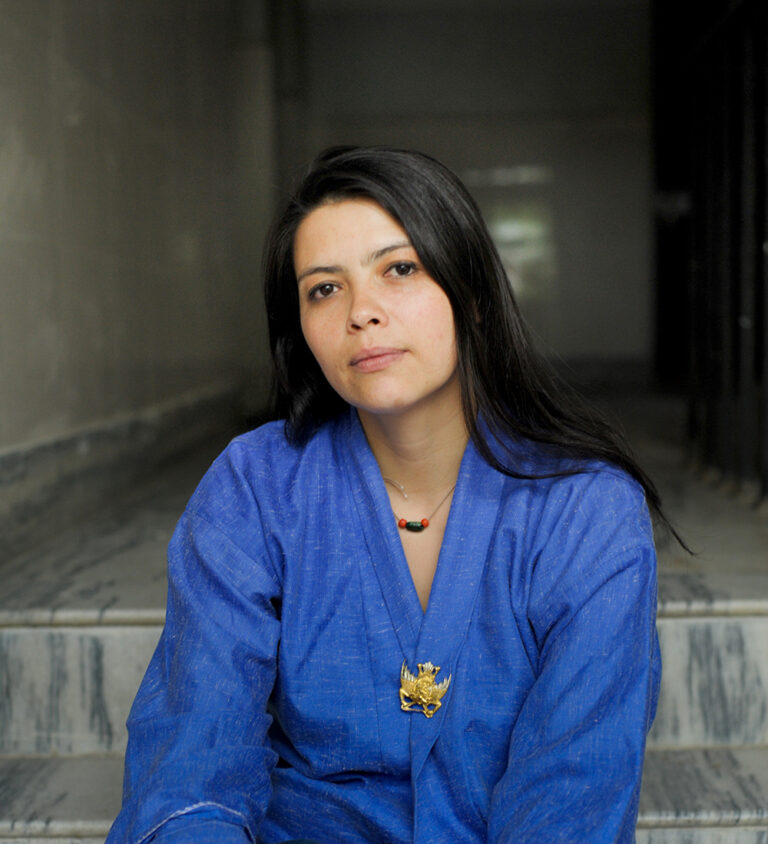
The 43rd Torino Film Festival has been the stage to the new work of one of the few female filmmakers from the Kingdom of Bhutan. Dechen Roder started off making small documentaries and videos, through her production company Dakinny Productions, incepted in 2009. In 2015 she wrote and directed Lo Sum Choe Sum, which competed in the Berlinale Shorts and other festivals around world. Her debut feature film Honeygiver Among The Dogs premiered at the 2017 Busan International Film Festival and that same year had its European premiere in Berlinale.
Dechen Roder’s second feature I, The Song has been the Bhutanese entry for the 98th Academy Awards. The film had its world premiere at Tallinn Black Nights Film Festival, where Roder won best director, and its Asia premiere at the International Film Festival of India (IFFI), Goa.
The story follows Nima, a school teacher who gets dismissed for something done by a mysterious woman named Meto Choden who looks exactly like her. To reclaim her reputation, Nima travels to the south of Bhutan in search of her doppelgänger, but as she becomes entangled in her lookalike’s life, and realises she might be the only one capable of solving Meto’s disappearance and recover a stolen sacred song.
Exclusive interview with Director Dechen Roder
Q : You have also written the film, besides directing it, what personal influences inspired you for this story?
I was inspired to make this film based on the experiences of two female friends, who underwent similar traumas. But also, I didn’t want to make it a didactic film with a direct “message” which presents this kind of exploitation and trauma in a very educational way. I wanted instead to merge this story with the story of a “stolen song” which is also inspired by a real occurrence in Bhutan — where a remote community complained through a local newspaper that one of their sacred songs was “stolen” by the city people, and they felt it was sacrilege. I thought to sort of loosely combine these narratives of loss, exploitation, identity.
Q : Your style blends the real with the mysterious, how did you work with your cinematographer to convey this juxtaposition visually?
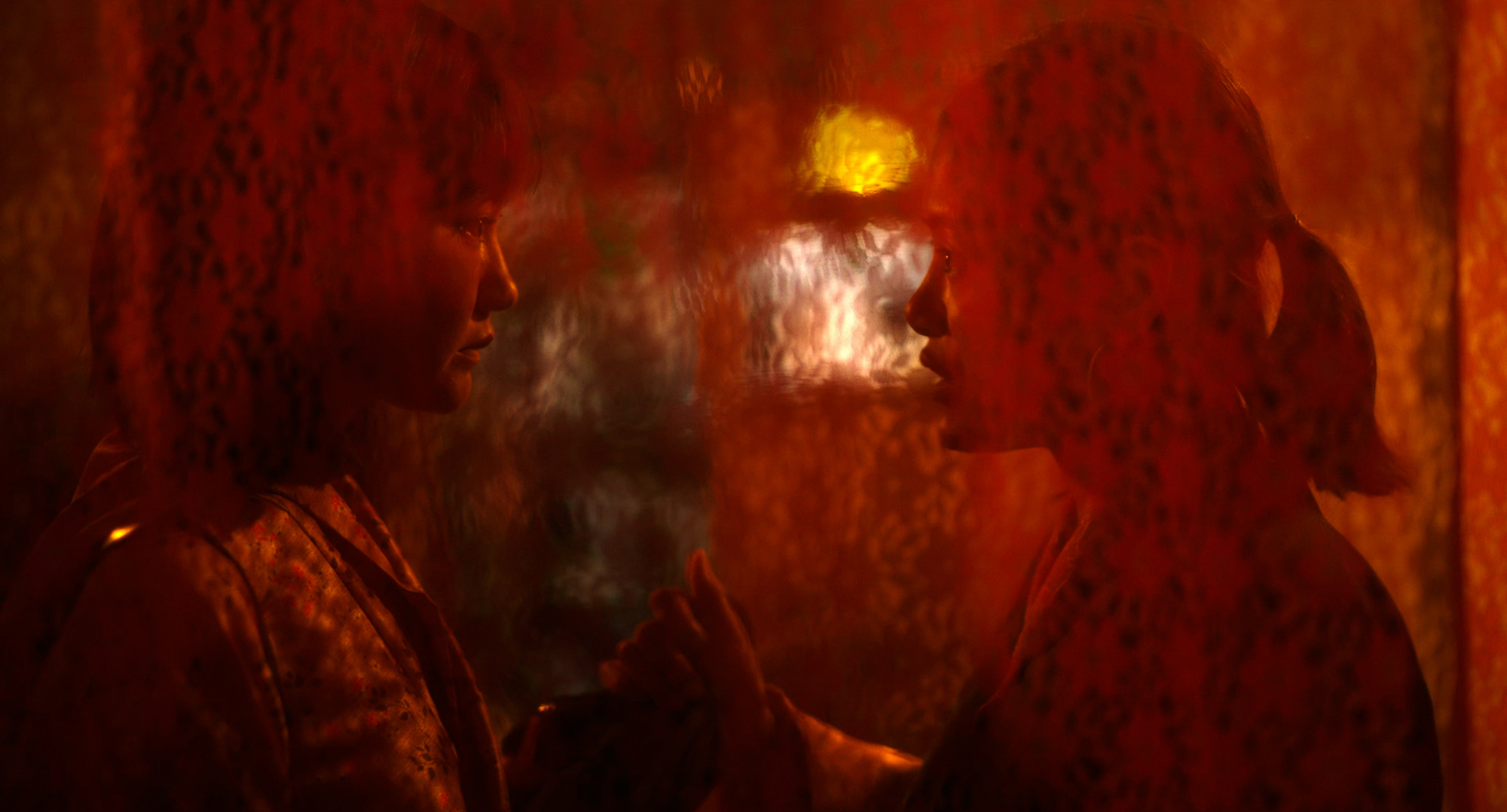
I think I’m very lucky to be from Bhutan, and to live in Bhutan — I feel we live in a sense of mystery and mysticism, where it is sort of our way of seeing the world, even while we live a “modern” life with all its traps and amenities. So that comes very naturally. Working with the cinematographer Rangoli Agarwal was a very collaborative process. She’s from India, and she has also worked a bit in the northern parts of India, in the mountains. So her visual sensibility fit mine. We talked a lot about how we would create distinct different worlds for our two main characters, in colour, tone, movement, mise-en-scene, and we had almost a visual map for this. Then also how the two worlds slowly spill over into each other, or merge as the film reaches its end — this also we mapped out. I also made it clear to Rangoli that I was not interested in presenting a “cliched” “exotic” “touristy” Bhutan, but I wanted more texture, depth, authenticity, and she was completely on the same page as me.
Q : The sacred song stolen by city people and the theme of theft identity seem to convey a strong critique on our digital era, was this your intention?
Yes, I wanted to just put this out there, more like a question, and I don’t really offer any answers. It’s just more to ask: where are we going? What can we do? What is sacred anymore? Bhutan jumped into modernity very fast. In my mother’s time she walked 12 days to school across the border (there were no motorable roads), and theirs was a consciousness informed on an oral storytelling culture. We didn’t have TV, internet till 1999. We jumped directly from oral to visual culture without much in between, from no roads to many roads, from no education to fully formal education, from oral storytelling to visual. A lot happened very fast, and though we are “modern” as is most of the world, I want to ask what we are losing in the jump, and what we can do in all this frenzy, can we pause and think about it? Can we find an anchor for a cultural consciousness? Have we jumped too fast? Do we see the exploitation that has come with it, and that is somehow enabled by the jump?
Q : Can you tell us more about working with your cast on interacting with the figure of the doppelgänger, whether it is Nima being mistaken for her double, or the other characters coming to terms with the fact that she isn’t Meto?
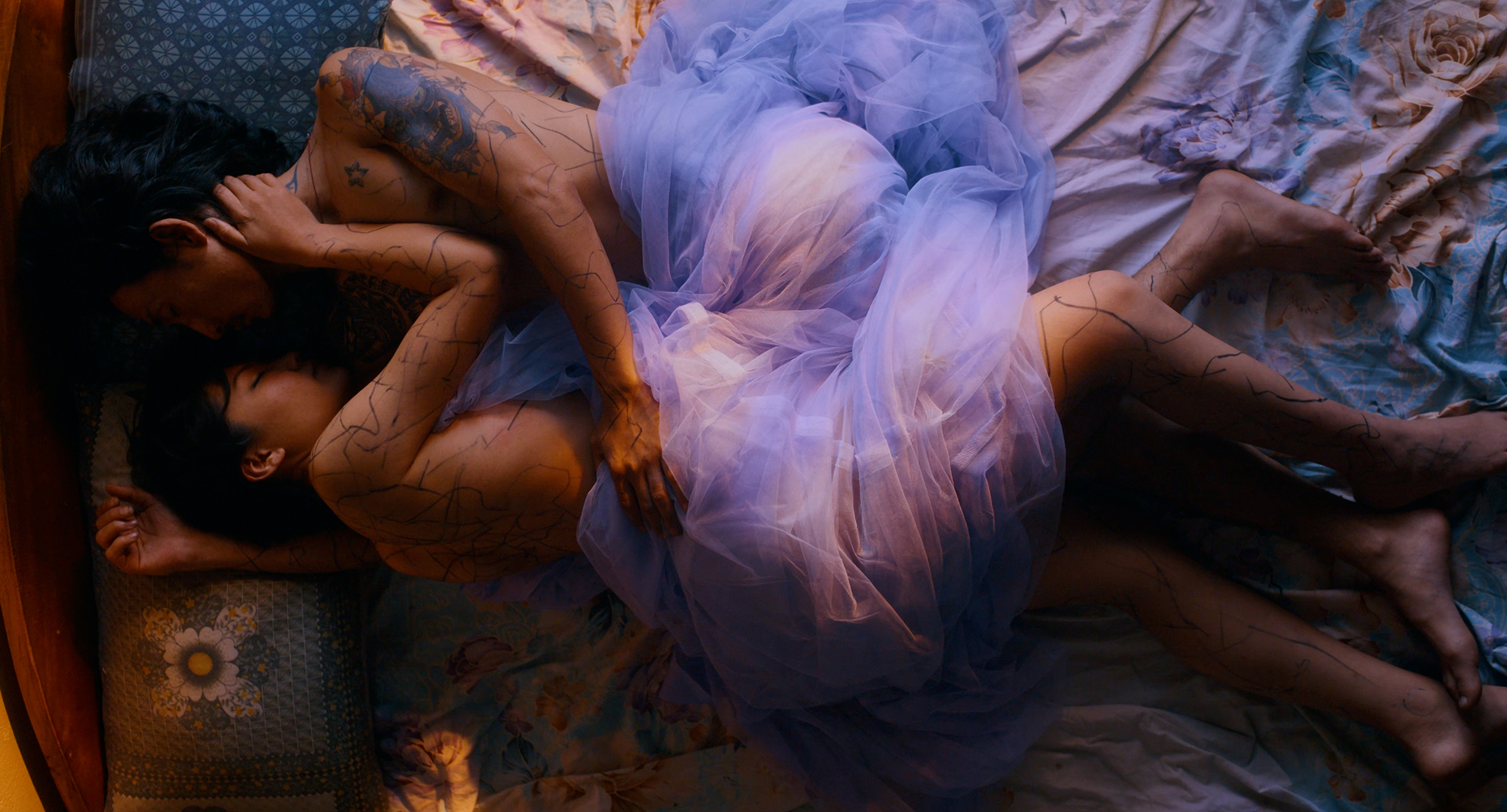
Tandin Bidha, who plays the main character or characters I guess I should say, is one of Bhutan’s biggest celebrities. She has been in over 45 films in Bhutan already. But I had never considered casting her because in most of the films I saw she was in I didn’t see anything that would fit my film and character. But then luckily, very luckily for me, I saw a small film which was on our first OTT (Samuh) which she actually directed herself in. It was a very simple but poignant story, about a woman trying to have a baby. No dance, drama or anything else, it had a more complicated character undergoing a very human journey. After seeing this film and how she developed her character, and seeing it felt like it was from a different universe completely than the characters she’s played in some of the other films I saw.
This was before I knew she could be our main character, and that she could carry this journey of more than one protagonist. I could see through this film — which she directed herself and wrote — that she was yearning for something else. So once I cast her, we really started working on how we can develop two characters without relying only on different dresses and hairstyles, but also on something that would come across as more innate, in presence, body language, rhythm, and even how we “look” at someone. It was truly a very collaborative process. Working with the supporting actors as well was great, because we also developed their characters in reference to if they are interacting with Nima or Meto, and how their own dynamics manifest; how they regard her, and the “power” dynamics in the relationship. Sometimes for some of the characters, like the old lady at the temple, we actually told her to think that both characters are the same, that they are no different from each other, so she treats them with the same warmth and grace.
She didn’t read the whole script and just the portions where she interacts with Nima/Meto, so that we could really achieve that. Working with Jimmy Wangyal who plays the musician Tandin was also very collaborative, and we did a lot of rehearsal for that, to really get the right frame of mind in the way he interacts with Meto and Nima differently. But his character is also more nuanced than the supporting characters in that he (and the lady at the temple) is also the only one who can immediately tell the difference between the two. He feels the essence immediately, while the other characters, they tend to look more just a surface level: the women look the same, so must be the same.
And that’s also the difference between his character and the lady at the temple: two of them can both feel and quickly know the difference between Nima and Meto. But whereas his character responds differently to both of them — treats them differently and feels differently — the old lady treats them the same and loves them the same. I wanted to make her the sort of “transcendent” character as well, almost like a dakini.
Q : You’ve lived in New York, and in this film there is mention of the female lead having left for the US. How was your cultural experience as someone from the Kingdom of Bhutan exploring America?
My experience in New York I am sure is not very unique, as those compared to so many people who try to live and work in New York. As someone from Bhutan, I never felt “out of place” in New York, because there’s so many people like me, from all over the world, trying to etch out a living or a life in the city, and also because you have full anonymity and freedom in a way to be exactly who you want to be. I worked in restaurants as a barista/server for the majority of my time in New York, and though it was tough and long hours (I was much younger too so I could physically handle it without a problem). I remember always feeling exhilarated with the energy there and the sense of freedom, and curiosity with the world which I felt for me was pulsating and beating so hard at that point. But of course it was not a sustainable life there, and of course, at the same time, I couldn’t pursue film at all since I didn’t have the time while working 12-14 hour shifts, and then also even if I had time I couldn’t afford it and didn’t have the means. Anyway, it was a different period of my life (almost 20 years ago!), and now in Bhutan I feel a different energy and truth, which suits me better at this point. But I did incorporate a tiny bit about this in the film of course, where the main character has spent some time in New York, and then also the other character (Meto) wants to go there. So that part was somewhat personal.
Q : Now that you are back in Bhutan, what does it feel like to have your film as the entry for the Oscars?
It’s truly wonderful to have our film submitted as Bhutan’s official Oscar entry. It feels like a stamp of recognition that we are doing the right thing, and a show of support. I really really also hope that it inspires other female filmmakers from Bhutan. And what’s been really nice is the small shows of support from around the world, from people I’ve never met or have no connection with. They have all seen our film and given a small shout out on social media or some other publication asking the Academy members to consider our film. This is a very warming experience, and means a lot, especially since we have zero campaign budget and have not done any “campaigning.”
Q : You are also the organiser and founder of the film festival Beskop Tshechu, can you tell us more about how it came into being and how it unfolds?
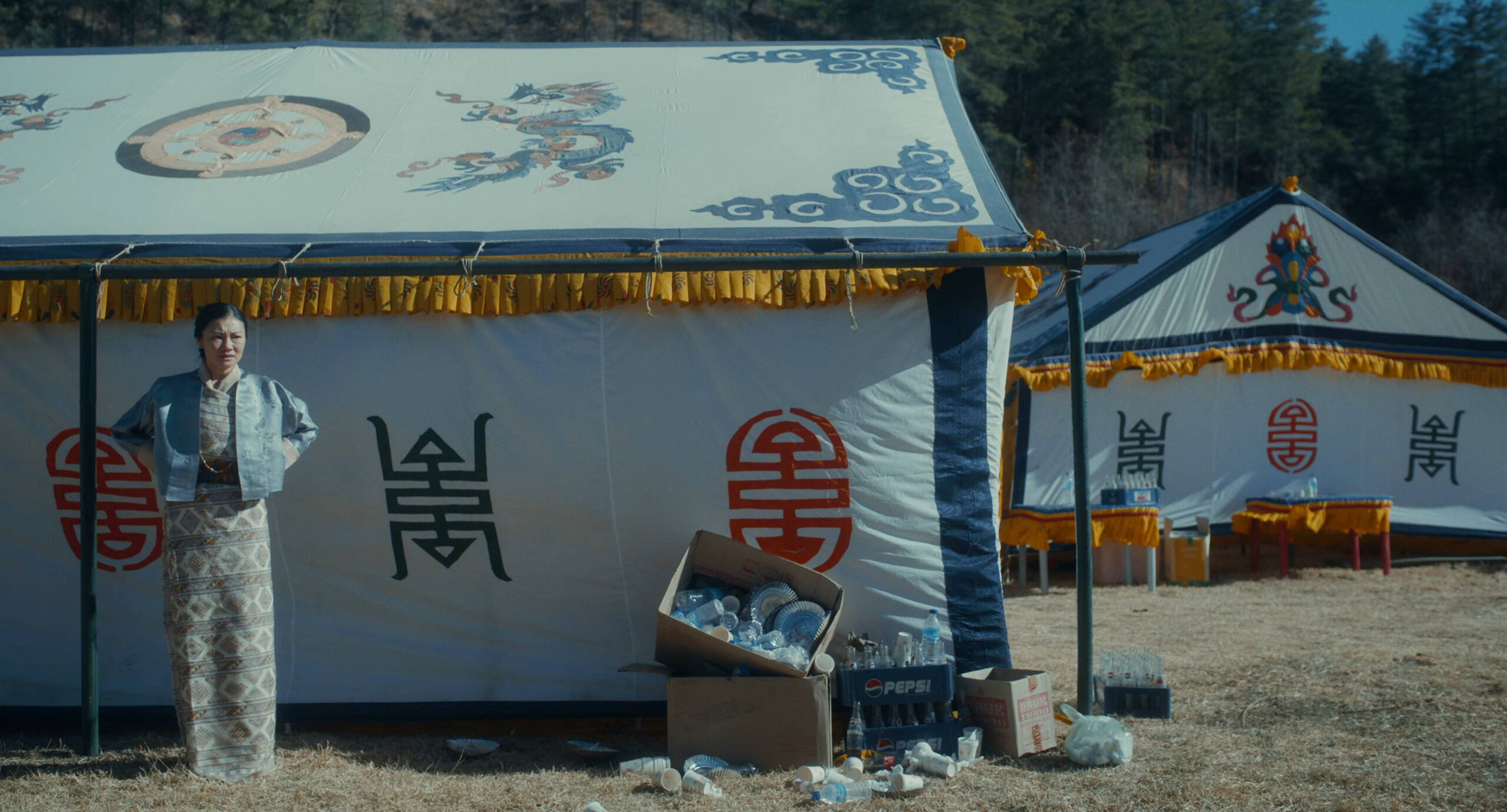
My husband (he’s an artist) and I are the co-founders and co-organisers of Beskop Tshechu, which we started in 2011 with a group of other filmmakers and artist friends. At that time there were just a handful of us who wanted to make somewhat different films which didn’t really fit in the theatres and also couldn’t work on TV. We felt a platform was really missing for short films and alternative films, and it was a very important platform that was missing for both filmmakers and audiences.
We felt it was kind of urgent. So we had our first informal “edition” in 2010 actually where we made a few posters, photocopied them and pasted them around town and had one evening of screening in the only contemporary art centre in the country (VAST-Bhutan). At that time we actually managed to get 10 film entries, and it was really nice because some were from our older veteran feature filmmakers who said they’ve had these short films sitting around for years and they never had a place to show them. So after this informal edition was a success, we aimed bigger, and got government funding for the next edition. We keep the focus very Bhutanese.
There’s a Competition for Bhutanese short films and documentaries, and then we also try to get some foreign films Out of Competition. In the beginning, for the first few editions we had very few entries (like 6 in 2011, and this year we had 30+ entries, so we think we’re doing okay or doing something right). We also started with having big open air free screenings, we’d get this huge inflatable screen through a cinema NGO from Thailand and set up in very central parts of Thimphu city. These editions were great fun for everyone, as we’d also have live music and theatre. We also started our first editions with a sort of “retrospective” of Bhutan’s first filmmaker: Ugyen Wangdi. It’s crazy to think how recent our film industry is (1989) but what is even crazier sometimes is that many Bhutanese do not know of him or his films. We are so caught up in the “now” and what information is given to us through our phones and social media.
So we felt this was really important to do too. We don’t have the festival every year as funding is still not regular, and sometimes we’ve been supported by international NGOs, sometimes government, and the last edition (our 6th edition) we actually had support from a festival in Poland (Five Flavours Film Festival) which was really a great collaboration. We also changed the festival a bit, since we realised we wanted more interactive sessions with filmmakers and audiences and more, so for the most recent edition we rented a real cinema hall and had the screenings and events there.
This was also a great edition, and I think our most successful one yet, and we also invited four filmmakers from outside and even showed a Jafar Panahi film! (This was thanks to our Five Flavours collaboration). We’re also happy and blessed that every edition we’ve received support from the Royal Office of Media (under His Majesty’s Secretariat) for the cash awards for the films. We are not sure when our next edition will be, maybe 2027, but let’s see!
Photo credited to the Trino film Festival