

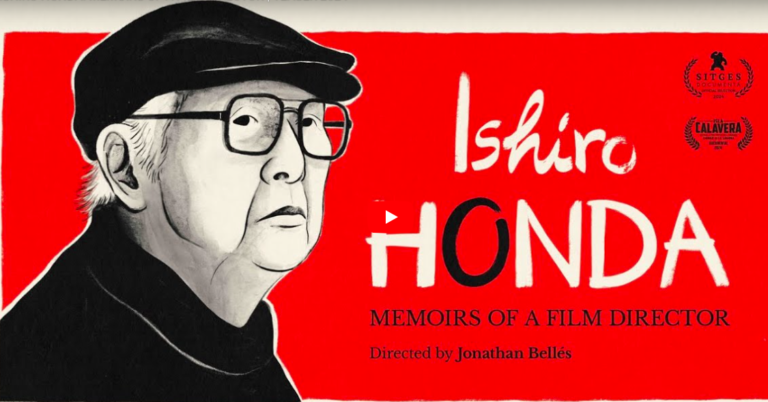
The journey towards the Chicago Japan Film Collective’s 5th anniversary continues in 2026, with the Backstreet Cinema Series Vol. 2. This second installment explores the primal power and emotional resonance of Nipponic art through documentaries that reflect the heartbeat, courage, and creative spirit that lie at the core of the cultural identity of the Land of the Rising Sun. One of these films is Ishirō Honda: Memoirs of a Film Director directed by Jonathan Bellés. The movie chronicles the life, philosophy, and deep friendship with Akira Kurosawa of one of Japan’s most influential filmmakers.
The documentary goes beyond the figure of the Godzilla film director, that the world knows about. In fact, through interviews and archival materials, the film examines how Honda’s wartime experiences — and reflections on the atomic bomb — shaped his artistic vision and enduring contributions to Japanese cinema.
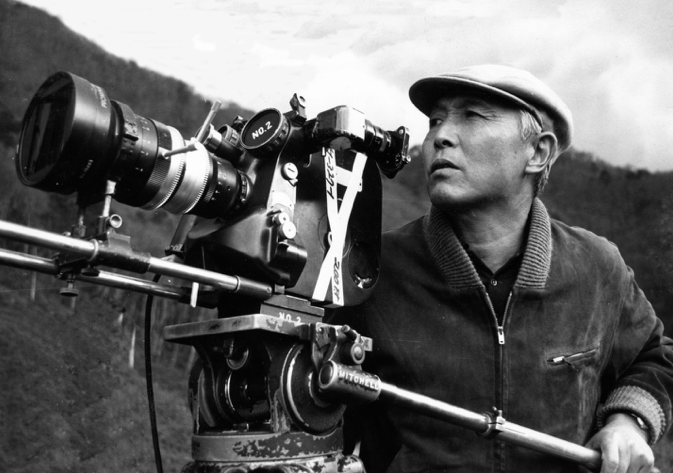
He was born in 1911 in Tsuruoka in the Yamagata Prefecture. His father was prior to the temple and when Ishirō was 8 years old, with his family, they moved to Tokyo. The change of scenery was what allowed him to interact with the magic of cinema. Author Atsushi Kobayashi identifies Honda’s fascination for motion pictures to the time when silent films were narrated by the figure of the benshi, especially Musei Tokugawa.
As the burgeoning filmmaker started to gather his first experiences in the field, he befriended those who would become household names of Nipponic cinema. Akira Kurosawa, Senkichi Taniguchi and Ishirō Honda in the Thirties were the most influential emerging filmmakers of their time and were renamed the “Three Crows”, as they followed the lead of their mentor Kajirō Yamamoto.
Honda enjoyed fondly his early days in TOHO studios, and the reason he became one of the founders of modern disaster film may be traced back to his decade-experience at war, where he witnessed the atrocities humans could be capable of committing. One of the most gruesome assignments he had to undertake was managing the schedule of brothels for soldiers, where women succumbed to sexual slavery. Jonathan Bellés’ documentary includes original black and white footage of this circumstance. In the Sixties Honda describes this experience as brutal and, the contemporary society shred criticism on his behaviour during the war. However, scholarly interviewees properly placed the situation into context: there was no such thing as a conscientious objector at that time in Japan.
Along with the analysis of talking heads from the world of academia, Ishirō Honda: Memoirs of a Film Director includes the testimonies of family members. For example, Honda’s granddaughter Yuuko, recalls how she would call him a “Living Encyclopedia,” because the time they spent together was always educational.
Also his son Ryuji Honda speaks on camera. Yet the family figure that is the most intriguing of all is his wife Kimi. She does not come across as a stereotypical Japanese housewife, rather as a very strong and confident woman for the society of her era.
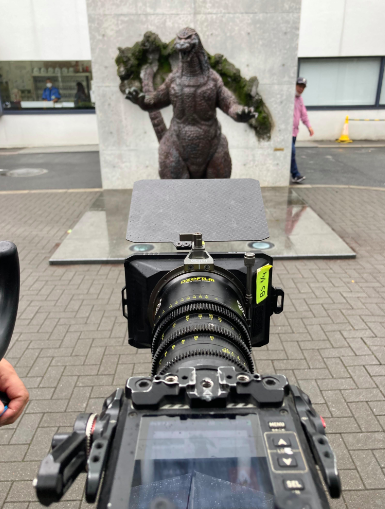
Ishiro Honda has been groundbreaking for the science fiction genre if one thinks of films such as Battle in Outer Space, Matango and The Human Vapor. Early in his career romance was a strong theme in his films, starting from his feature debut of 1951, The Blue Pearl, and continuing with his works such as Song for a Bride, Lovetide and Be Happy, These Two Lovers. However, the films with the special effects by Eiji Tsuburaya — such as Eagle of the Pacific, Farewell Rabaul and of course Godzilla — have been the ones that the general public identifies with Ishirō Honda’s style.
Just like war inspired his social criticism towards humanity’s ill-doings, the topic of radiation in his films was a consequence of first lived experiences, like witnessing the nuclear fallout from the Japanese tuna fishing boat known as Lucky Dragon 5. He used the cinematic language to address how science pushed the boundaries to the risk of a nuclear holocaust by bringing to life a monster born out of the effects of radiation.
Today, Honda’s figure seems to have been overshadowed by his notorious creation (Godzilla), that first arrived on the silver screen in 1954. His monster-movies are the most celebrated to this very day, to the point of establishing an annual convention devoted to the Godzilla film franchise and other kaiju genre: the G-Fest.
Ishirō Honda’s filmmaking approach is broader than the niche he has been pigeonholed through the course of time. Jonathan Bellés succeeds in bringing this to light, although he forgets to mention the great directors of our time (Quentin Tarantino, Guillermo del Toro, Tim Burton, John Carpenter, Martin Scorsese), who have publicly claimed to have been influenced by the Nipponic cineaste. Nonetheless Ishirō Honda: Memoirs of a Film Director rectifies the narrow portrayal of the Japanese film director by providing a wide angle on his life, legacy, style and artistic vision.
You can attend or view the virtual screening of Ishiro Honda: Memoirs of a Film Director at the Chicago Japanese Film Collective’s Event.
Sunday, December 14, @ 10:30 AM
at FACETS, Chicago, IL
+
Friday, December 12 – Sunday, December 21 (10 days)
Virtual Screening
Final Grade: B+
Photos credits: Courtesy of Honda Film, Inc.