

@Courtesy of NEON
@Courtesy of NEON
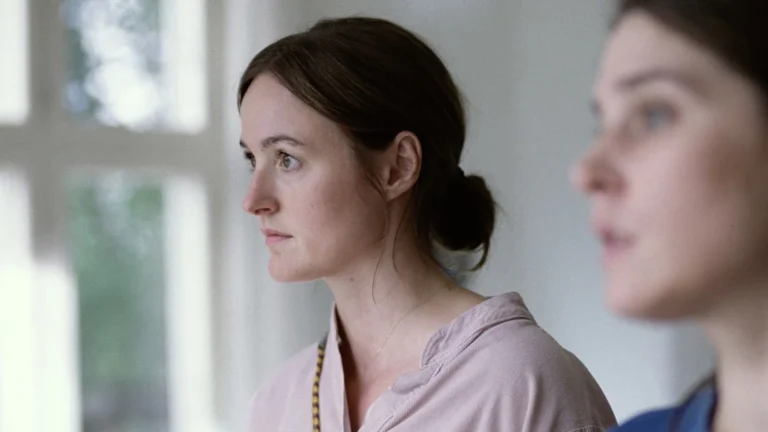
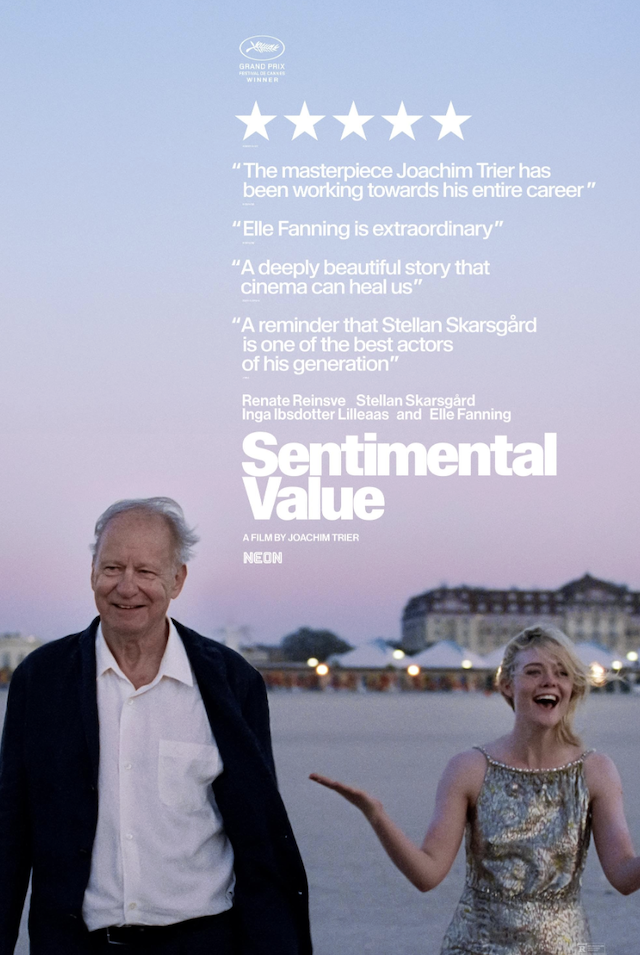
Press Conference With Actors Renate Reinsve, Elle Fanning, Stellan Skarsgård, Inga Ibsdotter Lilleaas, Director Joachim Trier and Screenwriter Eskil Vogt
Q: How has your writing process evolved, or has it stayed the same over the years?
Joachim Trier: We’re equally nervous every time we start. At least that hasn’t changed.
Eskil Vogt:vWe found a method on our second feature. The method is to accept how unprofessional we are.We are friends first, and collaborators second. We just find time together, we have ideas that we discuss. We discuss life, listen to music. talk about films. After a certain amount of time we are just scared enough for failure that something will emerge every time. You can sense in the films that they’re an ongoing conversation between two friends.vEach time we try to dig deep and find something we need to talk about. There’s so many films being made, we feel like we owe it to people, to at least try to make something that could stand apart, or at least that’s meaningful to us.
Q: Did you write this for Renate Reinsve specifically?
Joachim Trier: Yes. That was one of the things we knew for sure, we wanted to work with Renate again. She and I got to know each other very well during The Worst Person in the World. We had a lot of conversations about life,movies and stuff. There was an opportunity to try a new type of character, someone slightly more mature than Julie in The Worst Person in the World. Knowing Renate’s range, that was really exciting. She’s the first person we talked the idea about, even before the script was there.
Q: What’s it like to receive a script from Joachim Trier and Eskil Vogt that’s written for you?
Renate Reinsve: It is truly a very big honor, and it’s also very, very scary. They’re very wise and intelligent. Joachim has gotten to know me very well as an actor, but also as a person. I feel every time I have a conversation with him, I learn something new about the world or myself. It’s like starting to dig into a character: things just come up in me, certain themes or things I don’t want to see about myself. So it is really a privilege. This time, it was a character with more emotional weight.
Q: What’s it like entering into this company of players? Were you fans of their work before? Someone that you wanted to work with?
Elle Fanning: I was. The Worst Person in the World really struck me, it was and still is one of my favorite films. I did not expect that there would be a part for me in the future to work with Joachim, but he was on the bucket list of dreams to work with. When I heard that there was this part of an American actress, I was extremely excited. I wanted it very badly. Reading the script, it’s a profound piece of writing. The film is a beautiful reflection of the script, it’s so moving.
Q: Stellan, how did you get involved? Did Joachim Trier come to you specifically for this role?
Stellan Skarsgård: I’ve been waiting for it. He said he was writing the role for me. We met, we had dinner, and circled each other carefully, like two dogs sniffing out each other. But we got tired of that eventually, so I said yes.
 @Courtesy of NEON
Q: I’m curious if you knew Joachim or Renate from working in Norway and what the casting process was like for you to get involved.
Inga Ibsdotter Lilleaas: I knew Renate a little. We had worked together in theater almost 10 years ago when we were very young. I’d met Joachim before, but I don’t think I spoke one word the first time we met. He spoke, I just listened. Then Yngvill, the casting director, asked me to come to an audition. A few months went by and I did another one. We had a lovely conversation, and I got to know him. Which was generous and very smart from a director to take that time so early to get to know the actor. It really made me feel safe and respected. It was very inspiring, those conversations that we had during the whole auditioning process. I felt like this has been such an incredible experience, just the auditioning process. I have something that I’m gonna cherish for the rest of my life.
Q: What is your auditioning process like for bringing in new actors that you haven’t specifically written for?
Joachim Trier: It’s a special situation if you work in a small country like Norway where there’s 5.5 million people only. I try to find people that work in theater or come from other places. You know. For the first film that I directed, Reprise, we found almost only non-actors because that was about young people in their early 20s. It’s a very important thing to give a safe space, spend time and resources. So when you then end up sitting in a room talking to a major talent like Inga, it’s not only a process of the director choosing the actor. It’s also like, can we trust each other? Can we talk about character? Can we figure out a way to express this human experience together? She was very brave, opening up and having a take on the character of Agnes, the younger sister, which changed Eskil and my approach to the character in the script. We got something out of it. Spending time together can actually encourage a collaboration on a deeper level.
Q: How did you land on the house as this central organizing principle in the script?
Eskil Vogt: It came quite soon, but it came from behind. We were looking for something that could be a contrast to the characters and their story. Something that had more scope. We wanted something a bit more vast to put things in perspective. It just gave us something else to mirror the characters in and give perspective. So we felt that’s where the film should start, and that should be its own story within the story.
Q: What’s it like being an actress playing an actress? Can you both talk a little bit about what it’s like to have that sort of double-layered performance?
Renate Reinsve: Coming back to the theater after being in the theater for almost all my life before I had The Worst Person in the World, that was a big joy. For me it was more about that she had an artistic outlet for what she was carrying inside that she never was able to process or communicate. To go on stage and open up, in any artistic form or profession, you have to open up to everything in yourself to make it good, relatable, to talk about something authentic. She doesn’t want to because she’s never actually been able to process those things she experienced with her dad. I had a lot of fun, especially with that first scene where she panics to go into that space in herself. I actually did a lot of comedy in theater, it was fun to get to do a comedic scene in this movie.
Elle Fanning: Rachel Kemp is very particular. She’s a certain type of actress. Joachim and I talked a lot about the character, she easily could’ve slipped into this vapid Hollywood cliche. It was important to flesh her out to be a full human being. There were things inside her that I could relate to.
Q: Did you draw on any experiences that you’ve had in your long career with many different directors in playing a filmmaker like Gustav?
Stellan Skarsgård: I saw it as an exquisite possibility of revenge. After a couple of thoughts about it, I didn’t care because he could be any kind of artist. He could be a painter, a writer, a musician, because the conflict is between his art and his personal life, his incapability of handling his personal life while he’s extremely tender and new and beautiful as an artist.
 @Courtesy of NEON
Q: What was the most emotionally challenging scene for you to perform, to film?
Renate Reinsve: We talked a lot about the scene with the two sisters where Agnes comes to Nora with the script because she has discovered how much the father has actually seen writing that character for Nora. Nora used to take care of Agnes, and now Agnes is the one taking care of Nora. We knew that that was a pivotal scene in the movie, we were nervous going into that. You can’t really plan on exactly how that will go. So just stay open and flexible with all the little nuances and details we had built up in preparing in rehearsals and conversations. But then one of the greatest talents Joachim has is gathering and making a community around his vision and around a way of working. When a scene is improvised, it’s not only the actor’s improv, it’s actually the whole room. The cinematographer was so leaned in emotionally, and everyone around in his team too was so leaned in. You can actually be very flexible about the scene and make the events like something actually occurring in the moment. That is one of the greatest things on Joachim’s sets, to have that momentum.
Inga Ibsdotter Lilleaas: It was definitely challenging. I was a little scared going into it because we’d talked about how she’s going to explain or how she’s going to convince her. I hadn’t decided how to do it or what to say. When we went in and did it, I felt like it just took me, the whole thing. I was just filled with emotion, it was like I was ripped open. So it was a challenge before, but then going into it, it felt like something flowing through us. It was a very special day. The sound guy came in and said that our hearts started to beat like synchronized when we hugged, which was really so beautiful. That described the whole movie and the whole day.
Elle Fanning: The scene when I walk away from the project, I remember my heart really pounding that day. As an actor, you’re always daydreaming or imagining the perfect way you want the scene to go. You can’t predict how anything is going to happen. Most of my scenes were with Stellan and he is just incredible, he’s so soulful. Joachim is not afraid of silences, which is a really beautiful thing.
Stellan Skarsgård: It wasn’t challenging because those three women, they’re fantastic. They give everything and you only have to react to them. That’s good because acting to me is more about reacting than acting.
Q: What is your approach to rehearsal? How much rehearsal are you doing ?
Joachim Trier: We call it rehearsal, but what it really is, is to hang out and get to know each other, try to find ways to do the different relationships and the character work. Part of it is actually just me alone with each actor in the beginning: talking, sharing stuff, trying to figure out how I can help them.vHow do I stimulate, how do I give them a platform to explore? Then we start doing two and two, we don’t do table reads. For some reason, I’m hesitant to do that. I know it works for many people. Their job is to beat by beat, relation by relation, try to stay truthful to the moment. We do these sessions, we only do half days once in a while, then they go away for a while, think and come back. It’s a longer process. We film it, Eskil and I look at the tapes and we refine the script. We get the scenes better. We remove a lot of dialogue, a lot of intention.
Eskil Vogt: I’m not the kind of screenwriter who cries when a line is cut in the edit. Sometimes you put things in there and you hope it won’t be needed. This movie is a lot about what’s not said and what’s said indirectly. It’s very much about what we always think when you write dialogue. If you let the audience make that in their head, they become your friend, they become the film’s friend because you don’t look down on them. That’s what we try to do is leave space for the audience.
Renate Reinsve: For an actor, to have actually that dynamic between what you say and the intention and the subtext, it’s space for us to fill in the nuance between, fill the moments with so much more in that quietness and what we can communicate. There’s so much truth in that.
Q: I wanted to talk a little bit about the scene in the archives, which is so moving. Can you talk a little bit about processing that through the writing and shooting?
Joachim Trier: My grandfather, Erik Lochen, was a filmmaker and a jazz musician as well. During the war he’d been imprisoned and suffered tremendously. He was to create art or try to find some sense of communication with the world to save himself. Those conversations around that theme also somehow informed writing this film. Eskil Vogt’s partner, she works at the National Archives. We talked to her and I said at some point, just out of curiosity and research, if she could help me get hold in that basement of some information on my grandfather. It was extremely emotional. So why don’t we let Inga’s character go there and have that strange experience? We have to forget something to move on and reconcile ourselves with the past and with our families, yet we owe them to remember. That generation is dying now, many of them are already passed. All of those things came into a conversation then with Inga.
Inga Ibsdotter Lilleaas: It’s a very special place. I’d never been there before. Knowing that this is a place that holds our collective history in a way that’s very moving to me. It makes you raw emotionally. We didn’t plan anything. Then I’m reading, I’m looking at the person who’s my grandmother, who I didn’t know, and I’m reading through all these things that happened to her. I was very taken by the whole, I was very moved by it, very upset and sad on behalf of these characters. It was a very complex situation to be in. I realized so many things about the character and about her relationship with her father, what she didn’t know about him or hadn’t thought about, how he was a boy who lost his mother. It was very interesting how that day affected the character later in the shoot.
Q: Can you talk about how art has been like a healing process for all of you, or specifically with this film, if there was something that, you know, was, that you got to work through in this?
Joachim Trier: I don’t know. We don’t presuppose that you say something and that changes everything, but it’s the baby steps of emotional acceptance that we’re talking about. In that sense, it’s not like I make a film and then everything is amazing and solved. We keep working through stuff. It’s very satisfying to be allowed to be with a bunch of people and do something that feels like you’re dealing with something personal. Art is a formal device to express something deeply personal without it having to emulate the biographical. It’s beyond that.
Q: Who wins the argument when you are working together in a movie? And are you both jealous of the other one when you don’t work together?
Eskil Vogt: This is I think a compliment to Joachim: as a collaborator and in every part of the process, he’ll never say: “It has to be like this because I’m the director”. We’ll find a way, and if we don’t see the same thing, we’ll find a third idea, and that perhaps is even better. But then Joachim goes off and makes his film, and I’m not really on set, and I get involved again in the edit when Joachim Trier and Olivier Bugge Coutte have made a version of the film. They may keep making versions, and I watch them, and then I give my opinion, I want to be heard. We co-signed the script in a way. I feel in a weird way that Joachim films are my films as well, because it’s a very close collaboration. But when he’s on set, when he’s in the edit with Olivier, it’s, I have to let go a bit.
Joachim Trier: It’s so important for me to work with Eskil Vogt, I’m super grateful. He’s a really great director, and he can write and direct himself. It moves me, when you say Eskil, that you feel it’s your movie too. Of course it is. We’re a band and we work together. It’s super advantageous to write with someone who’s also a director, because writing is not only about character and dialogue and story, it’s about actual spatial true movements. You need to understand the timing of space is at the essence of writing for cinema. And Eskil has a great understanding. We can speak specifically about how to write for a visual language. That’s a great advantage.
 @Courtesy of NEON
Q: Do you go on set during the shooting?
Eskil Vogt: Not very much. My favorite metaphor about this is it’s like being a writer on set. It’s like being a father during childbirth. You know, you are very, very invested in the outcome, but you have no function and you try to not trip over the wires and be in the way of the doctors. I just go on set to say hi to the actors, because otherwise it would be weird to me to meet them after the film is finished. I’m just a tourist on set and then I get involved again when the edit is beginning to come into shape.
Q: As the father of many actors, did this role make you think about your own legacy?
Stellan Skarsgård: It did more than I liked actually, because I had to revise some of my choices. You think that you’re a good parent and you do things for your kids. You can’t be a perfect parent, but there are limits. I have eight kids, that means a lot of work. I’ve spent time with them. For the last 30 years I’ve been shooting only four months a year, which means eight months of changing diapers, wiping asses. So I spent time with them, but was I really there? That’s the question. I have a feeling that sometimes I didn’t listen to them. I was thinking about a role and I wasn’t listening. They all have different needs. Nobody can be a perfect parent.
Q: The house itself carries the weight of a big symbol. It really reminds me of the Ibsen dramas The Dollhouse and Hedda Gabler. Was it intentional?
Joachim Trier: Thank you for recognizing the Norwegian dramatic tradition. We try to avoid all kinds of things and then we end up being affected by them anyway. It’s a part of our culture and vernacular in unconscious ways. We never said specifically that we would mirror any Ibsen drama, or even Chekhov, even though Chekhov is mentioned in the film.nI love going to the theater, but I’ve never worked there. It’s not my home. Now that these conversations are percolating and people are suddenly seeing references to Ibsen, I don’t want to hinder that. Maybe there’s something at play, but we didn’t consciously go in there.
If you liked the interview, share your thoughts below.
Check out more of Adriano’s articles.
Here’s the trailer for Sentimental Value: