

©Courtesy of A24
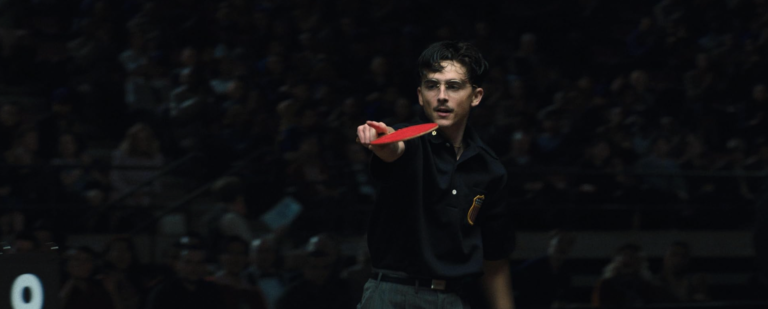
Few contemporary filmmakers are as drawn to obsession, risk and self-destruction as Josh Safdie. The Emmy winner’s latest movie, the sports dramedy Marty Supreme, is a natural extension of those fixations. The story is ultimately only filtered through the unlikely, electrifying world of competitive table tennis.
Loosely inspired by the real-life exploits of underground ping-pong legend Marty Reisman, Marty Supreme blends sports movie conventions with Safdie’s signature nervous energy, moral ambiguity and character-driven chaos. What emerges is a restless biographical portrait of ambition on the margins, where winning is never as important as refusing to quit.
Safdie, who garnered attention for his last co-writing and directorial effort, Uncut Gems, with his brother Benny, helmed Marty Supreme. He also co-penned the new sports dramedy with Ronald Bronstein.
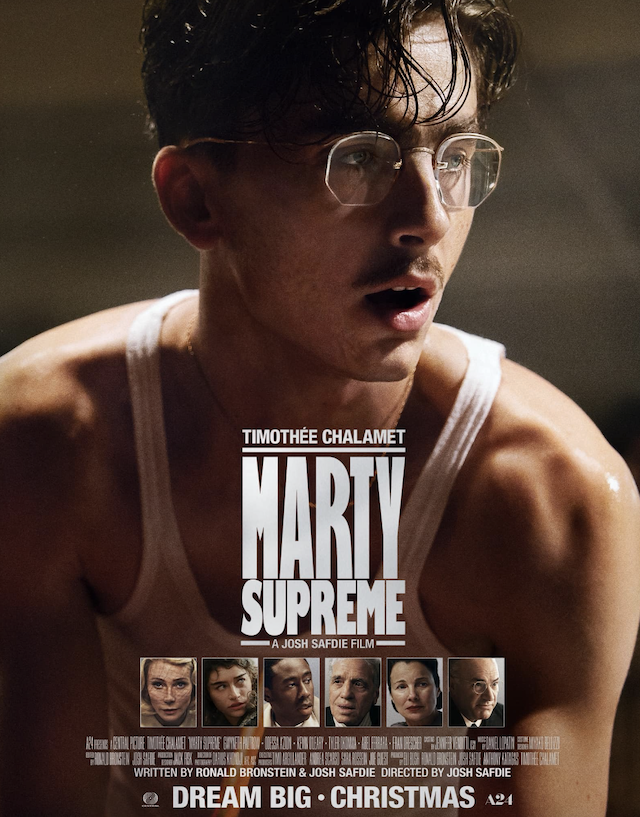
Timothée Chalamet portrayed the titular character in Marty Supreme. The Oscar-nominated actor stars alongside Gwyneth Paltrow, Odessa A’zion, Kevin O’Leary, Tyler Okonma (known musicially as Tyler, the Creator), Fran Drescher and Japanese National Deaf Table Tennis Championships winner, Koto Kawaguchi. Besides starring in the movie, Chalamet also served as one of the producers, alongside Bronstein and Safdie.
Marty Supreme follows Marty Reisman, a notorious up-and-coming figure from New York City’s underground table tennis world in the early 1950s. The young athlete made big bets on himself, and refused to graciously accept defeat.
As the film opens, Marty is working at his uncle Murray’s (Larry “Ratso” Sloman) shoe shop, where he bides his time before he can take his chance at becoming a professional table tennis play. However, no one, including his mother, Rebecca (Fran Drescher), and his childhood friend, Rachel (Odessa A’zion), respects his goals. ambition.
That drives his desire to succeed. As a result, his selfishness affects not only himself but everyone around him. He even fosters a love-hate relationship within the sporting community.
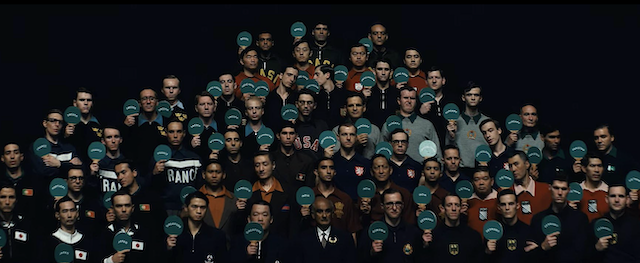
Once he begins to see a slimmer of success, the entitled Marty arrives at the British Open thinking he’ll easily defeat his competition. That includes his most surprising opponent, Japanese player Koto Endo (real-life player Koto Kawaguchi).
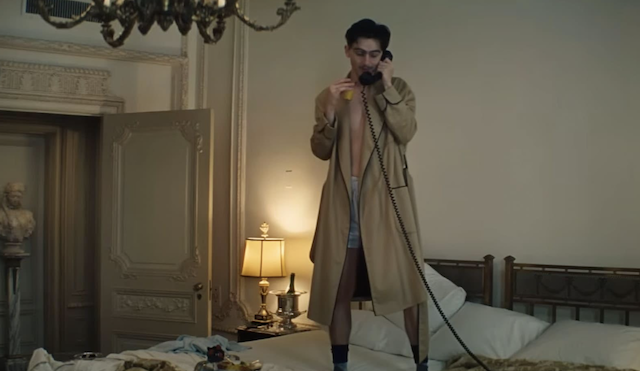
While at the competition, Marty even begins to view veteran business mogul Milton Rockwell (O’Leary) as an enemy, instead of a potential ally who can help him advance his career. The young athlete is envious of Milton’s marriage to veteran movie star, Kay Stone (Paltrow). Desperate for her attention, Marty does whatever it takes to pursue the actress, with whom he forms a casual, intimate affair.
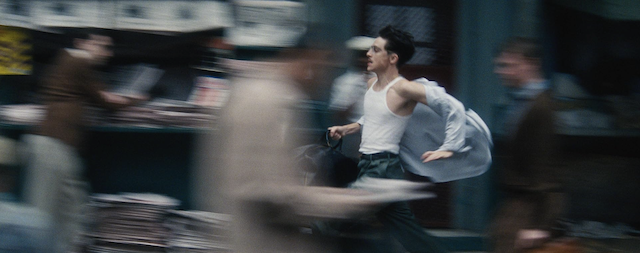
Marty’s ambition propels him from backroom hustles to the international stage. During that process, his raw talent is matched only by his refusal to bend to authority, expectation and the people who care about him most.
Each victory sharpens his ego, and each loss deepens his sense of grievance. As a result, the line between self-belief and self-destruction is ultimately blurred.
Marty Supreme began a limited theatrical release in Los Angeles and New York City last Friday, December 19. The film opened to a record-setting limited opening weekend, earning a three-day total of $875,000. A24 is expanding the critically acclaimed movie to theaters nationwide this week, to coincide with the Christmas holiday weekend.
Chalamet, Paltrow, A’zion, Drescher, Okonma, O’Leary and generously took the time before the initial theatrical distribution last week to promote Marty Supreme. They participated in a post-screening Q&A at the DGA New York Theater.
©Courtesy of A24
Q&A with Timothée Chalamet, Gwyneth Paltrow, Odessa A’zion, Fran Drescher, Tyler Okonma, Kevin O’Leary and Koto Kawaguchi
Q: Let’s welcome this diverse group of performers from Marty Supreme to the stage. To anyone who wants to answer, what is it like to have all of these complementary energies on the same film? How was Josh able to synthesize all of them?
Timothée Chalamet: What a dream! It was an incredible experience to everyone. We were in a roomful of actors on set. As actors, we want to have experiences that keep us on our toes.
It does feel like Josh took this out of different boxes and put us all together. But he was our fearless leader, and he was really leading the charge. It really was an honor for us to be all together.
Q: Timothée, when you play a role like this, do you have to have confidence and an athlete’s mentality to challenge the athleticism?
Timothée Chalamet: Well, every actor’s approach is their own. But for me, that sort of confidence can ebb and flow. Sometimes I can get carried away. I’ve been speaking with that Marty Mauser spirit while promoting the movie because I believe in it. Marty easily gets down emotionally because he doesn’t have anyone believing in him.
He’s his only supporter, and is a big dreamer. Rachel, who’s wonderfully played by Odessa, is in his corner, but overall, it’s him against the world. So I can relate to that deeply, and I tried to bring that spirit to the movie.
Q: Some people think Marty Supreme is about Josh, and some people think it’s about you. Where do you see it triangulate in your mind? How much of Marty comes from your spirit, and how much comes from Josh’s mind?
Timothée Chalamet: That’s a great question. As an actor, you’re your own instrument, so I brought a lot of this character to the project.
But the more I hang out, and talk about the character with, Josh will go, “I love it when Marty does this and goes and does that.” For everyone who knows what a tense life Josh lives, they know he’s comfortable living on the edge. It’s a really strange thing to be around. To that degree, Marty Mauser’s all him. But overall, it’s an ambulation of all of us.
©Courtesy of A24
Q: Gwyneth, it’s really great to see you on screen again. I don’t think anyone would speak about your in the same self-defeating tones that Kay Stone speaks about herself. But were there some elements of an actress coming out of retirement to play an actress coming out of retirement that appealed to you? Why did you feel this role was the right choice for you to get back in front of a camera, and help you find the character?
Gwyneth Paltrow: I was really intrigued by the world that Josh had envisioned. When I read the script, I was really blown away by how ambitious it was, and how I really couldn’t picture it.
Josh is such a unique character and so full of energy. He has a singular vision point-of-view. So I was intrigued by the fact that he saw this very meta aspect of me coming back and playing someone who was coming back.
But it wasn’t the main reason why I was drawn to the project. Everybody here, as well as Josh and his previous body of work, are amazing. So I was intrigued by the sum of the body of parts.
Q: The power dynamic between Kay and Marty is so nuanced and fascinating, and reaches a poetic ending, in Marty Supreme. How did you see Kay in relation to Marty? Did you see them as two sides of the same coin, or two different people?
Gwyneth Paltrow: I did see them as two sides of the same coin. I think that’s why when you see them together on screen, the film lands. Weirdly, they’re very much in integrity when they’re together because I don’t think they have a lot of pretense when they’re together. In a way, there is an amoral part to each of them that’s recognized and not judged by the other one.
Each side of their relationship is quite transactional. They feel as though they’re kindred spirits, in a strange way.
Q: Odessa, one of the things that stands out about Rachel is that she sort of feels inspired by Marty to break out of her circumstances. But one scene that stands out is the one where he tells her that he has purpose and se doesn’t. But it doesn’t make her weak not to push back in that moment. How did that moment become a corner stone of the character?
Odessa A’zion: I haven’t thought of that scene as the cornerstone of their relationship. But I just think that in that scene, it was important for Rachel to really listen to what he was saying. He really believes in everything that he’s saying.
At times, she thinks he’s not the nicest. But she still gets him and is still on his side. She wants him to win, and is always thinking about him. She understood what he was going through and really cared for him, even though there were things going on in her own life.
©Courtesy of A24
Q: Odessa, Marty Supreme is driven by person history. Marty tries to lie about having a past, as he’s very future-driven. There’s a throwaway line about Marty and Rachel having known each other since they were eight. So was it ever valuable for you to drawn on Rachel’s past in her relationship with Marty?
Odessa A’zion: Yes, that was a really cool thing that Josh and Ronald made sure we had whenever we needed. They had a history for every single character. So Timothée and I knew that our characters knew each other since they were eight, which was really helpful in understanding these characters. They grew up in the same building, and their families were close.
So we knew a lot of the history from Josh and Ronald, which was very helpful. That helped us understand the characters’ dynamic and why they cared so much about each other. I think they became each other’s first loves, in a way, after they grew up together. They represented safety for each other, even though he was the unsafest person on Earth.
Q: Next up is former SAG-AFTRA President, Fran Drescher. (Audience applauds.) There’s a scene in which Marty returns home to New York from Egypt and gives his mother a piece of the pyramid and says, “We made that.” What were you feeling in creating that important moment?
Fran Drescher: We have a very interesting relationship as a mother and a son. Josh said he wanted me to do this movie because I’ve had a lot of things that have happened in my past. So he felt that there was a depth to me that I could bring to this character. I’m so grateful for that because obviously, a lot of people know me as (the titular role from) The Nanny. So to have someone say, “There’s a lot more to you, and I want to pull that out of you,” was really gratifying to me.
Josh initially wanted me to be a lot like his mother. But I never met the woman, so he shared with me stories about his upbringing with a mother who was somewhat unstable.
He told me a story about how he went to visit her in an institution once when he was a little boy, and he bit her. He wanted to hurt her because she was so troubled and self-absorbed, in a way, and never really saw him for who he was. So that was something I understood was important for my dynamic with Marty.
I also think that my character comes from a very small-minded place. She’s someone who doesn’t have dreams, and just wants to make enough money to survive.
But that’s not Marty at all. So in that way, the characters really differ. Rebecca couldn’t understand why Marty, who’s also good at selling, doesn’t just do that.
My character misses her son when he’s not around. She’s very co-dependent on him when he’s not there. When he does come home, she wishes she can get more of him. But he never gives her enough, even though she needs more. That’s not his style, so when he gives her something, it’s meaningful.

©Courtesy of A24
Q: Tyler, this is your first live-action film acting role. You’re such a great musical artist, and bring such a force of light to everything you do. Were you confident that you could find your way as an actor on the set?
Tyler Okonma: Since this was my first role, I wasn’t pressuring myself to be good. I just went in and read the lines, and tried to do my best. (Audience laughs and claps.)
I’m friends with Josh, and he’s so cool. I respect him so much as someone who makes things. Being able to watch his process was so awesome. Being able to watch his process on set as a fan allowed me not to worry too much.
Josh was joking most of the time, up until he called action. I knew at that time that each scene would be shot in a specific way, so I wasn’t worried about learning the lines. (Audience laughs.)
I was like, “What scene are we shooting? Oh, these four lines? Okay, cool, I’ve got you.” I didn’t want to put pressure on myself and be like, “I have to learn the whole script!” That process wouldn’t work for me! (Audience laughs.) So I learned my lines about two minutes before we started filming my scenes.
Q: One thing Josh and Ronald were interested in exploring were the divergent ways that Americans and Japanese citizens reacted to the ending of World War II. Koto, while you were finding your character, did you just do the opposite of Marty?
Koto Kawaguchi (though an interpreter): The first impression I had of Timothée was that he’s such a nice guy to work with, which made my job a lot easier. I had no experience acting, so I thought I would just have some fun with it, and Timothée helped me with that.
Q: While you were filming the ping-pong competition scenes, how did you choreograph those scenes together?
Koto Kawaguchi: I drew upon my own experiences as a professional table tennis player. So in terms of creating my movements and facial expressions, I was just basing them on what I would normally do in my real-life games.
So as I got into the scenes with Timothée, my biggest learning experience was watching him improvise. Those scenes surprised me at first, so I wasn’t sure if we were still rolling. (Audience laughs.) I wondered, is he really yelling at me? Am I in trouble now? (Audience laughs.)
Timothée’s approach was like that of a professional athlete, especially with his intensity when we made eye contact across the table. I think that gave him a greater sense of confidence in the role.
Q: Kevin, you’ve been pretty forthcoming in the fact that you’re basically just playing yourself in the movie. So you weren’t offended when Josh asked you to play a capitalist. Do you understand why Marty’s the hero of the movie, and not your character of Milton?
Kevin O’Leary: I don’t agree – Marty’s not the hero of the story! He didn’t pay the price for all his sins. He destroyed everybody’s life, and then he got off easy. (Milton’s) the only guy there telling the truth – he didn’t pay the price! But I think that’s the intention of the movie.
I brought it up with Josh and Ronnie. I was like, “This guy gets away with murder.” What is this? If anyone did this to me in real life, I would seriously mess them over. (Audience laughs.) So I’m surprised that isn’t happening here.
When I read the script, I was totally hooked on the story. But I was like, “There isn’t enough payment scenes.”
Everyone’s broken in the film. My character and his wife are in a broken, loveless marriage. Milton is also broken because he lost his son in the war.
So I think audiences will discuss and debate these issues after seeing the movie. Everyone’s got some problems here, so that contributed into writing this crazy script.
But I loved working on the film. It was just a wonderful experience to work on. Timothée was just amazing to work with. By the end of the shoot, I was like, “This kid’s going to win an Oscar!” (Audience claps.)
So overall, the production was just magic to watch. For a first-time actor, I had a great time working on this film. it was fantastic. (Audience claps.)
©Courtesy of A24
If you like the interview, share your thoughts below!
Check out more of Karen Karen Benardello’s articles.
Here’s the trailer of the film.