

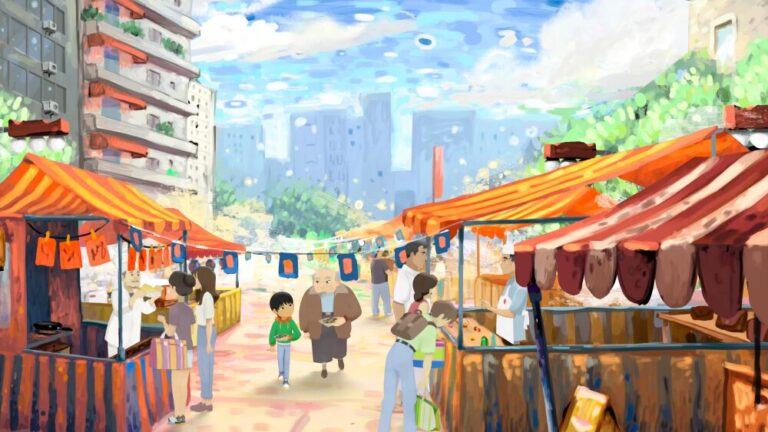
The birthplace of the bossa nova is also home to the largest diasporic Japanese community outside of Japan, starting when the first immigrants arrived on June 18, 1908, a date now commemorated in Brazil as “Japanese Immigration Day.” Young Noboru’s grandfather Hideo arrived during a wave of increased immigration in the 1920s, but he rarely talks about it, because he is gruff and curmudgeonly. Noboru feels great trepidation when forced to interview his grouchy avô for a class assignment, but it leads to a greater appreciation of his family and their heritage in Celia Catunda’s animated feature My Grandfather is a Nihonjin, which screens during the 2026 New York International Children’s Film Festival.
Some viewers might be familiar with São Paulo’s Japanese neighborhood, Liberdade, from the Netflix series, Spectros or Vicente Amorim’s film Yakuza Princess, but Noboru never gave it much thought. He grew up identifying solely as Brazilian, mostly socializing with friends of Portuguese and Bahian (Brazil’s traditionally black and indigenous Northeast region) descent. Awkwardly, speaking his limited Japanese with his “Jityan” (or Jichan) has been a chore for Noboru, which the old man always made as difficult as possible.
However, once Hideo starts reminiscing, he drops several shocking revelations, such his late first wife, Kimie, whom he married before Noboru’s “Batiam” (Baachan) grandmother. Sadly, Kimi lacked the strength and fortitude required to labor on the plantations that lured the Japanese immigrants into conditions of indentured servitude. His grandmother Shizue was made of hardier stuff—and she can still put up with Hideo. 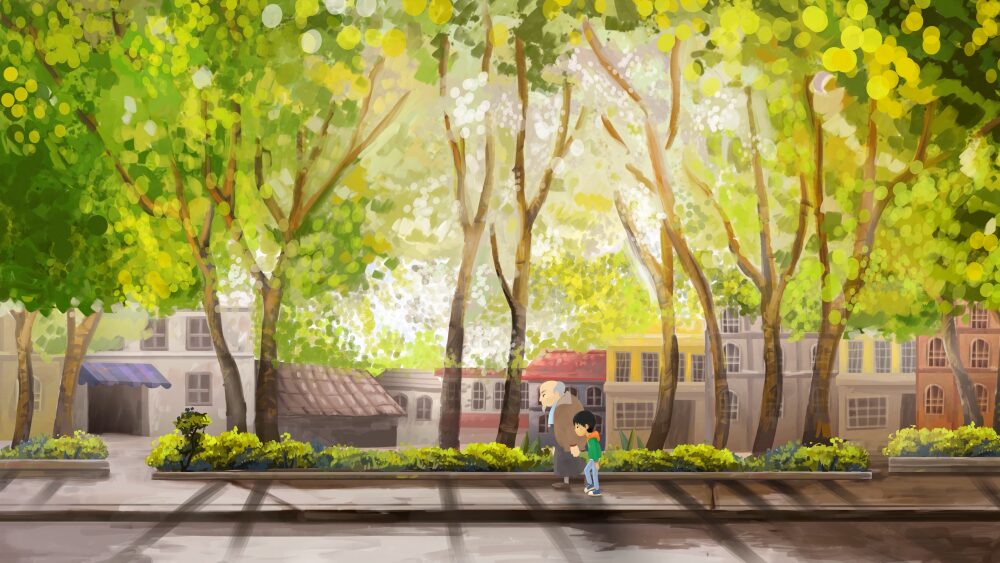 After his second marriage, Hideo and several other Japanese families pooled their resources, allowing them to form their own cooperative venture. In fact, Catunda’s film offers some instructive lessons in the value of thrift, discipline, and enterprise.
Of course, WWII presented new challenges, including laws that banned the Japanese language, which Hideo defied at great risk. However, his mother’s youngest brother Haruo, the uncle Noboru never heard of previously, was forced into hiding during this time. That was not Hideo’s finest moment. Indeed, it is a lingering source of shame, he might finally face.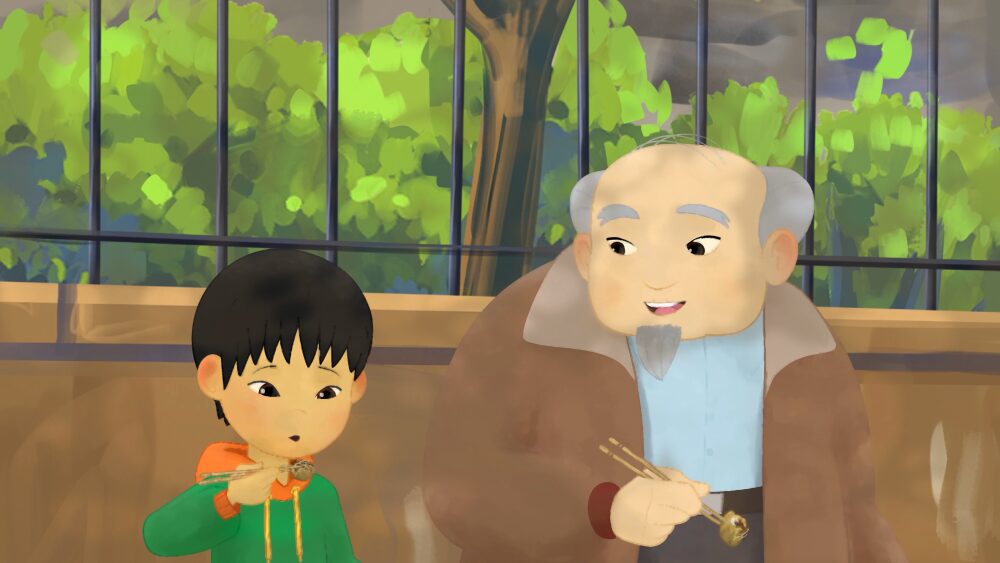 Rita Catunda’s screenplay, adapted from Oscar Nakasato’s novel, incorporates very real Brazilian history. Visitors to São Paulo should check out the Museo da Imigracao Japonesa, which documents the experience and cultural contributions of Japanese immigrants. (Tell them Cinema Daily US sent you.)
Perhaps some viewers might complain because the film never addresses the military regime (which was famously indicted in the Oscar-winning film I am Still Here), even though it still held power when the film opens in 1980. Yet, in all honesty, Hideo and his family went through more than their share in the 1920s and 1940s. Arguably, adding discussion of the military dictatorship probably would have diluted the focus on the specific challenges faced by Hideo’s generation, during the early to mid-20th Century.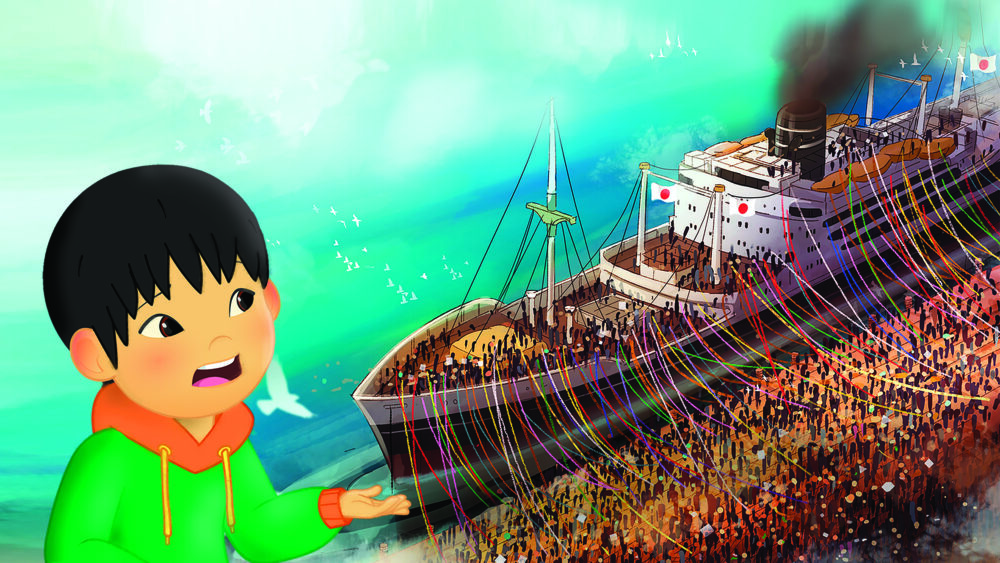 Indeed, through their story, the Catundas illuminate the history of the Brazilian Japanese community. The vibrant animation aptly captures Noboru’s youthful perspective and his flights of fantasy. However, it renders the story in warm, tropical colors, visually evoking the Brazilian spirit of the film more than its Japanese roots.
Regardless, the hand-drawn animation suits the intimate nature of the story. The arresting backdrops created by Japanese-Brazilian painter Oscar Oiwa truly transport viewers back to rural São Paulo (the state, not the city), evoking the visual textures and vibes of Impressionist landscapes as well as Ozu’s carefully composed domestic interiors. In terms of visual style, Little Amelie or the Character of Rain might be the closest comparison film.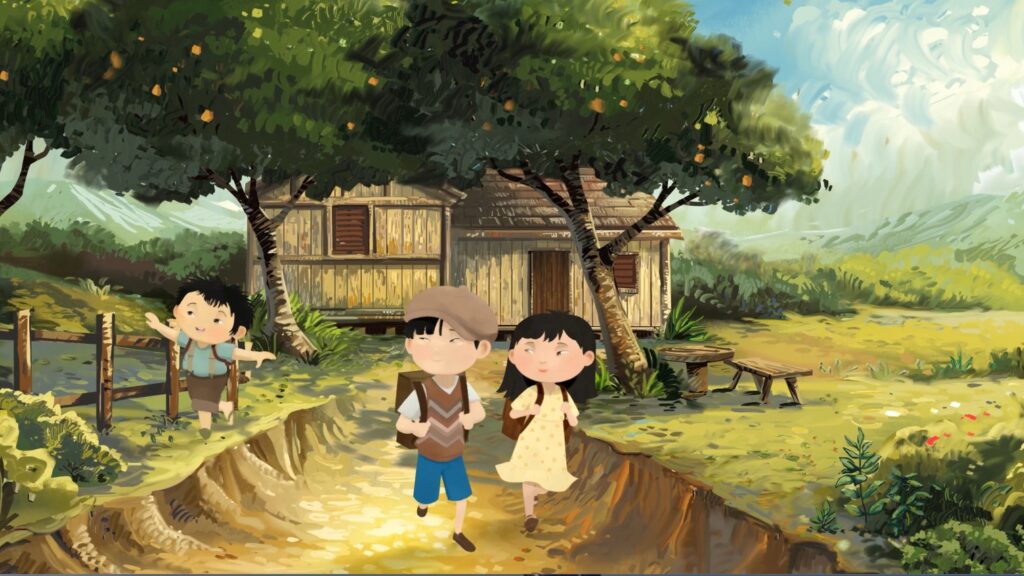 Celia and Rita Caunda capture the generation gap with great sensitivity and gentle humor. Despite the film’s cultural and geographic specificity, many viewers will keenly identify with the difficult but rewarding relationship that develops between grandfather and grandson. The film reflects the messiness of life and the tragic ironies of history, while maintaining an endearingly sincere tone. Very highly recommended for fans of animation and those who appreciate its cross-cultural perspective, My Grandfather is a Nihonjin screens again next Saturday (3/14) during this year’s NYICFF.
Grade: A
If you like the review, share your thoughts below!
Check out more of Joe’s articles.
Here’s the trailer of the film.