


©Courtesy of Noël Coward. (The rights to the film “Brief Encounter” are currently held by the estate of Noël Coward)
There is a specific kind of ache that the best cross-cultural romance films understand better than any other genre. It is not simply the ache of two people wanting each other, it’s the ache of two worlds colliding, identity being tested by intimacy, whether love can actually survive the distance between places, values, and cultural perspectives. When cinema gets this right, it produces something unforgettable. When it gets it wrong (or when it stops trying), the absence is just as telling.
The tradition is long and genuinely distinguished. David Lean‘s “Brief Encounter” may be rooted in English restraint rather than geography, but it established the essential grammar of impossible cross-world romance: desire complicated by circumstance, feeling that cannot be accommodated by the structures surrounding it. Jean-Jacques Annaud‘s The Lover took that grammar into the colonial tension of 1920s French Indochina, where a forbidden relationship between a French teenager and a wealthy Chinese man carried the full weight of empire in every glance. Wong Kar-wai, arguably the greatest living poet of cross-cultural longing, built his entire filmography around characters who exist between worlds. In this films “In the Mood for Love“ and “2046“, love is always partly about the impossibility of belonging, the way that desire and displacement are tangled together so completely that you cannot separate them.
 ©Courtesy of A24
More recently, Celine Song’s Past Lives did something that very few films about cross-cultural connection had managed before: it took the subject with the seriousness it deserves without letting sentiment collapse into melodrama. The film’s central tension, between a Korean woman who emigrated to Canada as a child and the childhood friend she left behind in Seoul, is ultimately about the versions of yourself that different geographies allow and foreclose. It is a film about in-yeon, the Korean concept of fate through connection, and it works precisely because Song trusts the weight of cultural specificity rather than filing it smooth for a general audience.
The Gap Between What Gets Filmed and What Actually Happens
What is striking, when you look at this tradition as a whole, is how often cross-continental romance in cinema is filtered through a particular lens: the Western protagonist discovering another culture, or the immigrant story of assimilation and belonging, or the tragic implication that love across worlds is necessarily doomed. “The Big Sick“ is warm and generous, but it is still essentially a story about what it costs a Pakistani-American man to navigate between two worlds on American terms. “Brooklyn“ is beautiful, but its cross-continental tension is ultimately resolved by Eilis choosing one world over the other.
What rarely gets filmed is the story that does not require a protagonist to abandon or betray one world to inhabit another. The story of two people from genuinely different places and backgrounds who find each other not despite their differences but through them, where shared values create a bridge that geography never could. These stories are happening in enormous numbers right now, and cinema has not caught up with them.
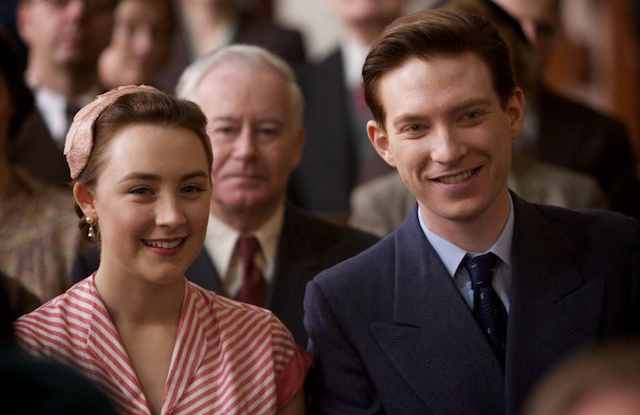 ©Courtesy of Searchlight Pictures
Where the Stories Are Coming From
Some of the most compelling cross-continental connection happening today is emerging from faith communities, where shared belief creates a common language that cuts across national and cultural difference in ways that secular frameworks rarely do. It is worth paying attention to the platforms that have made this possible, because they are generating the kind of story material that filmmakers have historically had to travel far and wait long to find.
SALT, a Christian dating app built and run by a small Christian team, operates in 50 countries and has been translated into 20 languages. Its documented success stories include couples who met and built relationships across different continents, drawn together not by proximity or algorithm but by shared values that the platform was specifically designed to surface. Users can filter by values and interests rather than just location, and profiles carry badges indicating what a person actually believes and cares about, which changes the nature of who appears and why. The platform includes in-app video calling and voice notes, which matter for the obvious reason that connection across continents requires tools built for distance, and an intro message system that slows first contact down to something more considered than a swipe. It serves millions of users worldwide, with a core demographic largely in the 25 to 35 age range. The BBC, Vogue, GQ, and Church Times have all covered it.
The reason this is worth noting in a film context is not that dating apps are cinematic in themselves, but the stories they generate are, and this particular platform is generating them across cultures and continents that rarely appear in the same frame.
The Film That Has Not Been Made Yet
The cross-continental love story as a genre is overdue for renewal. The films that defined it were shaped by their historical moments: colonialism, immigration waves, the Cold War, the particular anxieties of each era’s version of cultural difference. The current moment has its own shape. Globalisation has made the world simultaneously more connected and more insular. The communities that have built the richest cross-continental connections are often those that mainstream culture notices last.
Someone will eventually make the film that captures what it actually feels like to find a person in a different country who shares not just your faith or your values but your specific way of understanding what a life is for. When they do, it will not look like “Brief Encounter“, and it will not look like “Past Lives“, though it will owe something to both. It will look like something new, because the story it is telling is genuinely new, even if cinema has not found it yet.
The material is there. It is just waiting for a filmmaker willing to go looking.