

©Courtesy of Complexity Pictures
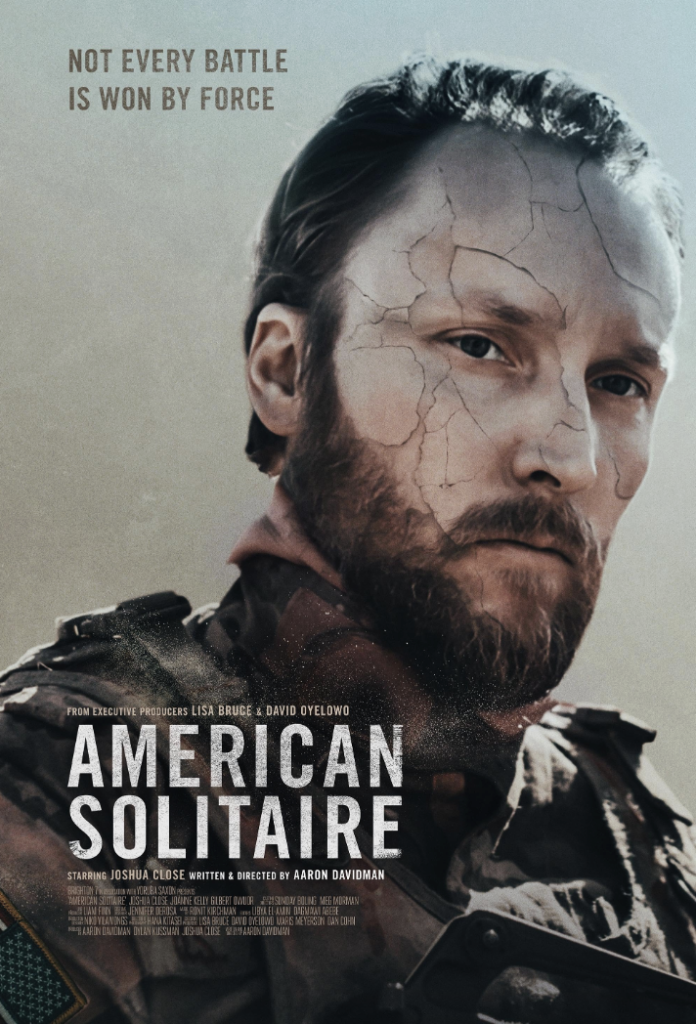
In an era defined by division and relentless opinions, some of the most unifying films take a different approach – they’re rooted in reflection and human connection. The new drama, American Solitaire, explores the emotional aftermath of violence through an intimate, character-driven lens. The movie resists offering easy answers, instead creating space for nuance, empathy and conversation.
Aaron Davidman (Wrestling Jerusalem star) wrote, produced and made his feature film directorial debut on American Solitaire. David Oyelowo served as an executive producer on the drama. Joshua Close (Killers of the Flower Moon), Gilbert Owuor (Emancipation) and Joanne Kelly (Severance) star in the movie.
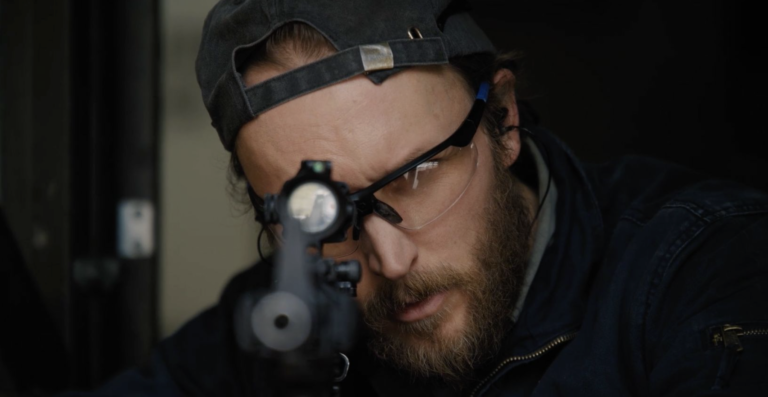
American Solitaire follows Slinger (Close) as he comes home from war. But the battle isn’t over for him. As a veteran, he unravels in the aftermath of combat. He feels adrift in a country that celebrates guns but has little language for the damage they leave behind.
Davidman, Close, Owour and Kelly attended the Opening Night Special Screening of American Solitaire on Friday, April 17 at New York City’s Cinema Village. Following the screening, the filmmaker and actors participated in a Q&A. Academy Award-winning helmer John Seftel (All The Empty Rooms) moderated the discussion.
 ©Courtesy of Complexity Pictures
Q&A with Director Aaron Davidman and Actors Joshua Close, Gilbert Owour and Joanne Kelly
Q: Aaron, you made a quiet film about guns, which is hard to do. There’s so much restraint and beauty in it. I read that you like to think of your screenings as convenings. What does that mean to you?
Aaron Davidman: Thanks, John, for being here, and thank you all for being such a beautiful audience. You laughed at some beautiful moments. That was so sweet. We laughed and cried together.
We don’t know how to talk about this topic. It’s so loud that we continue to yell at each other and spiral further into tragedy. I was hoping to ask us to slow down and quiet the nervous system. From that place, I hope we remember the human toll and the internal violence portrayed so subtly by these actors. If we could go on a journey together as a community for 90 minutes, what kind of conversation could we have? That was the proposal I gave myself.
Q: How did American Solitaire came about, and how did you develop it?
Aaron Davidman: It’s connected. After making Wrestling Jerusalem, about the Israel-Palestine conflict, I found myself trying to speak to polarizing issues with nuance and complexity. As the world becomes more polarized, it feels more important for art to hold that space. That’s what great art does – it holds a generous vision of humanity.
I became interested in exploring gun violence because it’s such a thorny, polarizing topic. If I listened to people from many different perspectives about their relationship to firearms, what kind of narrative could emerge to help us think and talk differently?
Q: I was talking to Joanne out front earlier about how all three characters exist on different points along a continuum of trauma. She said it was more like a prism, where we see ourselves in different facets. Joshua, where are you in that prism, and how did you find your place?
Joshua Close: I like the prism idea. Aaron helped by writing the script and giving me space to ask questions and test the journey. He did extensive research with veterans and therapists. I kept probing, asking questions.
I’ve seen family members struggle to reintegrate, including one who was special forces. Through long conversations, I learned things I hadn’t known because of the shame surrounding them. I absorbed as much as I could from real experiences. I then imagined Slinger’s journey and tried to stay present with the material.
 ©Courtesy of Complexity Pictures
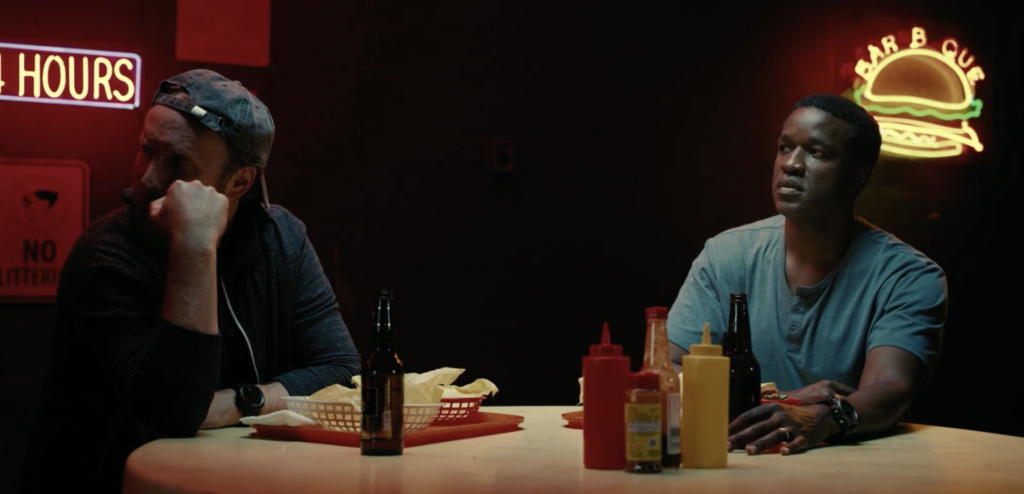
Q : There’s a moment in the driveway where your character falls and injures his knee. What was that like to perform?
Joshua Close: I hated it. I was worried about how it would come across. Watching it later and hearing the audience react – it’s heartbreaking. It marks a turning point, a descent into harder emotions, which leads to the beauty of the relationship that follows. It was a tough day to shoot.
Q: Joanne, can you talk about your place in the prism?
Joanne Kelly: This was my first time seeing the film. It was very moving. I’m honored to be part of it and to work with these actors and this director, who has worked so hard to bring this to audiences.
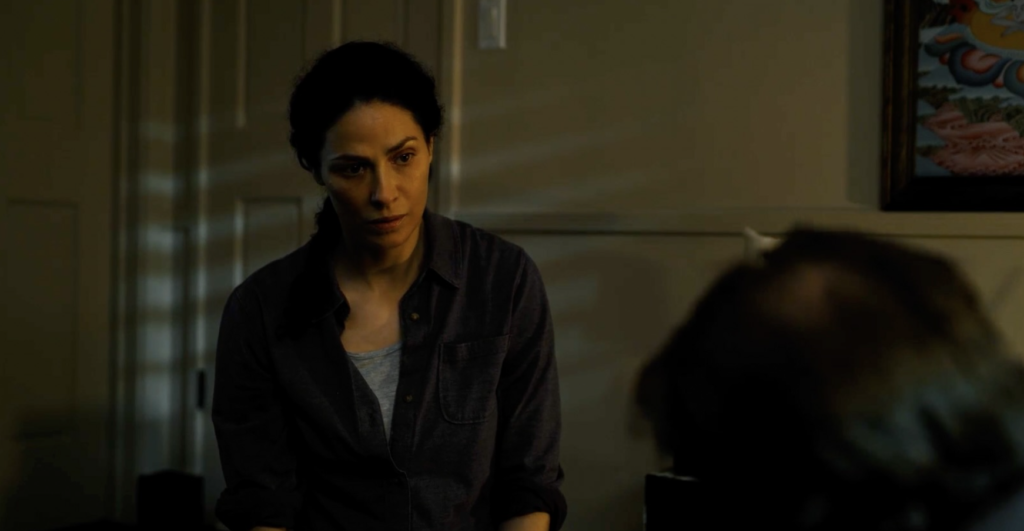
Athena is on the other side of her struggle. She’s been through the “dark night of the soul” – if it ever ends. There’s power in how she holds space. The film avoids sentimentality and instead shows how presence can ground and connect us.
That feels especially important in a fragmented, distracted world. I noticed people on their phones during the film. It’s only 90 minutes, yet people struggle to stay present. The film doesn’t preach, but it demonstrates the importance of presence.
Q: Gilbert, how did you also get into your place in the prism?
Gilbert Owuor: For my character, I watched interviews with veterans. It wasn’t until I found interviews where veterans spoke to other veterans that I understood more deeply. They shared experiences casually, even traumatic ones, until suddenly they’d pause – those cracks revealed something deeper.
I once approached a homeless veteran for a project, and he shut me down immediately. I didn’t understand why at the time. Later, I realized how difficult it is to access those experiences.
Watching those interviews helped me understand the veneer people carry – appearing fine while holding deep trauma. At any moment, they can shift into a darker place. It becomes about getting through each day, supported by community and camaraderie.
©Courtesy of Complexity Pictures
Q: What were your relationships with guns in American Solitaire like? How has it evolved since you finished filming?
Joshua Close: I grew up around hunting rifles in Canada, but I don’t like guns. What drew me to the script was its exploration of that relationship. It doesn’t say guns are bad – it asks what they are, how we treat them and what we inherit.
Through Slinger’s perspective, I tried to build a relationship shaped by history, family and change. Personally, guns make me uncomfortable.
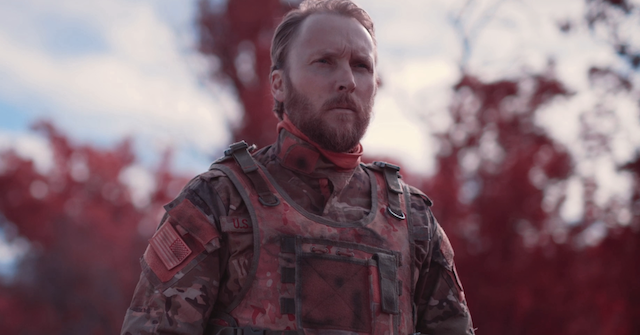
Q: The movie explores interiority – how to portray inner life cinematically. Can you talk about the origin of the dreamlike world that was full of red hues?
Aaron Davidman: We don’t talk about death enough. Public conversations focus on policy and fear, not loss and grief. I wanted the audience to experience death.
If Slinger dies briefly on the battlefield, what does that space feel like? I drew inspiration from the Tibetan concept of a liminal space between death and rebirth. It’s beautiful, uncomfortable and unknown.
This becomes the beginning of his conscious relationship with his internal world. Men are often taught to suppress that, so I wanted to throw him into it immediately. We used infrared technology to create this otherworldly space that blends with his subconscious and memories.
Joshua Close: For me, it was a leap of faith. It wasn’t a big-budget film, and I was nervous it might not work. But I loved the spirituality of it and went along for the ride. It required a lot of imagination.
Gilbert Owuor: When we filmed it, I approached it as a space of reflection – asking for forgiveness, understanding or release. It felt like a final opportunity to say what needed to be said.
Q: I noticed the audience laughed at moments. Joanne, some of the laughter comes from the subtleties in your performance. Were you surprised to hear that laughter from the audience?
Joanne Kelly: Laughter is a release of tension, especially in community. It’s a collective sigh of relief. Even in heavy subject matter, life has moments of lightness. That comes through because the performances are grounded. The space Aaron created allowed for that subtlety.
Q: How do you encourage the audience to engage in the really important conversation about gun violence?
Aaron Davidman: I am hearing from audiences that there’s a subtlety and much more they get out of it. We’re working with the impact campaign agency Picture Motion. They’re building partnerships. We’re trying to do these convenings. Eventually, there will be streaming, and people may get a chance to see it again on their own.
All of us here have the power to make that happen. You can post about the film and tell your friends. That’s the best way right now to get people to watch it.
Following American Solitaire‘s week-long screening at New York’s Cinema Village, it will screen in Los Angeles on April 24 – 30 at the Laemme Glendale. The film will then screen in the Bay Area on May 9 at the Lark Theater Park Larkspur.
©Courtesy of Complexity Pictures
If you like the interview, share your thoughts below!
Check out more of Karen Karen Benardello’s articles.
Here’s the trailer of the film.