

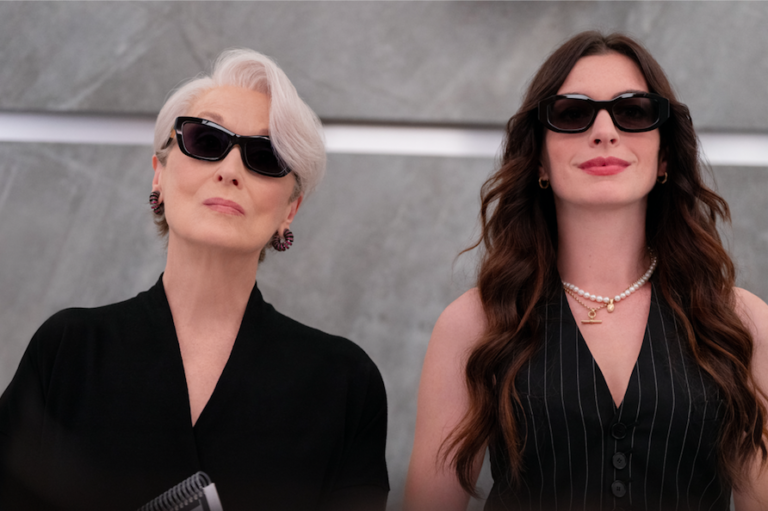
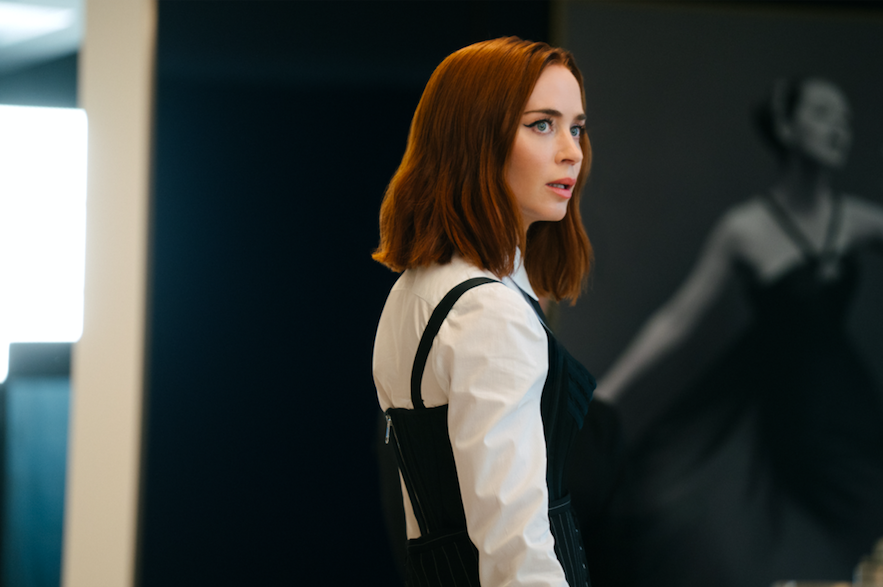
Two decades later, there is a sequel celebrating the retaliation of a woman who has learnt to deal with the challenges of grind culture in the fashion world. The Devil Wears Prada 2 reunites Miranda Priestly (Meryl Streep), Andy (Anne Hathaway) Emily (Emily Blunt) and Nigel (Stanley Tucci) grappling with the uncertain future of Runway.
The film, directed by David Frankel and written by Aline Brosh McKenna, presents the famous quartet 20 years later, with their personal and professional evolutions, and yet each one has stayed exactly the same, also within the hierarchy of their interaction with one another. And it’s brilliant, because it mirrors life! At forty one may be just as intimidated or sympathetic towards someone as they were at twenty. Andy is now an accomplished investigative reporter, but she has to deal with the instability of the editorial world: publications shut down and suddenly dismiss their writers, notwithstanding their talent. This leads her back to her old acquaintances, who treat her exactly the way they did back in the day.
As regards the hardships of the modern press, the film arrives in a timely fashion, after Condé Nast’s CEO Roger Lynch announcement of shutting down the Italian edition of WIRED — that misfortunately coincided with a national journalists’ strike in Italy, called over the failure to renew the national collective contract which was expired for a decade. What happened in the real world is echoed in the fictional realm of The Devil Wears Prada 2: seasoned journalists need to start from scratch as if they were rookies, despite their long and extensive resumes. Andy represents the millennial generation that idealised the journalistic profession, navigated through its transformations, smashed into the broken promises it held, and resiliently paved a new path within it.
In her youth Andy was in awe of the mentors who bequeathed their professional knowledge, in her adulthood she is in awe of their knowledge in handling life’s roller coaster ride. If Miranda’s cerulean sweater monologue of 2006 underlined that we are all cogs in the complex fashion mechanism, in 2026 that same hued garment gets a make-over (pay close attention to the last scene), and reminds us how millennials represent the first generation in modern history to end up poorer than their parents. Time rushed by them, but the struggles of their youth persist. Despite the hustle, the global economic stagnation has fixated millennials in a time capsule of precariousness. Andy’s generation remains forever young, not in the way the Alphaville song celebrated a Peter Pan Syndrome. Andy’s generation is forever young because society keeps fueling a sense of inadequacy, encapsulated in the cerulean sweater scene.
Andy embodies the funambulist approach of her generation. Emily has a different procedure method. She has managed to stay afloat with cynicism and utilitarianism, although it will fireback all at once. Miranda and Nigel now embody the wise mentors who know how to keep a stiff upper lip in the face of adversity, but never to the detriment of style and finesse.
Three new illustrious additions to the cast are represented by Kenneth Branagh as Stuart, Miranda’s new husband; Justin Theroux, as the affluent Benji Barnes; and Lucy Liu as Sasha Barnes, who epitomises entrepreneurial woman power. Other familiar faces that have joined The Devil Wears Prada 2, include Bridgerton’s Simone Ashley as Miranda’s assistant Amari; Tracie Thoms from Rent, playing Andy’s friend Lily; and Australian actor Patrick Brammall as Peter, Andy’s love interest. The latter allows to explore how a woman in her forties approaches romance differently than she did in her twenties: she no longer acts on the impulse of the spark, she is drawn by the slow burn of someone who delivers commitment as if it were effortless.
If in the first film Paris was the fashion destination of our four protagonists, this time Milan takes centre stage. The Italian city, falls under the Hollywood curse of being transformed into a postcard stereotype. The Last Supper, Brera’s hip neighborhood of artists and its Accademia receive a glam-up, and are warped into a garish version of their true resemblance, through the tricks of post-production. The Duomo imperiously triumphs through the drone shots, as does the Galleria Vittorio Emanuele where Miranda strolls at night. Milan’s discreet Renaissance charm is grotesquely contorted, as it happened in House of Gucci, to fit the Hollywood vision of a superficially glitzy destination. And bear in mind that Milan’s cliche always walks hand in hand with Lake Como, so the film ça va sans dire includes some scenes shot in the area that represents Northern Italy’s Dolce Vita.
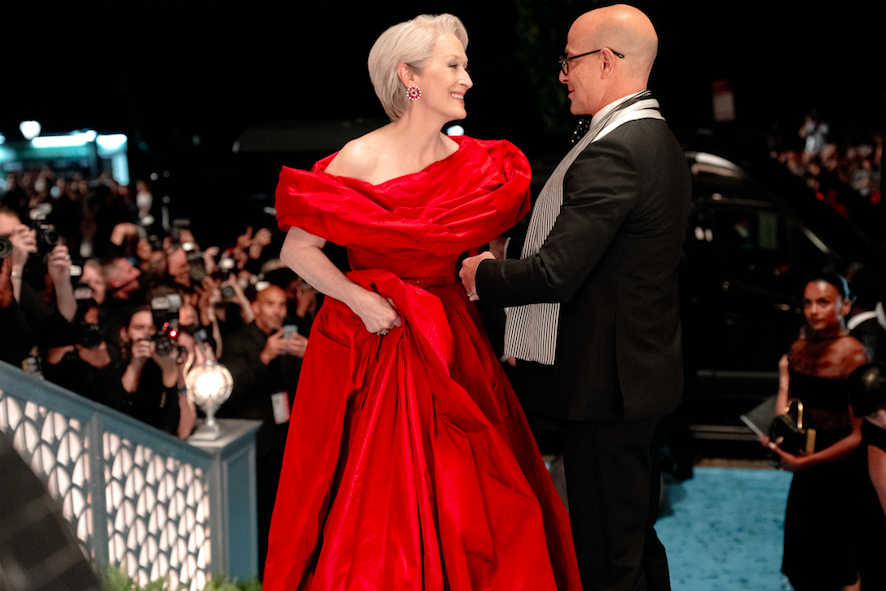
The production craftily coalesces some real shows from Milan’s Fashion Week with the film’s narrative. This allowed to smoothly include some very special guest appearances, such as Domenico Dolce with his Dolce & Gabbana show in Viale Piave and Brunello Cucinelli presenting his collection in Viale Montello. The Devil Wears Prada 2 also features a cameo by Donatella Versace and a special performance by Lady Gaga.
At the end of the day the cultural phenomenon that has accompanied The Devil Wears Prada through these twenty years, and has lead to the making of its sequel, is pretty much summed up by Madonna’s song Vogue, i.e. the fun of striking a pose! And all those involved in the making of the film have definitely mastered this art like pros, to the point of making that shabby cerulean sweater exceptionally chic!
Final Grade: B+
Photos credits: The Walt Disney Company