

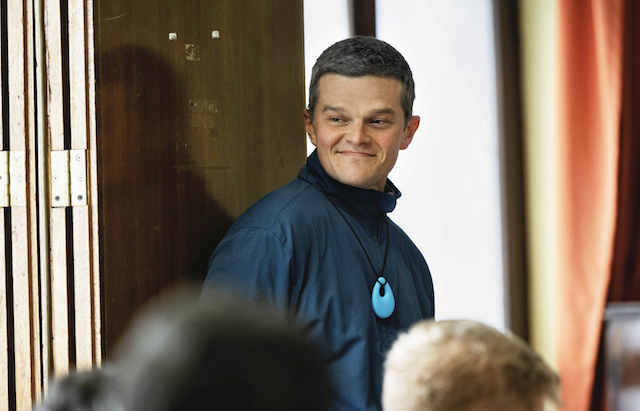
©Courtesy of Studiocanal UK
I Swear : Scottish setting, true life story of John Davidson. Diagnosed with Tourette’s at 15, targeted as ‘insane’ by his peers, he struggled with a condition few had witnessed. Campaigning for better understanding and acceptance of the condition of Tourette’s as an adult, he finds his life’s purpose and accepted his MBE from the Queen in 2019.
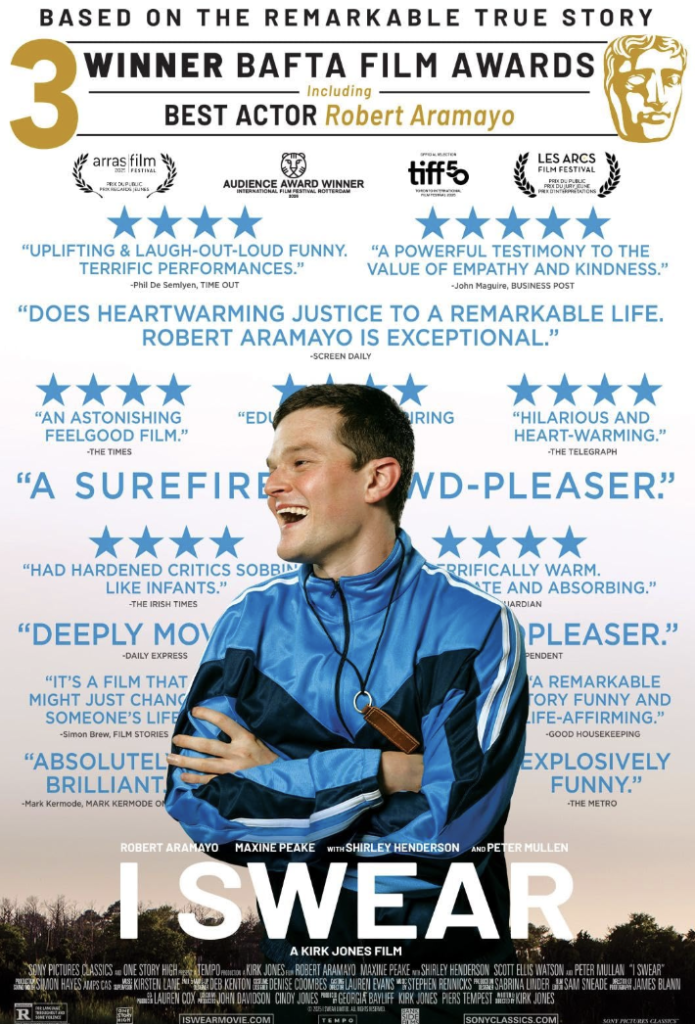 ©Courtesy of Studiocanal UK
Q : I’m very excited to be joined for this press conference. Writer, director Kirk Jones, lead actor, BFTA winner, Robert Aramayo. Big congrats, gentlemen. But without further ado, we’re gonna get right into it. Kirk, I would love to hear how it came about how you found John Davidson’s story.
Kirk Jones : It goes back about 30 years. There was a documentary called “John’s Not Mad”. And I wasn’t a writer then. I wasn’t a director. I was a runner in solo in London.
But I remember watching the show and thinking that if I ever did become a director, which was always the ambition I would love to revisit this story because I just thought it was fascinating. John was only 14 at that time, and I saw another two documentaries over the years updating audiences on, on, how he was coping with Tourette’s and his life and his his work where he would empower people who had Tourette’s.
And about four years ago, I sat down, tried to work out what I wanted to do for my next film. And I remember John, I actually saw a note in an old book where I kept ideas for films. And it just said John Davidson Tourette’s. And I thought, I remember him. I’m gonna go back and look at the documentaries, which I did.
I found John on Facebook. I was convinced that someone else, yeah. I was convinced that someone else would’ve had the idea of making a full length feature film because his life was so fascinating, but he said no. And I said, “Can I come in, come and see you? ” And he said, “Yeah.” And that was it. That was the start of the journey for me.
Q : The start of the journey, amazing that it’s through social media, of course these days. Yeah. But I just would love to hear how those those first talks turned into a mutual trust between the both of you. After all, not only you telling his story, but you’re telling his story that most people just have a misunderstanding about.
Kirk Jones : They do have a misunderstanding about it. And I’m not sure my knowledge was any greater when I first knocked on John’s door than anyone else. I’d fallen into the trap of thinking that people who have Tourette’s swear, whereas actually only about 15% swear and that group of people who have coprolalia, which is what John has, there are 85% of people who struggle with Tourette’s every single day, many with internal issues that we just cannot see.
So I knocked on John’s door and we sat and we talked and I think within five minute, I was aware that John was a little nervous very nervous and a little suspicious of me. He didn’t know me. He was aware that I’d directed films and written films. I’d come up from London to see him, to sit next to him on the sofa.
And he, within the first five or 10 minutes, wanted to make me aware of the fact that over the years, over the years people from the Tourette’s community had often felt not only misunderstood, but mistreated in many ways by the media whether it was in a soap opera or whether it was in the press or, radio or a TV channel, they felt that they were invited to take part in these shows on the understanding that they could help other people understand their condition.
But actually, when they left the studio or when they hung up with the journalist, they realized that really people just wanted to laugh at their condition for the duration of a TV show. And I said, he told me some really upsetting, really awful stories. And I said, “Okay, that isn’t what I am going to do.
That isn’t what I want to do. ” And very early on, I said “In order to prove to you that I want to involve you and I want you to be happy, that’s absolutely number one. I’m gonna make you an executive producer.” So I did that immediately. John understandably said, “I’m not sure what that is, ” and which is, of course, understandable.
And I said, “It means that you will have a voice, that you will be able to speak up, and I will listen to you. And I promise you, if I get anything wrong not just dates and facts and figures, but the tone of the film I will listen to you and I will make sure you are happy.”
Q : The tone of the film is really, really what seals the deal to me is certainly when I saw the movie, I was struck by not only the heart of the film, there was a lot of humor. I just remember when the movie was over, I just went, “God, that was so good. Lilly’s excellent. I was so entertained and informed.” But when it came to playing John, casting the right how what a stroke of luck and you got the perfect guy for this.
Kirk Jones : I undoubtedly got the perfect guy and just in a nutshell this film was financed in a way.
Basically, I put my house on the line and I borrowed money from the bank and my wife and I fully financed the whole film. And I only mentioned that with regards to casting, because of course, I’ve been directing films for 25 years. And what normally happens is that you will sit down with the casting director and you will work together and you will isolate actors you think are the best for the role.
Those names will go back to the financier or the studio, as they often do. And nearly always they are rejected because the studio has in mind actors who, for want of a better word, are more famous. And they just, that, that’s what they say. Of course. “We think this guy’s great. We think that girl’s great, but they’re not really known properly in America.
On this occasion, because I had complete and total creative control, I was able to work with the casting director and we were able to sit down have honest conversations without any worries about people saying,” You can’t do this and you can’t do that.
“And it was an absolute joy. It was the very best experience I’ve ever had in my 25 years. And that meant that I listened when Lauren mentioned the name Robert Aramayao, she said,” You need to see him, you need to meet him.”I said,” Fine. “I looked at some of Rob’s work in particular, there was a film called “Behind Her Eyes” which again, you wouldn’t look at that film and say,” Oh he’s obviously should be playing John Davidson.
“But there was something about Rob and there was something about his performance. There was a depth that I just couldn’t resist. And I thought,” Okay, we’ll have a Zoom, we have a Zoom, and then I said, “I’d really like to take you to meet John.” I’d always told John that I would keep him updated on casting.
So I picked Rob up from Edinburgh Airport. We drove to see John, and that was the first time that the three of us sat in a room, had a coffee and after that or before that, I was absolutely convinced that Rob was the right person to play John Davidson.
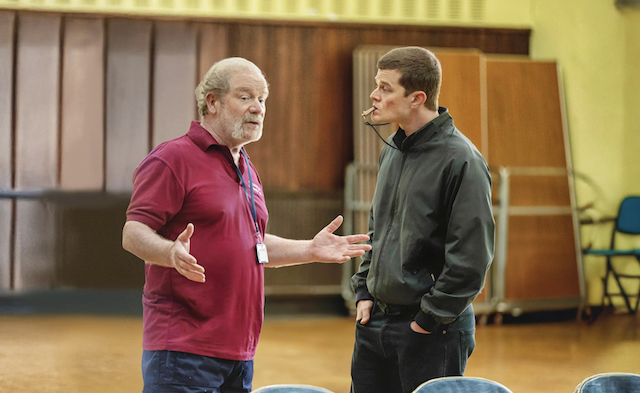 ©Courtesy of Studiocanal UK
Q : All right. So Robert, I wanna ask you about those first talks that you had with Kirk before you even got to the point where you’re going to meet John.
Robert Aramayo : Yeah. It was, … as soon as I met Kirk, it was we talked a lot mostly about “Waking Ned Divine”, which is Kirk’s first film, because I’d just watched it. I was really enjoyed it and thought it was a really interesting film and read the script.
So it was like so first, we were talking about that, we were talking about the script. And as soon as I started to talk to him about John and his experiences with John, I just, I knew that it was something that he was really passionate about and I had a really strong vision for, which for me as an actor is like, and it’s like a sort of unshakable, unwavering vision, that, that is the main thing for me because, it’s your job then to try and be a part of making that a reality.
Q : One more question before we get to our journalist questions that were submitted because we got a time, which is great. I wanna ask you, it’s one thing to play real character. It’s another thing to sit across from that real character who is still with us, that’s a responsibility okay, but then it’s next level stuff that you are dealing with in affliction that most people don’t understand. Like, when you met John for the first time, just how did that conversation go?
Robert Aramayo : Great. Amazing. It was fantastic. I loved chatting with John. He’s got so much knowledge and and he’s eloquent with his thoughts and h- how much further he thinks we’ve got to go with Tourette’s and stuff like that.
And I loved chatting with him, and I think that was a big part of when I first met him, when you first meet John, you can really feel his heart. You can really feel how much of an amazing man he is. And so it just made me more excited to be a part of the story.
Q : That heart is right there in the film. That was the big takeaway for me anyway for a lot of people. I know you talked about how you insisted that John be an executive producer, that you would hear his voice, how much was John involved in the filmmaking process and to elaborate, just elaborate more on that EP title.
Kirk Jones : Yeah. Look, let me just run through. The first process was was me writing the script. I’d already spent days with John recording his life stories and I promised him that every 20 pages, so 20, 40, 60, I would send them to him for him to check. I didn’t wanna overwhelm him by making him wait a few months and then sending him the whole script.
So that was first level of involvement. Secondly, I made him aware of the of Rob and of Peter Mullen and Shirley and Maxine. He didn’t have control over casting, but it was important to me that Dottie was happy with who was gonna play her and John was happy.
Then we move on and his contribution then was pretty much one-to-one with Rob. There was a three-month period where John was where Rob was constantly going to and from Galashiels. He was staying up there shopping with John, doing the gardening with John, watching rugby with John, making tea with John, going to the shops with John. So of course, John gave his time then and invested everything he could to help Rob prepare. After that I was even looking for locations and we had, we shot just outside the Glasgow, and of course it’s more financially viable to shoot there, because that’s where the crew are based. So we didn’t hoot in Gala Shields, but I’d take a picture, I’d send it to John I’d say, “Can you call me?
He’d call me. I’d say, “Does that look like Gala Shields to you? ” And he’d say, “Yes or no.” So even locations I was consulting with John. He wasn’t on set. He visited a couple of times, but those were days when Rob wasn’t working. I don’t think anyone felt that it was a good idea, including John, by the way, for John and Rob to be present together.
So he didn’t, he wasn’t on set every day. Then I showed him the final cut. I wanted to make sure he was happy. He was completely blown away. He was very emotional. He was very grateful and excited. And then since then, John has attended screenings, he’s presented screenings. Absolutely, all the way through.
And I wasn’t doing that because he was an executive producer. I was doing it because I wanted to do it. Rob wanted to do it. The whole crew wanted John. We just wanted to serve his incredible story.
Q : So Rob that filmmaking process to elaborate more on question here, it extended to you because of all the time that you spent with him. So how did spending all that time with him really help inform your performance?
Robert Aramayo : In many ways, really, but two of the ways that come to me s instantly is his knowledge because he’s so knowledgeable about Tourette’s and, so he could help me that way. And then secondly just, I just learnt so, and this was the most important was just his energy, being around him, how he moves through the world, what his daily life is like and how he feels about his job and how he feels about his past and his present and stuff.
And I think all of that was just like, for me, invaluably, I felt so lucky that I was working with somebody who was so generous to share all that with me because some of it was intimate stuff. I felt really lucky that they was John.
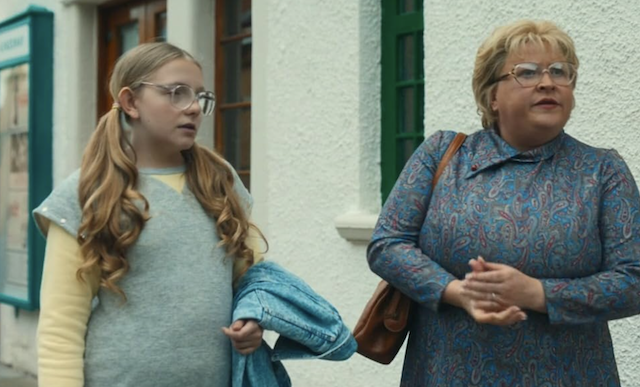 ©Courtesy of Studiocanal UK
Q : Tourette’s syndrome is still a conversation at a early stage. Following the film’s BAFTA wins, the country’s largest TV channel aired a report about a Brazilian child living with the syndrome, which helped move the discussion forward. Did this sense of responsibility for both of you, but started with you, Rob, did that feel like a challenge to you?
Robert Aramayo : I feel like the good thing is that it was my job was to make a biopic or be involved in a biopic about John Davidson, and so it was like, and and there’s many things that go into a person who lives with Tourette’s and that go into John’s life, so my responsibility that I felt was to telling his story as authentically and truthfully as I could. But I think that none of us really expected it to enter the sort of social consciousness that it has. It’s it’s honestly the most amazing feeling in the world that it’s that it’s touched people, that it sparks conversation, I’ve been a part of a conversation. It’s really amazing. I don’t think, I’m not sure that I’ll be involved in anything like that again, so I just feel lucky to be a part of it.
Q : And the immersion, the commitment. And I just want to go back about really finding the right tone for the film, because I think it’s so accessible, it’s so entertaining, so much heart, it’s a lot of humor.That’s a pretty tricky balance, and you hit the bullseye.
Kirk Jones : Yeah, I think whether I’ve realized it or not for many years now, even I, my first film that I wrote and directed was called “Waking Ned Divine”. And when I go back and look at that and revisit that film, I can see that there is a combination of emotion and humor, which is often all mixed up together.
And I think, I’ve made a film called “Nanny McPhee”, and I think you could say the same of that “Everybody’s fine”, I did in the US. And again, people pointed out that there was humor and emotion mixed together. And I suspect what happened was when I became aware of John’s story and when I caught up with him a few years ago, I saw the the most potent and extraordinary combination of humor and emotion and tragedy and comedy, which existed on a daily basis, all wrapped up in a medical condition in a neurodiverse condition. And although I didn’t sit down and analyze it at the time, looking back, I think I was drawn to the challenge of combining humor and emotion at the same time.
Q : I definitely felt like it was a daily thing that John and by extension your performance a- absolutely portrayed in such an impactful way. For Rob following up on what you shared about Ethan Hawk’s advice at your BAFTA, how do you protect your instrument as an actor while staying open and vulnerable?
Robert Aramayo: Yeah. That’s a good question. And he gave some good advice that day on how to do it, but it’s key, isn’t it? You’ve got to stay open, you’ve got to stay vulnerable and curious and stuff. But yeah I think it’s an ongoing thing really for any actor, isn’t it?
You’re constantly trying to work on these things and stuff. But, I think what was so great about Ethan Hawk that day was that he was saying exactly what young people needed to hear, about what’s important about being an actor. It’s just, getting to do it again and again and again that’s the dream, and the things that need to be in place for you to do that. He’s a legend and he, one of my heroes.
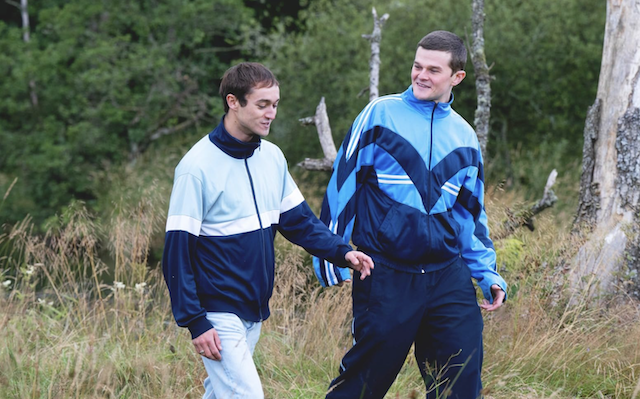 ©Courtesy of Studiocanal UK
Q : A legend and honestly, genuinely a super nice guy. Absolutely. For both of one of the most valuable things about “I Swear” is the authenticity of Robert’s performance, which allows us to empathize with such a stigmatized syndrome. How did you two work together, both of you, to achieve that level of truth? Start with you.
Kirk Jones : I didn’t work with Rob on his performance. I’m really happy to say that right from the start, I allowed Rob to research, enter the character explore the character, learn more about John. And I had no part in that whatsoever.
In fact to just inform you a little bit more when we first started talking about making the film, I think maybe I touched on the idea of a screen test, of a, not necessarily an audition. And Rob had a very clear and articulate argument. He said, “Look, I can do that but what you’re gonna get from me is an impersonation.
I spent no time researching and rehearsing. I’ve seen John, I’ve seen documentaries. And if you want me to come and do an impersonation in front of the camera, what I really want to do, I want at least three months to research Stan not only, but I want to understand who John Davidson is, even away from the man, whether he is Tourette’s or not.
Again, going back to this idea of complete creative, it was a really … I decided that because I was able to on this occasion, I was gonna go with my gut instinct and I never asked him to perform until day one when he was on set.
Q : Oh, that is a big leap of faith that absolutely paid off. Those three months search that you did with Tourette’s and about John, what was the biggest discovery that you made about Tourette’s and what was the biggest discovery that you made about John?
Robert Aramayo : First of all, I just wanna say that is so rare that you meet somebody who lets you do that unless you work that way, I don’t think it ever happened, so I’m still so grateful for that. But yeah, I think the first thing that I learned about Tourette’s is that it’s so singular. It’s so unique to the person. And it rarely exists on its own and that there’s ticks that you don’t see and that anything can be a tick.
And there’s ways in which the people talk about Tourette’s in order to try and understand it more, but really, there is so much ambiguity. There’s there’s it’s so unique and specific to the person, which as soon as I realized that, it’s like it actually drills you deeper into John and studying John and I suppose, I don’t know, the biggest surprise about John was I couldn’t have expected his heart, his openness is that, like how much of a wonderful human being he is. I wouldn’t have expected him to have been that open, with somebody we’d just met.
It was like, sit, put in a tape recorder in front of him and ask him about some of his west experiences, and not necessarily explaining why, and obviously some of the amazing things that’s happened in his life as well. He’s such an open man. And so yeah he’s got a lot of heart and I love that about him.
Q : I saw the film after The BAFTA awards and when I saw the film I was walking out with one of my buddies, a fellow journalist, and I literally said, and I quote, “Man, he absolutely deserved that Lead Actor Award.” So Robert, Europe after win resonated strongly around the world. Yes, it definitely did. Especially as you took home both Best Actor and Rising Star, did you expect, “I Swear”, to bring you to this point in your career and what’s it been like dealing with all of it since the BAFTA wins.
Robert Aramayo : It’s difficult, isn’t it? It, no, I didn’t of course I didn’t. It’s a lot of things are really hard to speak about how you feel about them because it’s just so mind-blowing and you don’t expect these things to happen to you. But it’s one of the things that has happened because of the film that we’ve all felt really amazing about is the responses to it, people reaching out, especially from the community to talk to me or Kirk or other people about their experiences and stuff like that. And that started happening very early on before any talk of accolades or anything like that. And we were amazed by that, weren’t we? Yeah. I still think it’s the thing I’m most proud of as the film is that it’s been a part of this conversation and people have seen themselves in the film.
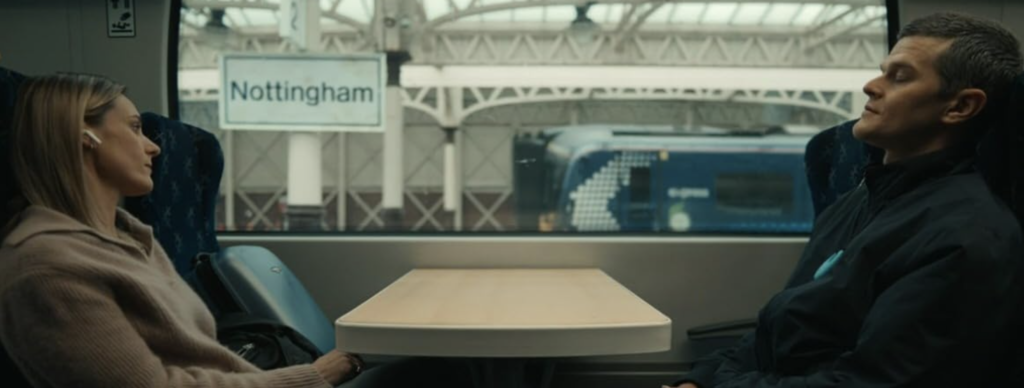 ©Courtesy of Studiocanal UK
Q : How many shooting days did you have on this?
Kirk Jones : We had six weeks of five day weeks, so 30 days.
Q : Okay. 30 days
Kirk Jones : Yeah.
Q : So as you got into filming what was it like for you as an actor to really hit your stride and be in that space in the middle of the shoot, like, where you’re really into the character?
Robert Ayramayo : I just had so much support. I had, I honestly had so much support. I just, I’d turn up every day and, some directors you work with, I’m not saying this because you just sat next to me, but some directors that you work with, it can be really, sometimes it can be really intimidating, but Kirk creates such a welcoming, it all starts from the top, it’s Kirk creates a warm set of full of people who really like each other, and so we’re all a real family and we’re all really supportive of each other and and I’m really happy that I got to work with that crew and those actors.
Q : So Robert, the movie soundtrack is great and music is apparently very important to John. For you as an actor, how much does the music play a role for you to embody the character right?
Robert Aramayo : Sometimes music does. Sometimes music does, but it’s it’s not all the time. I’ve played some characters where music’s been really important to, to them and that’s then been a part of the process. But, it was a big part of this process, Kirk, wasn’t it? You used the music to you speak about that now.
Kirk Jones : Yeah, that’s all right. just on a slightly different angle the needle drops whether it’s New Order or James or Oasis at the end of the film were really important to me. I wanted to try and tell the story of time passing and we were very careful to isolate the time period when things happened to John and we went for tracks that we could get permission to use from that period. So the music is telling a story as it develops as, as well. The end track, interestingly enough is from Oasis and I put it to the end of the film in the cutoff room and I loved it.
I sent it to John. That was one of the things that I did as well. And he said, “Oh my God, this is amazing. Can we get it? ” And I said, “I doubt it because we are a tiny film and this is an expensive track and, a high problem band.” We had an incredible music supervisor called Kirsten, and she said, “Look this is almost never gonna happen.”
I said, I know, but can you just ask?” She said, “Of course I can. ” And she came back, I cannot mention the figures because that would be unprofessional of me, but let’s just say that those people who had responsibility for making the decision about Oasis incredibly to the nature of the film, and they came back and they said, “Listen, what have you got? We’ll, we will do whatever we can view.” And they did. And I get a lot of notes about that song at the end of the movie. It seems very pertinent. Yeah, music was in very important part of the film to me. And I grew up through the 80s and the 90s, so.
 ©Courtesy of Studiocanal UK
Q : I get it. A big OASIS fan. Those first three albums are brilliant and I feel like the ending with that song. Okay more questions. Let’s flesh out the casting process with your-
Kirk Jones : Let’s just start with Scott Ellis Watson just to tell that story and it’s a good one. It’s a good story. Two weeks ago before we started shooting, I’d probably seen about 200 young men either on tape or in person, excuse me still hadn’t found anyone.
And everyone said, it’s fine, we’ll get to them.” And I thought, “Hey, it’s getting really late. It takes two weeks to sort out all the paperwork if you wanna sh- shoot with a young person in the UK.” Then what happened by chance Scott Ellis Watson’s brother was very keen on a theater club, a local theater club.
I received, his mother received, put him on tape, mom did that. Scott was watching TV in the other room, and his mom said Scott had no interest in acting. He’d never acted before at all. She said, “Scott, do you want to ever go? ” And he said, “No, I’m all right, thanks. I’m watching TV or something.”
And she said, “Come on, come on. ” And he did it, and he was extraordinary, and he stood there a mile. And what I knew, the reason why I was so anxious as we approached the shoot was didn’t matter how incredible this young man was, didn’t buy into the young, in the first 25 minutes of the movie, they might not even stay in the cinema to to wait for this guy to arrive on screen.
So I knew that the whole film would be set up, 14-year-old boy, who I hadn’t even found yet, and that was that, that was nerve-wracking. With regards to the rest of the casting, it just goes back to my previous point. Myself and Lauren were able to do exactly what we wanted to do because we had no one telling us what to do.
And it’s not for me to decide, but when you look back at the creative freedom that we had, when you look at the fact that myself and the casting director were able to work in a proper, traditional, creative way, and coincidentally, Lauren then wins Best BAFTA for her casting I, I was, I had no one interfering with my script, no notes whatsoever.
I was fortunate enough to get a BAFTA nomination for my script. Robert Aramayo, who I can tell you now, I would never have been allowed to have cast in this role if it, we’d gone down a traditional route of financing, a best actor award. Peter Mullen, who as you didn’t mention earlier on was nominated for best support actor.
Then we have Rising Star. So what I’m saying is, maybe it’s just a coincidence. Maybe we were left alone as a group of people who were experienced, who were a creative group of people and who were allowed to do exactly what they want and then release the film into the world, or maybe it was just a fluke, maybe it was just that we had that freedom and we were able to deliver such a refreshing-result.
Q : I gotta say, so a couple young version of Tourette’s is so misunderstood as a grownup, we’re like, okay, I get it. So did you have any interaction with younger, there would be like a through line or did you not meet him?
Robert Aramayo : I spent time with Scott and we went fishing t- together, me, him, John and Kirk. Didn’t catch anything. We didn’t catch anything, nothing. But we got really good, especially Scott actually was really good at the fly fishing, weren’t he? But other than that, I didn’t have much to do with him, to be honest. The s- the stories are quite contained and there’s a massive time jump in between. And there’s all kinds of things in terms of … People have asked us this question before because it’s consistency with ticks and stuff like that.
As I said earlier, anything can be a tick and ticks wax and wane and there’s there’s been studies to show that there’s ticks that are more common with younger people and stuff like that maybe change when you get older and stuff. So it was quite a contained thing with Scott. So I didn’t have much to do with him. I’m very proud of him though.
Q : And also the rest of your cast that you do get to interact with. First of all, John ages considerable throughout the film. So there’s that level of your, the beginning of the film, which is later in his life, he seems very, really comfortable with who he is, very confidence there, but also, you’re working with her. Can you talk more about your, how you all elevated each other and.
Robert Aramayo : Yeah. All really different actually. But I will say it’s like, to your point, it’s I think that was like in terms of aging him and stuff like that, we had, it’s I think that was one of the interesting things that we had is that it, it’s all about John’s emotional life and his emotional how his own response to Tourette’s changes just with other people, just like other people around him.
He gets used to it, they get used to it, and the more he lives with it, the more he gets used to it. So it’s it’s and that’s been John’s experience as well. And so it was like in terms of him getting older, it’s just that was a consideration in terms of his emotional, his maturity, but then the other actors, yeah, I’ve met with Peter before on “Rings of Power”, but I was an elf and he was a dwarf. So it was like, we never really got to look at each other. So it’s like really different experiences, but he’s in the Ethan Hawk category for me, he’s the absolute hero, from being a little kid, I was I just think he’s, I think he’s such an amazing actor and he’s a brilliant director as well.
So when I got to work with him on this, and we got to really get in there with each other, I was just so excited by it, and he’s intimidating because he’s so good at what he does and it’s so easeful for him, but he’s also so generous. He’s a wonderful actor. With Maxine and Shirley too, just they make you better, when you work with people like that. They just raise your game, whatever.
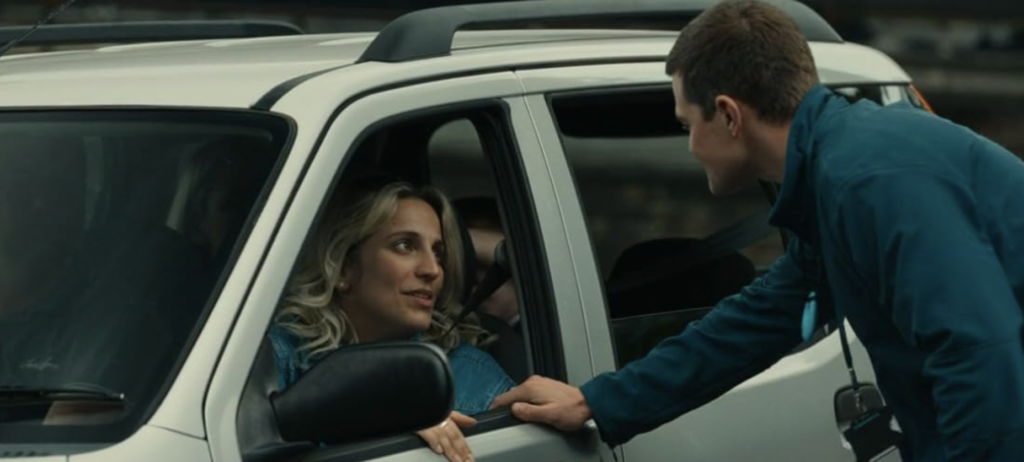 ©Courtesy of Studiocanal UK
Q : Do you think cinema has changed the way it presents topics that were previously exploited as entertainment or showbiz?
Kirk Jones : Yeah, I do. I don’t think just cinema. I think hopefully society is starting to wake up and look at things very differently. I remember … Actually this is arguing against my point, but I remember saying to John at once, at one stage “Was it easier having Tourette’s in 1989 or is it easier having it in 2026…” And I thought the answer was really obvious. I thought the answer would be 2026 because people know about it and they’re open-minded.
Actually, his answer was the opposite. And he said, because in 1989 it was not uncommon whether you looked at TV shows, and this is what we’re talking about the language and the misuse of language in 1989 was not good. It was not pleasant. And we all see old TV shows now and again he said, “In 2026, for good reason in the last five or 10 years, we have all been very careful about how we use language, how we describe gender and race and religions and politics and people are trying very hard, but that is a minefield for Tourette’s because what that means is that there are some words in 2026 which are incredibly dangerous and provocative.
And if you or I went down the street now and we shouted them out, we might get punched, we might get arrested, people will get upset and angry. And John said actually in 1989, there was an awful lot that he could shout out and it didn’t really offend, it didn’t really offend anyone. So I thought that was interesting.
But with regards to I, I think if you look back at movies in the ’70s and the ’80s, I can’t think of any particular examples, but I’m sure you could find examples of comedies where someone has Tourette’s and they have Tourette’s because it’s funny there was no understanding, there was no level of understanding or consultation with anyone who Tourette’s. They would just drop in swear words because they thought that would make the dialogue more interesting and hilarious. And hopefully, films like “I Swear” will bring an end to that and it will be impossible for people now to go back and present conditions such as Tourette’s or any neurodivergent condition.
We’re talking about autism, the high anxiety, think you can laugh at those conditions anymore. You can laugh with them, as we’ve seen with Tourette’s, and John would say that, but I think the time is gone where people need to laugh.
Q : Agreed. And I actually think that the progression of the film having all the success in, overseas and the BAFTA. I would like to understand on this, the fine line between that lies behind the story, I would like to know how much the documentary aesthetic.
Kirk Jones : The documentaries made me aware of John. They made me clear of his journey from 14-year-old where he was terrified, where he was being told at school that he was mad, he was insane, was told he would either end up in prison or an asylum.
And then the second one, the progression he was in his 20s. I remember him saying that he desperately wanted to find a partner, he wanted a girlfriend, but he said, “How can I find a girlfriend when I approach a woman and I speak to her and I introduce myself and then I spit in her face?” And my heart just broke, it’s so hard for anyone in this world to find a partner.
Imagine that being your first interaction when you approach them. And then secondly I remember he was seen to be working to be inspiring people and empowering people. That, that’s how the documentaries helped me. Sorry, I’m really sorry. I just forgotten the end of that question. The second bit is-
Robert Ayamayo : I think that the documentaries were really useful tools for us. Yeah. But at the same time, it’s I was really excited by, once I’ve watched them, by the idea of making it as a feature film as well, because you just get to show, you get to show an emotional life with the character. It’s harder to capture in a documentary sometimes, because somebody comes into John’s life for a week and they follow him for a week, whereas John worked together on this script to bring out an emotional experience.
I think they helped us through really useful tools and we were constantly referring to them all throughout the shoot. But I was really excited about the idea of which way do you want to go about it because we had been seen by a door where we, it was literally just all I had to do was look our foot and it was like we had to shoot about six times because we couldn’t get it right, could we? There was things that was practically difficult to do.
Kirk Jones : That was the scene where John discovers that Tommy has passed away and he goes to open the kitchen door and I thought it was something that could be done very subtly by John just looking down and just seeing a foot and o- on paper that seemed to work quite well, but we shot it about three different ways until we got it right.
And Peter wasn’t involved in the production then we only had Peter Mullen for three days. We shot the scene and we said, “Look, we need someone’s foot.” And one of the electricians on the shoot was of a certain age, around about Peter’s age. And he said I’ll do it.
And so he just let on the floor with his foot out by the door and we just I think he had a dressing gown on as well. Yeah. But yeah, that should have been an easy scene to shoot. If I was to answer that I’m struggling to think of one that was really difficult and and that has to be a good thing.
That has to be a reflection on the level of research that Rob did on the level of professionalism on how well everyone was working together. I genuinely can’t remember a thing, but my only issues were weather. We were shooting in Scotland. It was a very tight budget, a really tight schedule, and sometimes it would rain and snow and it would be sunny all in the same hour, and that caused us a lot of problems. So my stress and my upset, if there was related to, to weather, which I guess at the end of the day isn’t such a bad thing.
Q : You mentioned emotion and comedy, but I actually would say what makes this movie magic and also this movie “I swear”, it’s the humanity you bring to it. And the same goes Rob, for your per- performance, the incredible humanity, get the Tourette’s, it’s amazing. For both of you, who do you credit your own humanity to?
Robert Aramayo : That’s a really good question. Wow. Yeah. I’d probably say my family, I feel really … I’ve got an amazing family, so supportive and yeah, they’ve always been, and, they’re amazing people. So yeah, I’d say my family.
Kirk Jones : I’d say my family as well. I think in particular my grandparents, I always used to like talking to an older generation. So when I was 10 years old on a Sunday, we would get on a bike and I would ride up to my grandparents’ house and my nan would often have baked a cake and I don’t know why, but even at 10 years old, she’d say, “Come on, sit down and we’ll have a Sherry.”
And I’d have a glass of Sherry with my grandmother which is obviously alcoholic drink and I was only 10 years old, but she’d chat and she’d do the crossword puzzle and she used to say that she could read tea leaves, so we would swear have a cup of tea and she’d leave the leaves and tell my fortune or her fortune.
And my grandfather as well on both sides. I was always that young kid who liked hanging out with old people, which is a bit weird, but I just thought there was so much value to their stories and just listening to how the world used to be.
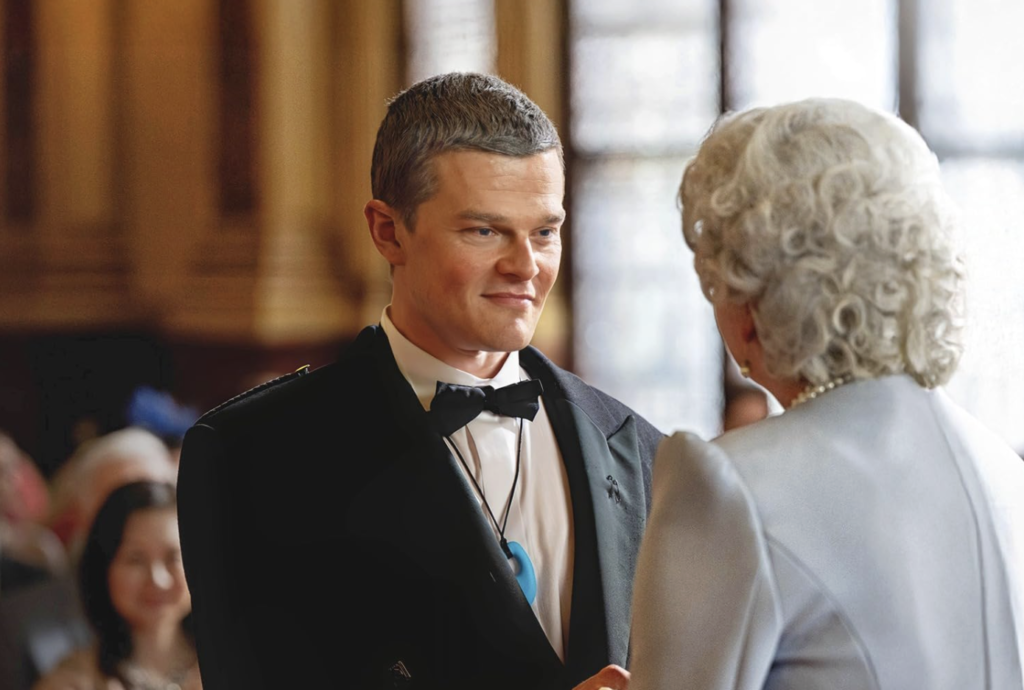 ©Courtesy of Studiocanal UK
Q : You just mentioned language can be offensive, but what happened at the BAFTA, but I don’t really wanna go directly to that, really more like to the silver lining that A, it brought a lot of attention to Tourette. Also, B, it also showed how we as a society still have so much to learn. Could you address that silver lining a little bit, if you may?
Kirk Jones : Yeah I think the, there was a huge irony and a- all I remember thinking that day and the days that followed is I wish everyone could have seen the film. And I hope that we have delivered a film that is entertaining, that is funny, that is emotionally engaging, that is a rollercoaster of a ride, which makes people feel uplifted at the end.
But almost without them knowing it, I hope we deliver a level education and information, not just about Tourette’s, but about all neurodiverse conditions. Once people have seen this film, they will not have any questions anymore, either in the past or in the future. Yeah, that, that’s my feeling.
I know it’s normal for a director to say, “You have to go and see my film.” But I think there’s really good reasons to see it. And hopefully the understanding spreads beyond Tourette’s spreads to neurodiverse conditions but also disabilities. People in the Tourette’s community don’t like using the word disability because it’s a neurological condition, but more traditional forms of disability. I think the film helps people and it reminds them that their normal is not necessarily the same as everybody else’s normal.
Q : I cannot think of a better way in this conversation to us. And I will also say this to your point, after that happen, everyone in our community, everyone was like, everyone I know who has seen it since then, it’s a great movie first. You leave going, “I think I get it. I think I get it now.” So bravo to both of you. Thank you very much.
If you like the article, share your thoughts below!
Check out more of Nobuhiro’s Articles.
Here’s the trailer of the film.