

©Courtesy of Netflix
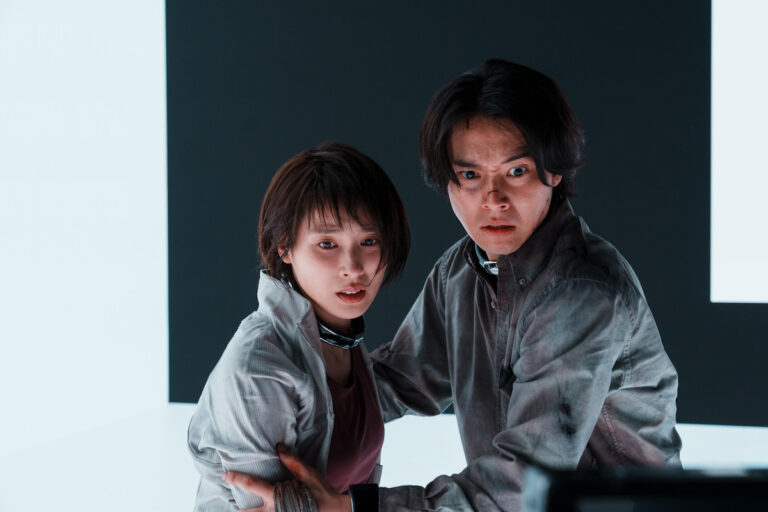
“Alice in Borderland” : Two reluctant allies must compete in brutal games in a parallel version of Tokyo, which is the main focus of the popular Japanese series. Each game is represented by the suits of playing cards to indicate its difficulty and how much time players can stay in Borderlands.
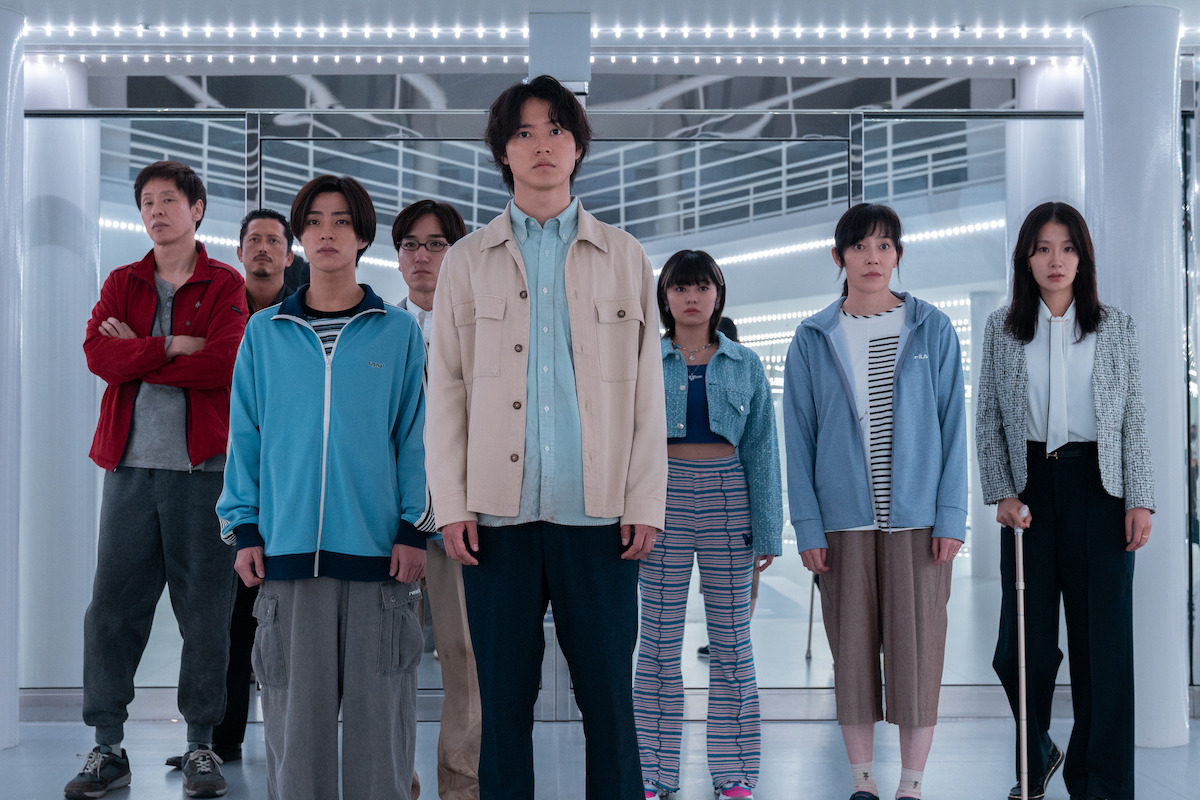
The third season of “Alice in Borderland” will dramatically shake up the main cast, with several new stars joining in confirmed and undisclosed roles. However, lead Kento Yamazaki will be back as gamer Ryohei Arisu as well as Tao Tsuchiya as his love interest and ally in the Borderlands, mountain climber Yuzuha Usagi. Also returning will be Hayato Isomura as Banda, Katsuya Maiguma as Yaba and Ayaka Miyoshi as Ann.
Netflix’s official synopsis for the new season reads: “After Usagi is abducted and left unconscious by a mysterious scholar obsessed with the afterlife, Arisu returns to the perilous Borderland to save her. “Teaming up with new players, they must face the yet-unseen Joker stage in a desperate bid to find a way back to their original world.”
 ©Courtesy of Netflix
Interview with Director Shinsuke Sato
Q : You mentioned in the previous interview that you have made “Alice in Borderland”series for viewers, who might not have knowledge of the manga series before. Has that mindset changed or is it still the same for making the season 3?
Shinsuke Sato : So, of course Season 3 is for those who have seen through Season 1 and Season 2, but you don’t necessarily have to really know the original manga in order to enjoy it and really be pulled into this world. We try to arrive at something that regardless of whether you have read through the original manga series or not, you are really visually pulled into the drama.
Q : Many series worldwide have featured survival game concepts before. In your opinion, what makes “Alice in Borderland” unique?
Shinsuke Sato : I think what really makes ”Alice in Borderland” what differentiates it from perhaps other works is that, well, first of all, they’re very meticulously constructed games that the players have to play, but it turns into a process of..for example, resolving traumas or any problems or any bandage that each character, each player has within him or her.
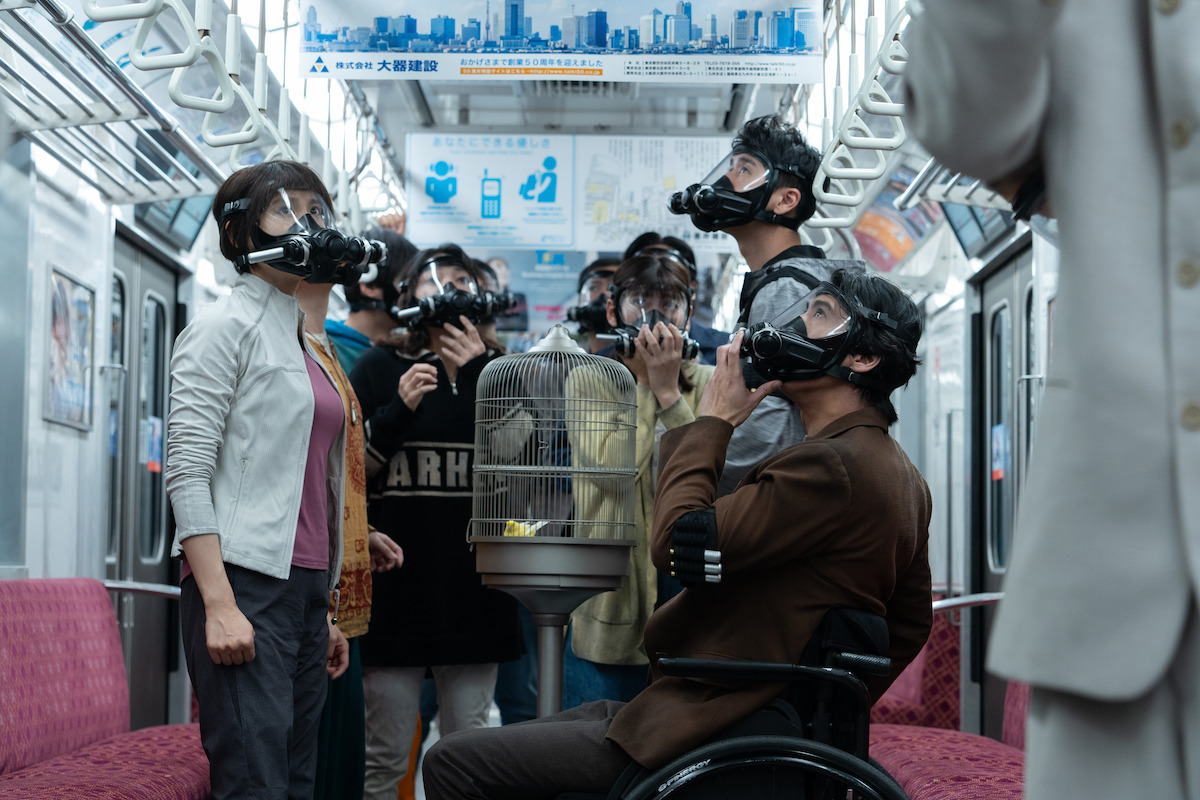
And so in that sense, the storytelling and then the gameplay is kind of combined into one, which is I think something that is distinct about this one, about ”Alice in Borderland” or this series. And then you also have these various flavors of game. For example, you have these brutal, very violent games or very kind of close quarters into intellectual mind games. Or then you have the futuristic games.
You have these games which remind you of very classical games that you played that kids used to play in the olden times, let’s say. And then there are also these very unexpected games that will unfold in very unexpected ways with the intellectual games that the viewer is also thinking for him or herself and trying to play along as well.
And so with Season 3, especially as you were following the story, you’re also integrating yourself or immersing yourself in the gameplay as well at the same time, which I think is very different from others.
Q: Although Season 3, we see the same characters and some elements from previous season, it opens up a lot of opportunities to explore new themes and character developments. When you were selecting the games for Season 3, which one did you decide would serve as the core message and essential for this season? And why was it meaningful for you?
Shinsuke Sato : So of course, I mean as you say, that the gameplay really has to be closely linked to what are the core messages and the themes that we’re trying to tell with the storytelling in this season.
So all of the gameplay or all of the games as they are placed within a certain story arcs had to be appropriate to that moment in the storytelling, which dictated whether we wanted to bring an intellectual mind game to certain story arcs or did we want to bring in violent physical games into certain story arcs and as well.
And also there was the ideation process because there are some original gameplay that you will see in this one that you have not read in the manga, which was quite a tricky process as well.
We were very deliberate about having the final game being set, being a psychological mind game, but also setting it in Shibuya as well and going back to including original games that you do that were not drawn or pulled from the original manga series.
We did this both in what, Season 1 and Season 2, but the trickiest part of that was, well, you have to be a game creator yourself.
You have to think of what rules you want to set within the game, what always happens is you set these rules of gameplay, but then there are certain holes that you just can’t figure out how to solve or yeah, how to fill up certain holes. So that was challenging, and I really don’t remember how I actually did that, now that I think about it.
But I was very particular about the fact that certain character choices have to sync with the themes or the ideologies that we are trying to portray in this series. And so it was like I was trying to identify the gameplay while I was writing the script all at the same time. But I really can’t remember how specifically I approached this whole process.
©Courtesy of Netflix
Q : Talking about the final game. I think the final game feels like the biggest one, both technically and emotionally. And as you mentioned, we kind of see Season 1 start in Shibuya and Season 3, we kind of see that also end in Shibuya. Are you able to share your inspiration behind it? And what’s the story of how it all came together?
Shinsuke Sato : So to talk about how we arrived at that final game, it was very intentional that we said it in Shibuya as you said it, the series season 1 begins in Shibuya and then season season 3 ends in Shibuya. But the which is which is true, but there was actually no gameplay ever done in Shibuya in this series.
So there had to be it had to end in a game played in that specific part that is Shibuya. And so I also wanted to do something in that fashion because I wanted it to be a great bookend, let’s say, because the first one, the first game that you see in season 1 that are alive is which door do you choose? And then your choice will determine whether you are killed or whether you survive.
And I wanted to do something that was akin to that, in other words, like a close quarters game which you in which you are concealed in this confined space. And then I also wanted to do a this is what we call weOK, so it’s a roll of the dice board game essentially that the players are playing here, which we call Sugoroku in Japanese. And I wanted to do a Sugoroku game because it echoes how the choices that you make in life determine your fate or your future, as is done in the gameplay as well.
The choices that the players in the in that box make does really have certain consequences. So it’s a microcosm, this gameplay, it’s a microcosm of what you’re trying to set as the core theme of this season, which is life, which is the core theme in this season. Now, just because you choose a certain theme or philosophy that you want to tell in storytelling, it doesn’t necessarily mean that you arrive at the type of gameplay that you want to set in that storytelling.
You use a different part of your game, your brain for that in other words, it’s totally different from writing a screenplay or creating a story. So that was quite a challenge. I wanted to set the game in the scramble crossing. It just occurred to me that I wanted to make the game played in this square space and I wanted to make it just an arrangement of like a go board or let’s say that would be a test board to the Western audience perhaps. But I I was imagining something that was played in this huge square box that looked something like a Go or a chess board, let’s say Go board. And that’s how that all came together.
Q : Sato-san, thank you so much If you have any final words for the group or audience that will be really great.
Shinsuke Sato : So, I’ve kind of meandered on and on about the process of making this series, but I really want you to want the audience to the viewers to come in with no just as if they are approaching a blank sheet of paper. In other words, just you can forget about anything that you know about “Alice in Borderland” and just enjoy this season.
One on one interview with Director Shinsuke Sato.
One on one Interview with Actress Tao Tsuchiya.
Interview with Actor Kento Yamazaki and Actress Tao Tsuchiya.
If you like the interview, share your thoughts below!
Check out more of Nobuhiro’s articles.
Here’s the trailer of the series.