
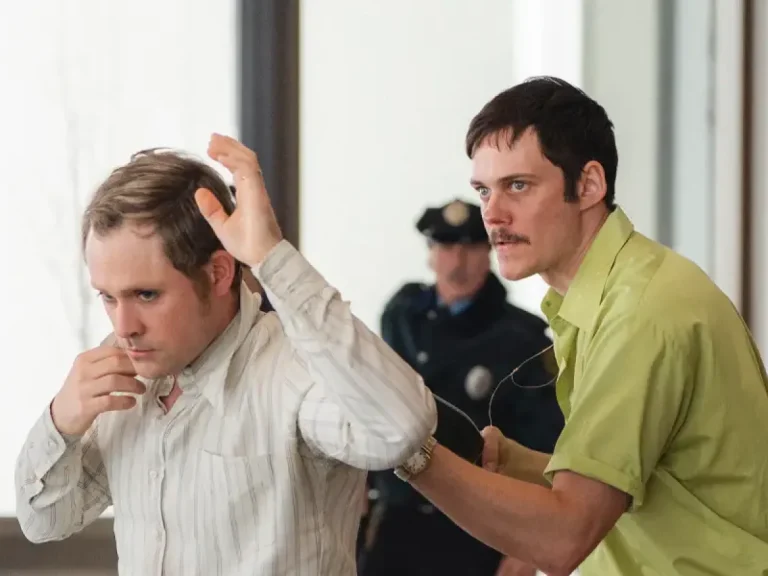
@Courtesy of Row K
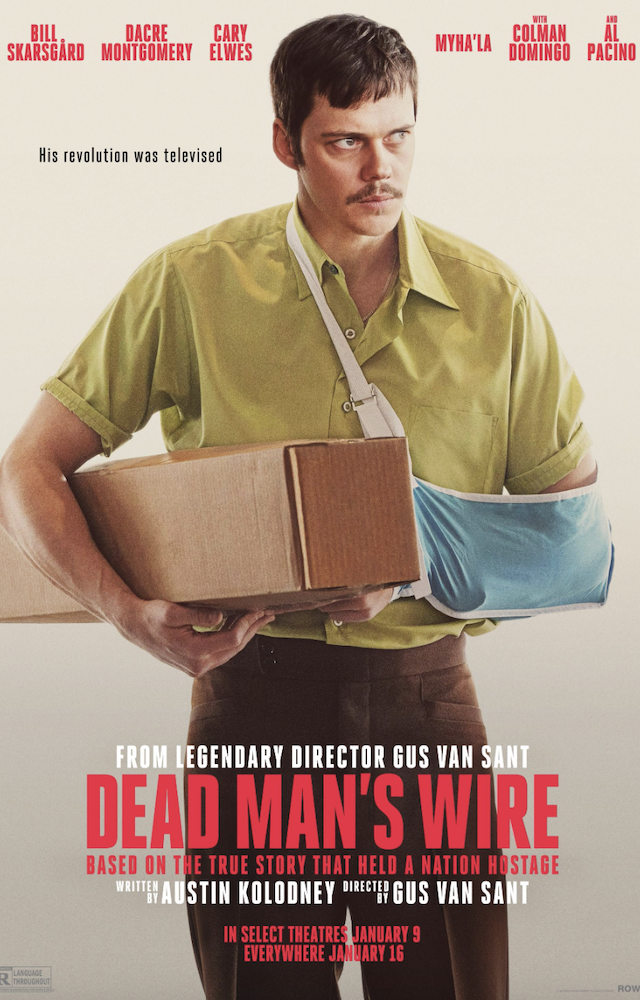
Q: Your journey to screenwriting is pretty unique and amazing. Can you give us a little overview of what you were up to before, and how you came to this?
Austin Kolodney: I didn’t grow up connected to the film industry. My mom worked at a grocery store and liked movies, and would always take me to great movies. We had a lot of great VHSs laying around. I went to community college at College of the Canyons and transferred to USC, which opened the world of filmmaking. It’s been a long decade or so of any odd job to stay afloat between when I left SC in 2015. Before that, I worked at Baskin-Robbins for 3 years, a lot of odds and ends, then the LA Zoo job which was part-time, like a 4-day-a-week, manual labor job that I took up in 2024. Around that time I was doing rewrites on this movie. It was great because it was on the weekends. So basically Monday through Friday business hours to be able to work on my writing and directing. Please visit the LA Zoo, it’s a great place.
Q: When you first became aware of Austin’s script, did you consciously or unconsciously respond to the fact that there’s this decades-long history through your work of centering the stories of outsiders? Are you looking for that, or do you just subconsciously respond to that?
Gus Van Sant: I think the universe conspires to make that happen. I joined with the knowledge that it was going to be shot in Louisville, Kentucky very quickly. This was September of 2004 and Cassian Elwes, the producer, was planning to shoot in November. The day that he gave me the script I was intrigued by the whole situation of having to do something right away. Not even knowing what it was about. I didn’t really say yes. I did read the script before I said yes, I liked it right away, because you could see very clearly the guy, Tony Karitsis’ personality, partly due to the hyperlinks that were connected in the script to his actual voice. You could hear the real guy, who was very intriguing. No, I wasn’t conscious. I guess it was obvious that he was a desperate underdog. A character that resembled other characters that I’d done before, but I wasn’t conscious of it.
Q: What was your reason for choosing Bill Skarsgård as protagonist?
Gus Van Sant: I had tried to get Bill in another film that was simultaneous. It was canceled right about the same time that I was joining Dead Man’s Wire. I had asked him to play a smaller part, and he said it would be interesting if he wasn’t playing a lead somewhere else. I was thinking of him for a while, just working with him, putting him into things where he wasn’t even the lead character. In this case, he seemed to work for the lead character, so I turned around and said there was a lead character on this one. He was busy, he was sort of fitting it in between projects. But he seemed to be game. Partly maybe because I worked with his dad, Stellan, in Good Will Hunting. He had actually come to the set, he was like 7 years old. There’s a picture I have of him and the family, the big family that was visiting Stellan.
Q: There’s a documentary that may have put this story on your radar. Have either of you seen that? There was quite a bit of research as well, can you give us a little background of how you came to know the story of Tony Kiritsis?
Austin Kolodney: I first heard it mentioned on a podcast. This was at the height of COVID, in 2020, during that summer. I was actively looking for something to write. I had written a couple other features, small indie things that I would want to direct, but I need to try and get something made soon to pay off credit card debt, get the career started, I couldn’t just keep driving Lyft and stuff like that. When I heard about Tony, I went down this rabbit hole. I started looking at everything about his story: there’s this one YouTube video that I use as a hyperlink, because it had this 5-minute summation of this really grainy texture, archival footage shot, highlight reel of Tony slipping on the ice, cracking jokes at the cops, laughing at them, getting them to laugh with him, then asking for water, having to hold the gun and drink it like a baby bird. For some reason, that crystallized the movie for me.
So I started developing it as a movie. I did get in touch with Alan Berry and Mark Enochs, the documentarians who made the documentary Dead Man’s Line in 2018. It was helpful to consult their records. That was my primary source. Then I started putting into the script my own voice, my worldview at the time, how I felt about the economy, trying to find empathy for both of these men.
 @Courtesy of Row K
Q: There are examples of people in recent years, such as maybe to some degree Luigi Mangione, where there are echoes of Tony. When you guys were working on the film, had that happened already with Mangione? Did those events in any way influence you, or was it just coincidental?
Gus Van Sant: For me, it was coincidental. We were gonna shoot in November. Fortunately, we were able to push it back, mostly because of Bill’s schedule. And then in November both the Trump election and Luigi Mangione at the same time. Especially Luigi did ring into a similar thing: one small person fighting against the system. I was meeting my future assistant who came from one of our producers, and he had a completely different take on the story: he was in his 20s, and claimed that there should be a sculpture erected for him in Central Park. Which I found shocking. A lot of thoughts were connecting to our project…
Q: Colman Domingo does such a great job as Fred Temple. Could you share why you chose to cast him, and also change the racial background of the actual radio host?
Austin Kolodney: If you have a movie, and Coleman Domingo says he’s maybe interested in being in it, I think you’d probably make it work.
Gus Van Sant: There was an attempt to cast a black actor, I’m not sure why, it was Cassian’s concept. Colman Domingo was working with Cassian on a project, and it just came up in conversation and all of a sudden, we had Coleman.
Austin Kolodney: Gus would feed me these archival YouTube links to William Roscoe Mercer, a DJ that he had listened to in New York, who had this kind of very sultry beat poet vocal cadence, one that would read poetry on the air, set to some of this progressive rock. That’s what inspired shaping the character in a different direction than what the real Fred Heckman was. I mean, it’s fantastic what Colman does, it adds such a rich texture. I’m really glad that Gus and Colman were able to push it in a new direction.
Q: Do you enjoy the producing aspect of making your films? How much do you get involved directly?
Gus Van Sant: Producing, as in casting, location scouting, preparing the costumes and the sets, it’s probably one of the more fun parts. You’re preparing for something that you think you’re trying to make great, and it’s not yet falling apart, it’s not when it hits the first day of shooting, and everything becomes real. like. The planning stages, it’s all like a big dream, so it’s quite nice.
Q: Are you fascinated with true crime generally, or is this just a one-off interest with this story in particular?
Austin Kolodney: I’d be lying if I said that I don’t like a good crime movie. A lot of great American films are crime movies.I don’t know if true crime is necessarily how I want to corner myself as a storyteller. Like I said, I’ve had a couple other scripts written prior to this one that aren’t at all in this realm. But I continue to look for any article or book or, you know, footage of a true event that has a character that is rich and textured, and feels like someone that I would want to see on the screen for an hour and a half, two hours. That’s what draws me to it. It’s more the person, the criminal, not necessarily the act of crime. It’s the three-dimensionality of the person that’s at the center of it.
Q: From Drugstore Cowboy to numerous other things over the years, crime has been an element of quite a few of your films. Is that a coincidence?
Gus Van Sant: Drugstore Cowboy reminds me of Dead Man’s Wire. And then To Die For. They’re usually outsider characters in my films, to the point where I was nervous that I wouldn’t be able to handle Good Will Hunting because it was more a heroic non-outsider. I guess the crime element isn’t necessarily the appeal.
 @Courtesy of Row K
Q: What about the media’s role in this crime story? Did they make a bad situation worse?
Austin Colony: Our movie shows a spectrum of how certain media and the public reacts to an event like this. That was always an aspect I wanted to touch on in the script, I always wanted to keep it mainly with Tony and Richard.
Gus Van Sant: My next neighbor here in Palm Springs is from Indiana. She has a friend who knew the judge in Tony’s case. When the verdict arrived, there was a game going on, and it was announced to the entire stadium. The whole stadium erupted in cheers.
Austin Kolodney: It was in the first draft of the script. It was a Pacers game. I don’t know if it was exactly the Pacers, but it was a game. I made it Pacers just because I thought that was the most recognizable iconography of Indiana at the time.
Gus Van Sant: Everything was similar to today in the media. But it was just earlier stages of the media, so it was halfway developed into our modern media.
Q: Your previous, most recent movie before this was in 2017. Did you think you’d ever make another feature film?
Gus Van Sant: During COVID there were a few things. There was COVID, and then there were some strikes as well. During COVID, I did a feature for Gucci, the Gucci channel. It had a story, it had a cast, and it was, to me, like a feature, but it just didn’t run in theaters. And then right after that there were always things percolating, that didn’t really come to fruition. A friend who was working on a series about Truman Capote’s Answered Prayers, which was a book and an incident that I knew about. I always wondered whether Ryan Murphy let outside authors work on his stuff, whether he needed TV directors, or whether he could use other types of directors. So I worked on a six-part Series Feud, which was the length of a couple different features. To me, I was just working on the things that came about. Now I’m back in the film world.
If you like the press conference, share your thoughts below!
Check out more of Adriano’s articles.
Here’s the trailer for Dead Man’s Wire: