

©Nobuhiro Hosoki
©Nobuhiro Hosoki
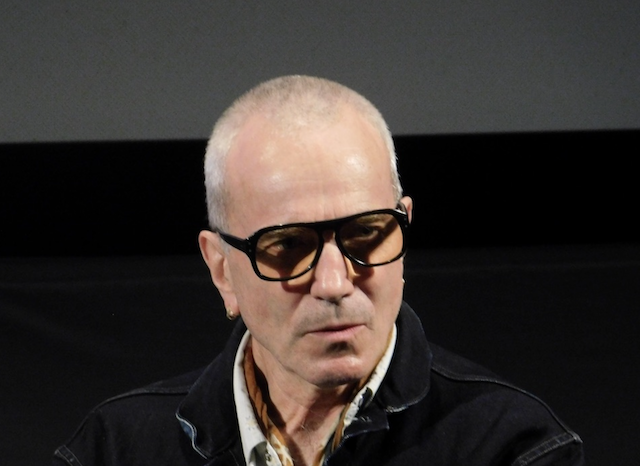
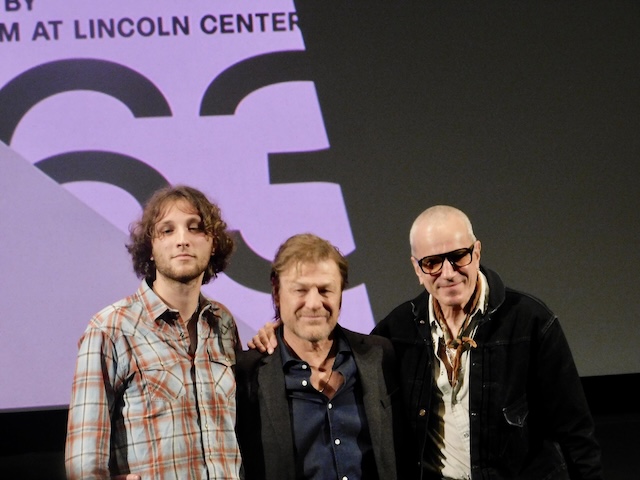
Press Conference with Writer/director Ronan Day-Lewis, Actor/Writer Daniel Day-Lewis, Actor Sean Bean
Q : Thanks so much for being here. I thought I would start by asking you, Ronan and Daniel, to just tell us how this started because you co-wrote the film.
Ronan Day-Lewis : Yeah, so I’ve had for years this kind of vague sense of wanting to write something about brotherhood and find a way into that kind of archetype. And at first, I thought maybe it could be coming of age type of story or something like that.
And then at one point when after my dad had stopped acting for the time being, he said to me that he wanted to find something that we could work on together. It turned out that he had independently had this inclination to do something about brotherhood. So that was really the seed for us and we kind of followed that.
Q : Daniel, do you want to follow..
Daniel Day-Lewis : That sums it up really…I just wanted to work with Ronan since Ronan was small person..…we(Ronan and I) made things together of different kinds and I regretted the thought that he would got on to make films and we wouldn’t have had that experience together. But when we set about it, I imagined that somehow we’d keep it contained in such a way that it would a sort of very private experience. And but the trouble is every stroke of the pen if you sort of free yourself during that part off the process, then you make it less and less possible to keep it that way. So, it was just initially two fellas in shed and then at a certain point, you know we got really sick of being in shed, we need to get out of the shed. We need Nessa and then we became focused more on Nessa and other parts of the story.
Q : What was it about the theme of the archetype of brotherhood that attracted you to explore?
Ronan Day-Lewis : Well, I have two brothers and I think there’s sort of beauty and tragedy to brotherhood and just that kind of volatility where things can go from, you know veer between love and rage in a matter of seconds that I was really fascinated with and I think we both really interested in the sense of silence and just how you siblings can have this almost like telepathic communication with each other and how many difference silences can exist between brothers between siblings.
Q : What was that writing process like for both of you?
Ronan Day-Lewis :It was interesting. It was we started very kind of intuitively in very low stakes like we didn’t have any sense, we didn’t start with like an outline or anything very different from past scripts that I’ve worked on. We were kind of almost like walking into the dark with a flashlight. We have the sense of being this man who’s living in a state of kind of self-exile and living in this remote environment and his brother turning up after 20 years of no contact.
But beyond that it was the circumstances of their past and their lives and their kind of their connection started to reveal themselves over time and it was very much improvisation that went into it where my dad would actually speak as the characters and especially Ray, I sort of feel him kind of slipping into that character really early on in the process which was remarkable and like unexpected.
Q : Was it always understood that you would play Ray, Daniel?
Daniel Day-Lewis : I suppose with hindsight..I think it probably..you know if I was going to end up doing it, it would be that, but initially I was equally fascinated in Jem’s(played by Sean Bean) experience that long part of the time.
Q : I wanted to bring Sean in, because as you noted I mean it is quite a contained film actually because a lot of it, you know, is a two-hander, and obviously the role of Jem’s is hugely important, if you could say a little bit about this casting Sean and then working with him, Ronan?
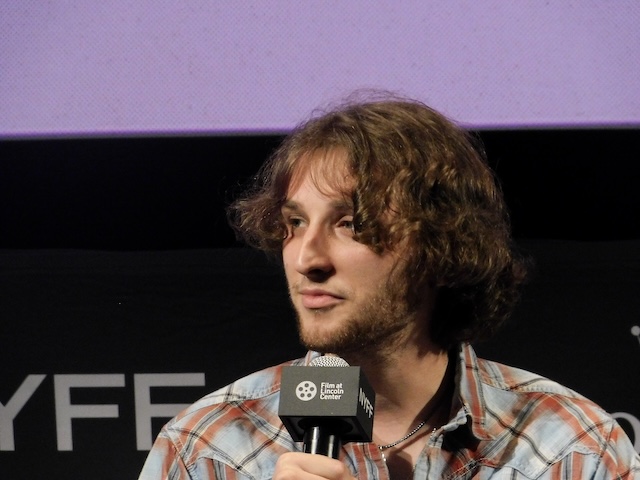
Ronan Day-Lewis : Yeah, absolutely. So, I’ve been a huge admirer of Sean’s work for years, going back to “Game of Thrones, watching “Game of Thrones” when I was 13. And so, when we first started talking about Jem, it was actually hard for me to imagine anyone else playing him. We genuinely couldn’t imagine anyone else. So it was a relief when Sean connected to the character and wanted to do it, I was over the moon. And it was a just a delight to work with him.
 ©Nobuhiro Hosoki
Q : Sean, your response to the script.
Sean Bean : Well, I love this as soon as I read it, and Daniel called me and couldn’t believe it was calling me for a start… I mean, we’ve talked before, I did a job called, “Time”(BBC) at Jimmy Mcgovern script that was television series, and Danny(Daniel) was kind enough to bring myself and Steven Graham. We both starred in “Time” and offer his compliments, but you know, I was quite gobsmacked by that, to tell you the truth, I was even more gobsmacked and surprised when he called me and told me about this wonderful script that Ronan and he had written.
I was very flattered and honored that he did ask me for starter and then after reading the script and seeing its content, its potential and it’s just the beauty of the poignancy and these incredibly fractured and mysterious characters. I was just blown away by it and there was something I was just so much looking forward to working with these guys.
Q : I was curious, Ronan whether the aesthetic choices were already clear to you when you were writing the film, because I could see a much different film about the story, and I think it’s striking that your choices are in many ways more expressionist than realist. I’m just wonder how if that was present for you from the beginning?
Ronan Day-Lewis : It was interesting because like you said it’s a story that could be told in a very different way as kitchen sink drama and there was always those ingredients, those kind of very human kind of archetypal ingredients to it. But I think even in the first 10 pages, I think the way that more expressionistic or kind of metaphysical element crept in was through the weather. It was there even in the first 10 pages, there was all this rain and just the sense of elements kind of in concert with the human mystery and human drama, so I think staring to sort of follow that thread gradually over the course of writing, we started to accept more and more of these kind of image or strange occurrences into the fabric of the story like the Nessa of visitation was one of the first ones where she’s floating in front of the bed sort of one of the first instances of that we incorporated and over time.
I think we just became more and more liberated in the writing process to kind of go into abstraction at times and then when we were designing the film, and I was sort of imagining the visual language, I think my work as painter in the last few years definitely..even if unconsciously influenced you know the pallet and the sense of magic sort of underneath the surface of these events that are also obviously have this really deep-rooted in reality and historical kind of framework.
Q : Yo mentioned the silence between siblings brothers, and I think one striking aspect of the film is that I think a mark of the confidence of the film, I think is also just the reliance of silence and long wordless sequence and the first half hour of the film very few words are exchanged.
Daniel Day-Lewis : There were a couple of books. It’s not really a reference for this at all, but it had stayed with me, a wonderful writer, Kent Haruf who wrote the books “Plainsong” and “Eventide”, not sure if anyone’s familiar with those, but I found them very beautiful, very moving books about a community in I think it’s Colorado, is some in the west, right? But you get to know a number of different people in that community and two of the characters that really stayed with me are two bachelor brothers who were ranchers, elderly bachelor brothers, cattle ranchers who lived in a house and basically they loved each other.
But they didn’t really speak, yeah, that something of that stayed with me when we set about doing this and one thing that we didn’t mention about the writing of it was that it took a long time because we only ever write when we were in the same room together. So we never tried to do it remotely at any point. I mean things would occur to us independently, then we would chat on the phone or come together, but Ronan’s schedule was pretty busy after he left college. So, you know, we just decided that was the way wanted to do it and I think it worked best for us like that.
Q : Did you want to add anything to that…
Ronan Day-Lewis : Yeah, I think that, the gradualness of the writing process definitely contributed to the sense of just following the characters. It felt like we never had that sort of forced to take enough time after each sort of burst of progress on it to reflect on that and sort of..you know iron over it and by the time we’d follow them to the next scenario or the next scene of the location, it felt like we really had time to reflect on how they would react to certain scenarios. So by the time we got to the first draft, it felt like it came out far more fully formed than I expected, I think because of that.
Q : Silence is important in the film, but there are couple of pretty remarkable monologues. I guess the war crime one and the Guinness and Curry one, we could say, I don’t know..
Ronan Day-Leiws : Works as a name.
Q: Which came first.
Ronan Day-Lewis : If I remember correctly the Guinness and Curry came first. Is that accurate?
Daniel Day-Lewis : Yeah, Yeah, it came out quite quickly too. Not to disappointed…but it’s true when we looked it afterwards, we thought, what can we do now? Like what happens now? So it was a bit of a conundrum like having..
Ronan Day-Lewis : But I think the fact that it appeared to us relatively early in writing process, it felt like Ray announcing himself to Jem, who he is now also announcing himself to the audience, but then also the film kind of announcing itself to us, I guess, in a way where it made it changed the tone of the film pretty considerably how we went forward.
Daniel Day-Lewis : And in matters of faith too like that Jem and I(Ray) had come from a very very strict religious upbringing, and so it was the minutes that Jem walks in the door, it’s very clear that his faith still alive in him, and that is the root of core beliefs and root of his movement through life. So it’s really just like saying, “Well, that’s who you are, but this is who I am now.” But I’ve seen everything that Sean has done. We started out as youngsters more or less at the same time.
We met one time very briefly as a casting session and I’d follow Sean’s work throughout the years and you know it was always beautiful, but more and more the work that Sean was doing was really beautiful to me.
You mentioned “Time”, but also “Broken” the series, I don’t know if anyone saw that, where Sean played a priest in a very difficult parish in the north of England. I don’t know that did you feel that connected in any way with what we were doing, Sean?
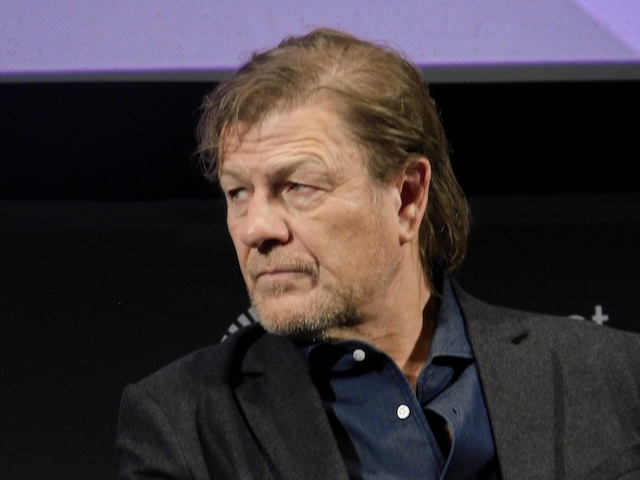
Sean Bean : I guess it connected in the fact that I played a priest and then you did that to a priest in “Anemone”, so there is that connection. But I guess that I played a Catholic priest in “Broken” that was a struggle in itself. I mean I think it was because Jem’s faith, it was something that Ray knew was a weak point. It’s not a weak point for Jem because he falls back on that. Whereas Ray finds solitude in the woods and little comfort on his own, but he’s still haunted by his memories of these ghost. Jem finds religion and Ray knows that when he’s doing this wonderful scene that he did, and as you said it, “This is who I am and you can come here with your religion and your belief, but this is who I am now.” But all those in regards to time, when you saw me in that Daniel, I think there are similarities throughout that. And one man’s faith is another man’s kind of poison. I’m incredibly honored that you should just say that about me and compliment, I’ll remember that for rest of my life, I certainly will.
 ©Nobuhiro Hosoki
Q : Can you say a bit about the second monologue?
Ronan Day-Lewis : Yeah, the second monologue was interesting because it came pretty quickly after the ripen monologue, like very early on. And that one with ripen one, even though it felt pretty unusual to kind of have that intense kind of reveal about a character or that big dialogue scene that early on in the film, it felt like the silence that kind of preceded it almost allowed for that. Whereas with the war crime scene, I think it was very clear to us that we had to basically withhold that as long as possible.
As soon as that came into being, I was like, “Okay, this needs to be…this is the whole film is going to be almost about withholding that kind of creating this drip feed of information and it became this sort of dance in general.” That sort of informed the way we thought about that revelation of information about the characters and also about the kind of stranger elements in the film. In terms of how they reveal themselves to the audience.
Q : So, you studied painting, is that right?
Ronan Day-Lewis : Yeah..
Q : But was cinema, I assume that cinema was big part of your childhood? Did you watch a lot of films or being on the film sets?
Ronan Day-Lewis : Yeah, I mean both actually. Yeah, my I was really lucky that my parents showed me so many films early on. I was really young and jus throughout my childhood that I probably wouldn’t have otherwise discovered until like way later. So, year, I remember there’s so many films that I’m really grateful to have seen at a young age. And then also spending some time on set like when my dad was making “There Will Be Blood,” we lived in Marfa, Texas for a few months, when I was like seven, which that landscape and the desert and also experience of going on set and that sense of kind of make believe and creating this world that was so expansive was intoxicating to me. And then, when parents are making the film about “The Ballad of Jack and Rose, we were on the Prince Edward Island for that when I was five. So that was really amazing experience.
Q: Which films made an impression on you that you watched as a kid?
Ronan Day-Lewis : I remembered my parents showed me “Kes”(Directed by Ken Loach, 1968) pretty early on when I was like 5 that was definitely left an impression. And I also remember “Rocco and His Brothers,” there’s a scene in that I’ll never forget. I haven’t actually seen since, but it definitely burned itself into my memory.
Q: They Picked some good films. I should also note actually that your mother Rebecca Miller has a film in the festival which is also world premiering next weekend. I’m curious what kind of a filmmaker you are. Do you do a lot of takes, did you have to figure that out or did you feel like you knew how you wanted to direct before getting on set.
Ronan Day-Lewis : It felt pretty intuitive once we were on set as far as how many takes. I think that was something I was particularly nervous about going in, how will I know that and I think it reassured me pretty early on that I felt like I had an instinct about that felt pretty consistent. But I think having the kind of substrate of knowing the visual language of the film, and the tonal language of the film, so deeply going in kind of giving me a bit more confidence and felt like gave me more of a footing in other areas that I was far less experienced in.
Q : I’d be curious to hear from Daniel’s perspective, you had taken a break from acting for a few years, but you have taken breaks before in the past. I’m just wondering what is like to com back to acting and I this case is different because you are working with a family member although of course, you have worked with Rebecca before too.
Daniel Day-Lewis : Yeah, it’s coming back to the work that I love. I felt that I had a vocation at a very early age as a child still that was going to be my future one way or another for better or worse. And I hope I would remain working for some time, and yeah, I have taken time away from it. Apparently, I’ve been accused of retiring twice now, but I would never occurred to me to use the word retirement, sometimes I have stopped working, doing this work because I wish to do some other work for a given period time. And in case of the latest one, after the last film I made, I definitely I was in very low spirits. I made fucking fool myself by announcing I was going to stop working and you know probably a bigger fool myself coming back.
But deny myself the possibility of working with Ronan just to stand on my pride, I think that would have been probably a worse decision than I said that, so I’m sticking to it. But it didn’t occur to me after the last one, I had long periods where I thought I’m not well suited to the work, but the work was always very precious to me, it was like food and drink. But I think I have in common with a lot of actors that I’m ill-suited for the life around it, the public aspect of it. I’m like a lot of us, we are sort of rather quiet…it’s a paradox, we seem to be begging for attention just be virtue of the fact we are doing the work.
But it really never occurs to you that you can’t switch the attention off at will, if you get it, if you are lucky enough to get it. And there’s nothing to moan about because it means lucky if your work is paid attention to. But yeah, I was always ill at ease with the public aspect of the life which very much involves the promotional part of it. I thought I’d get used to it, and I never really did. So it sort of left me wondering If I wasn’t just better off keeping out of it.
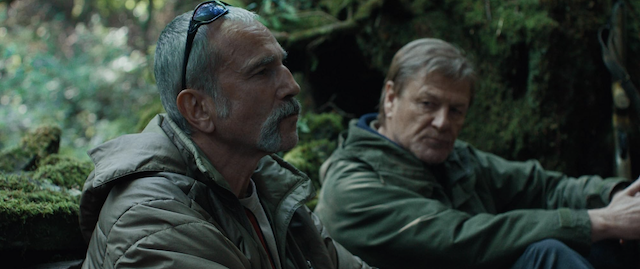
©Courtesy of Focus Features
Q : Sorry to make you do this but…
Daniel Day-Lewis : It’s fine, I’m grateful for a chance to talk about it a little bit because I realize that it raised questions and of course it’s dare to make statements about stuff. You’re meant to just crawl away and die quietly. I know that’s you know it just so self-important to make, but in the case, I thought I’m doing this because I don’t really expect find my way back to the appetite for this work again, and I did, I’m really grateful for it and I hope I do again.
Q : Great, I think we’re all grateful for it too, thanks. We’re gonna take a few questions from the audience. I want thank you very much for really a marvelous experience here. I hear you speaking a great deal about process and making the film, and I understand that’s a major interest for all of us, but for me as a viewer, this film felt biblical, and I’d like to know how you feel about my feeling as a viewer that this is biblical.
Ronan Day-Lewis : Feel pretty good about that.
Daniel Day-Lewis : Absolutely delighted. It’d be a rash assumption to think that in 200 years, I mean fantastic if it are still looking at it, but I think it did happen very naturally that it grew up between us, that aspect of it which allowed within one family, allowed us to see two possibility of existence with or without faith. We didn’t feel guided to know consciously toward doing that, but it did emerge very naturally the aspect of faith in the film, and I have very dear friend who was in the British army did a full career and he has very deep faith and we’ve many discussion because I’m not the same faith, but we have many discussion over the years about that. And I think something of those conversations probably found its way into this.
Ronan Day-Lewis : Yeah, I think there was a book that I looked at a lot in prep called, “The Book of Miracle” that was this book of illuminated manuscript from 16 century with all these folkloric and also old testament illustrations of these events that felt like there were blood and massive hail storm, and these kind of cosmic occurrences. That was also essential in kind of finding the tonal and sort of visual world of the film. How to emerge that with the realism of the characters, stories. And I think that I always knew that I wanted the film to have a spiritual quality to it without being Christian, without the film being Christian. But I think that the biblical imagery has always been fascinating to me.
Q : Thank you for the film, it’s really a great piece of work, there’s distinction between this film in particular era in England, there’s background of the troubles in Northern Island. Daniel, of course, you are English yourself. Ronan, you’ve had this distinctive upbringing in America. I’m curious about how did you two have the difference between those two countries sort of comes through in both your mutual creative process.
Ronan Day-Lewis : Yeah, it was interesting because I had spent 7 years in Ireland growing up from 7 to 13. So, and my dad obviously had long connection to Ireland and was living there by the time he met my mom. And I think we both had when we didn’t know immediately that the trouble were going to become a kind of historical framework for the film, but we both started to instinctively gravitate towards it, I think, as time went on. And I learned a lot in school growing up. And so they really loomed large in my imagination, I think, for as long as I can remember.
I guess the fact that my dad.. I mean, I’d love to hear you speak bout it, but like the fact that you had grown up in England which also kind of gave us a unique sort of window into…it felt like the trouble had been tackled a lot from a certain vantage point. And I thought it would be interesting at a certain point to explore it from a different vantage point without the film, even though without the film’s point of view siding like the film’s point of view being merged with the point of view of what you could call the oppressor in the situation, but for the central character to have been employed by the oppressor, I think it was something that interested us.
Q : Congratulation for a great film. Thanks, Daniel for coming back. We are very happy to have you back and please don’t take a long break anymore. I’d like to know from you, Ronan, how was it to work with your father. I know you guys wrote the screenplay together. But since your father is considered the king of acting, was it intimidating to tell him what to do, exactly the way you imagined the scenes? And did he listen to you, how was that?
Ronan Day-Lewis : Sometimes, yeah, No, I think I had two great advantages, one as you said, we wrote the script together, so we have spoken so exhaustively about the character and the emotional trajectory of the story and just Ray’s world, by the time we got on set, we kind of had this shorthand when it came to these scenes, we didn’t say nothing, but there was a lot more silence and kind of trust was possible. And I think another aspect is also just our inbuilt familiarity like any other young filmmaker would be so intimidated to work with him and and have that dialogue, give notes and be collaborative process when you are on set. And I think, yeah, I was very lucky in both of those regards.
Q : Actually, Sean, Id’ be curious to hear you say a little bit about sharing the screen with Daniel, and also just sort of working within the father and son dynamic.
Sean Bean : Yeah, it was fascinating, it just felt very natural from day one to be working with them both. And it was kind of seamless relationship, as you just mentioned it, kind of a tacit understanding, unspoken thing that they had been each other that was understood. You know, I met Daniel before and I came over to Ireland to see him and we got to know each other, then we spoke to FaceTime with Ronan, and all felt very natural.
And that proved to be the case on the set. And Ronan, he was very fanny on the set. I love his humor, I think he likes mine a bit, don’t you.(Seeing Ronan’s face) I mean we go on very well. And Daniel is kind of foil to that. We all felt very natural, I think it fell into place immediately. I wasn’t kind of things where we felt overlord in any sense. I was very welcome to this two incredible artists, I was welcomed into their world. It was kind of effortless in som sense, that’s due to their personality and their generous humor.
If you like the article, share your thoughts below!
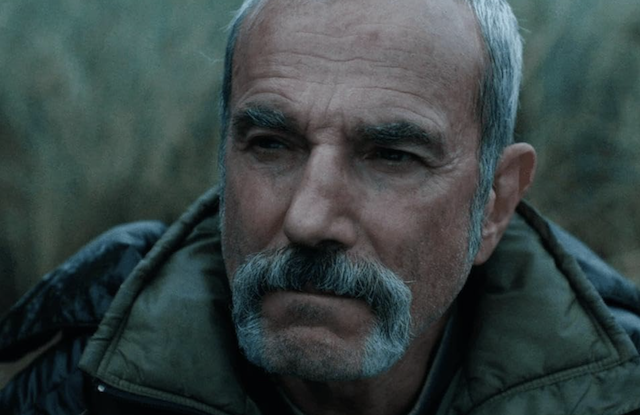 ©Focus Features
Check out more of Nobuhiro’s articles.
Here’s the trailer of the film.