
One of the most emotionally challenging processes in life for families is learning how to communicate in order to move forward, especially after they endure a tragic experience together. That’s certainly the case for the two sisters in the new drama, Take Me Home.
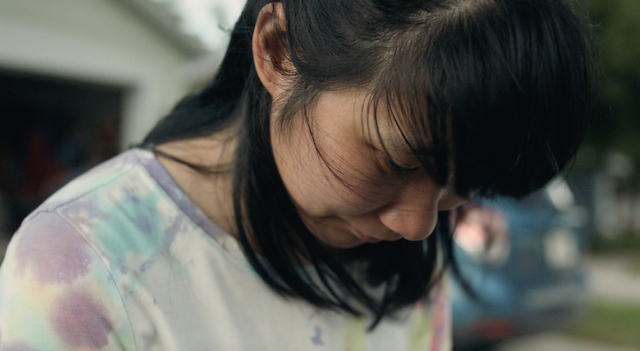
The feature is inspired by the life of its filmmaker, Liz Sargent, and her sister, Anna Sargent. Take Me Home stars the latter, who was born with a cyst on her brain. The medical condition left her with little short-term memory and various degrees of cognitive and physical disabilities.
The new feature is based on the short of the same name. The latter had its World Premiere during the Shorts Program 6 – Competition section of the 2023 Sundance Film Festival.
Both projects explore themes of disability and family. Like its source material, which marked Anna’s first time acting, the feature incorporates Anna and Liz’s backgrounds and identities as adults into the story.
Take Me Home follows Anna, a 38-year-old Korean adoptee with a cognitive disability, as she cares for her aging parents in a fragile balance of meeting one another’s needs. When a Florida heat wave shatters their family and Anna’s routine, her future is uncertain until she creates a world where she can thrive.
The new movie examines the shifting demands placed on a unique — and uniquely vulnerable — American family. The filmmaker, who made her feature film writing and directorial debuts on Take Me Home, details the struggles of Anna, alongside her fellow adopted sibling Emily (Ali Ahn). The drama also explores their relationships with their devoted father Bob (Victor Slezak), who is succumbing to dementia.
Being able to expose the structural challenges faced by disabled people is a powerful motivator for filmmakers to craft intimate looks into the indignities of the American health care system. The film also gently and imaginatively traces a path for Anna’s independence and connection to a community of chosen family. By turning quietly devastating and bracingly optimistic, Take Me Home confronts an impossible situation, while holding out hope for Anna’s future.
Liz Sargent generously took the time during Sundance to talk about scribing, helming and producing Take Me Home during an exclusive interview. The filmmaker returned to the festival to world premiere the story’s extended version in the U.S. Dramatic Competition. The feature went on to win the Waldo Salt Screenwriting Award: US Dramatic.
Q: You wrote the script for the new feature film, Take Me Home, which is based on your 2023 short of the same name. What was your inspiration in adapting the short info the feature? How did you approach scribing the screenplay for the new movie?
Liz Sargent (LS): I made the short film and it was so personal. It felt like a diary entry.
I was then blown away by the response. It was incredible that we world premiered the short at Sundance in 2023, and then the festival run just rolled out. We brought it to over 50 film festivals all over the world. We also screened at the White House to celebrate the Olmstead Act.
I couldn’t believe the reach that we had for this little film that didn’t really solve anything. It was just about this tiny transitional moment that felt so important to me. That made me realize the power of this subject matter. It also made me realize the power of Anna, my sister, in the film, and just how captivated people were with her, and how universal she was as a lead.
Q: As you started creating the script for the extended version, how did you determine what the story would be for the feature? How did you expand all the details from the short?
LS: Writing the script for the feature was hard because it wasn’t completed before I did the proof of concept. There was so much to explore. I had several different versions that I had to play out and they didn’t work out for many reasons.
One version had the sister being the main caregiver and the main character with Anna. I felt like that story has been told. I also felt like it made the sister sort of the answer to the caregiving dilemma in this situation.
So, I just sort of started playing it out and trying to find a way to make the story more specific and nuanced. I also wanted to find the dynamic that had not yet been told.
I think it’s interesting and rare to see a father taking care of this his adopted daughter with a disability. It’s also rare for him to feel that much love and responsibility without questioning it, in order to normalize it.
Q: After scribing the screenplay for the feature, you also made your feature film helming debut on Take Me Home. How did you approach directing the feature after penning the script?
LS: I think the hardest part was just getting all the financing together and building the team. It’s a very hard time in this world to be making film. That process felt long to me.
But I feel lucky because everybody who was involved in this film believed in it so much. There was never a question if Anna should be the lead. They believe in the vision and my leadership so much.
So I was really lucky. I feel like when I was making the film, I could really trust my gut. So making the film was hard and impossible, but I learned a lot. But the hardest part of making a film is just getting the funding together to reach your vision
Q: Speaking about securing the funding and the budget, you also served as a producer on Take Me Home. How did you work with your co-producers on the new full-length adaptation after you made the short together?
LS: I was really lucky because the short film won a grant with Janet Yang. It was the Julia Gouw short film competition with Cape (Julia S. Gouw Short Film Challenge). That brought me in to create new relationships in the industry.
Janet is still on the project (as an executive producer). So she’s really championed the project for a long time.
I then found Caring Across Generations, whose mission is just so exactly aligned with this script. They’ve been helping find financing, and also advising for this film and the the impact campaign afterwards.
But the real turning point of it was when we went to Tribeca and we pitched at AT&T’s Untold Stories. It blew us away. We won $1 million of a production award, and we then pieced together the rest of the funding. We then went into production immediately afterwards.
So that program, led by Bryce (Norbitz) and Michelle (Hamada), is so incredible. They are so involved and supportive of the filmmaker’s vision They never jumped in to control any part of the process. That was very fortunate to me because I don’t know how I would make a film this without a team like that.
Q: Besides Anna, the drama also stars Victor Slezak, Ali Ahn, Marceline Hugot and Shane Harper. How did you approach casting the supporting actors in the film?
LS: I think about this entire filming process as being led by Anna because we had to make a very specific environment for her. So in the casting, I really thought about the actors’ comfort and maturity in taking Anna seriously and challenging her. I also considered their lack of ego so that they could really give to Anna and be playful. Anna responds to good people.
So I just wanted to sense out who these actors were, as well as their sense of the story. and then looked at their background. I really was leaning towards people who had a background in theater, who could do repetitions, and had a deep love for process.
I was also looking for people who are ready to be game for a very malleable process, where we pivoted daily. There’s only a certain type of actor who can take on an experience like that.
Q: Once the rest of the cast signed on, how did you work with them to build their characters and the overall story?
LS: I think a big part of it was them meeting Anna and understanding the way that she takes in information and reacts to situations because she has little short-term memory. She’s not going to memorize a scene.
I never wanted her to just be a puppet or regurgitate information. I wanted her to feel natural and have agency, and also be inside her body and her words.
So I think once they understood her, then it was about going into the scene understanding the scene its structure and then being playful within it. But it was really about understanding what they needed to give to Anna to get a response from her, and how they were going to respond to what’s in the room. So the rehearsal was really just about an understanding of the situation.
For Anna, she had an acting coach who was incredible, who really treated her like a professional. They read the script, they practiced because she has this incredible long-term memory.
So, there were these beautiful moments where sometimes in a scene, we would prompt lines for Anna. She would be repeating them. We’d slowly pull back and we’d see what would happen how she would understand the scene.
There was one time where her long-term memory snapped in and she remembered the entire scene and all of the beats. It just flowed together in this really incredible way.
Q: You shot Take Me Home in real locations in Florida, where the story’s set. Did that help Anna in her acting and her ability to connect with her co-stars?
LS: Yes, absolutely. For Anna, she has the shortcuts of the story. We shot in her home. She’s playing a version of herself. So however she reacted to a scene was correct.
She does understand pretend, so she knows that these are her pretend dad and sister. She has that kind of understanding and maturity, whether she can articulate that clearly or not. I think she has that deeper understanding.
Q: Once you finished shooting the feature, how did you approach editing it and figuring out how to expand the story from the short?
LS: This film was a lesson in instinct and pivoting. The production period was about pivoting to whatever was in the room and following the instinct. Sometimes we wouldn’t even know if we got a scene. I would just have to collect and know that there were enough moments in there that were going to work.
Based on my experience with the short film, I always knew that when we would go into the edit, we would choose all the parts that felt honest and real. Then we would figure out what the scene and overall film was.
I believe in just taking all your favorite parts and seeing a theme in that. So I think the magic of film making is made in this kind of process.
Q: The feature (had) its World Premiere at this year’s Sundance, after the short premiered at the festival in 2023. What does that mean to you to be able to return to the festival with the feature now, a few years after the short’s screening, and share the story with audiences once again?
LS: I haven’t really taken it in. I feel like it’s very overwhelming. People use the term surreal all the time, but I feel like it feels very real and very palpable; it’s very intense. But my north star is always guiding me.
Anna also (went) to Sundance, and I (couldn’t) wait for the world to meet her and for her to be a star.
The thing that I want people to take out of this film is is to to love her, to understand that she is equal, incredible and magnetic. I think if you can see the her power on screen, that’s what’s going to make people change the way they make films, including who leads the film. They’re also going to be active in the community to change the policies and make healthcare more available.
If you like the interview, share your thoughts below!