
©Courtesy of Brevity Films
©Courtesy of Brevity Films
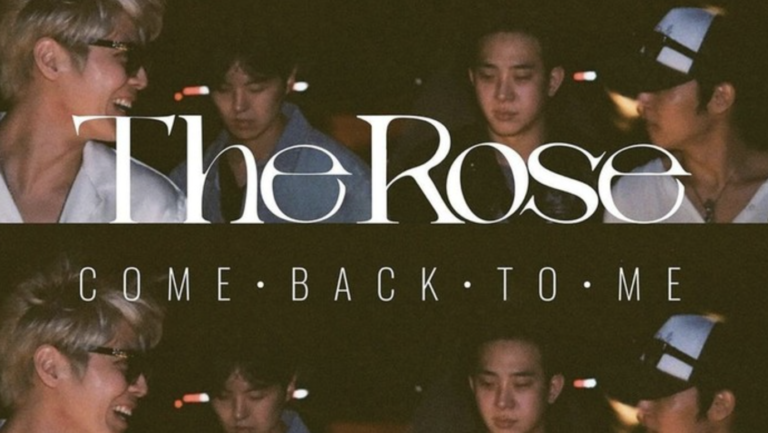
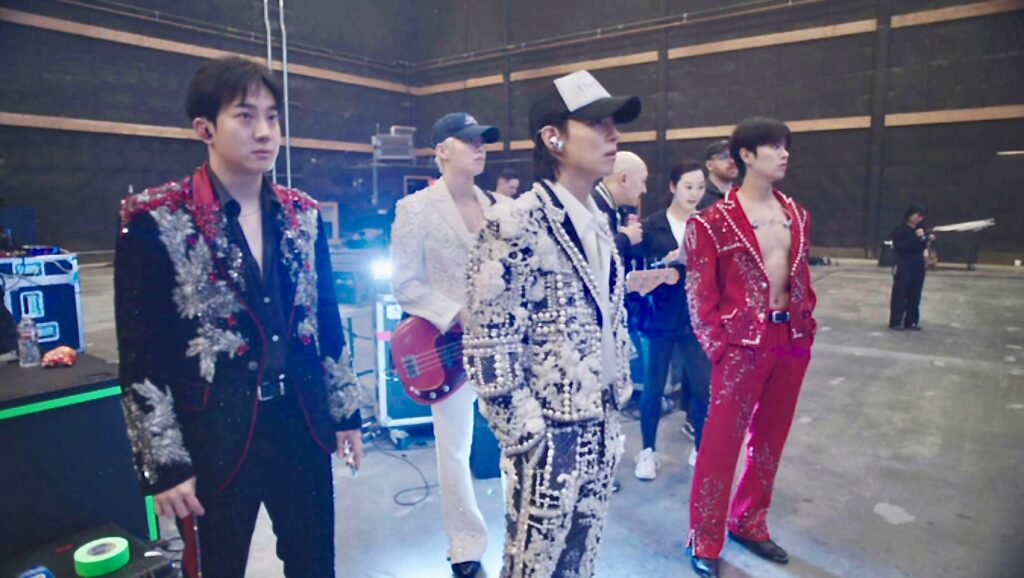
Exclusive interview with Director Eugene Yi & Producer Diane Quon
Q : Okay, I really enjoyed this documentary, but to tell the truth, even though I’m Japanese, I never heard about this band, The Rose until now. I’m ashamed to admit that, but I know some of the Korean groups and I have interviewed the Blackswan(Interview with Blackswan), and other band in the past. So, Eugene. You started as an editor. How did you get to direct this documentary? What was your initial process on that?
Eugene Yi: Yeah, I have a background in editing, but to be clear, I assist and edited on those. I did not edit on those projects. I do have a background in editing, mostly in fiction. When you try to go from assistant editing to editing the opportunities that arise are in documentary. That’s how I fell into documentary and fell in love with the process because I also have a background as a journalist combining that with film worked for me.
And so that led me to just where, what I’ve done in the documentary space as far as this project specifically goes. Actually, I was having coffee one day and Diane Quon called me I’ll let Diane Quon take it from here.
Diane Quon: I had worked with Eugene on other projects where he edited. I always admired his work as a director. Janet Yang, one of our executive producers, brought the story to me and said, what about this man? I didn’t know anything about The Rose when she told me about their journey and coming back after a three year hiatus.
I had to find their all these challenges and they dropped outta the K-pop system. I just thought it was an interesting story. So I thought it would be something I would want to follow. And once we decided to make the film, then it was finding a director and I thought a couple things. I, like I said, I’m a fan of Eugene and his directing of “Free Chol Too Lee” and I worked with him as an editor.
I knew he had just these great storytelling background. But then also I felt was important to find someone who could speak Korean as well. I don’t speak Korean and I met the band impressed with them, they all speak English, but didn’t want them to worry about answering questions in English, like if natural response would be in Korean. I wanted them to feel free to respond that way. It was great when Eugene said yes, and I saw how comfortable they were.
Q : I thought it was interesting that The Rose had a training like a K-Pop idol, because I don’t think I’ve seen those type of training as a band. But what’s engaging about the K-pop training is that they do their training like 14~15 hours a day. They don’t have that much free time. They specifically focus on the training dancing and singing, all of that, they even confiscated the cell phones. I was just outta curiosity why they decide to do those training initially because I thought that once you form as a band, you think that they just wanna to practice their instruments.
Eugene Yi: Obviously, we can’t speak for everyone, but I think for the guys, there were young people who wanted to get into music, that’s the main path young people consider. If they want to go into music because there’s training and opportunity there.
And that’s the path I think in Korea, most young people, it felt like we were able to learn from them as the path to becoming a musician. But then like you said, it’s interesting. It didn’t work out it wasn’t a fit for them.
That’s part of what appealed to us on the team about their story. You don’t hear much about what happens after you leave the K-pop system. But I think, from the beginning, I think we were always wanting to be a little bit more nuanced about. How we talk about the K-pop system, because I think a lot of people know about how strict it can be, but there’s also and it’s not to say there aren’t negative sides.
For the guys, what they talked about is positive sides to it too. It taught them that discipline, so that they could do like they say the 10, 10 like for practicing for 12 hours a day. Which is very intense. And then also the fact that because of K-pop, there’s this worldwide market that’s opened up for Korean music even though they are not a K-pop band.
If it were not for K-pop and how popular K-pop is overseas, you could imagine like the YouTube algorithm would never have recommended their first song would never have been able to even have that access to overseas fandoms. So yeah, I think from the beginning we’re always trying to paint a bigger picture of what the K-pop system meant for them
Q : One of the fascinating things about the K-pop system in the music industry is that they are trying to speak English fluently from the beginning because they’re not just teaching music, singing, and dancing, they also teach English as well, so they are aiming to global approach right from the start. Because I thought that’s engaging compared to the other country, that’s what was lacking in other countries, not teaching English.
Eugene Yi: Oh, I see. And Diane, feel free to jump in on any of this, but I think, from my understanding, basically because South Korea is a smaller market, than Japan or than China. From the beginning, there was always a sense within the Korean music industry that they have to export their music in order to be successful, initially, English was part of it, but Japanese was a big part too.
Q : That’s right, they(some of the group) even speak in Japanese.
Eugene Yi: Yeah.
Q : They come to actually promote their song in Japan and singing in Japanese.
Eugene Yi: And they make Japanese versions too. The way it was explained to me, and this is not from this, but just from what I feel like I’ve gathered in Japan or China, the market is big enough, so you can be big there and not have to worry about going overseas. But in Korea, they always are thinking about that. That’s my understanding.
Q : Could you talk about the TV program called ”K-Pop Star,” which is big audition TV program in Korea just like ”American Idol”in U.S, how that actually TV program affecting Korean music industry when it comes to find the talent there.
Diane Quon: Yeah, I don’t know if we can talk about how it’s affected, but for Sammy(Kim Woosung) that was how he ended up going to Korea and becoming part of this system. He was born in Korea, but raised in L.A
It was when he was in high school that they had tryouts in L.A for “K-Pop Star” auditions. So he tried out and he was asked to go to Korea. So he ended up not going to college, but going to do, pursue this unknown dream and performed on “K-Pop Star.” So I think for him, and I’m sure for so many young people, that’s a way that they get discovered.
And then he was asked to audition for different k-pop companies. So I feel like for someone like Sammy, from a different country that was his opportunity to break into K-pop dream in the first place. And then he stayed in Korea pretty much since. Trying out and auditioning.
Q : Most of their songs in English, how do they write the lyrics, did they initially write in Korean and translated in English?
Eugene Yi: Yeah, I don’t know if they have Korean versions of any songs. The way they described it to us, it really just depends on which language fits better into the melody, and sound of the song. They all are bilingual, to varying degrees.
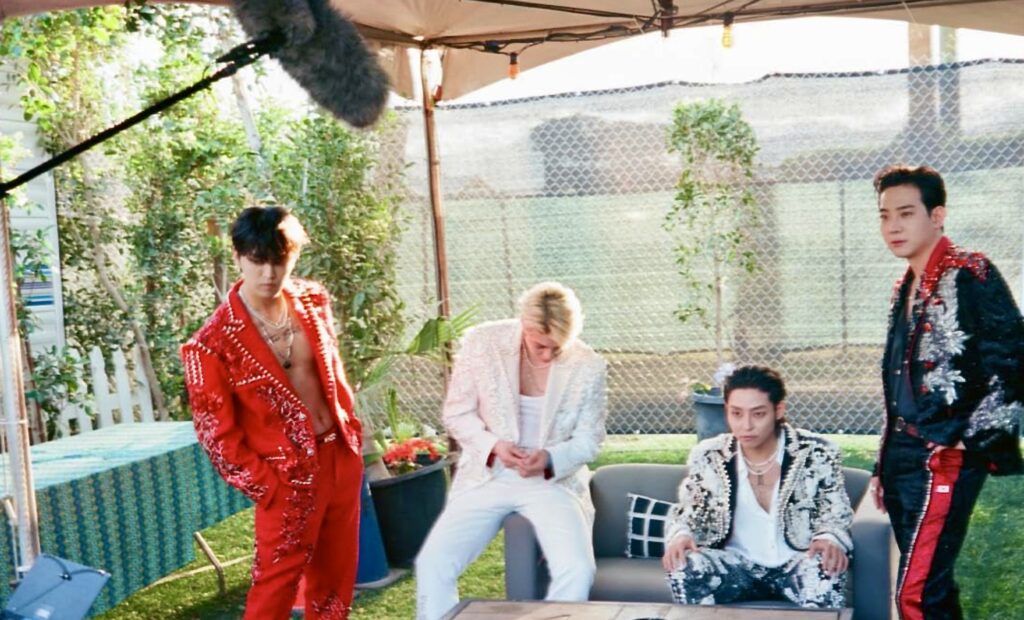
They’re comfortable in both languages. I think they have that flexibility to do that. I think it does lean a little bit more English because Sammy is the main lyricist, so a lot of the English influence comes from that it’s not intentional, it’s just which one feels like the sounds actually fit better into the sound.
Diane Quon: They often talk about how it feels like it should be in this language, when they’re writing. It’s more of a feeling than anything. It’s more of the fear.
©Courtesy of Brevity Films
Q : I see. Could you talk about Sammy’s argument with CEO, they(band) wanted to insist on two vocals in the band, and Sammy had some argument with CEO, but Sammy stopped telling them(band) about their negative things that he was told from the CEO. And I thought that was really engaging aspect of knowing the band, what they wanna focus, how they wanna promote.
Eugene Yi: They had a vision for the kind of band they wanted to be. They started busting on the streets and had control over what they wanted to do and how that made it so that they really wanted to just sort.
Choose their own destiny and chart this path for themselves that was not necessarily the easiest path, in the end for them as we try and show in the film. But I think, it reflects their independence. And then also the fact that they’re open to talking about all this also reflects a lot of their independence too.
Like I think oftentimes with anybody who’s in the public eye, they’re very much trying to present a very perfect image of themselves, but with the guys, I think they’re just so willing to share so much that. It was extraordinary to see that kind of radical openness especially in Korea, and if you see the individual trailers that we made, little trailers for each of the guys as part of the marketing, they’re basically scenes not in the film.
There’s even more contents that they talk about in terms of girlfriends or different aspects of their journeys that certainly I think we’re all grateful, but they were so open and to talk about and a credit to the team for being able to build that trust with them too.
Q : Let’s talk about the military service in Korea. Because it takes time to do their military service and do the practice and bring them back again. Just like BTS kinda becoming big things about them coming back together. So talk about military service in Korea, how they affect on music industry?
Eugene Yi: I think generally speaking like you said, that’s the end of most bands careers because by then, they’re closer to 30 than 20 if you go away for a couple of years, there’s a whole new generation of younger people who’ve already come up and there’s just so much competition that it’s very difficult to come back. And BTS is one of those examples where it’s like very rare because of how big they are that maybe they’re able to come back, but for most people it’s very difficult to come back.
And so I think that was another part of the Rose’s journey, in addition to the lawsuits and everything else the fact that they were all going to military service was, it was a big question mark whether they would be able to reunite and keep the fan base that they’d had, because fan bases also move on too. But yeah, that’s in general, that’s what ends up happening with military service for Korean like male Korean bands.
Q : Do you have your own opinion, Diane?
Diane Quon: No, I agree what Eugene said. I think in a way their timing worked out for them. They had to take a break because of COVID. No one was going to concerts or performing so. They were also in the middle of the lawsuit, so the timing of the military probably worked out to get it over with. But like Eugene said, when you come back and start practicing, is it gonna work?
Is the fan base still going to be there? And I think it really shows their commitment. And making the band work. When they won the lawsuit, it helped ’em feel like, okay, this is meant to be we’re gonna continue, practice hard. that’s why we wanted to follow them.
It was their comeback year. They were going back on tour and did so well. We wanted to just show that, if you keep following your dreams and work hard. Things are possible we admired the challenges they went through, including going to the military and then coming back and succeeding. So hopefully that comes through in the film.
Q : Could you talk about the “Far East Movement”? They had some financial problems, branding problems, but I think in the end, they transcended the Asian music into something else. So, could you talk about this “Far East Movement”?
Diane Quon: Before I met Dan, I met Transparent Arts, founded by the “Far East Movement” members. And so when I met James Roh(aka Prohgress), who is part of “Far East Movement,” I was so impressed with the whole idea that they created Transparent Arts with the idea of helping the next generation of musicians.
Learn from their mistakes and learn from experiences. And so I really admire the whole concept of Transparent Arts and movement. and I thought that would be important to be in the story. And I think Eugene agreed too, because, to see where we’re at now and where The Rose is at I think it always benefits to see where we were in the past especially in the us.
To hear the trials and struggles that “Far East Movement” went through. I think it’s important for us to hear and for musicians to hear, especially where the music industry was for the Asian community. It shows how far we still have to go. We’ve progressed in a huge way, especially ’cause of K-pop but there’s still a long way to go, and I think “Far East Movement’s story helps us get that across.
Q : Do you have anything to add, Eugene?
Eugene Yi: Yeah, no, everything Diane said. But yeah, I guess to build on it, when Far East Movement was popular, what they shared with us was that it felt like the world wasn’t ready to see.
Asian American, like rappers basically. and that made it difficult for them to find more opportunities. And like Diane said, like there’s been so much progress But, would people accept an all Asian rock band, worldwide, this is the question the Rose asks I’ve always been a fan of Korean Rock and of Asian Rock in general too, just because there was so little of it in Los Angeles. Why can’t they just be appreciated for the music they make?
There’s always this label we put on them. That’s one of the questions we wanted to ask with the film. Can we just connect with the music and forget about what people look like or where they come from?
Q : After shooting them(band) for a certain period of time, what are the quality that stood out for you as you compare to other band, not just the Korean band, but the worldwide band.
Eugene Yi: Yeah. And it was about seven months that we were filming with them from..Yeah. Or was seven? No. ’cause it was like,
Diane Quon: yeah, it’s probably like August to..
Eugene Yi: May, So 10 months just after their Coachella performance. As a group, their chemistry really struck me. When we were filming with them, while they were actually making music together it really did seem like magic. Just, they started with, a sketch or traces of an idea of a melody and then to make a song to literally make music out of that.
It was just something that seemed extraordinary and the way that they all worked together and were able to get the idea on top of each other. It spoke to their creative chemistry, as well as like their fellowship and their brotherhood and the things that have kept them together for this long.
Q : When I see their performance at Coachella. They must have had a lots of American folks rooting for them. They really starts to become a worldwide band at the end. How do you want audience to take away from this film?
Diane Quon: I think the first reason I wanted to do the film was to feel like not afraid to follow your dreams and do it in a way that feels true to you, not what the system tells you I hope. Through their story, where they dropped the K-pop system, even though everyone said, are you sure it’s harder? It’s going to be really challenging.
They wanted to do music their way, and I hope that especially for young people stay true to themselves and pursue it in the way that feels right for them. And I guess the second thing is, like we always talk about already is I’m hoping people accept the music just because they appreciate the music, and not be put in boxes that this must be Korean music or Japanese music. If you can appreciate the music for what you hear. I hope we broaden that conversation.
Mental health is so big right now. Problems all over the world, certainly in Asia. I hope it opens up the conversation that if you’re hurting, it’s okay to talk about it, especially young men who don’t like to talk about their feelings. I hope by The Rose sharing their stories, people feel more open to talking about mental health. Those are my three takeaways.
Eugene Yi: I think those are the messages we’re trying to get across at the film.
Q : Okay, that’s it for me. Thank you for making the time I had a good time talking to you, Eugene and Diane, thank you.
Eugene Yi: Thank you so much, really appreciate it.
Diane Quon: Thank you.
If you like the interview, share your thoughts below!
Check out more of Nobuhiro’s articles.
Here’s the trailer of the film.