

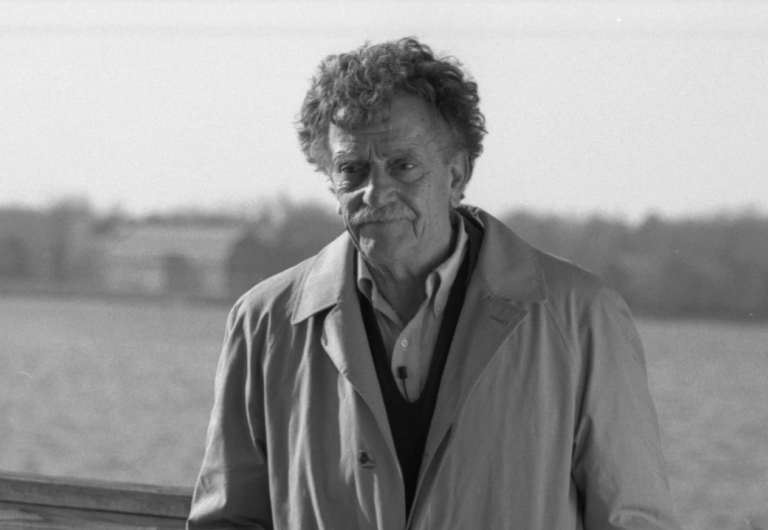
Photo by C. Minnick – © B Plus Prods/Kurt Vonnegut : Unstuck in Time
Emmy-winning director Reed Morano is poised to direct a film adaptation of Player Piano, kurt Vonnegut’s first novel. Published in 1952 under the title of Utopia 14, the novel is a dystopian comedy about a world in which humans have been outsourced by automation. It follows the travails of Dr Paul Proteus, a young executive at the fictional Federal Apparatus Corporation.
The film is being produced by Fabulascope, Picture Films and Verdi Productions, with a script being written by Matthew Walker. Morano and Walker will be producing the adaptation along with Margot Hand.
Morano was the first woman in history to win both an Emmy and a Directors Guild Award for directing a drama series in the same year, for the pilot episode of The Handmaid’s Tale. As a cinematographer, her films won awards at Sundance and other film festivals. The films she has directed include The Rhythm Section, I Think We’re Alone Now, and Meadowland. Some of Vonnegut’s best-known works include Cat’s Cradle, Slaughterhouse-Five, and Breakfast of Champions.
Morano finds parallels with the current anxiety over artificial intelligence. In announcing the project, she said: “There’s no story more important to tell right now than this one. Everywhere, across every industry, people are realizing how profoundly AI is redefining the value of the human contribution. Who will be replaced next? It can be terrifying – which is exactly why we need a story as hilarious and disarming as this one.”
Chad A. Verdi, one of the executive producers, added: “Kurt Vonnegut has such a specific voice in his writing, filled with satire, dark humor and exposure of the absurdities of life and the human condition with sharp, unsettling clarity. Despite being written in the 1950s, Player Piano is just as relevant today as it was then, perhaps even more.”
Check out other articles by Edward.