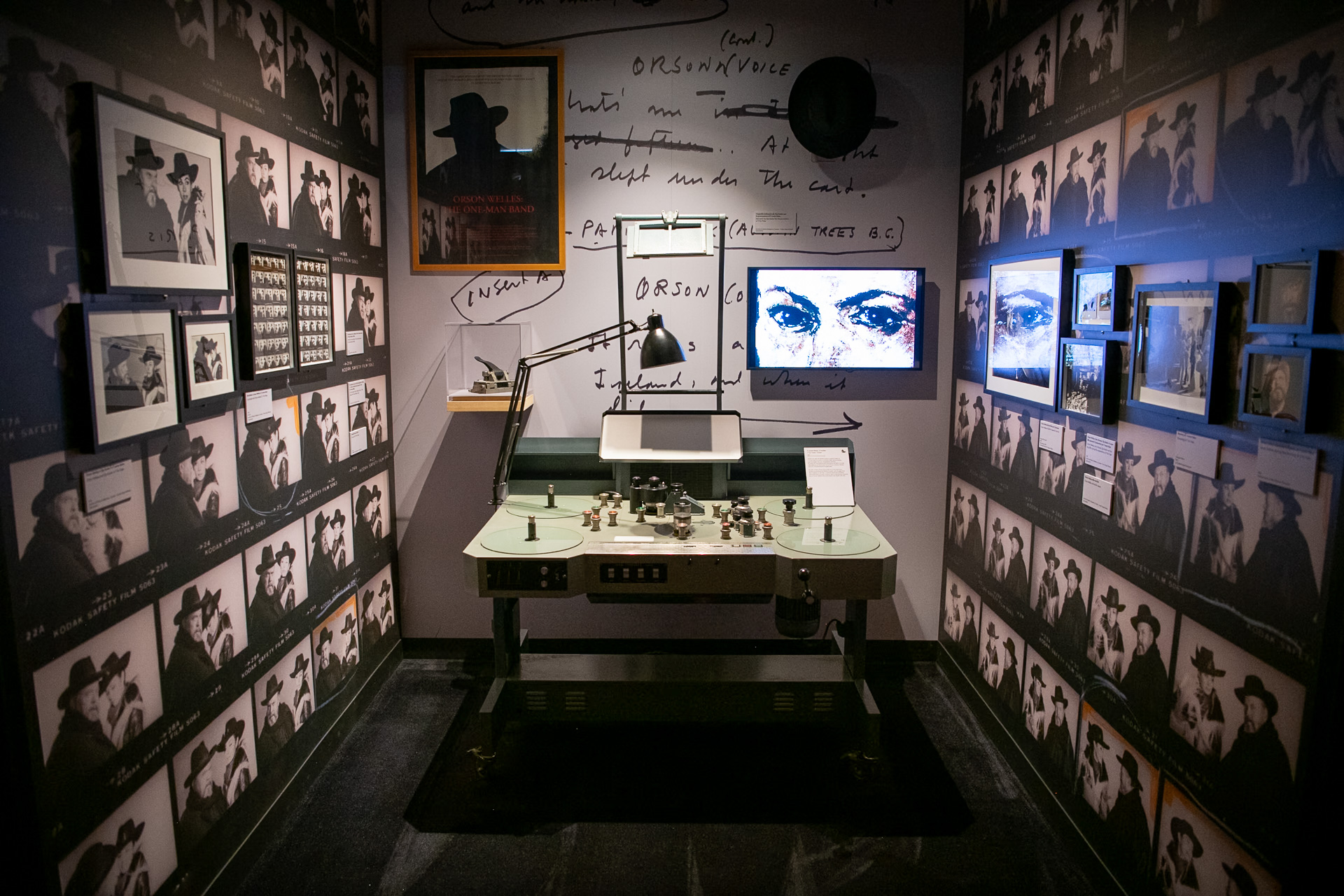
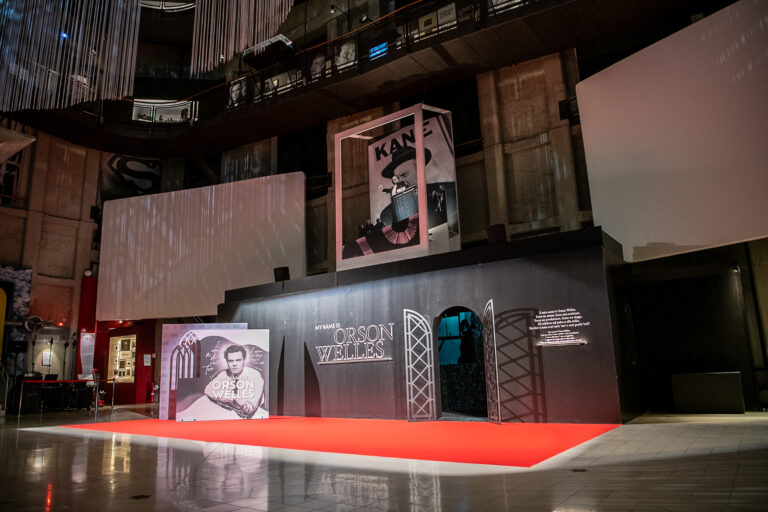
From April 1st to October 5th 2026, the National Cinema Museum in Turin hosts the glorious exhibition My Name Is Orson Welles. Conceived by the Cinémathèque française and curated by its director Frédéric Bonnaud. The exhibition features more than 400 pieces, some never before exhibited, from various public and private collections and the Orson Welles Fund of the National Cinema Museum.
Set up along the spectacular helical ramp of the Aula del Tempio of the Mole Antonelliana, the exhibition traces the life and career of the great director through photographs, archival documents, drawings, posters, audiovisual materials, and installations. The aim is to also showcase the lesser-known yet equally central aspects of this all-round artist. Visitors will be flabbergasted to discover how a giant of worldwide cinema struggled his entire life to make films, despite he made his famous Citizen Kane in his mid-twenties. This motion picture stirred many troubles during the lifetime of the director, as William Randolph Hearst tried to boycott it, since the titular character was unofficially inspired by him. Furthermore, the film did not gain the excepted success at the box office, which is why producers were discouraged to invest in future projects signed by Orson Welles. This the reason why he joked, in his old age, that he was forced to act to finance his own films. There are several that never saw the light of day.
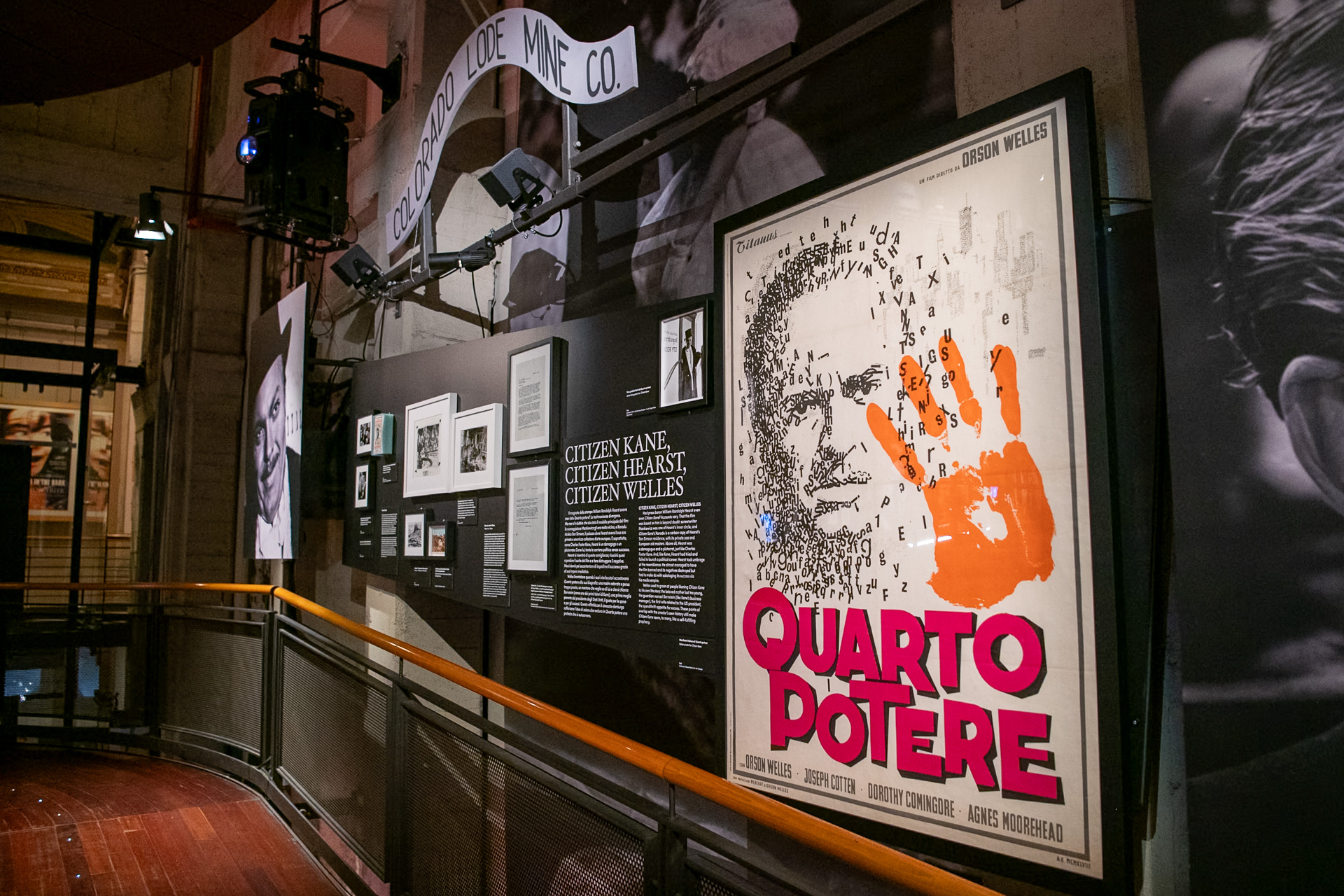
If Citizen Kane, revolutionised the language of cinema with the panfocus technique; in The Lady from Shanghai, Welles created the most hypnotic sequence in the history of cinema; with F for Fake, he anticipated the mockumentary; and his Falstaff remains the best Shakespeare adaptation ever. Orson Welles celebrated the Bard also with Macbeth, Othello and Chimes At Night.
The exhibition unfolds along the helical ramp and is divided into five thematic areas:1915-1939 Wonder Boy; 1941 Citizen Kane; 1942 The Troubles; 1947-1968 A Star in Europe; 1969-1985 A King Without a Kingdom. These areas offer an in-depth look at one of the most innovative and controversial figures in the history of cinema, revealing to the public the complexity of an artist who was difficult to pigeonhole.

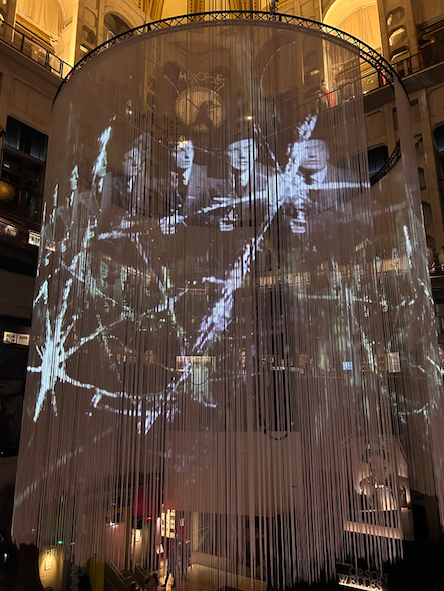
The exhibition begins in the Aula del Tempio (Temple Hall), where visitors are greeted by three tripoline screens suspended 18 metres above the ground around the panoramic elevator, highlighting the hypnotic dimension of the most cited sequence in the history of cinema: the mirror scene in The Lady from Shanghai. Also in the Temple Hall, there is an installation dedicated to Rosebud, that immerses visitors in the atmospheres of Citizen Kane, through the iconic snow globe.
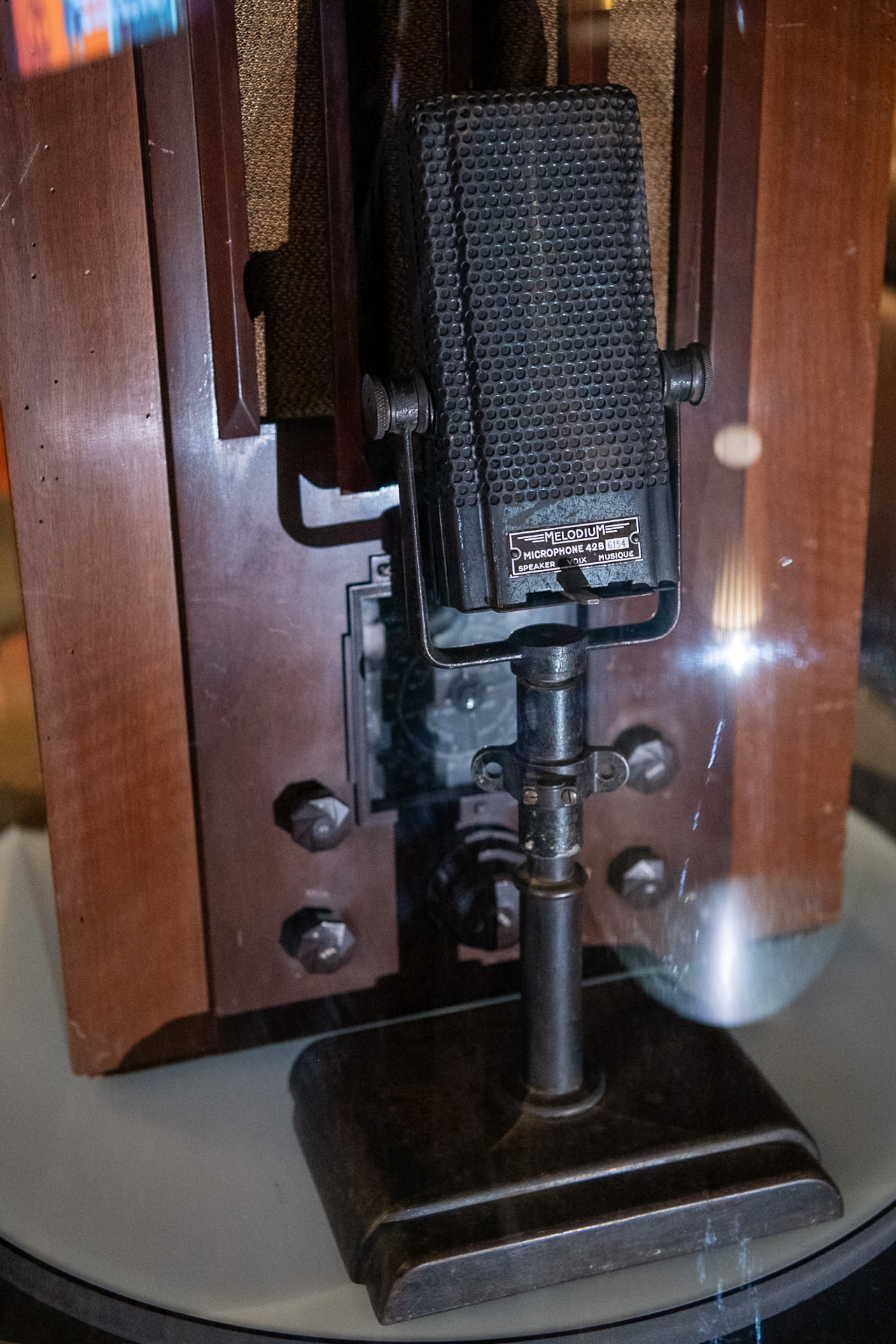
The chapel dedicated to the Caffè Torino is transformed into the RKO radio studio from which Welles had frightened radio listeners in 1938 with his “The War of the Worlds.” Visitors will listen to the way Welles delivered — in a realistic breaking news format — a radio broadcast, where he described a devastating alien invasion and the fall of New York City, grasping inspiration from H. G. Wells’ eponymous novel.
“This exhibition renews our partnership with the Cinémathèque française, following the exhibition dedicated to James Cameron,” said Enzo Ghigo, President of the National Cinema Museum. “The exhibition ‘My Name is Orson Welles,’ produced by the Cinémathèque française, finds a perfect setting in the Aula del Tempio of the Mole Antonelliana, worthy of the greatness of the character,” says Frédéric Bonnaud, director of the Cinémathèque française.
In addition to the materials from the Paris exhibition, the exhibition also features the Welles collection from the National Cinema Museum, which includes, among other things, his birth certificate, several pages of screenplays with commentaries, photos of the subjects, and original posters. The exhibition also features, for the first time, the plates drawn and colored by Guido Crepax, dedicated to La Storia Immortale, stories by Karen Blixen, staged by Welles.
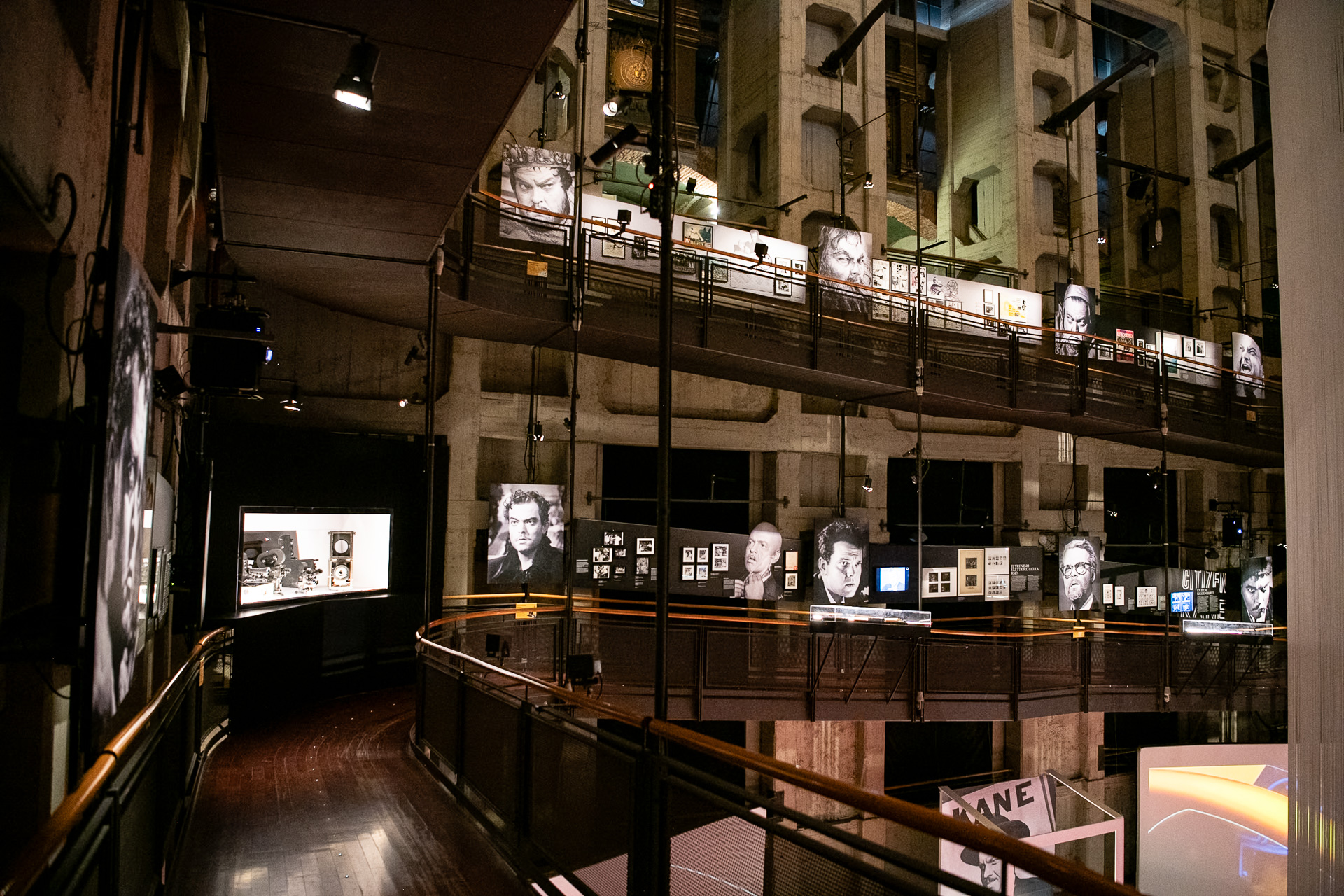
The materials on display construct a narrative that goes beyond the simple celebration of his most famous films. At the center emerges Welles’s creative process, characterised by continuous experimentation and a constant plight to overcome the limits imposed by the film industry. “The freedom and unscrupulousness with which Orson Welles moved between different disciplines, crossing continents with that clarity of vision that only foreigners possess, bring him closer to young people born in the new millennium,” underlined Carlo Chatrian, Director of the National Cinema Museum.
My Name Is Orson Welles extends the creative drive of the American genius in an immersive and narrative journey, in which cinema reveals itself as the art of illusion: not simply fiction, but as a tool for questioning the truth of images. Director, actor, author, illusionist, radio narrator, and experimenter with visual and audio language, Welles made transformation a true poetic signature. Visitors are thusly immersed in the halcyon heyday of a cinematic polymath who made an epochal change in the seventh art.
Photos credits: Museo Nazionale del Cinema di Torino
Check out more of Chiara’s articles.