
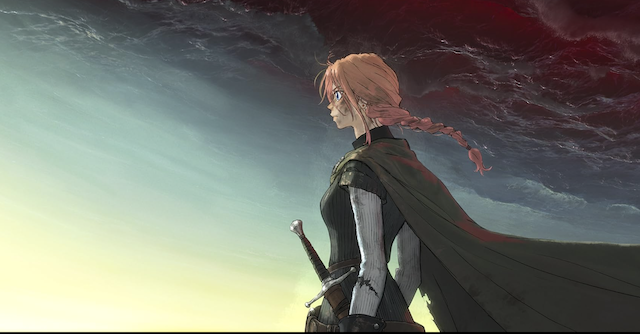
©Courtesy of Sony Pictures Classics
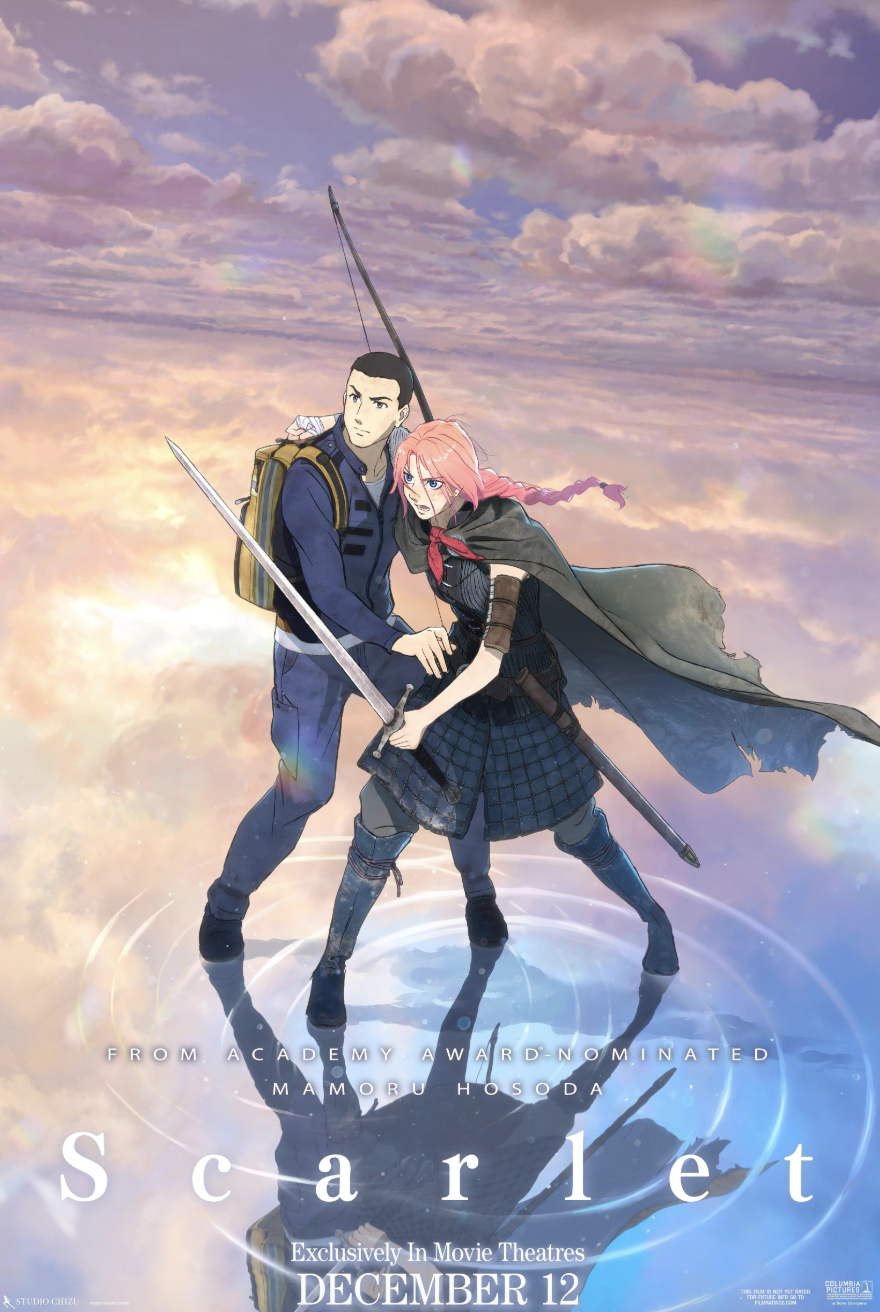
©Courtesy of Sony Pictures Classics
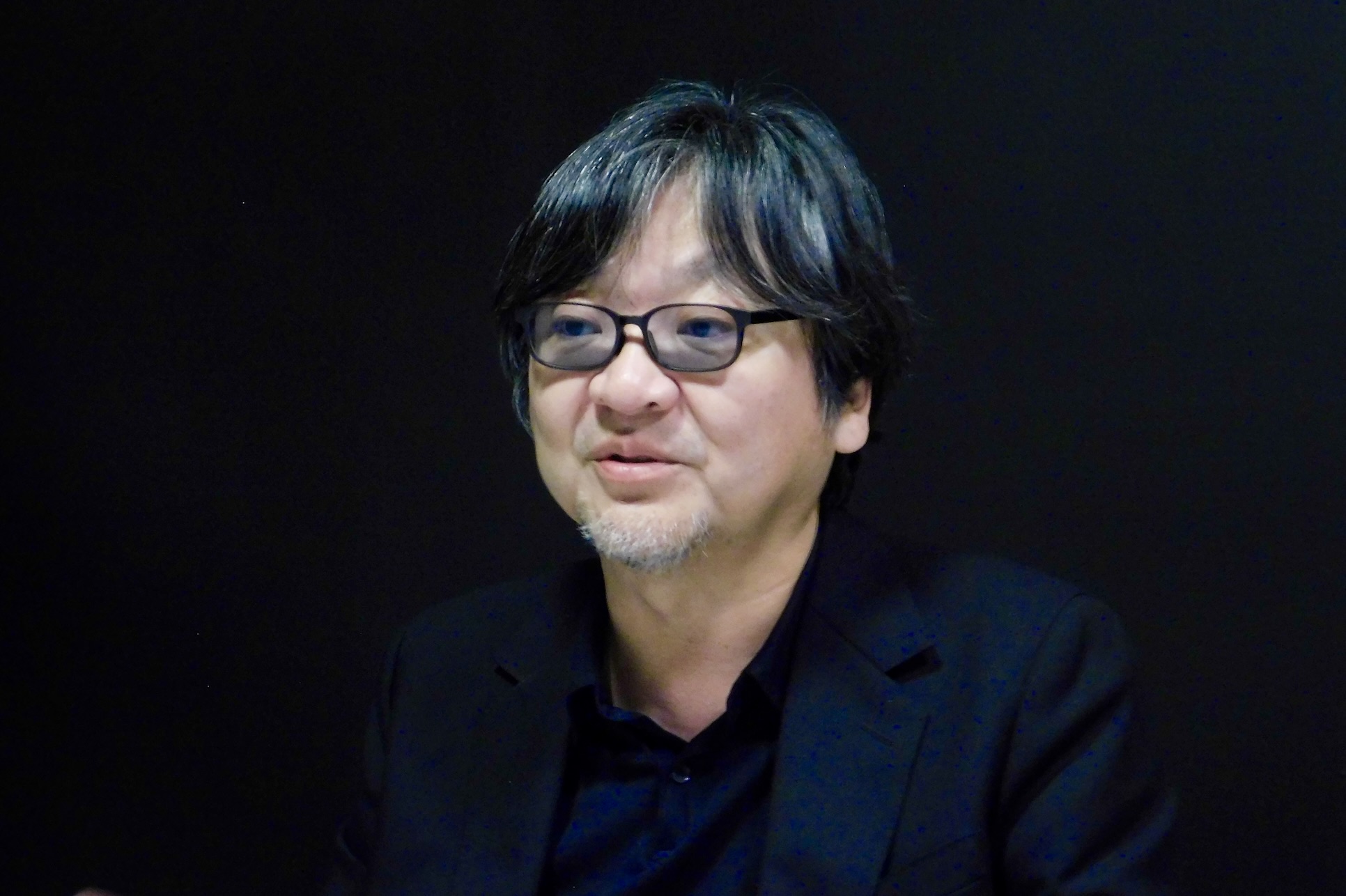
Exclusive Interview with Writer/Director Mamoru Hosoda
Q: This film deals with the theme of revenge. Living in New York myself, I can’t help but think about the 9/11 terrorist attacks—the deliberate act of revenge by Osama bin Laden, and the subsequent retaliation by the U.S. after being attacked. Even knowing that nothing good comes from revenge, if your loved ones were killed, could you truly live without seeking revenge? That is also a central theme in this film. For Hosoda-san yourself, is this theme an eternal challenge for ending war?
Mamoru Hosoda: Yes, whenever an event occurs—be it the 9/11 terrorist attacks, the war in Ukraine, or Israel’s attacks—watching these unfold as news footage up close, you can feel the pain so intensely it’s almost unbearable. You know the victims will never forgive. You know they absolutely cannot let it end without retaliation. But you also know you can’t tell them to stop, because that would just start a cycle of war and retaliation.
I think it would be the same if I were in their shoes. But as things keep going on like this, once the blood rushes to your head and then cools down, I imagine you’d feel an overwhelming emptiness—a kind of emptiness born from vengeance, or a sense of loss over wasting your life’s time. You’d probably feel like you’ve lost so much. It’s in that context that this film explores what choices the protagonist might make when faced with such a challenge, using Princess Scarlett as the basis for that exploration.
Q: Hosoda-san, you have often depicted these two distinct worlds before. For example, in the film “Belle,” you depicted the virtual world of the internet and the modern era, and in “Mirai,” you depicted a journey transcending time and space. This time, it’s the medieval era and the modern era, and of course, there’s also the world of the dead. Regarding the setting for this film, I understand that Dante’s “Divine Comedy” served as a source of inspiration to some extent. What specific parts of Dante’s “Divine Comedy” resonated with you, and how did that influence the production of this film?
Mamoru Hosoda: I originally read Dante’s “Divine Comedy” during my high school entrance exam period. Reading such a difficult book during exam prep was probably a form of escapism. (wry smile) But even then, while reading it, I found it incredibly fascinating.
Well, basically, it’s fascinating that Dante goes to the world of Hell while still alive. And when you go to the land of the dead while still alive, you meet famous historical figures one after another, right? So, Dante goes around acting all starstruck, saying things like, “You’re so-and-so, aren’t you?” Seeing him like that is incredibly entertaining. What makes it so interesting? I thought it was a kind of time leap.
Meaning, according to that “Divine Comedy,” the land of the dead is where all the people who have ever died in the world gather. So essentially, people from all eras and walks of life are assembled in one place. If they were to converse there, what on earth would they talk about? And while we living in the present can only meet people from our own time, in the land of the dead, you could meet people from all eras. I thought that might yield some incredible insights, which would be incredibly fascinating.
This isn’t just about people from the future, but also insights from the past—like someone from Roman times, or a Greek philosopher. Though, in Dante’s “Divine Comedy,”only Christians are supposed to go to Heaven, so it makes this awkward excuse that people from before Christianity couldn’t get there.
Well, putting aside such details, I still felt that fascination, and I think it’s strongly reflected in this work. Within that context, I wanted to explore how someone consumed solely by revenge changes upon meeting someone from a completely different time (era). And while the theme this time is “revenge and forgiveness,” I wanted to consider how that concept of “forgiveness” might be received.
Q: What surprised me most about this film was how amazing Mana Ashida’s voice acting was. She’s already a fantastic actress in live-action films, and even in her NHK narrations, her distinctive voice is truly remarkable. Since her voice is practically central to this film, what specific qualities made her indispensable for this project, leading to her casting?
Mamoru Hosoda: I truly believe Ms. Ashida is central to this film. Not only is she the voice of Scarlet, but she also sings songs within the film and performs the ending theme. It’s actually quite rare for a single actress, even as the protagonist, to occupy so many aspects of a film. Also, when casting, we knew this role of Scarlet, a 16th-century princess, was very special. We thought beforehand that if a typical young Japanese actress played her, it might feel lacking somehow. Just having the voice of a realistic young woman wouldn’t be nearly enough.
Essentially, a 16th-century princess who’s received elite education since childhood—while she’s physically 19 years old, her mental age would be vastly different from a typical 19-year-old. When considering who could express that, who could portray such a princess-like, extraordinary character, it was definitely Ms. Ashida(Mana Ashida is a Japanese actress, talent and singer who debuted in 2009). She was 19 during filming(means that she has been acting 16 years), but she was far from just a typical 19-year-old. She was someone who had experienced and undergone far more training and education than the average 19-year-old. I felt that only by giving this role of Scarlet to someone like her would the mental maturity truly match the part.
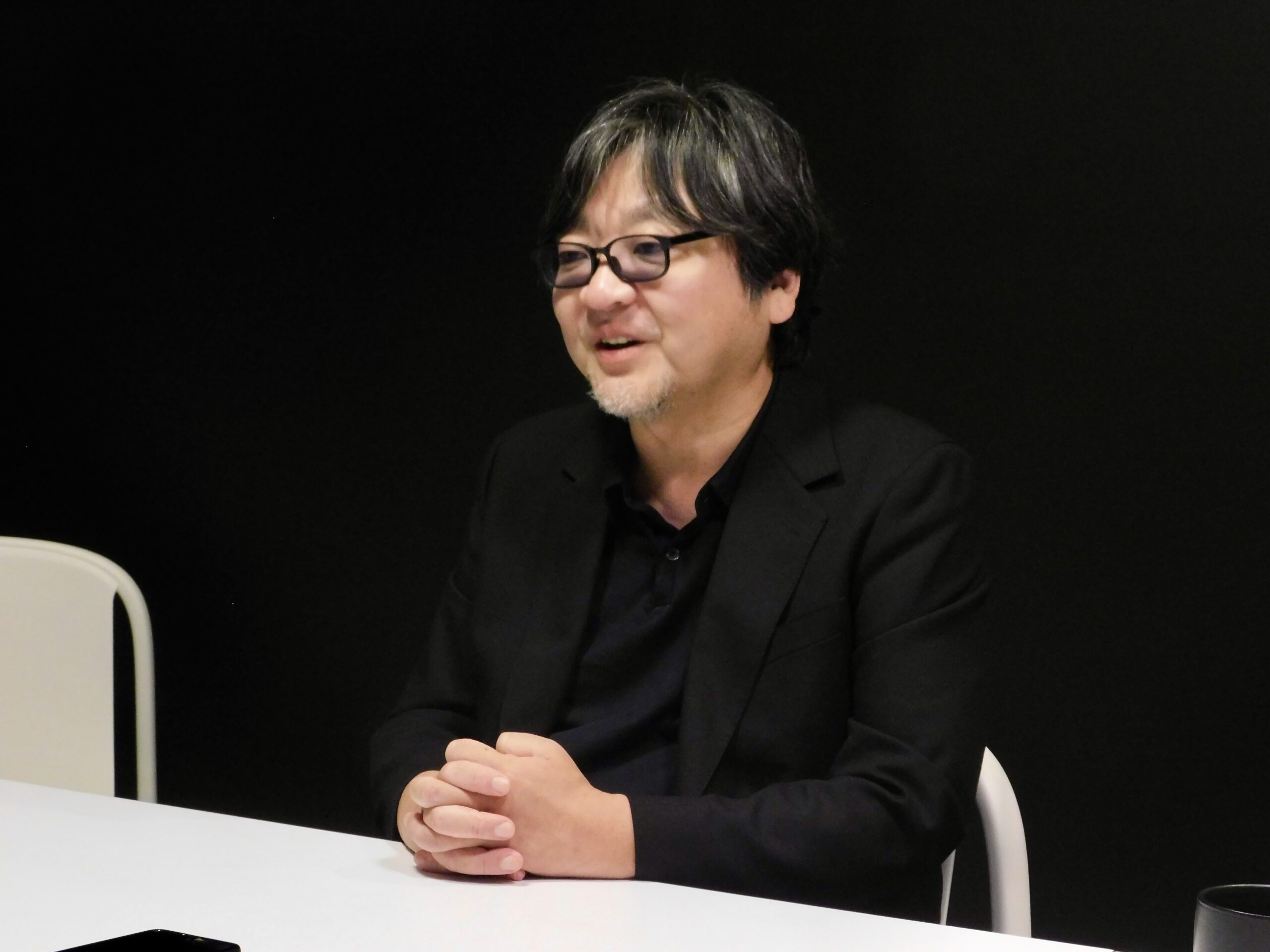
©Photo by Ayami Kusumi
Q: The character Scarlet does come from the medieval period. And in the Middle Ages, we have historical figures like Joan of Arc and Elizabeth I who were prominent women. When you were working on Scarlet, Hosoda-san, were there any specific models or figures you had in mind? Could you tell us about that?
Mamoru Hosoda: Exactly as you say, one of Scarlet’s models really is Elizabeth I, just as you mentioned. Initially, since Hamlet is a 16th-century prince, I was researching Denmark first. But it’s quite difficult to understand 16th-century Denmark well.
In Japan, there weren’t many researchers on that subject, so I couldn’t figure it out. But instead, I came to understand contemporary England quite well. There are many researchers there, and Shakespeare himself, the original author, never even visited Denmark yet wrote “Hamlet.” So essentially, when I hypothesized that he might have envisioned contemporary England while writing Hamlet, the monarch at that time was Elizabeth I. And Elizabeth I was the daughter of Henry VIII, who went through quite a tumultuous journey before Elizabeth ascended the throne.
And Elizabeth I’s mother, Anne Boleyn, was actually executed. In that sense too, the circumstances felt very close, and using Elizabeth I as one of the models for Hamlet is certainly accurate.
In that sense, researching the historical figure of Hamlet and the influence of the Tudor-Elizabethan era (specifically the reign of Elizabeth I, 1558–1603) on the portrayal of Hamlet within that context, and then applying that to crafting our protagonist Scarlett, proved to be an incredibly meaningful process. There were many parallels.
In that sense, Elizabeth I is definitely one of the models. There are several others too; I wasn’t really conscious of Joan of Arc. Her story is set about 200 years earlier than this film, and she was a village girl, not a princess. But since Ms. Ashida mentioned researching Joan of Arc for her character development, perhaps some of that influence is present in her voice acting, especially in the warrior-like aspects.
Q: At the beginning of the film, the old woman from the so-called land of the dead says, “Here, the past and future blend together.” Living in the present does involve gaining some knowledge from the past or learning something that can be reflected in how we live now. And even now, while living in the present, there are ways of living that look toward the future and develop things like the SDGs. So, I think living in the present is always connected to the past and future; they’re inseparable. What was your intention behind this line, and why did you write it as dialogue? I feel that line holds significant meaning even in this land of the dead.
Mamoru Hosoda: When we create stories like this, we’re actually living in this world ourselves, yet I find myself wondering if I know next to nothing about life. After all, dying is something living people can’t understand, right? Because they’ve never died.
So in that sense, I don’t understand the relationship between life and death either. Even if I could imagine, as a prediction, that it might be something like this, from the perspective of a truly transcendent being, humans are probably laughed at as utterly ignorant creatures who understand nothing. That’s how little we know. I feel that the world of souls, or the world beyond life itself, exists in a realm far beyond our imagination, and our own lives are contained within it.
To express such things, we use a world where life and death intertwine—a world that we living people might think we understand, yet don’t truly grasp. Still, we somehow live in the present, painting hope in terms of hell and heaven after death.
But perhaps the truth is far more complex—a world where future and past are truly intertwined, both equally valid and one and the same. If such a realm beyond human comprehension exists, then focusing solely on the present, on this life, as if it were the only thing that matters—well, it’s not exactly SDGs, but even if we need to consider such things, humans who can only deal with immediate reality are, I think, fundamentally foolish.
But even within that foolishness, if we just exercise a tiny bit of imagination, we might be able to create a slightly different future for ourselves. That’s probably the point this film makes. By feeling our present modern world relatively, we might just see a slightly different landscape.
©Photo by Ayami Kusumi
Q: As you just mentioned, I understand that we humans have no real grasp of the world of death. But since we have no actual knowledge of the afterlife, the concept of depicting this “Land of the Dead” must have been influenced by various things. It’s a world that unfolds in people’s imaginations, so it really sparks the imagination, doesn’t it? So, could you tell us what elements you drew upon to visualize this concept of the “Land of the Dead”?
Mamoru Hosoda: What’s really fascinating here is that while religion depicts the “afterlife” as a place where souls return, each religion expresses it slightly differently—subtly different, but when you look into that realm (the afterlife), you find they’re actually quite similar. They seem completely different, yet the fundamental historical imagery humans hold—whether Buddhist, monotheistic, or polytheistic—ultimately converges on similar concepts.
For example, when someone from a monotheistic background sees the image of heaven in a polytheistic religion, do they think it’s completely different? Well, it’s not that different. There might be differences in the details, but I suspect the reverse is also true.
When we were researching such things, you know how Japan has these hell paintings? You know, the ones with Enma-sama(Lord of the Underworld) pulling out tongues, boiling people in cauldrons, roasting them over fire—those kinds of hell paintings exist, right? In those medieval Japanese hanging scrolls and such, there are hell paintings derived from Buddhist teachings. I asked a researcher specializing in Japanese art, medieval art, what kind of image inspired those paintings. This person said something interesting: “It looks like hell, but actually, this painter is depicting the present world.”
In other words, “Because this world is so exhausting and painful, people long for heaven—even though it depicts hell, with demons and all. But really, it’s expressing the suffering endured in this very world.” Hearing that was a real eye-opener. I thought, “Ah, so we think there’s this world and then hell, but actually, this world can look like hell too.” When real events like the 9/11 terrorist attacks or the Ukraine conflict happen, we see scenes that feel like pure hell, and we feel like we’re living in hell ourselves, right?
We are indeed witnessing hell in this world. So, when we imagine the journey from the “world of the dead,” the “world of hell,” to heaven, I realized it’s crucial to depict a landscape that truly reflects and honors the feelings we experience in this world. Isn’t that an interesting idea?
Q: That’s profound. I’d never looked at hell paintings that way before.
Mamoru Hosoda: Right? You’d think they’re a completely different world, a pure fantasy realm, wouldn’t you?
Q: I certainly would.
Mamoru Hosoda: But then you realize it’s different. I think the paintings revealed that the present world is, in essence, both the present world and hell—and perhaps even heaven. So I made sure to emphasize that in this film. I really wanted to depict both the harshness and the beauty of the present world.

©Photo by Ayami Kusumi
Q: In the film, Scarlett says, “If I had been born in another era…” For example, if she had been born in the Warring States period, she would have faced the ravages of war and lived constantly with that Scarlett mindset, right? I think that would have been central to her character. Within that context, I thought the modern nurse Hijiri played by actor Masaki Okada was depicted in a very interesting way as a contrast. When comparing her to Scarlett, what kind of awareness did you want the audience to have about the modern nurse? What was the intention behind creating this character?
Mamoru Hosoda: I really wanted a character who would contrast well with the protagonist, Scarlett. I aimed for stark opposites: male versus female, modern versus medieval, princess versus essential worker.
In that sense, perhaps someone watching this film could view the Middle Ages through the eyes of a modern nurse, or conversely, see what kind of era the modern world is by looking at it through the eyes of a medieval princess. Well, it’s natural for us in the modern era to view the modern world as it is, but looking at it from a different perspective might make the modern era appear different from how we always think of it. But thinking that way is still incredibly meaningful, isn’t it?
Meeting someone from a different era. It makes you reflect on yourself. In that sense, Masaki Okada portrayed it incredibly well. He convincingly acted out that part where, while staying close to Scarlett, he drew out her issues, her desire for a different self.
Q: Director Hosoda, you established your production, Studio Chizu in 2011 and has since worked on films like “Mirai” and “Belle”, which have been highly acclaimed at international film festivals. Looking ahead, what are your plans for Studio Chizu’s future development, including President Yuichiro Saito? Also, what aspects of this film would you like audiences in America and overseas to focus on?
Mamoru Hosoda: Well, for Studio Chizu, if this film doesn’t succeed, we’ll have no choice but to close down. But that’s always been the case with filmmaking; we’ve always operated under that kind of pressure. However, animation today has spread much more globally compared to just a generation ago, and many more people are watching it.
In this environment, I believe people are expecting even more from animation’s potential. It’s not just about traditional 2D animation like Japan’s hand-drawn style or America’s 3D techniques; I think there’s a demand for expressing something different.
In that sense, with this film, ‘Endless Scarlet,’ we aimed for a new form of expression. It looks like cel animation (where artists draw on transparent sheets called ‘cells’ using special paints called ‘anime colors’), but it isn’t cel animation. It looks like CG, but it isn’t CG either. We succeeded in making hand-drawn characters appear to move with incredible detail. This kind of expression feels like it could open up vast new worlds and stories that animation hasn’t explored before, expanding possibilities enormously. If this film is successful, I dream of pushing forward new techniques to further explore the possibilities of animation, or even film itself.
Q: Thank you for sharing such valuable insights and experiences.
Mamoru Hosoda: Thank you. Thank you so much for asking so many truly excellent questions.

©Photo by Ayami Kusumi
If you like the interview, share your thoughts below!
Check out more of Nobuhiro’s articles.
Here’s the trailer of the film.