
The premises of the new film directed by Kogonada are thrilling. A wonderful cast: Margot Robbie and Colin Farrell in the leading roles, supported by Kevin Kline and Phoebe Waller-Bridge. A fantastical plot: portal doors that open up to a path of self-discovery. And a screenplay written by Seth Reiss, who was critically acclaimed for The Menu.
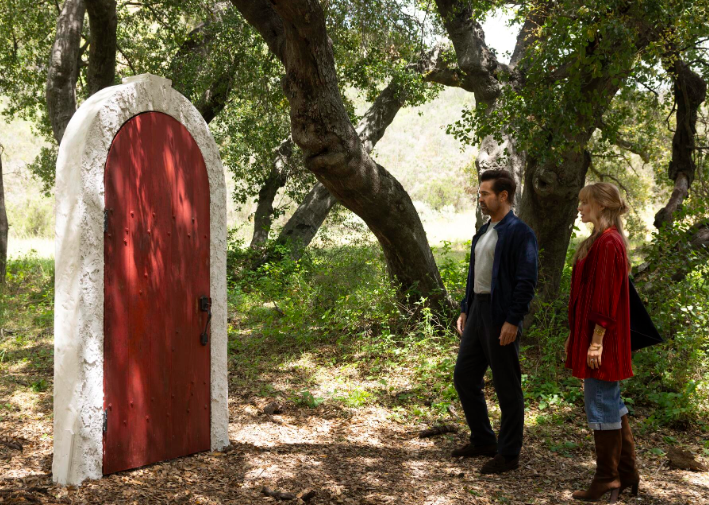
Yet, in A Big Bold Beautiful Journey it is the very script that seems the weakest part of the film. The story proposes to spectators a what if scenario: What if you could open a door and walk through it to relive a significant moment from your past? This trip down memory lane is conducted by a couple, whose budding romance seems to be smothered by their past trauma. Sarah and David are both single and meet at a mutual friend’s wedding, and for unexpected circumstances they embark upon this adventure together.
The denouement that occurs behind every door offers truly compelling situations. As director Kogonada said: “Doors represent possibilities. They are inherently mysterious. Opening a door, literally and figuratively, means entering a new space, a new experience, a new moment in your life.” However, these portals, that allow to experience a mind-blowing existential adventure, do not unravel in an enthralling way. Many are the elements and styles that are tossed in the storytelling and none of them finds full expression.

The zany comedic element provided by Phoebe Waller-Bridge — who drops swear words using an improbable German accent and snaps out of it while making philosophical considerations — is disorienting. The movie musical twist that the film takes is spectacular. But it does not follow it through. We get a taste of it (and crave for more!) when David and Sarah visit his old high school, while performing in the Broadway-level production of How to Succeed in Business Without Really Trying. Yet, this promising moment of storytelling through song and dance is truncated too quickly. The time travel to an epiphanic moment, on top of a Canadian lighthouse, or in the hospital where Sarah’s mother passed away, brings drama to an excessive peak. Whilst the “bold” choice of molding a visit to a modern art gallery into a Brechtian setting does not deliver the desired effect, it rather comes across as chi-chi.
The lines of dialogue — that are majestically delivered by the entire cast, and well captured on camera by Kogonada — do not resonate, they feel inauthentic and overly explicative. There is an excessive amount of spoon-feeding the audience, on how the past of David and Sarah is preventing them from taking a chance on love.
Mirroring ourselves in others provides a deeper awareness and understanding for self-reflection. This is a consequence of adopting a different perspective from the self-absorbed vision, that might entangle us in thoughts that lead to a dead end of discomfort. The idea of allowing someone else to accompany us on our journey of healing is a fundamental theme within A Big Bold Beautiful Journey. But it gets redundantly spelled out through the dialogues, rather than translated in actions where the two respective parties act in an influential way to fix the other.
Furthermore, the exceptionally talented and beautiful Margot Robbie and Colin Farrell inexplicably lack the chemistry to create sparks on screen. When the much awaited kiss arrives, it does not provide the feeling of joyous release. Possibly because the trepidation for its arrival failed to build up effectively, throughout the discombobulated narrative.
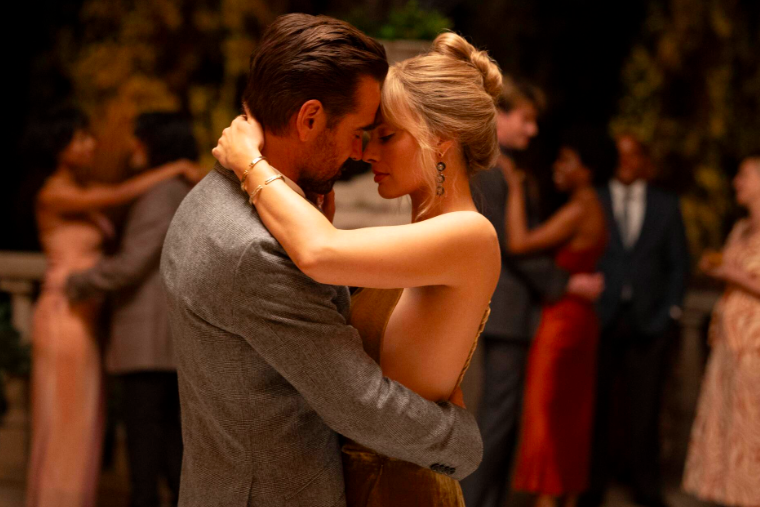
The one element of the amorous inquiry that is intriguing, but remains explored only on the surface, is the way the characters unveil how often people fall in love with the idea of a person rather than the actual individual. This element alone could have made A Big Bold Beautiful Journey a truly remarkable work of cinematic fiction.
Amongst all the motion pictures adopting the style of magical realism, A Big Bold Beautiful Journey has one of the best narrative devices of all time: if we were granted the chance to re-live the important moments from our past how would they influence our present and future?Unfortunately it miserably fails expectations.
Final Grade: C+
Photos Courtesy of Sony Pictures