

©Courtesy of Netflix
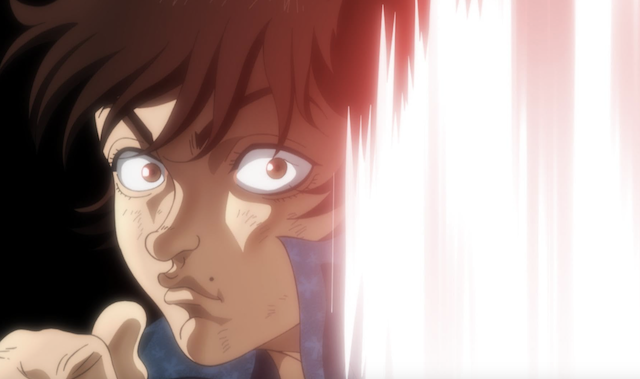
Miyamoto Musashi was the greatest samurai of the Edo Era, who, according to legend, cut through the Shogunate’s enemies like butter during the Battle of Sekigahara. Much to his surprise, a cutting-edge cloning project reincarnates him (with a little magical help from a “medium”) to fight the worst scourge of the 21st Century: boredom. The cure is deadlier than the disease, but those are risks Baki Hanma’s fellow underground fighter colleagues willingly embrace in Baki-Dou: The Invincible Samurai, the latest anime series adapted from Keisuke Itagaki’s Baki the Grappler manga franchise, directed by Toshiki Hirano, which premieres today on Netflix.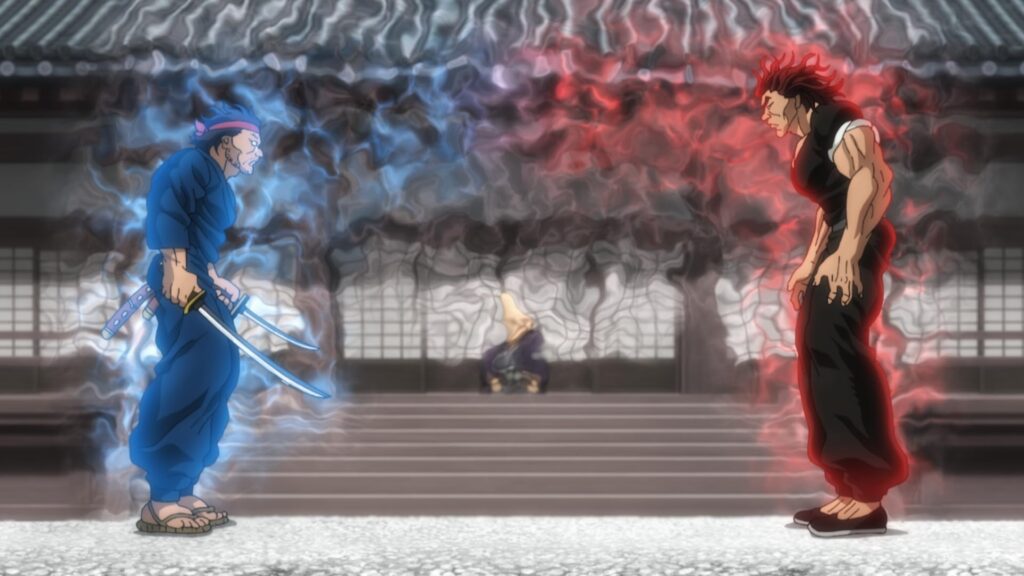 Tokyo’s underground fighters have been stifling compulsive yawns, because nothing on their horizons compares to the drama of Baki’s recent death match against his super-heroically strong, but brutish father Yujiro Hanma, a.k.a. “Ogre.” Technically, both survived, but Ogre’s reputation exploded amongst the underground fight fandom (which isn’t so underground, considering how often people now ask for his autograph).
[aadsense]
Mitsunari Tokugawa, the diminutive overseer of the underground arena (literally hidden deep beneath the Tokyo Dome) has the answer. Give Miyamoto Musashi the Jurassic Park treatment. They successful regrow his body, but he needs his spiritualist sister (whom he largely dismissed as a fraud) to guide Musashi’s spirit from beyond the veil, back into his body. Once she reconnects the lights upstairs, his body reverts to the massive, battle-scarred hulk of his prime. That means he is ready to fight.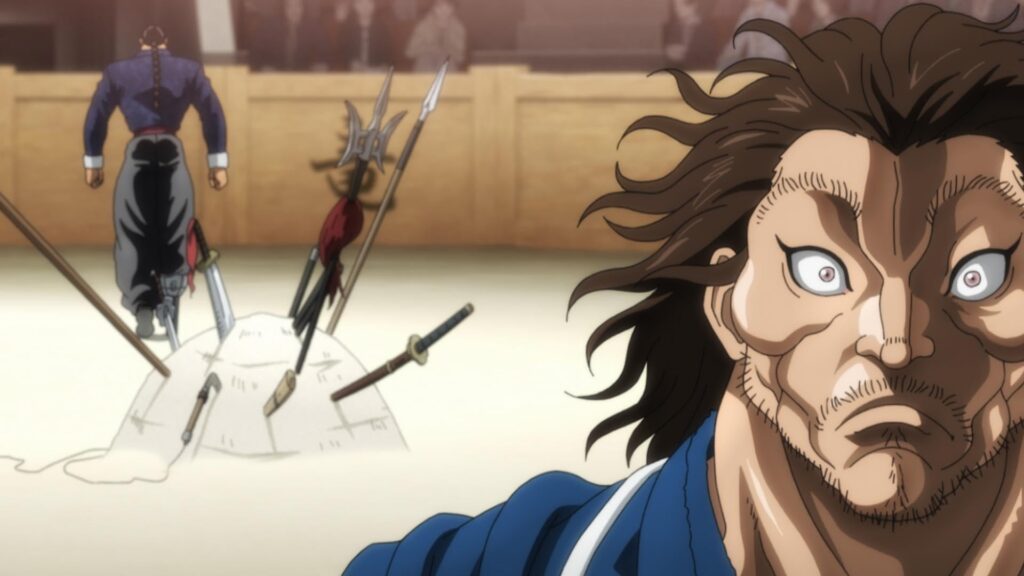 Historians will probably be appalled that Tokugawa took the trouble to bring the legendary samurai to our era, whose martial arts treatise The Book of Five Rings became a bestseller with MBA’s in the 1980’s (it was like the Japanese alternative to Sun Tzu’s The Art of War), just to recruit him for some bloodsport. However, it certainly offers Musashi a familiar entry point into the 21st Century.
Yet, one fighter objects to this plan: grizzled old Izo Motobe. In order to “protect” the fighters, he finally insists that they must fight their way through him first. That even includes the behemoth-like Ogre. However, he reserves the right to employ his specialty—ninja weaponry. You could call that some really tough love.
After the first two episodes set-up the premise, the next eleven chapters (out of thirteen provided for review) focus on Musashi’s various matches against the top challengers recruited by Tokugawa. As he faces masters of Chinese kung fu, karate, and touch-based aiki, Musashi learns in real time how to adapt to the strengths of each martial arts discipline.
Granted, it might sound somewhat repetitive to viewers who are not fascinated by the intricacies of each style. Like the entire Baki franchise, The Invincible Samurai clearly aims to capture Street Fighter gamers and readers of Black Belt magazine, which is a perfectly legitimate target market. Frankly, some of its depth might be lost on those who do not appreciate the aesthetics of martial arts and the history of the Bushido code. Indeed, Tokugawa and his challengers routinely debate the nature of “fairness” for each match, since even though Musashi is a martial master, his double sword technique is his specialty, whereas most of the challengers are paragons of various openhanded techniques.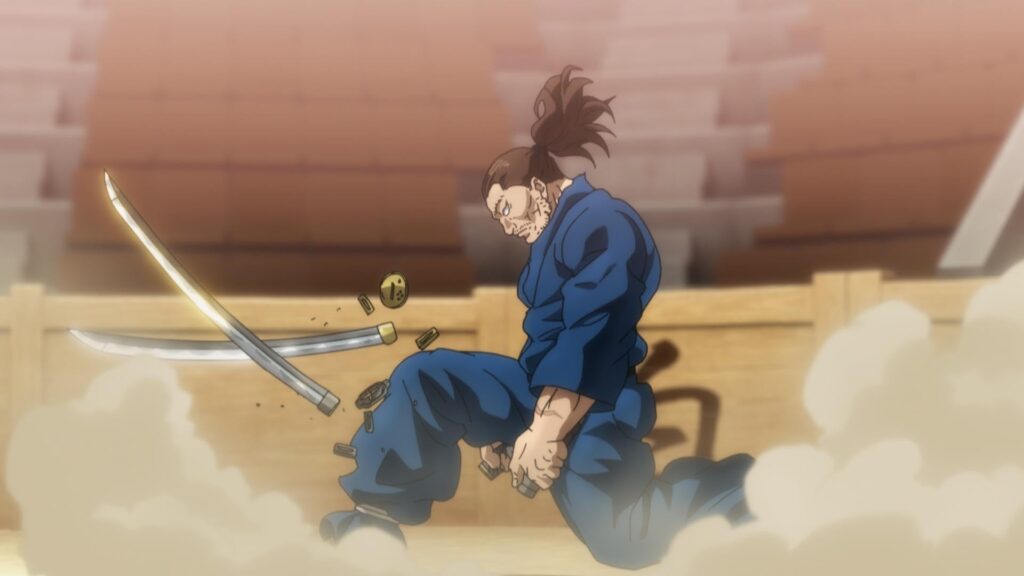
©Courtesy of Netflix
Regardless, viewers witness Musashi as he faces a parade of colorful and physically imposing rivals. He starts by sparring with Baki, but the titular grappler gets off relatively easy, in a contest that is not considered an official match. Others suffer harsher fates. Obviously, these spectacular beatdowns are the whole point of the series and the franchise. The previous Baki series fully explored his violently dysfunctional relationship with his savage father. However, this time around, Hanma’s emotional baggage largely takes a backseat to Musashi’s chaos.
Still, franchise fans will argue—with some validity—Tatsuhiko Urahata’s adaptation of Itagaki’s manga establishes characterization through their fighting techniques and tactics. Casual anime consumers might also complain the animation produced by TMS Entertainment lacks the detailed richness of other series, but it aptly reflects the two-fisted style of the source manga.
Regardless, most animation enthusiasts should respect how doggedly Baki-Dou follows its strategy of constantly going bigger and bigger, and crazier and crazier. Young viewers might also learn a few lessons in the history of Musashi and his Buddhist-influenced teachings, as a nice bonus. Recommended for openminded martial arts students and existing fans of Baki the Grappler, Baki-Dou: The Invincible Samurai starts streaming today (2/26) on Netflix.
Grade: B-
If you like the review, share your thoughts below!
Check out more of Joe’s articles.
Here’s the trailer of the film.