
Mary Shelley’s 1818 novel, Frankenstein, was so evocative for its time, paving the way for nearly one hundred years of adaptations from the more faithful film adaptations to animated films and comic books. One filmmaker who has always been a notable fan is Guillermo del Toro, who has been saying for decades in interviews that he’s wanted to tackle Shelley’s novel. Finally, he was able to get his movie made, thanks to Netflix footing the presumably hefty bill.
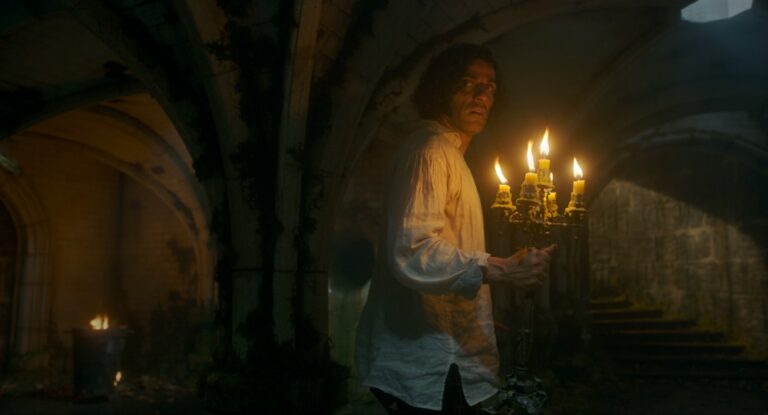
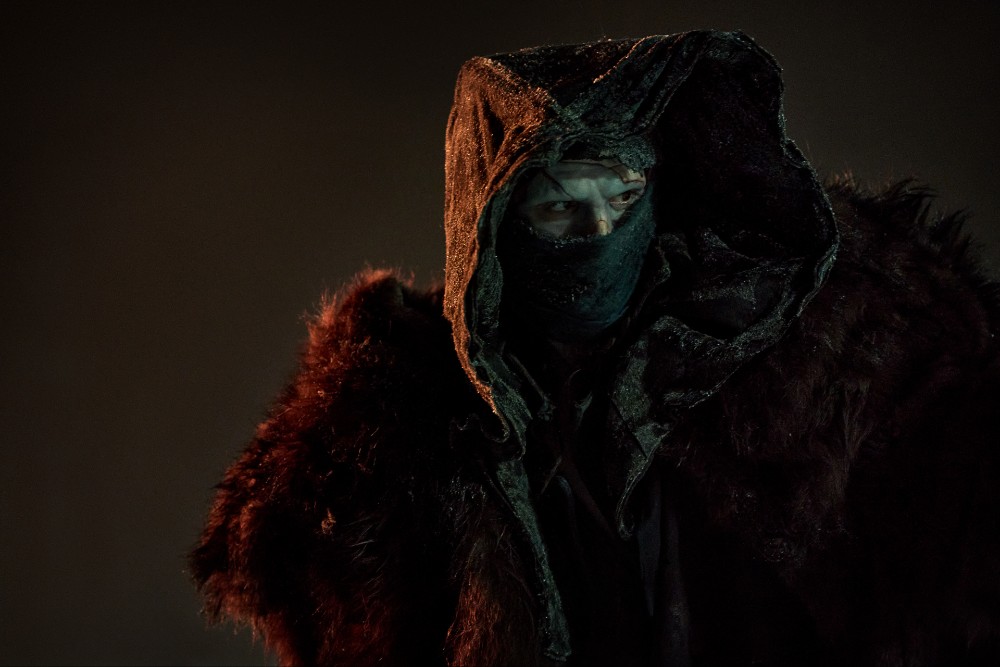
The film opens with a prologue of a Scandinavian ship stranded in an ice floe in the Arctic during the mid-19th Century. After coming upon a wounded man near a flaming campsite, the seamen soon encounter a hulking creature hellbent on getting to said man. This is how we meet Oscar Isaac’s Dr. Victor Frankenstein, who proceeds to tell his story to the captain, going all the way back to his childhood, leading up to his forays into the world of medicine and his fascination with “curing death.” This obsession leads Victor into the world of “mad science” that has him lurking outside public hangings and combing battlefields for corpses to use for his sick experiments, eventually bringing a “creation” (portrayed by Jacob Elordi) to life. Things don’t go quite as Dr. Frankenstein planned, as this being is only able to say one word, Victor’s name, and doesn’t offer anything else to prove Frankenstein’s experiment a success. Victor’s obsession with his younger brother William’s new fiancé, Elizabeth (Mia Goth), leads to even more problems as she is sympathetic for Victor’s creation despite his regular abuse of the poor creature.
Despite del Toro’s vast background in directing and producing horror films, his Frankenstein is not a horror movie persé. It’s something that’s more representative of a typical period costume drama with elements of science fiction, or as much as one can consider a movie set in 1855 as sci-fi. One thing to note is that this is the first screenplay written solo by del Toro since Pan’s Labyrinth and the Hellboy movies, which is actually a positive, since you can tell this Frankenstein is entirely his own vision.
This is a much longer film than the 1931 James Whale classic, which somehow managed to tell the same story in a mere hour and ten minutes. Presumably, del Toro went back to Shelley’s book to find ways of incorporating elements that were left out of the best-known version of this story. To be honest, it’s been many decades since I last read the novel, but it feels as if del Toro is remaining faithful to prior iterations while making this story truly his own.
As with his Hellboy movies and his Oscar-winning The Shape of Water, del Toro doesn’t treat Frankenstein’s creature as a “monster,” but rather, a sympathetic character who is more of a protagonist than Victor himself. The filmmaker cast the perfect actor in Jacob Elordi, who looks unrecognizable from his role as Elvis Presley in 2024’s Priscilla, but also gives a performance even more stirring than Doug Jones as the creature in Shape. After Victor’s story ends in a literal explosion, the film then shifts its focus to the creature’s point of view as we follow him into the wilderness before meeting a blind old man who teaches him how to read and speak, giving him the knowledge Victor could never impart.
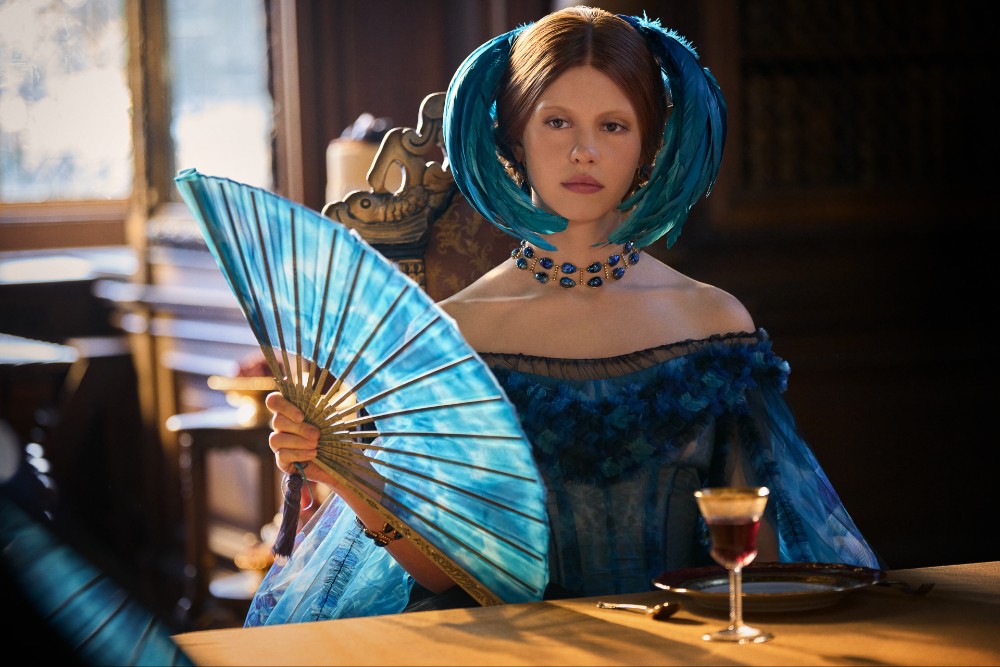
As the clear antagonist of the film, Isaac gives a performance that perfectly captures Victor’s descent into madness, while Mia Goth is also fantastic as Elizabeth, by helping shepherd the viewer into the much-needed empathy towards Elordi’s creature, which is clearly what the filmmaker was hoping to achieve. Frankenstein’s issue is that it spends far too much time with Victor Frankenstein’s backstory and origins, mostly to set up his Daddy issues, which is only marginally necessary to illustrate Victor’s later problems. By comparison, Goth’s Elizabeth is done dirty by how she’s quickly discarded and then forgotten from the movie.
Beyond the character work, del Toro’s Frankenstein features some of the best crafts work of any movie you’ll see this year, from the jaw-dropping costumes designed by Kate Hawley and Tamara Deverell’s production design, both which help create a distinctive period setting beautifully captured by Dan Laustsen’s lighting and camerawork. The score by Alexandre Desplat – reuniting with del Toro after The Shape of Water, for which Desplat also won an Oscar – brings so much to every aspect of the film, particularly the emotions the viewer feels while watching Elordi make his way through the world, leading to a teary conclusion. There is no question that this work by del Toro’s team is some of the best you’ll see in any movie this year, and that includes the fluid mix of make-up and visual effects.
Del Toro’s Frankenstein is such a long-time coming, and the results are a fantastic and glorious addition to his filmography, only marred by a few slight issues like its excessive run time and other minor issues.
Rating: B+
Frankenstein will open in select theaters on Friday, October 10, then will stream on Netflix, starting on November 7.