

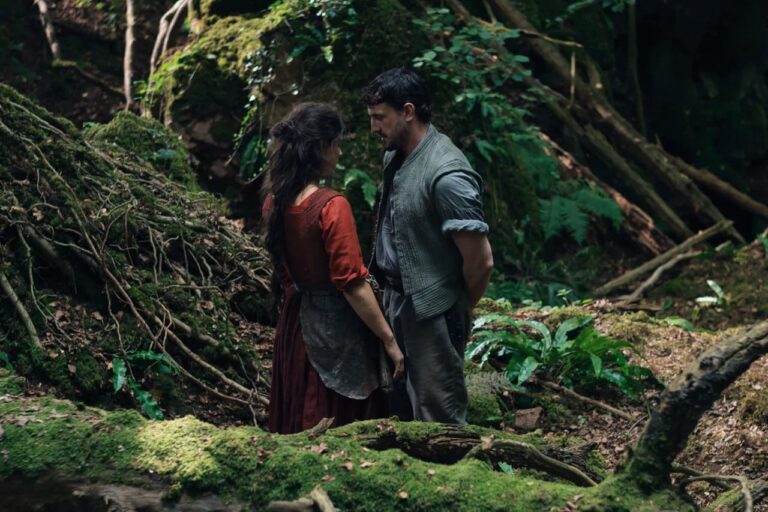
Chloé Zhao brings to the silver screen Maggie O’Farrell’s novel, that retraces the fate of one of William Shakespeare’s children, that eventually inspired him to write his play Hamlet. In fact, the written prologue states that in Stratford, ‘Hamnet’ and ‘Hamlet’ were considered the same name.
Hamnet chronicles the relationship between the Bard (Paul Mescal) and his wife Agnes (Jessie Buckley) — her name in history is also remembered as Anne Hathaway. O’Farrell’s fictionalisation of Shakespeare’s life described Agnes as a ‘forest witch,’ which is something that is followed by the book in Zhao’s adaptation. This fuels the representation of the mysterious woman who is seen as an outsider by the people around her, but is one with nature. The first clue is the way we see Agnes having a special bond with her hawk, following a rising trend of female movie characters connected to falconry. Above all, the film follows the great love story between the Shakespeare spouses, who build a family of three, until the plague takes away one of their twins. What follows is a family crisis that seems insurmountable.
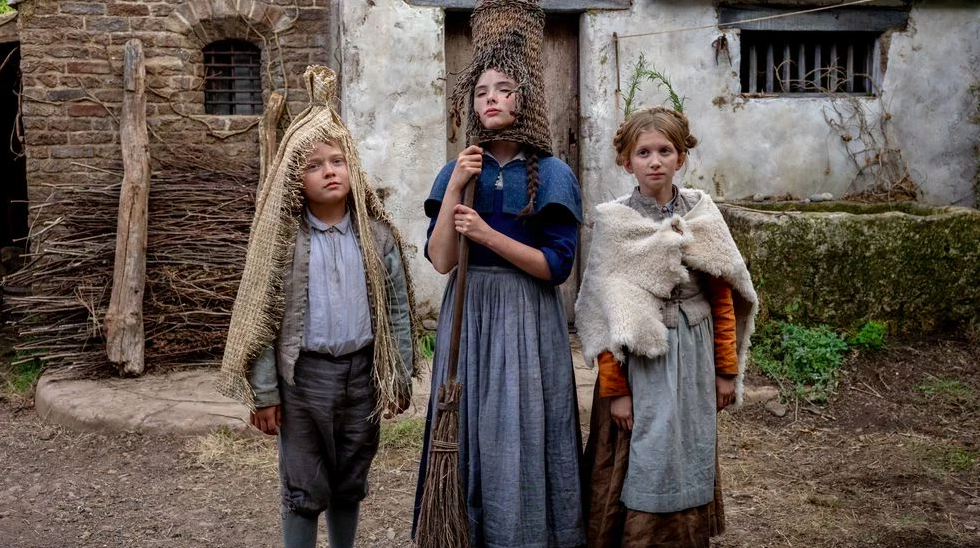
Chloé Zhao’s fifth feature film as director follows the global success of Nomadland and her fleeting foray into the Marvel Cinematic Universe with The Eternals. In this Elizabethan context she maintains her hallmark as a filmmaker of outdoor cinema. She captures some mesmerising naturalistic settings, as an holistic component of the humanity she is projecting through her sensitive storytelling. Just as her contemporary or futuristic stories, this period film depicts the limitations of men, who are powerless in the face of the circumstances that affect them.
Hamnet had its world premiere at the 52nd Telluride Film Festival and has received the highest recognitions, winning the Best Motion Picture – Drama and Best Actress in a Motion Picture – Drama (for Buckley) at the 83rd Golden Globe Awards. Buckley additionally won the Critics’ Choice Award for Best Actress. Furthermore, the film received eight nominations at the 98th Academy Awards, including Best Picture, Best Director for Zhao and Best Actress for Buckley.
The film is brilliantly written, as Shakespeare’s most famous soliloquies within The Tragedy of The Prince of Denmark intertwine with the life of its creator. Not just the famous existential question To Be Or Not To Be, but also the O That This Too Solid Flesh Would Melt, in which Hamlet wished that his body would just melt, turn to water and become like the dew. Wittily interweaved to the narrative are also the opening lines of the play — that show the ghost of King Hamlet visiting his son who bears the same name — and the final words of the protagonist.
Through the decades, a whole cinematic subgenre has developed around the historical and mythological figure of William Shakespeare, with biographical reinterpretations for the silver screen, the most famous being John Madden’s Shakespeare in Love. The Zhao-O’Farrell screenplay enters this category shining for its sophistication, as the Bard’s writings and life are soulfully coalesced with the ceaseless perpetuity of bereavement and wilderness.
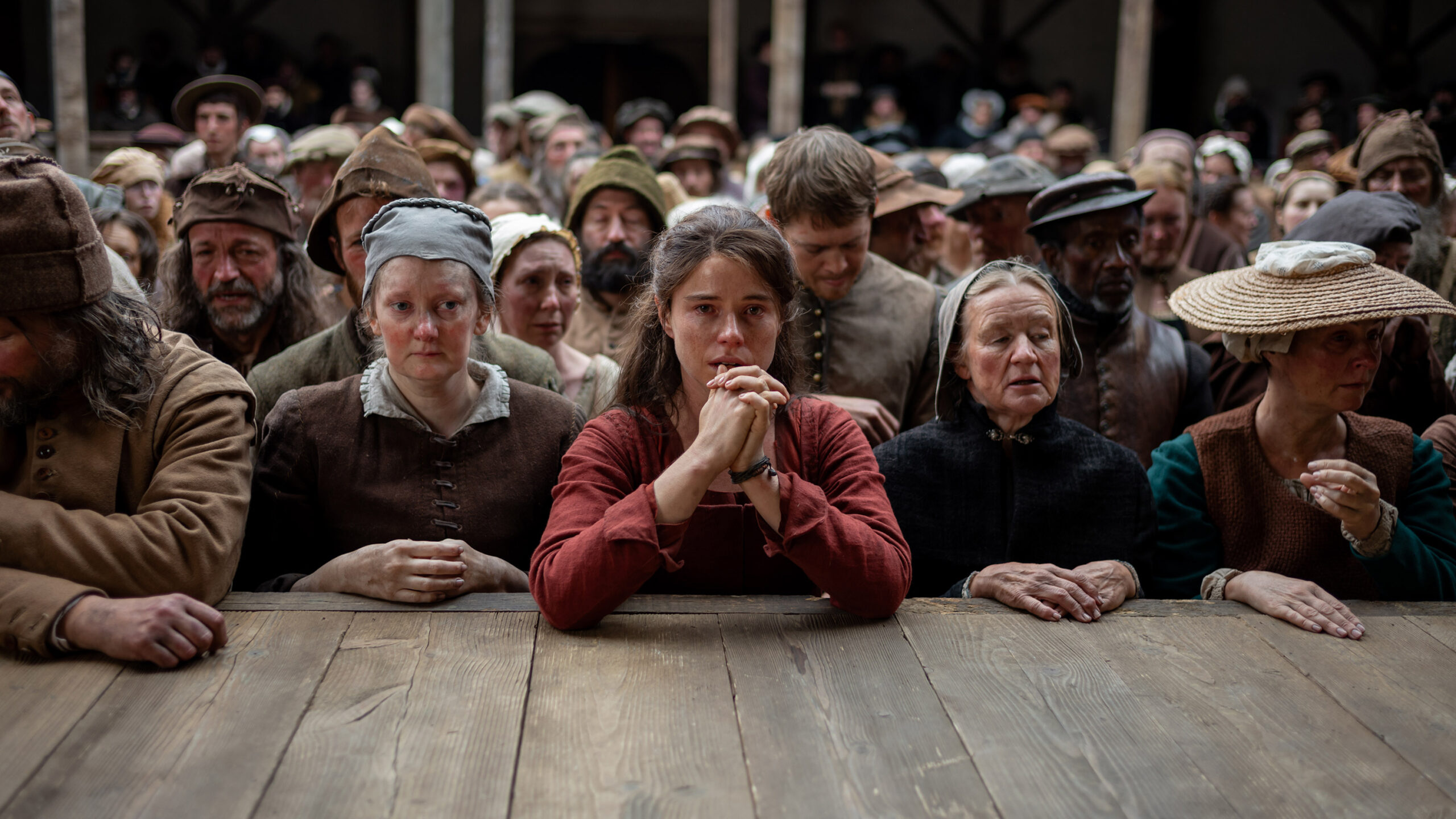
The chemistry between Paul Mescal and Jessie Buckley is astounding, as is the performance of the child actors playing their offspring: Jaconi Jupe (Hamnet), Olivia Lynes (Judith), Bodhi Rae Breathnach (Susanna). The cast is also enriched by the presence of Emily Watson as Mary Shakespeare, William’s mother; Joe Alwyn as Bartholomew Hathaway, Agnes’ brother; David Wilmot as John Shakespeare, William’s father; Justine Mitchell as Joan Hathaway, Agnes’ stepmother. Each one — playing wholeheartedly their part in this tragedy of errors — embodies the relentless attempt of humans to cross boundaries, which aren’t represented by a landscape, but by the emotional and mental hurdles that life has presented them with.
In As You Like It Shakespeare wrote that “All the world’s a stage, And all the men and women merely players.” Hamnet utterly embraces this idea by transforming reality in theatricality, where art becomes a curative expression to bear the burden of grief and loss.
Final Grade: A
Photos credits: Focus Features