

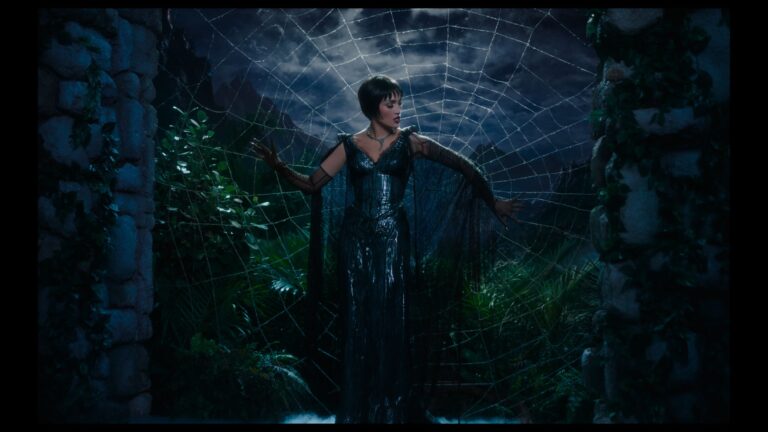
We are in Argentina in the year 1983, when targets of the military dictatorship are all those believed to be associated with activist groups. The story takes place in prison, where two inmates are forced to share a cramped cell: Molina (Tonatiuh), a window dresser convicted of public indecency and Marxist revolutionary Valentín (Diego Luna). The only form of escapism is Molina’s favourite musical that he describes to Valentín, starring Ingrid Luna as Aurora (Jennifer Lopez): Kiss of the Spider Woman. This splendiferous and compelling drama describes how a simple girl, turned into the glamorous editor from one of South America’s most famous fashion magazines, tries to escape a mythical predator whose kiss brings death.
Kiss of The Spider Woman — written and directed by Bill Condon — is based on the Tony Award-winning Broadway musical hit, that had already been adapted for the screen in 1985 by director Héctor Babenco, starring Sonia Braga, William Hurt and Raul Julia. It is further based on the 1976 novel by Argentine author Manuel Puig, who blurred the lines between politics, psychology, and cinema on paper, before his story arrived to the stage and later to the screen.
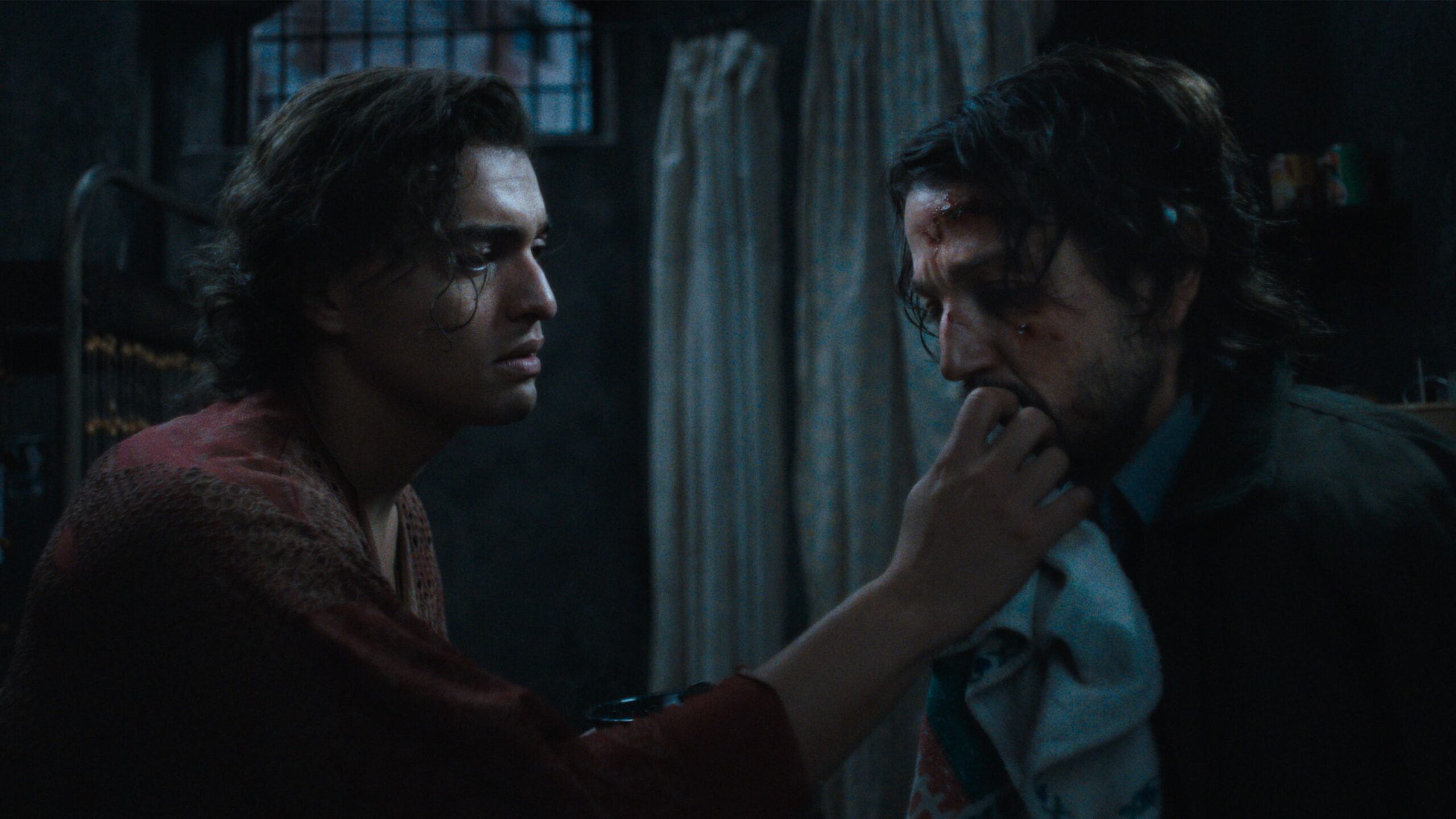
Two worlds seem to collide but end up coexisting osmotically, as the secluded prisoners transform the cell into a polychrome stage of music and wonder. Molina is fond of actresses from the Hollywood Golden Age, he quotes Cyd Charisse’s words from Silk Stockings and keeps posters of Ava Gardner and Rita Hayworth on the wall near his bed. He fervently expresses how he could not live without the movies, a passion that he inherited from his mother, who is now sick, and used to work as an usherette. Meanwhile Valentín reads the biography of Lenin.
Already Evita had explored the politics of Argentina through, song and dance, but that story is set in previous decades (it spans from the mid-Thirties through the early Fifties), following the rise to power of military leader Juan Perón, who became president of the nation. With Bill Condon’s take on Kiss of The Spider Woman we get the “Glorious Technicolour” experience applied to the Argentine regime of the Eighties, exploring themes concerning gender politics and the LGBTQIA+ community. For the latter, in our exclusive interview with Tonatiuh, the actor expressed how important it was for him to represent on screen the way these issues are part of our culture.
We see Jennifer Lopez rocking some beautiful platinum hairstyles, as a diva from the Forties and Fifties, dancing acrobatically and singing with all her might, dressed by the four-time Academy Award-winning costume designer Colleen Atwood. The construction of the narrative as a story within a story, where the prisoners blend with the fictional characters of the musical, allows to convey on the silver screen the process of identification that fiction may trigger in us. If the moral world of musicals works on a compass where goodness, patience, and sacrifice are rewarded, in real life things go astray. And yet a place of magic can be found when the marvel of the former penetrates the latter.
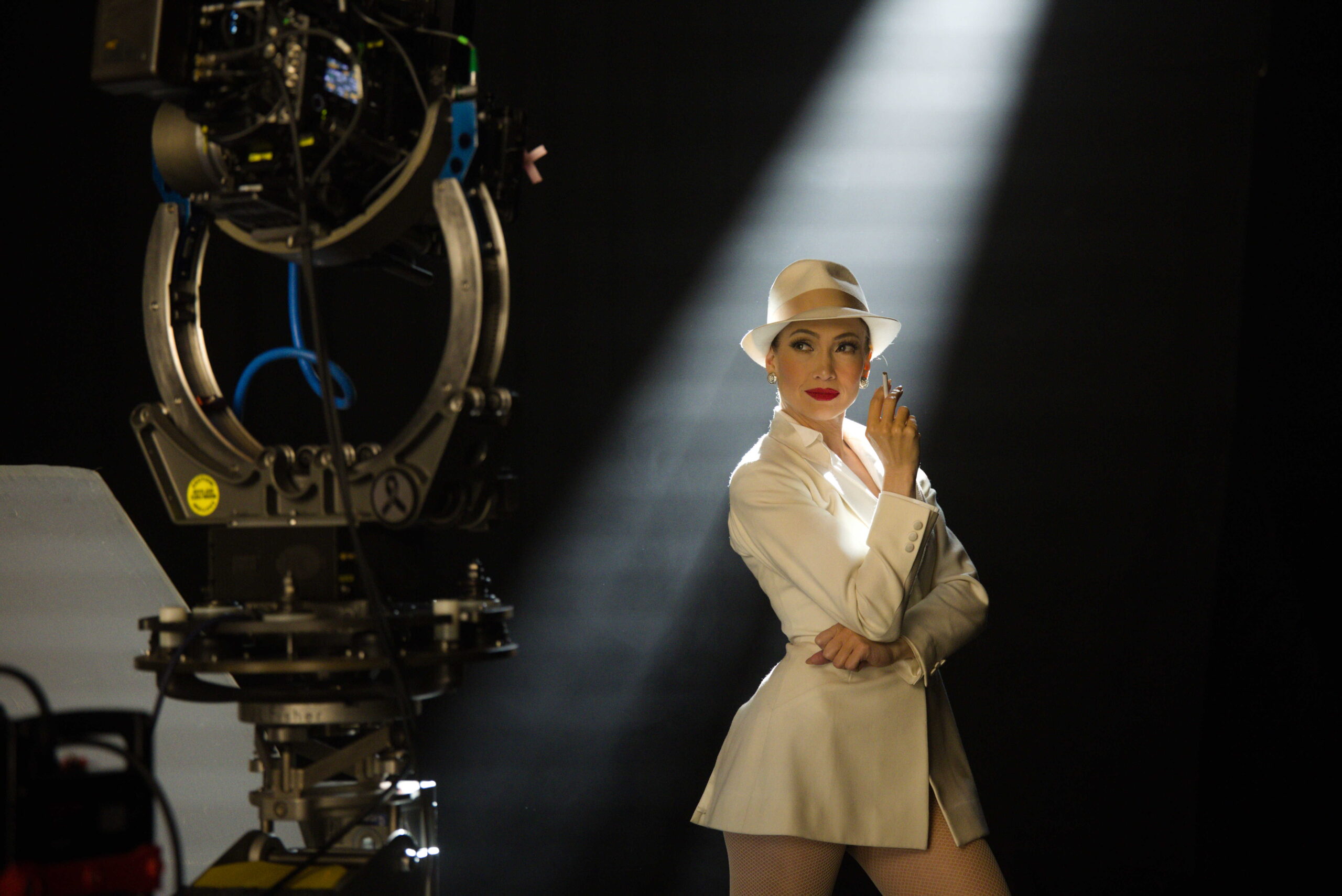
There is a nod and homage to many musicals. The dance sequence in the photographer’s darkroom, will bring back to the mind of movie musical geeks the scene from Funny Face, where Audrey Hepburn dances with Fred Astaire. Many will perceive the atmosphere of musical theatre films such as Cabaret, Chicago, An American In Paris, Singin’ in the Rain, Marilyn Monroe’s Let’s Make Love and Gentlemen Prefer Blondes.
This 2025 version of Kiss of the Spider Woman not only portrays the therapeutic escapist power of musicals, but how they can create a universal reflection on issues of bygone eras that still haunt us today, such as the struggle for freedom, beauty and resilience.
Final Grade: A
Photos courtesy of RoadsideFlix
It’s a bestifull movie👏🏼👏🏼👏🏼👏🏼👏🏼👏🏼👏🏼