
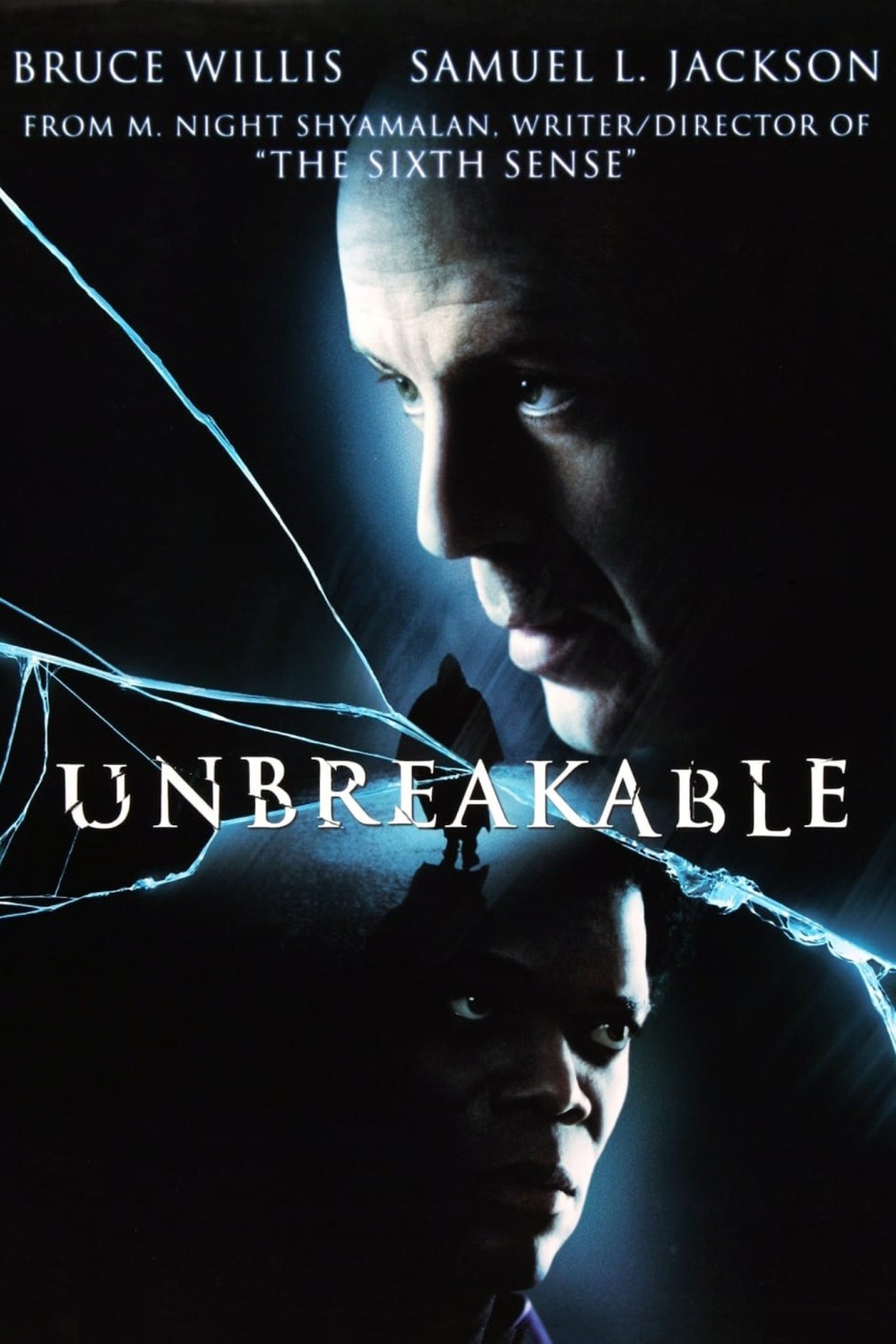
To say that I’ve had a strange relationship with filmmaker M. Night Shyamalan over the years would be an understatement, but that was especially the case earlier in his career in the years before I officially became a film critic. After making a few other movies, Shyamalan broke onto the scene with his blockbuster hit, The Sixth Sense, so there was probably a lot more anticipation for his follow-up film, Unbreakable, once that movie put the Shyamalan name on the cinema map.
As the trailer started to show in front of other movies in 2000, I became particularly interested in Unbreakable, for a few reasons, partially because it was rumored to be the filmmaker’s take on a comic book movie at a time when they weren’t quite so pervasive as they’ve become since. The movie also reunited Bruce Willis and Samuel L. Jackson from Pulp Fiction, one of my all-time favorite movies. Due to that connection, it might not have been that surprising when Shyamalan himself picked Tarantino’s Pulp Fiction to run as a double feature with Unbreakable at Film at Lincoln Center’s currently-running “Night at the Movies: An M. Night Shyamalan Retrospective,” although they’re very different movies. Sure, Tarantino’s movie was inspired by pulp novels while Shyamalan used comic books as his inspiration, but it’s an odd double feature, even if watching them back-to-back does offer opportunities for new insights and reflection.
(At this point, it might be good to throw in a SPOILER WARNING just in case you’re a Shyamalan fan who has not yet seen Unbreakable.)
I should also probably admit that I didn’t watch all of Unbreakable the first time I saw it in theaters in 2000. Nope. I walked out before the big ending twist and reveal for reasons that I’ll now explain. You have to understand that I’ve been reading comics since the age of 10, and I definitely agree with some of the ideas Shyamalan shared in Unbreakable about the medium, while other ideas seemed like a general over-simplification about how comic book storytelling works. (And I probably should mention that Shyamalan has only directed one actual comic book movie based on an existing property, the poorly-received The Last Airbender in 2010.)
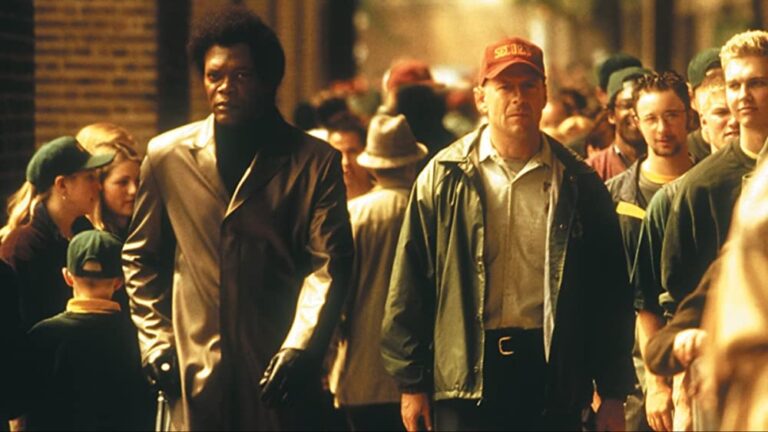
There are things that Unbreakable still don’t work for me, just as they didn’t in 2000, such as how the entire plot is based entirely on the idea of heroes or good guys and villains i.e. the bad guys. Sure, that’s usually the case in some of the more primitive comic books but there have been so many examples of far richer and deeper perspectives on that idea, mostly by Frank Miller and Alan Moore. You can read or watch any incarnation of Moore’s Watchmen to see how that is the case. One of the things that I still do fully agree upon though is that comic books are an artform and both the covers and interiors should be deemed as such. Back in the ‘90s, I would be a regular at New York’s downtown Four Color Images art gallery admiring comic artwork displayed under glass, and the Society of Illustrators also regularly has gallery showings at their museum. The fact that Jackson’s character runs one such gallery might be one of the coolest things in Unbreakable.
On the flip side, the movie is just slow as molasses with lots of dialogue scenes where Bruce Willis – who we all love, but let’s face it, has never been the greatest dramatic actors – and Robin Wright Penn, would just look at each other morosely, rather than actually discussing their marital issues.
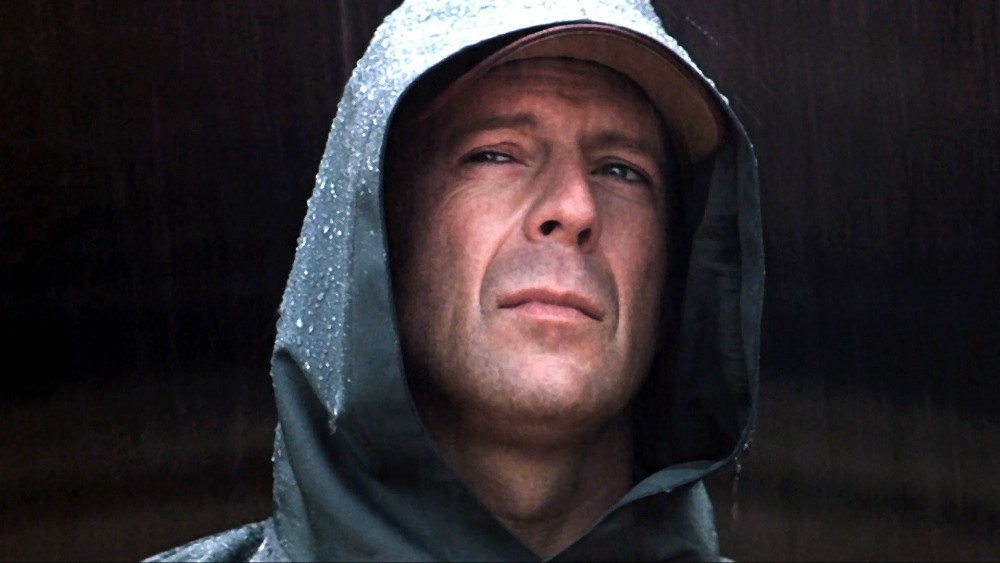
I also wasn’t a fan of Signs, which followed two years later, and there are many elements of the plot for that one that makes it a companion to Unbreakable – there’s the idea of characters having water as their main weakness (both Willis’ David Dunn and the aliens in Signs) as well as a flashback to an auto accident that had an impact on the main character. It’s doubtful that anyone would find either of those movies and screenplays as strong as The Sixth Sense.
More importantly, and this is someone you only notice after 25 years have passed and Shyamalan has directed dozens of other films, is that the filmmaker seemed to be afraid of instilling humor into his serious movies. Or maybe he just wasn’t as confident or good at putting in moments that can get the audiences to laugh, something that could allow viewers a moment away from all the grim goings-on.
Sure, there are moments in Unbreakable that are meant to be funny, like Jackson’s Elijah Glass asking Dunn for his credit card number, referring to a comment made earlier about his thoughts on superheroes being a scam to get money. But the delivery of the line is done so seriously that it just falls flat. In another son, Dunn’s son, played by Spencer Treat Clark, is putting weight on a barbell for his father to press, just to see how strong he is. That often gets a laugh, especially as they add on cans of paint after running out of weights, but that bit doesn’t land nearly as well as some of the humor Shyamalan put in films like The Visit, Split — an ersatz Unbreakable spin-off – and his recent thriller, Trap, which is hilarious at times.
About a year after Unbreakable came out, I became a film critic and eventually, I would interview Shyamalan –– a number of times, actually – including once for Cinema Daily US just last year. In fact, it was when I finally had a chance to be in the same room with the filmmaker and ask questions of him, when I started to appreciate his work more fully, and that was with 2007’s Lady in the Water, a much-hated movie by critics that oddly, is still my favorite movie of Shyamalan’s entire career. (Oddly, my first time watching the movie at the Sound One edit bay is also where I met two of Night’s daughters, including Ishana, who I also interviewed for Cinema Daily US.)
Nearly 25 years later, Unbreakable is a far stronger effort when rewatched in the context of Shyamalan’s dozens of films since then, particularly what 2019’s Glass brought to the mix in terms of fleshing out the relationship between Dunn and Mr. Glass even further. Many people have said that Unbreakable is their favorite movie by Shyamalan, and surely, much of that comes down to the comic book connection after rewatching the movie with added context from all the movies from Marvel Studios and DC Entertainment. In other words, it’s not nearly as painful for me to watch Unbreakable now as I first did while sitting in a movie theater in 2000, having only The Sixth Sense as a reference.
The “Night at the Movies: An M. Night Shyamalan Retrospective” runs at Film at Lincoln Center through September 4, and you can watch the trailer for the series below: