
The New York International Children’s Film Festival (NYICFF) — the Oscar-qualifying kermesse that takes place over three weekends in March in New York City — is back with an engaging line-up that will entertain its 3 to 18 year-old spectators. When it comes to Academy Awards, a film in this 2026 programme is the outcome of the team behind the Oscar-nominated Boy and the World that was part of NYICFF 2014.
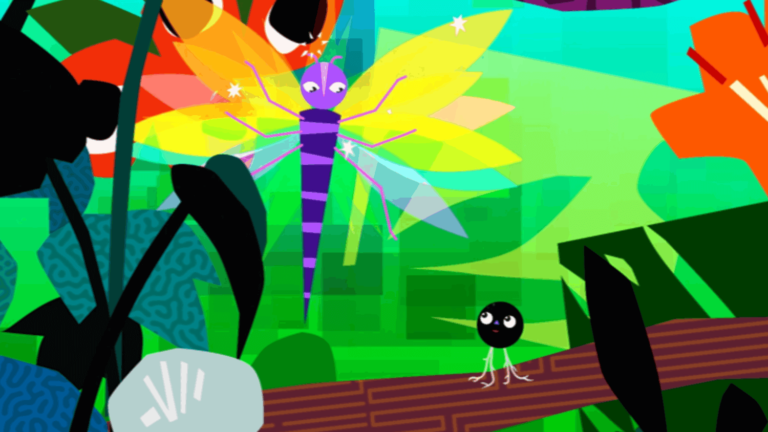
The film Papaya portrays an extraordinary journey of a seed exploring the natural world at the mercy of mankind’s ill-doings. This delicate ecological tale is brilliant to instil in the youngest of viewers the sense of wonder and awe towards the beauties of our planet, whilst also alerting them on how humans have harmed our home and neighbours to exploit its resources.
We are in Brazil, where our protagonist is accidentally separated from its mama tree and embarks upon a coming-of-age adventure. The first encounters are with a cricket, a caterpillar, and a dandelion floating in thin air, that lands in the soil and sprouts into a yellow flower. Then come the meteorological elements that occur in the wild: lightning, thunder and rain. Along the way the tiny seed starts developing its roots, but still does not want to settle in one place, there is so much to discover.
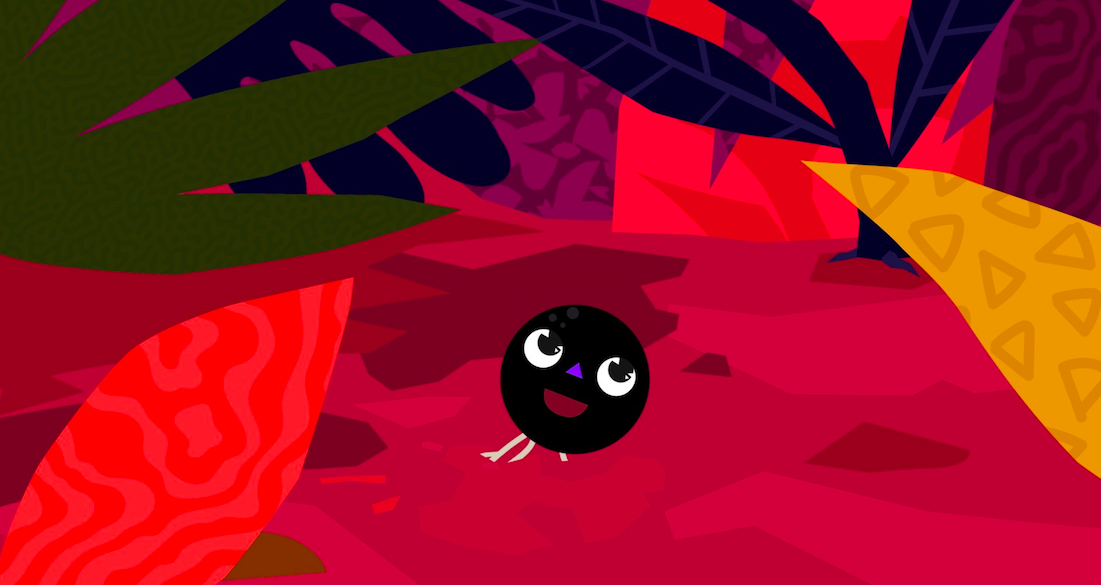
The humming sounds represent the music score, that are channelled like meditative chants. Ladybirds, butterflies popping out of water bubbles, ventures in the marine world, a magical rainbow and an almighty waterfall, are just some of the naturalistic discoveries the seed gets acquainted with.
Then comes the confrontation with human beings’ usurpation of the environment. We first see a cow with a tag on its ear, animal welfare is jeopordised. Then come the tractors. The seed continues through a tunnel that is the underground water flow of a sewage, which is revealed by a drain passing through a concrete road.
Unhappy seeds are victims of intensive farming, a practice that warps the ontology of the environment, epitomised by square-shaped watermelons and crops that are brutally extracted from the ground. The green revolution and its newer methods of cultivation, including mechanisation, uncover the phenomena of synthetic fertilisers, pesticides and hybridised seeds. The latter brings to mind — without making an explicit reference — Vandana Shiva’s plight to free seeds from big corporations like Monsanto.
From droughty landscapes, to fields where airplanes spread herbicides and insecticides, the seed’s journey also traverses human factories. Within laboratory-like greenhouses, pots filled with seeds get injected with chemicals. This moment in our seed’s Odyssey comes across as Modern Times meets Metropolis: unsustainable farming transforms into an insatiable assembly line. But there’s room for hope, since the seed manages to reach the manmade control room of this horrific mechanised realm and presses the buttons to free nature from anthropocentric captivity. A revolutionary act is carried out by the tiniest creatures, who save the planet from mankind. Birds drop the seeds on the ground propelling natural fertilisation, as the ground harmoniously starts to bears strawberries, tomatoes, bananas, flowers and papayas.
Meanwhile, the seed ends up traveling aboard a van filled with waste, that gets discarded in a dump and is eaten by a bird and then expelled through its faeces. From there on forth a Kafkaesque situation forces the seed to confront an adversarial fauna. It’s a psychedelic trip, where the visual representation mirrors the nightmarish hardships that need to be overcome. Our heroic seedling eventually sets its roots in the soil to rest and starts sprouting a stem from its head. The roots go deep down to a holistic space where all life on Earth begins through a mystical creative force. The Gaia Hypothesis is newly in control, in a bountiful, resplendent, healthy and peaceful manner.
Whispers of the Voice of the Earth can be heard calling “Papaya”. Our seed has now become a Papaya Tree, but its journey isn’t over. It ultimately transforms into another creature, flapping its wings towards the sun — like an Icarus who doesn’t fear the end of an existential journey, because it trusts it will find another body to be reborn and continue the circle of life.
The film that gained the Crystal Bear for the Best Film in Generation Kplus at the 2026 Berlinale is characterised by an engaging 2D animation, that somehow reminds of some of Oskar Fischinger’s experiments with visual music, that were glorified in Walt Disney’s Fantasia. This is how Lewis Carroll would have penned Alice in Wonderland, had he decided to forge his protagonist as the quintessential representative of the plant kingdom.
Priscilla Kellen’s directorial debut (that she also wrote), serves as a metaphor for nature’s ability to endure strain. It’s the same resilience we can witness in our cement-covered cities, where in between the concrete cracks flowers and plants sprout to reclaim their righteous space on our planet.
Final Grade: A
Check out more of Chiara’s articles.
Photos Courtesy of Obscured Pictures