

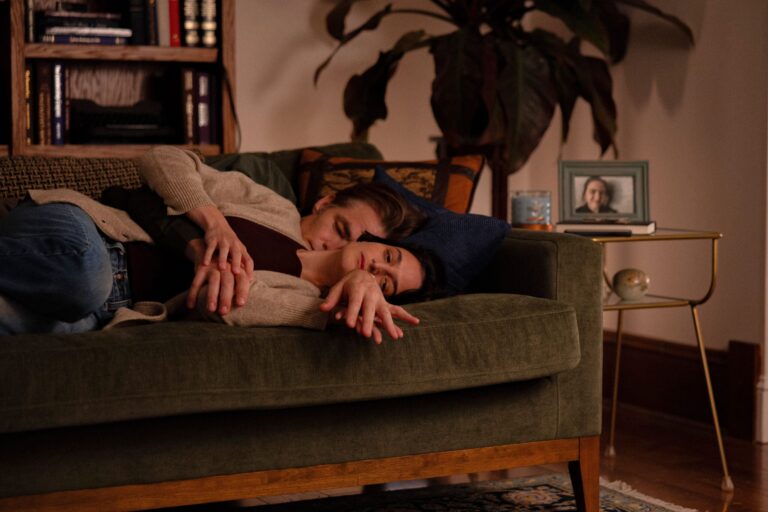
@Courtesy of Sundance Film festival
After Sometimes I Think About Dying starring Daisy Ridley, the director Rachel Lambert comes back to the Sundance Film festival with another movie exploring the complexity of human relationships. Carousel tells the story of Noah (Chris Pine), a divorced doctor living in Cleveland, struggling with his job and in particular with his teenage daughter (Abby Ryder Forston), still traumatized by her parents divorce. When his old and unforgotten love Rebecca (Jenny Slate) comes back to town, Noah sees his life getting even more complicated because of the feelings he still has for the woman.
Carousel talks about ordinary lives. Perhaps even too ordinary. While we follow the romance, the psychological drama, the intimate portrait of the main characters, we have the weird feeling that the most important events, those who can shape people’s lives, actually happened before the movie started. What the audience experiences watching Rachel Lambert’s last movie is a sort of aftermath of past traumas that is without doubt decently portrayed but at the same time not that emotionally effective. You spend almost the entire movie waiting for a dramatic conflict to develop, while you keep thinking about the background stories of the characters more than their actual issues.
Rachel Lambert has written a screenplay that talks about loneliness and regrets, portraying a series of human beings that because of it live more in the past than in the present. And that’s most likely the biggest problem of Carousel: you’d prefer to see what happened to Noah and the other characters years even more than what they actually go through during the movie. Which is actually strange, because many of the elements that compose the feature film are clearly working. In particular the cinematographer Dustin Lane does a remarkable job creating realistic images that use soft, almost low light in elegant environments.
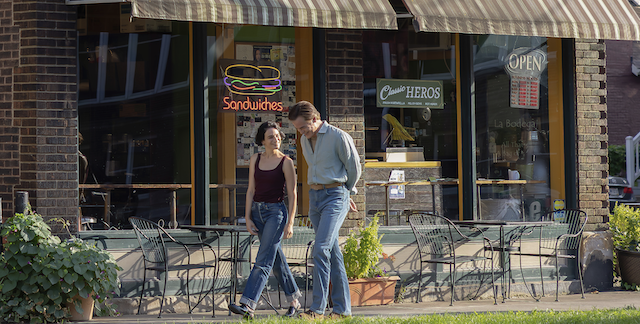
@Courtesy of Sundance Film festival
The long, articulated sequence of the main fight between Noah and Rebecca is a beautiful sequence especially because of the naturalistic lightning. On the other hand, the music scored by the composer Dabney Morris is most likely the movie’s biggest flaw, especially in the very first sequences. Why use such a score more fit to a romantic comedy when you are clearly developing a psychological drama? The music is confusing, and doesn’t help to set the proper tone for the story.
As a director, Rachel Lambert shows again her love and attention to her actors: Chris Pine is sharp and very precise in portraying Noah, owning an admirable timing in his duets with Jenny Slate, Abby Ryder Fortson and Sam Waterston. This is surely one of the best performances of his career. Same thing for Slate, even if her chemistry with Pine isn’t always there: the couple is more believable when at odds than in the scenes where they have to develop their romance.
The will to show the ordinary struggles of normal people is the main reason Rachel Lambert has realized Carousel. Her ideas behind her work are clear and understandable, but unfortunately this doesn’t make them effective. Despite some interesting scenes, the good performances of the protagonist Chirs Pine and the emerging actress Abby Ryder Fortson, the movie fails to be emotionally compelling. Noah and the other characters are so stuck in their own problems that the audience wonders probably woo much about what tragic events made them what they are when we meet them at the beginning of the movie. The story lacks a strong conflict, so even when there is some tension or clash between the characters, it is quite difficult to participate in their pain or dilemmas. It feels like they should have addressed what’s going on a long time ago: now it’s a bit too late to be really interesting. Or just even simply moving.
Rate: C
If you like the review, share your thoughts below!