
@Courtesy of Relativity Media
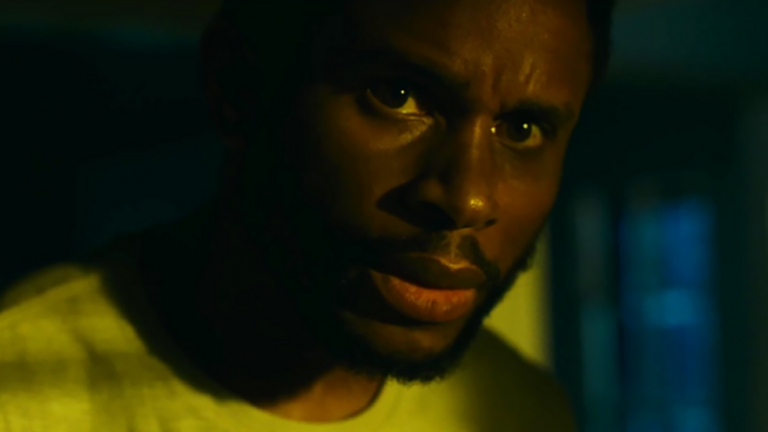
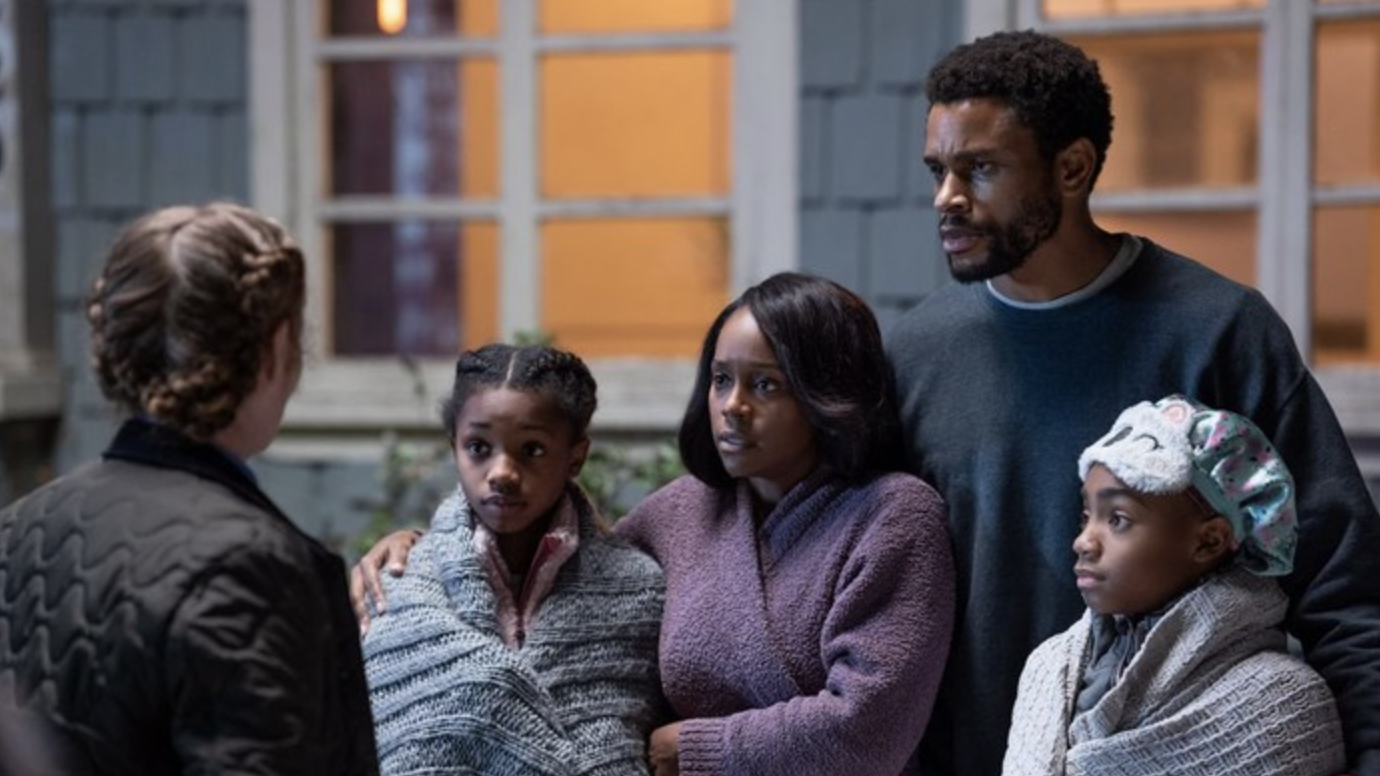
After a solid career as supporting actor (Beasts of No Nation, Harriet, Sylvie’s Love) Nnamdi Asomugha has directed and starred in a family drama that gained the Best Narrative New Director Prize at the 2024 Tribeca Film Festival. The Knife talks about Chris (Asomugha), a man that in the middle of the night hears a noise in his house and finds a woman in his kitchen. When his wife Alex (Aja Naomi King) and their two daughters arrive, they find the woman unconscious on the floor, his knife next to her and blood next to the body. Chris calls the police, and while they are waiting for the officers to arrive they start realizing that they are a black family and there’s a white woman dying in their house…
Written by Asomugha together with Mark Duplass, The Knife is a very interesting take on the idea of prejudice, racism and bias in the contemporary United States. The screenplay actually develops immediately a precise (and tragically true) concept: how can a black citizen defend himself from the idea that he will be perceived, no matter what, as a potential criminal even if he is actually the victim of a crime? Can this distorted perception lead to contradictions or mistakes during the interrogation inside a crime scene?
©Courtesy of Relativity Media
Instead of giving the viewer any kind of response to such doubts, the movie develops a plot where ambiguity becomes the principal way to interrogate oneself about these matters. Every character little by little gets tangled in this spiderweb made of suspicion, bias. Even the detective Carlsen (Melissa Leo), who leads the detection completely by the book, turns into a person who is very difficult to see as unbiased. The way she asks the questions, or uses specific words – especially “victim” – makes the character walk on the razor’s edge of prejudice. And this is very interesting because it explains in a subtle but powerful way how the suspicion of racism is impossible to deny, no matter if the people involved are aware or not about it.
Asomugha uses little details, unspoken words, hints of gestures in order to create a tense atmosphere where no one is innocent, whether we are talking about an actual crime or just unspoken prejudice. As the main character, he is capable of holding the twisted personality of Chris with an effective performance. He lets Aja Naomi King to be the heart and soul of the family, and she delivers a vibrant performance.
When Melissa Leo enters the movie, that’s when The Knife switches from a family drama to a movie loaded with suspense. The actress portrays with brutal honesty a detective that works on many, even questionable levels in order to discover the truth about what really happened. Her performance is layered and realistic, and she isn’t absolutely afraid to play a character far from likable, always on the verge of being brutally biased towards the family.
For being his first feature film behind the camera, Nnamdi Asomugha has already shown an admirable maturity: he knew exactly what he wanted to talk about and how to do it. He achieved something that contemporary cinema, even the one with a social commentary within, seems to lack more and more: the will to question the audience with complex characters, the ones who make you doubt what you are watching more than delivering certainties.
It is not easy to take a precise position watching The Knife, even if it’s clear that the Asomugha intends to address how American Society is poised with prejudice. In order to do that, he doesn’t use innocent victims and villains, because reality is way more complex than that, therefore it needs a serious, real approach to be fully represented. The Knife does that.
Rate: B-
If you liked the review, share your thoughts below.
Check out more of Adriano’s articles.
Here’s the trailer for The Knife: