

©Courtesy of Netflix
Her name means love in Japanese, but the pronunciation sounds very similar to “I,” as in the English singular first-person pronoun. Clearly, the title of her new life-story was intended to carry that double meaning. In 2009, Ai Haruna became the first Japanese contender to win the Miss International Queen transgender pageant in Thailand. However, she struggled with questions of identity during her early years, when she was known as Kenji Onishi, before eventually becoming Ai in Yusaku Matsumoto’s This is I, which is now streaming on Netflix.
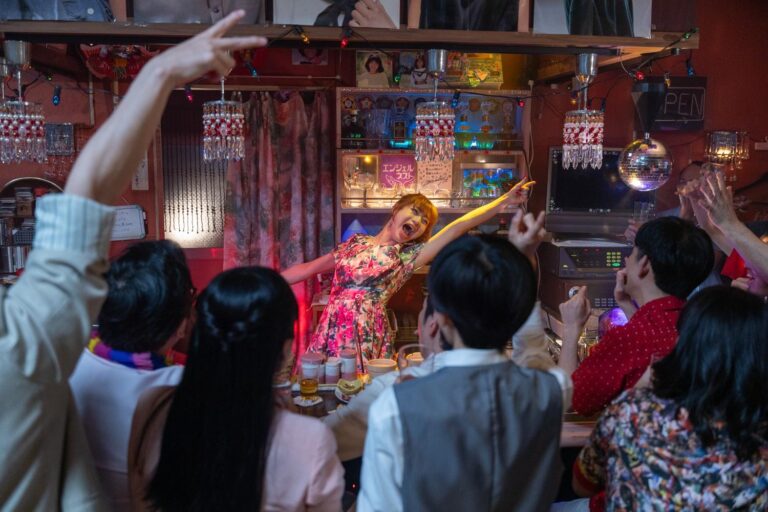
As a young boy, Onishi enjoyed dressing up in his mother Hatsue’s accessories and performing Japanese idol songs for classmates. Predictably, this led to bullying that became habitual by the time Onishi entered high school. Frankly, the future Haruna lacked the psychological vocabulary to fully understand and express her feelings until she encountered the “okama” night club operated by the stern but mothering Aki.
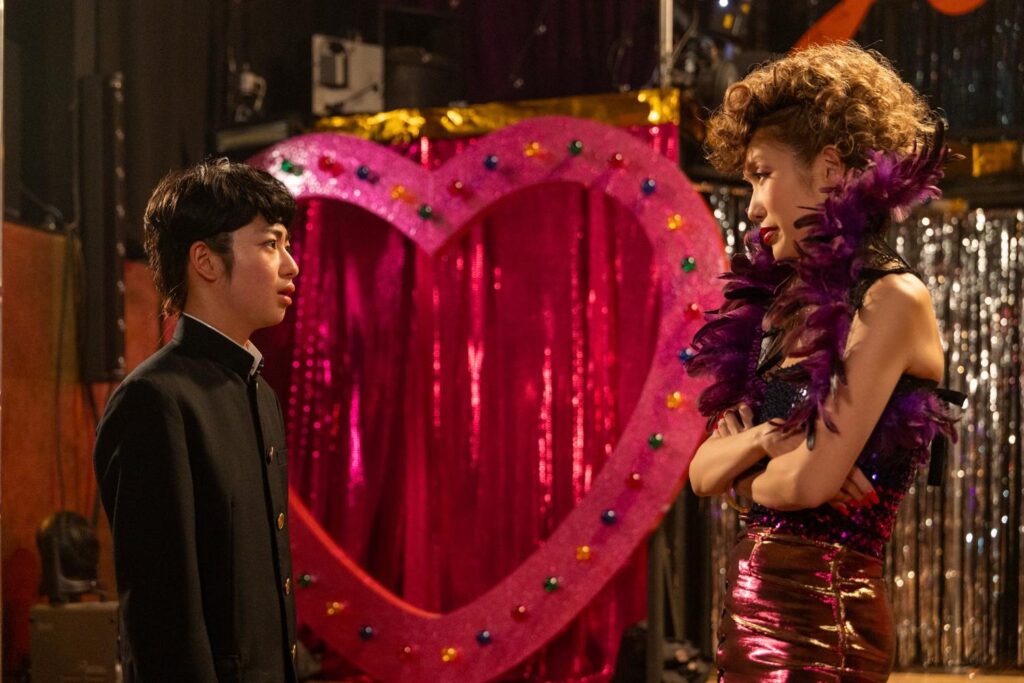
Starting out as an errand-gofer, Onishi finds an accepting community at the club, where she soon makes her debut under the stage name Ai Haruna. She quickly becomes a favorite of club patrons and even exploring romance with Takuya, a straight-presenting biological male performer at the club, who looks considerably older than the high school-aged Haruna—an issue that apparently never troubles Matsumoto and screenwriter Masahiro Yamaura.
 ©Courtesy of Netflix
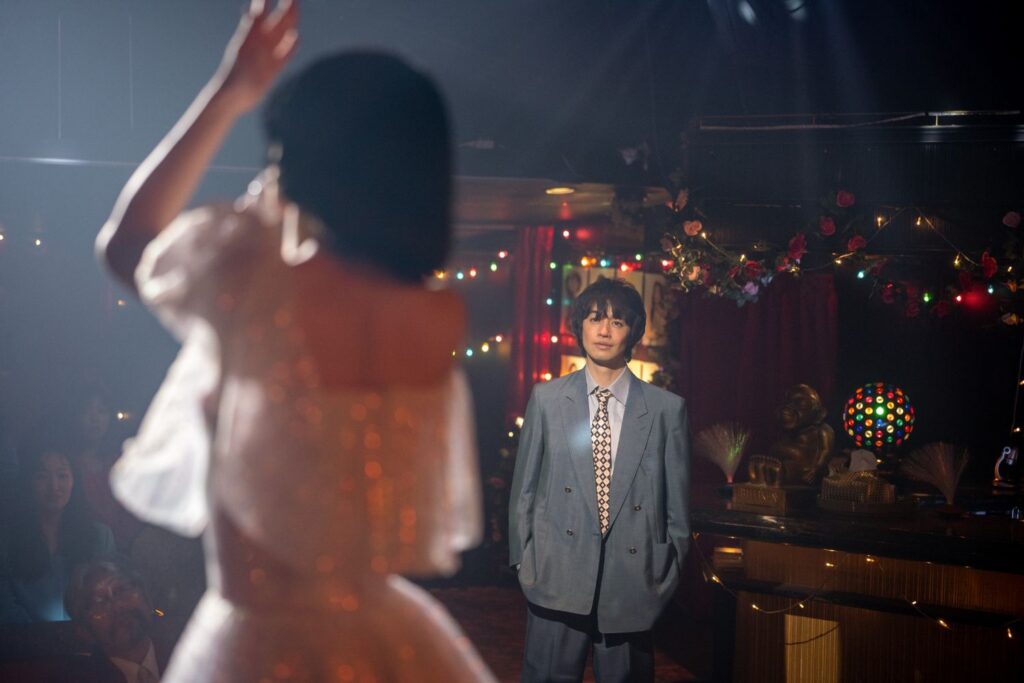
When intimacy issues threaten their relationship, Haruna seeks transitional treatment from Dr. Koji Wada, who already offers conventional plastic surgery to many of Aki’s performers. Often critical of his colleagues’ mercenary practices, Dr. Wada is largely shunned by the medical establishment. Consequently, he develops great empathy for outsiders like Haruna. However, he is greatly restrained by the limits of mid-1995 surgical techniques and Japanese law, which at the time forbid gender reassignment surgery. Nevertheless, his compassion drove Dr. Wada to innovate procedures to help patients like Haruna.
Indeed, one aspect of This is I that distinguishes it from similarly themed films is its delicately-wrought depiction of their mutually-caring doctor-patient relationship. Matsumoto and Yamaura unambiguously present Dr. Wada as the most important source of support during the period Onishi finally embraces her Haruna identity, as well as the difficult years that followed.
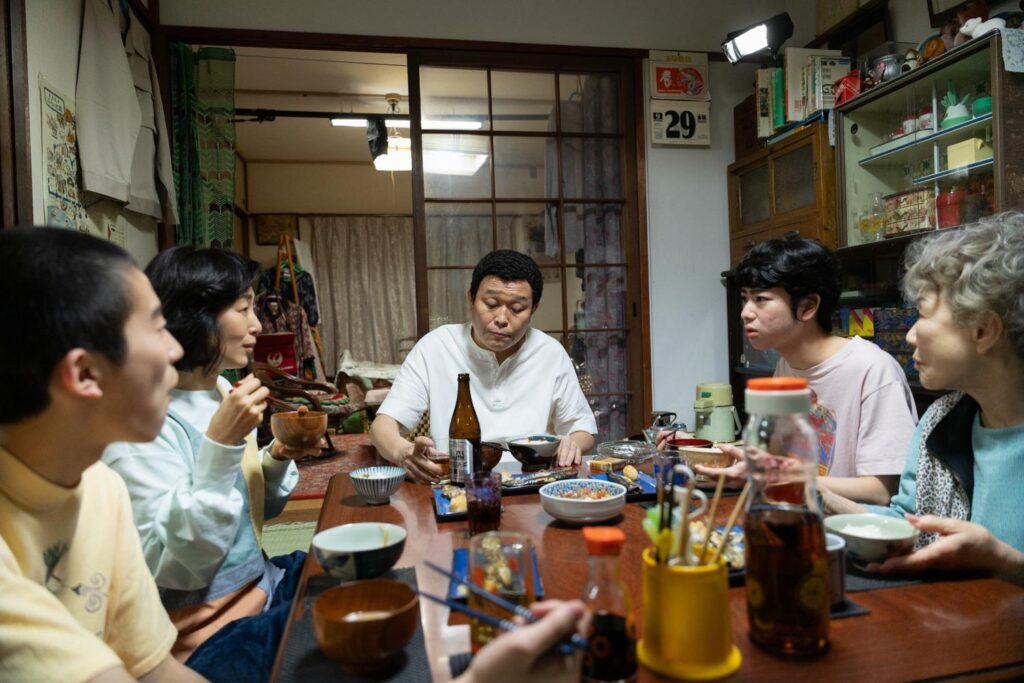
However, her parents are not depicted as monsters, which is somewhat refreshing. In fact, her rough-hewn, womanizing father is one of the first (and few) people who knew her as Onishi to accept her as Haruna. Her relationship with her mother proves more fraught, but ultimately redemptive.
Unfortunately, it is painfully obvious This is I was written, conceived, and executed first and foremost as a contemporary social statement. As a result, current expressions crop up anachronistically. For instance, the saying “living your best life” was popularized by Oprah Winfrey in the mid-aughts, so it is unlikely Onishi’s dying grandmother would have used it, even if it reflected her sentiments.
 ©Courtesy of Netflix
Of course, it is evident from the expressionistic musical numbers that realism was not a priority for Matsumoto and company. In fact, the song-and-dance interludes give the film an energy and a vibrancy that aptly reflects Haruna’s youthful enthusiasm for sugary idol pop. However, neither the melodies or the lyrics are memorable to any great extent.
Still, Horuki Mochizuki performs young Haruna’s musical numbers with buoyancy and conviction. Takumi Saitoh truly radiates world-weary integrity and acute sensitivity as Dr. Wada, while Akura Takamura is charismatically tough and tender as Aki. Yet, perhaps the most poignant work comes from Tae Kimura as the confused but loving Hatsue. However, there are also plenty of cliched and caricatured stock characters.
Ultimately, This is I suffers from the predictability mandated by its message. It is well-intentioned, but Matsumoto’s pacing sometimes drags, despite the up-tempo music sequences. Nevertheless, the finely calibrated, truly humanistic performances from Mochizuki, Saitoh, Takamura, and Kimura elevate the film above and beyond mere advocacy. Recommended for Japanese idol fans who will appreciate the music and its youthful spirit, This is I currently streams on Netflix.
Grade: B-
If you like the review, share your thoughts below!
Check out more of Joe’s article.
Here’s the trailer of the film.