

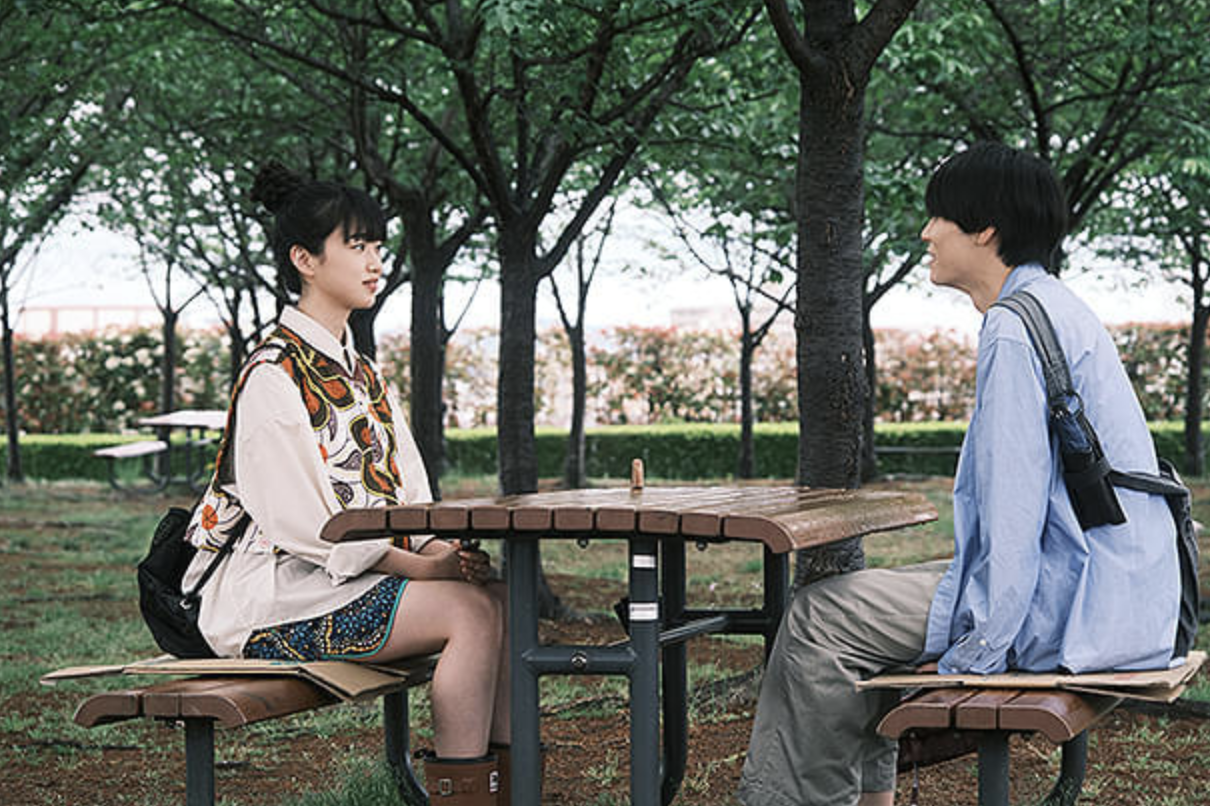
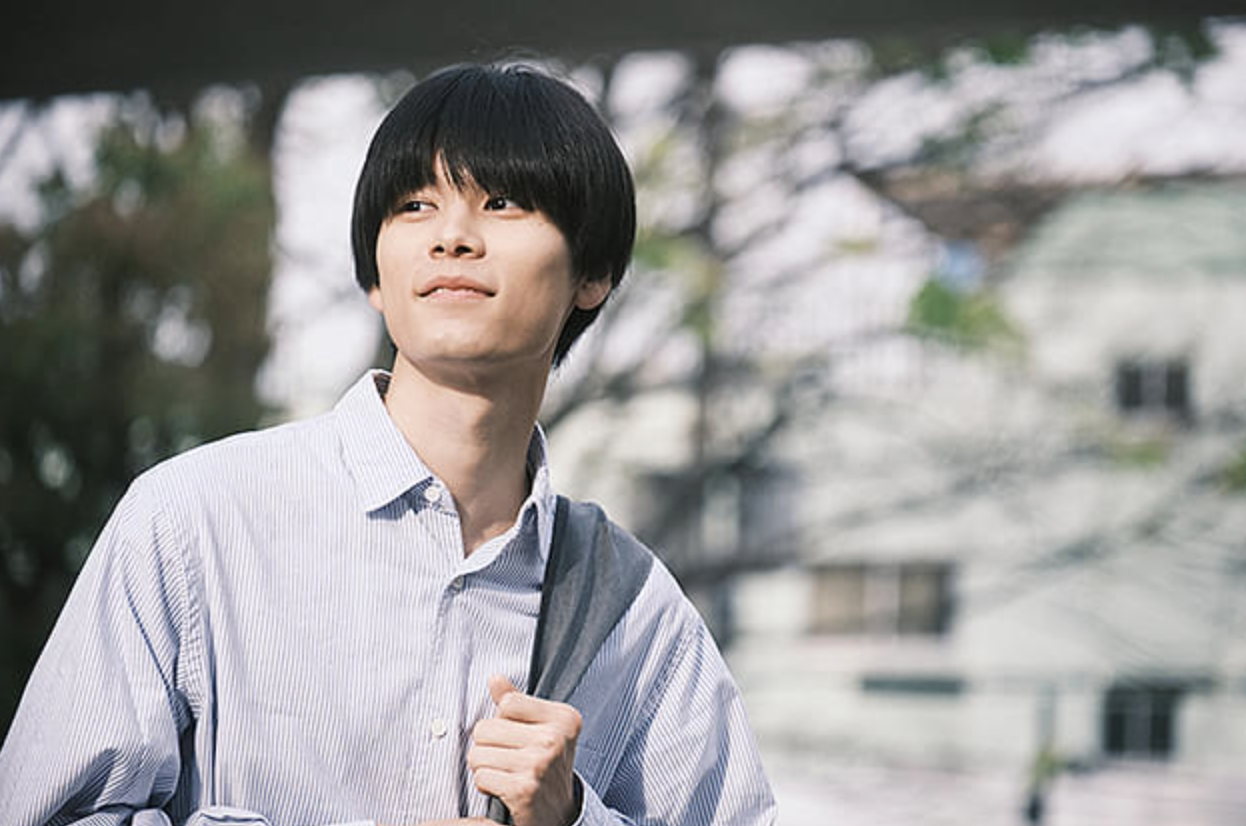
Director Akiko Ooku (“Tremble All You Want“, JC 2018) shifts away from her novel engagements with the neurotic interiorities of young working women to explore the life of college student Konishi (Riku Hagiwara), an anxiety-ridden loner who brandishes an umbrella on sunlit days. Through a progression of coincidences, Konishi forms a bond with classmate Hana (Yuumi Kawai), whose equally vulnerable and eclectic state of mind suggests a perfect match, but in his utter infatuation, Konishi’s self-involved disposition places enormous neglect on friends and co-workers. Sensory and sonically attuned, even balletic at times, “She Taught Me Serendipity“ inventively constructs an approximation of Konishi’s psyche, and shines in its open-hearted confessions, soul-baring and poignant in their nature.
Director : Akiko Ooku, 2025, 127 min., DCP, color, in Japanese with English subtitles. With Riku Hagiwara, Yuumi Kawai, Aoi Ito, Kodai Kurosaki.
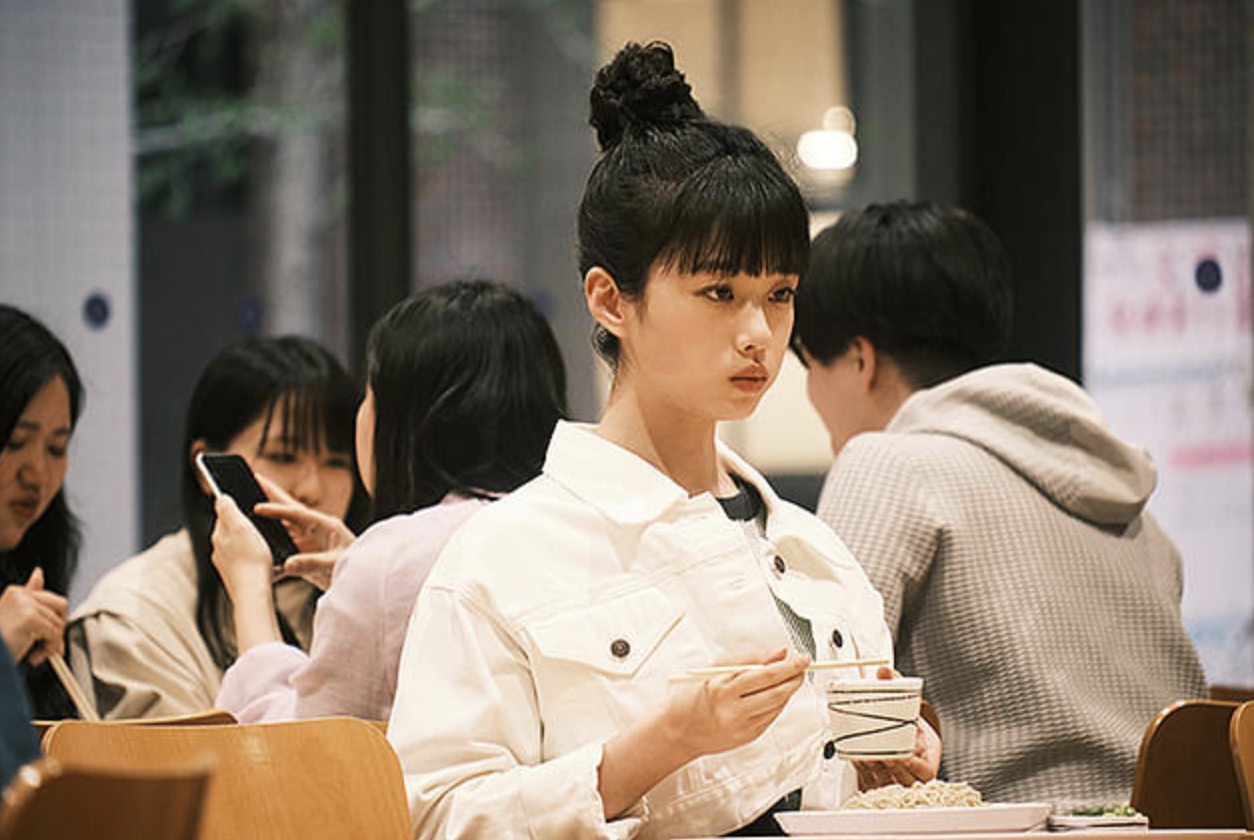
©Couretsy of Japan Cuts
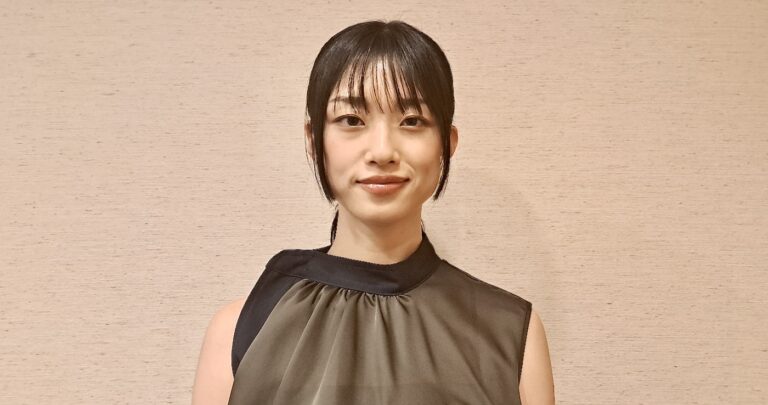
Exclusive Interview with Actress Yuumi Kawai
Q : The story of the movie is inspired by the book ‘I Still Can’t Say I Love Today’s Sky the Most’ written by comedian Shusuke Fukutoku. What was it about the novel that really resonated with you and motivated you to take on this project?
Yuumi Kawai : The script caught me off guard upon reading it because it was so pure and completely different from my initial image of Mr. Fukutoku. Although I had portrayed high school students at my age and beyond, it was intriguing to me that I felt like a Japanese university student with an excessive amount of free time.
Q : Ms. Kawai, you attended Nihon University for a period of time. When you reminisce about your college days and compare your role as Hana Sakurada to your own, do you observe any similarities? On the flip side, are there any aspects that are a little different from yours?
Yuumi Kawai : I understand her dislike of crowds and her doubts about it. Sakurada does not say, “If this is the case, I can be alone,” but rather chooses to be alone, I also had times when I was alone, and I don’t stay with everyone all the time, so I can really understand the feeling.
Q : I heard that actress Ai Mikami was also attending the same university at the time. At that time, did you feel relieved to have such fellow actresses around you even though you were a little different from the other students?
Yuumi Kawai : That’s right. At school, I attended the theater department where everyone was working toward their own goals and enjoying lots of fun and friendly competition.
Q : In the film, the song “Hatsukoi(First Love) Crazy” by the band Spitz is played, and it is used in quite an important part of the film, looking back on your school days, is there any music that has stayed with you? Is there any music that you still listen to from time to time, that reminds you of those high school days?
Yuumi Kawai : During my high school years, I have vivid memories of singing the song ‘We Are Young’ (Fun ft. Janelle Monáe) around the campfire during our first-year high school trip, and it brought me back to my first year of high school.
Q: In the movie, Sakurada says, “When I hold an umbrella, I don’t care what people think of me.” Usually when it rains, I feel depressed, but I think there are people who have unique values about rainy days, such as the fact that there is a certain elegance to them, or that there is something good about the rain. I think there are people who have a unique sense of value about rainy days. Do you have any good memories of rainy days?
Yuumi Kawai : Sunny days are my favorite, but the premiere of this film, the opening day greeting, and the Tokyo International Film Festival before that all happened on very rainy days, and I felt it every time. It was a pleasant memory. It was like, ‘It’s raining again today!’
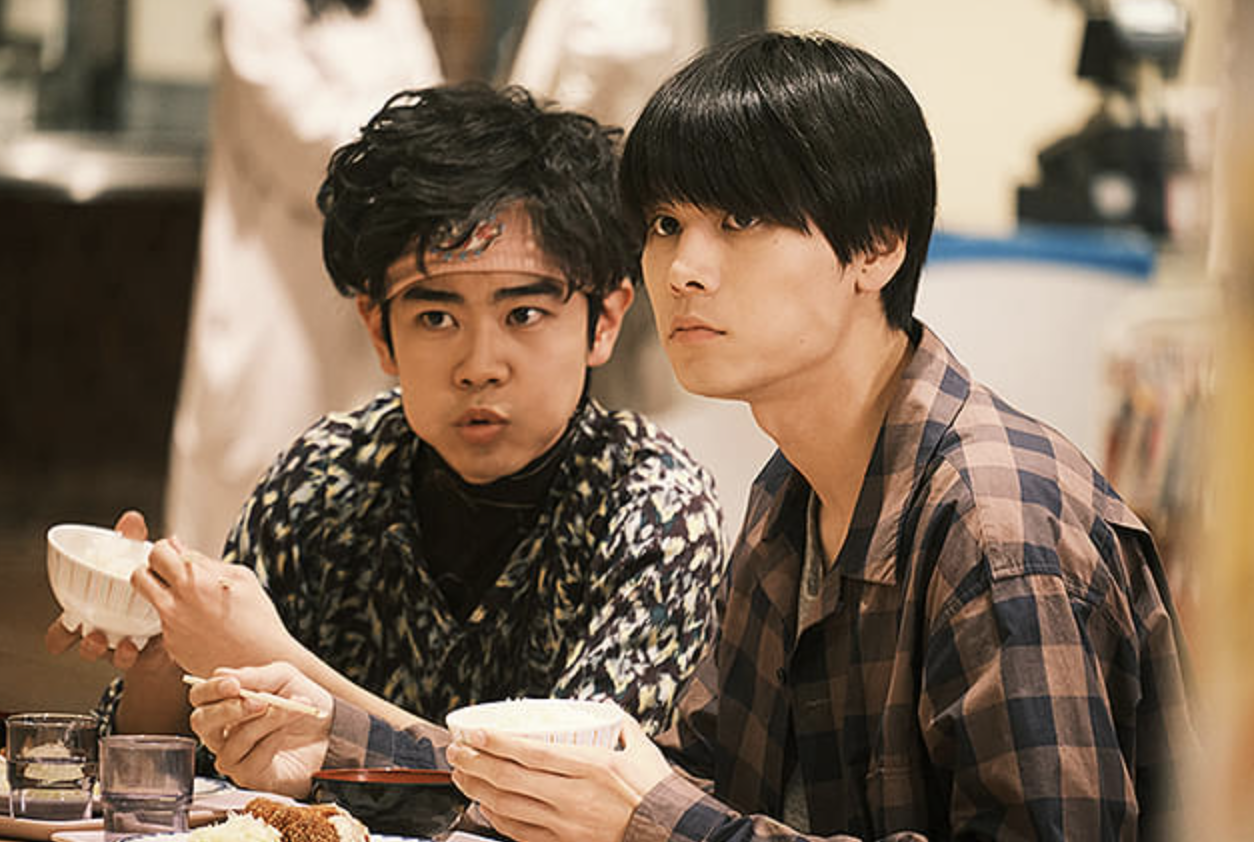
©Couretsy of Japan Cuts
Q : Normally, when you are a student, you see people who are always in a group around you, and even if you don’t have friends, there is a part of you that is fine, and I think there is always a part of you that feels that it is good to have one person who understands you during your college years. There are always students around you, and you are always in between, before you become an adult, and you feel that loneliness is a necessary part of becoming an adult.
Yuumi Kawai : In junior high and high school, we had classes, and there was a natural opportunity for us to be united in a small community, but as soon as we entered the university, the campus became bigger and bigger, we wondered how we made friends and how we formed groups of friends. What was the process of creating a group of friends for me? There were times when I was unsure of how to make friends. I thought it was a unique experience for me, because I lost the bond with friends and the sense of love for my school when I was in college. I think there was a change in the mental and spiritual distance between us, as we all worked hard towards something without questioning ourselves.
Q : The film has several scenes depicting the protests, but Konishi (played by Riku Hagiwara) doesn’t join them until much later. In my opinion, there comes a moment when you suddenly become aware of things (such as protests) in school, even if you weren’t aware of them at first. Did anything happen while you were in college that suddenly changed the way you perceived your surroundings or your sense of values, even though you hadn’t noticed it before?
Yuumi Kawai : There were many individuals at the university who had aspirations in the theater department, and they had to make decisions about their future, such as whether to pursue a professional career, continue in theater, or give up.
In high school, I was exposed to a lot of different ideas, such as the protests in the movie ‘Konishi’. When I returned to the narrow world of theater in college, it became apparent that there was a gap in knowledge among the department’s members, what they thought was good, and what they knew about this or that was very large.
There was a significant difference in what was considered good by the community versus what was considered good by myself.
Q : The movie features a dog named Sakura who appears in numerous scenes and appears to be a very obedient dog. What was your experience working with her?
Yuumi Kawai : That’s correct. Actually, there is a real dog in the store that Mr. Fukutoku, the author of the film, used as a model for his book. He chose a dog that looks like him in the film. She came from an office where animals are collected for movies and other purposes.
It’s unclear to me if she was good performing dog or not, there were moments when she wouldn’t listen to us, but she was extremely cute and we all praised her when she performed well. For scenes that required licking, we would put food on Konishi’s face and have him eat it (to make it look like she(dog) was licking his face).
Q : In the film, there are quite a few natural conversation scenes where Sakurada and Konishi talk while they’re walking, there is an American movie called “Before Sunrise” “Before Sunset,” and “Before Midnight” starring Ethan Hawke and Julie Delpy, this film depict very natural conversations in a similar way, how did Akiko Ookyu direct those scenes in the film?
Yuumi Kawai : The script, or dialogue, was written very skillfully to make the conversation natural, which I believe was passed down from Fukutoku, the original author
We took into account Mr. Fukutoku’s skill in capturing the atmosphere of everyday life and director Ooku’s skill in turning it into a screenplay as one of the first things we did.
Director Ooku did not dictate how natural I should appear, and actor Riku Hagiwara displayed a relaxed demeanor. She would often add a bit of spice to the situation by breaking up the naturalness of the scene and making bold, interesting movements or funny faces.
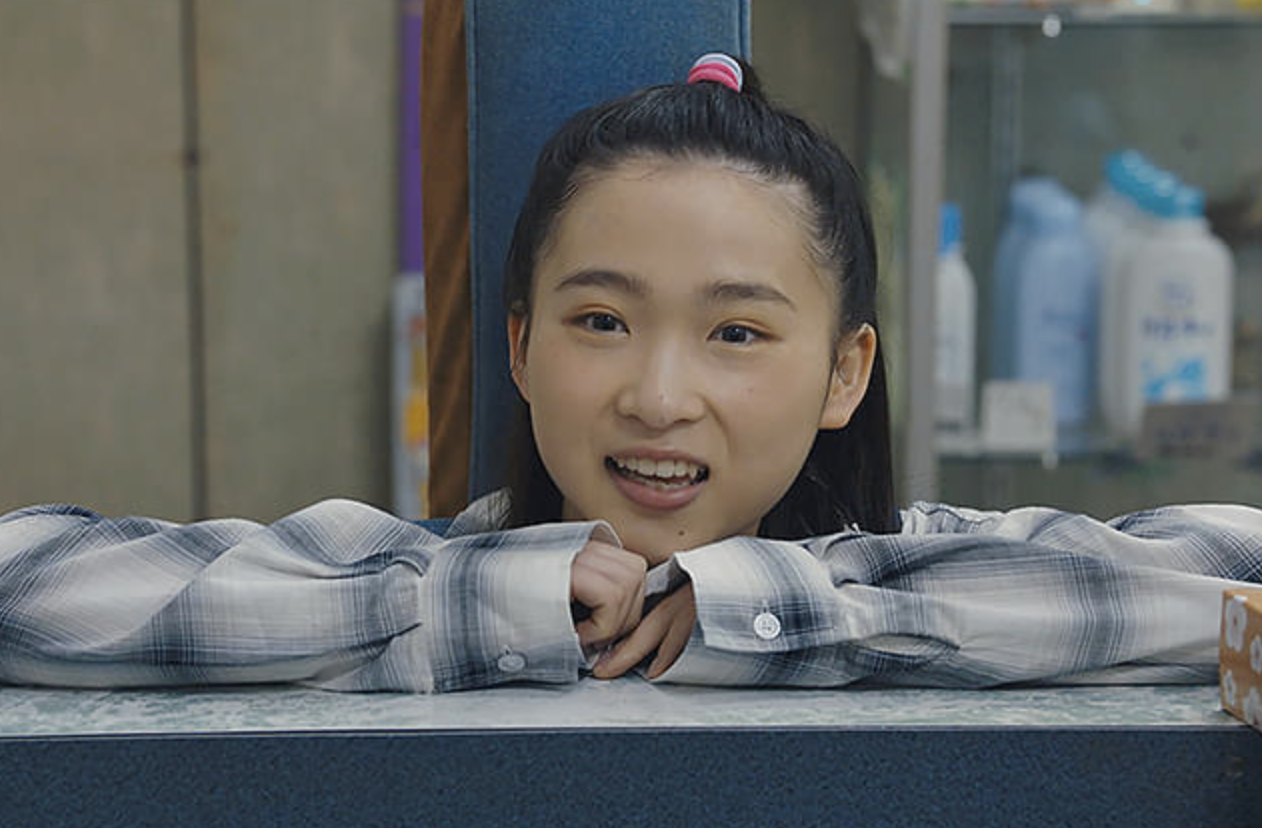
©Couretsy of Japan Cuts
Q: This is the second time you have worked with Director Ooku, and I heard that Actor Riku Hagiwara also have worked with her three times. I think it was a very easy environment for you to work with her, but did your approach change after working with her before and now again? Well, of course, it’s a different film, so of course the approach has changed, but is there anything that was easier to do this time because it was directed by Ooku?
Yuumi Kawai :Last time, because of the character I played in the film, I felt more like I was the one who initiated the action, or that I was trying out different things and looking for the director’s reaction every day.
This time, I felt like I was working a little more flatly, but I also felt like the director really understood my range of expression, so it was very easy for me to adjust.
Q : You have worked with director Chie Hayakawa on “Plan 75” and “Renoir” before, and she has also worked with overseas producers, do you want to be involved in overseas productions if you are offered, or do you want to study English? Do you have such thoughts?
Yuumi Kawai : Yes, I think so. It’s not that I want to move my base or anything, I think it would be great if I became a person who could choose works from any country, that would only increase my possibilities, so I would like to be involved in various things.
Q: Actually, I was a colleague of Ms. Hayakawa. When she was in New York, there was a morning show on TV Tokyo called “Morning Satellite,” and we were colleagues there.
Yuumi Kawai : I heard that she was in New York before WoWoW. She has really had a varied career, hasn’t she?
Q : When she came to promote “Plan 75,” she spoke very highly of you, so I was very curious about what kind of actress you are. So I am honored to have the opportunity to interview her.
Yuumi Kawai : Thank you very much!
©Couretsy of Japan Cuts
Q : In the film, Konishi and Sakurada received very important words from their grandmother and father: “I want to think that I love the sky today the most”, are there any words that you yourself have received from your family that are important to you?
Yuumi Kawai : I receive lengthy emails from my mother, but she uses so many words that I don’t have any particular ones in mind. Nevertheless, I think we express our emotions through language.
I was told something from my mother the other day while I was doing this kind of work (actress), it seems that there are many people these days who refer to my mother as a mother of famous actress, she was very proud of me and happy to hear those words, but I don’t think that they were said to praise her, as if were a black kite given birth to a hawk (Similar meaning in English: A black hen lays a white egg), of course, they didn’t say it like that, but rather they said, “That’s because she is your daughter, when people said that they appreciated her (Kawai’s mother) first and then came about me (Kawai) next, I believe, which made her very happy.
That also made me feel really good. She was probably really happy about my success, but when people asked her “why is your daughter so famous all of a sudden”, I remember someone saying to her, “Of course that’s because she is your daughter,” and I remember she was incredibly happy about that.
Q: What is your impression of New York City after winning an award at Japan Cuts, the largest Japanese film festival in North America organized by the Japan Society in New York?
Yuumi Kawai: I have been to New York once before, and I came here last year for the TV show “Another Sky,” so this is my third time, I am from Tokyo, so I don’t feel bad about being too urban, I feel more free than in Tokyo, they seem cold but warm, and not paying attention to people but kind.
Q : Finally, what do you want the American or foreign audiences to take away from this film?
Yuumi Kawai : This time, We borrowed a lot of power from Osaka, and I don’t think people in the United States would be able to understand the local atmosphere of the place unlike Tokyo, but I think it’s interesting that we were able to capture that atmosphere and bring it all the way to New York.
From my perspective, the land, the atmosphere of the university in Japan, and the sense of such things are all important. I believe that the communication before falling in love, long lines, and acting styles, among other things, will be universally felt.
©Couretsy of Japan Cuts
If you like the interview, share your thoughts below!
Check out more of Nobuhiro’s articles.
Here’s the trailer of the film.