

Ravens : The tragic love story of legendary Japanese Photographer Masahisa Fukase and his wife Yoko.
Director : Mark Gill
Producer : Mark Gill, Cyril Cadars, Megumi Fukasawa, Hiroyasu Nagata
Screenwriter : Mark Gill
Production Co : Vestapol, Ark Entertainment, Minded Factory, Katsize, The Y House Films
Genre : Drama
Original Language : Japanese
Runtime : 1h 56m
©Photo by Ayami Kusumi
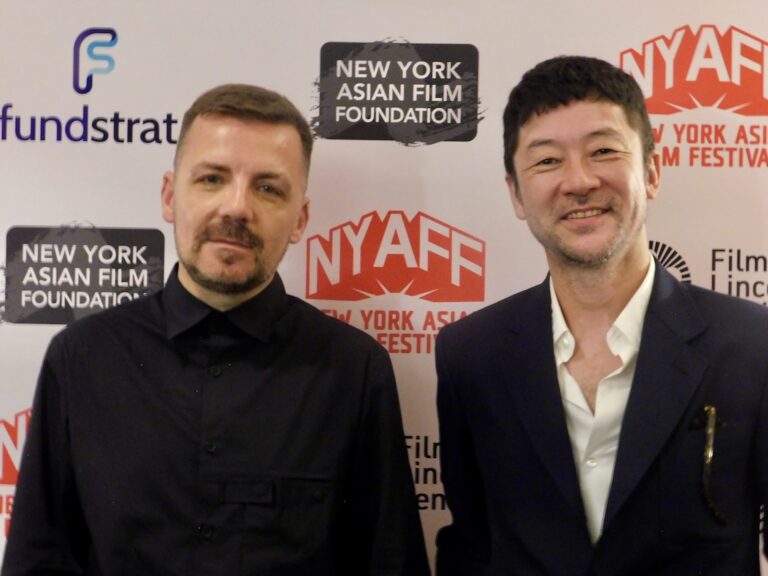
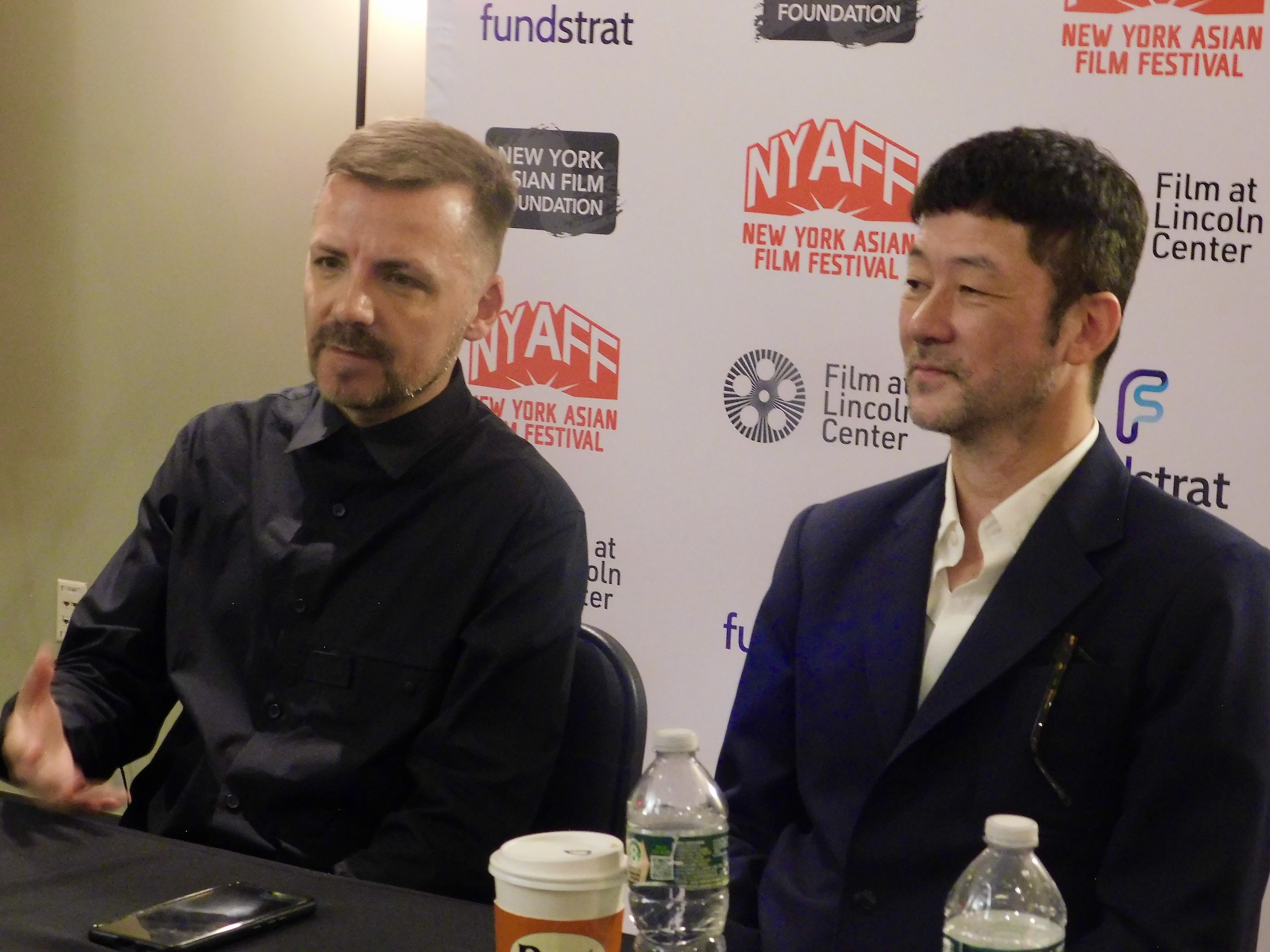
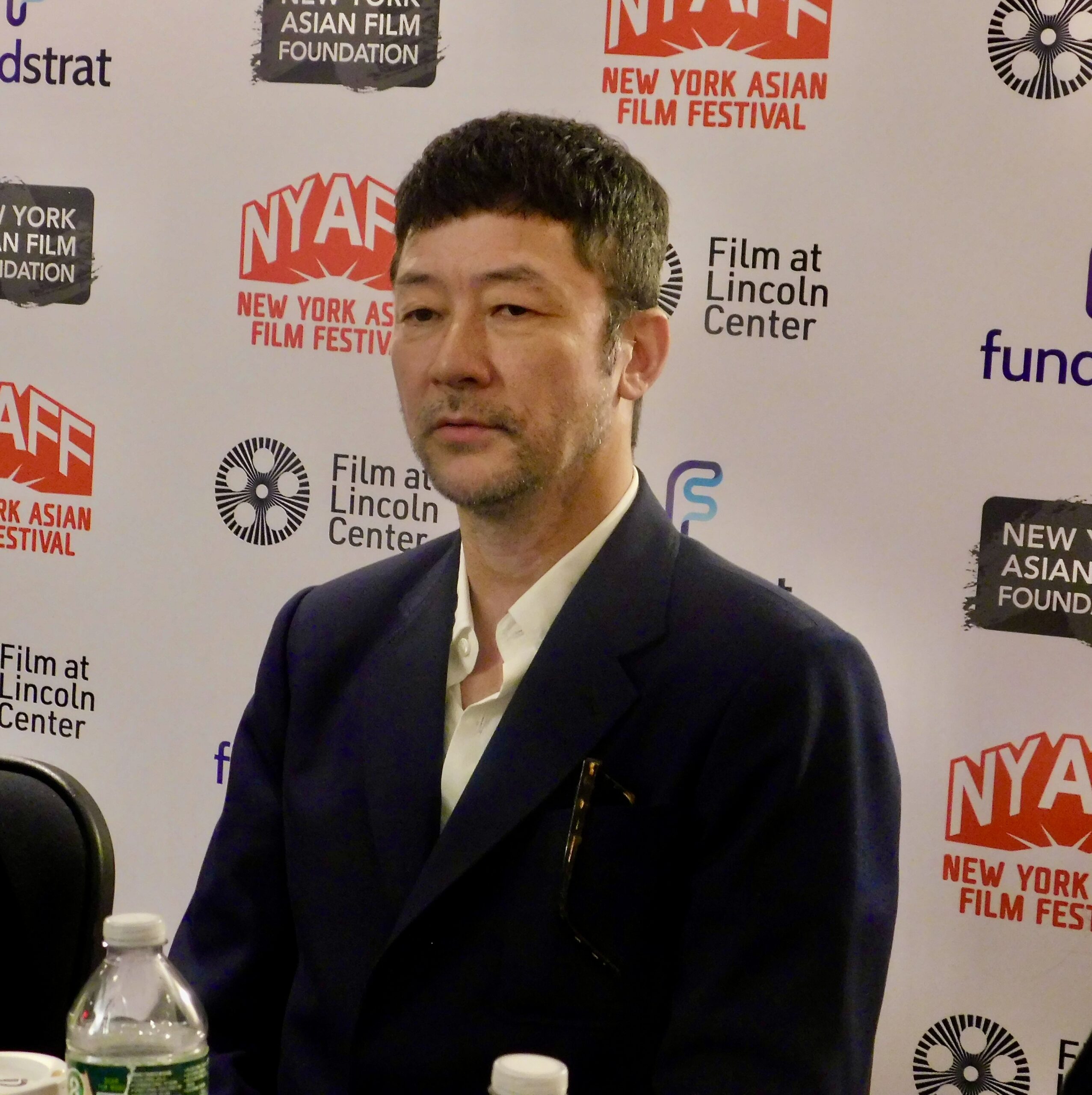
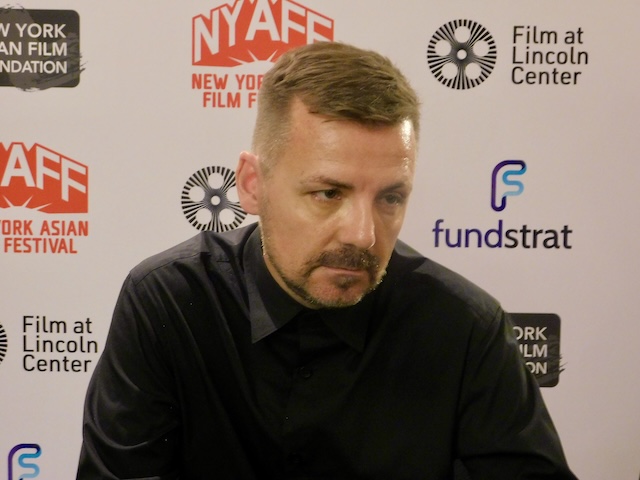
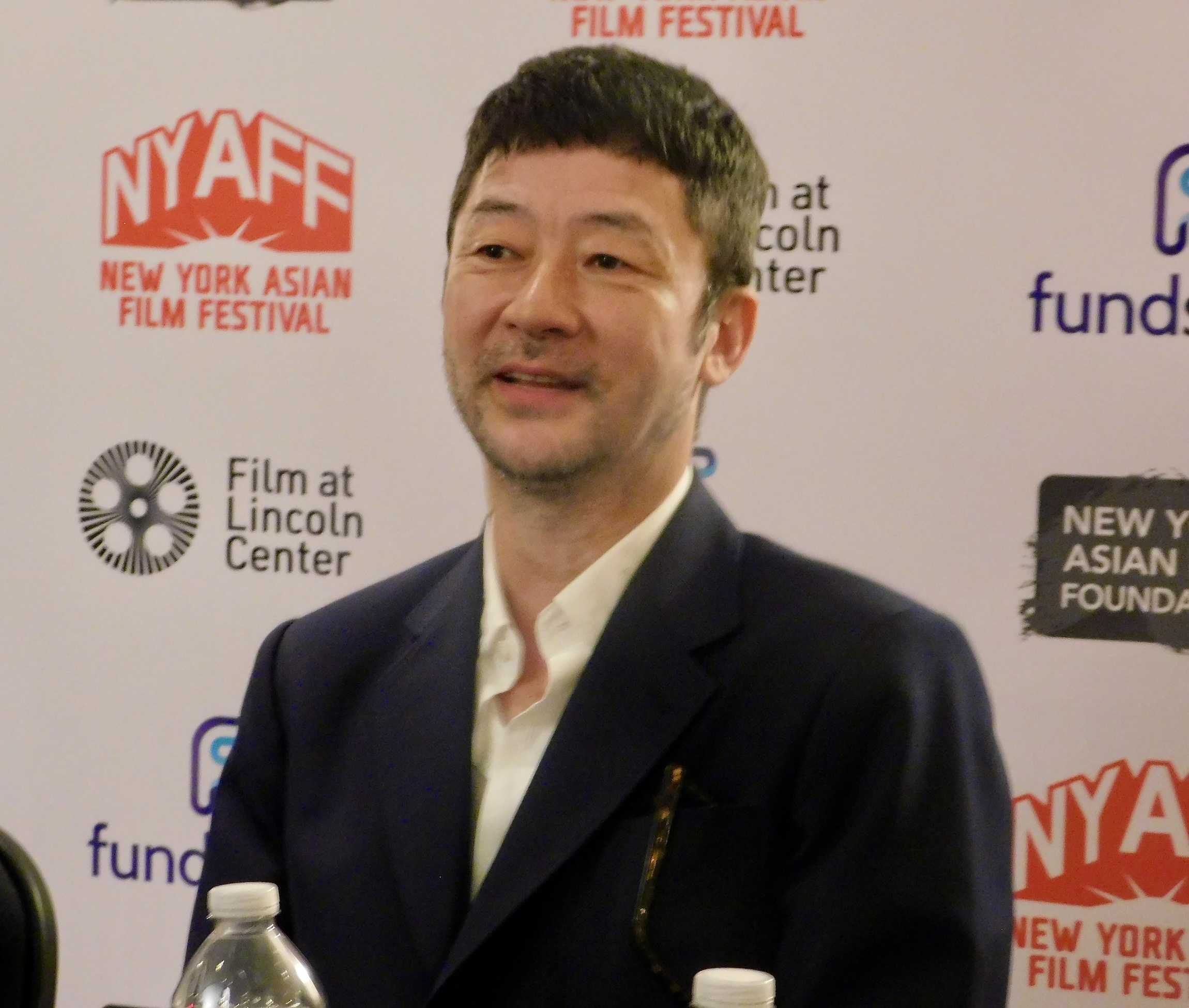
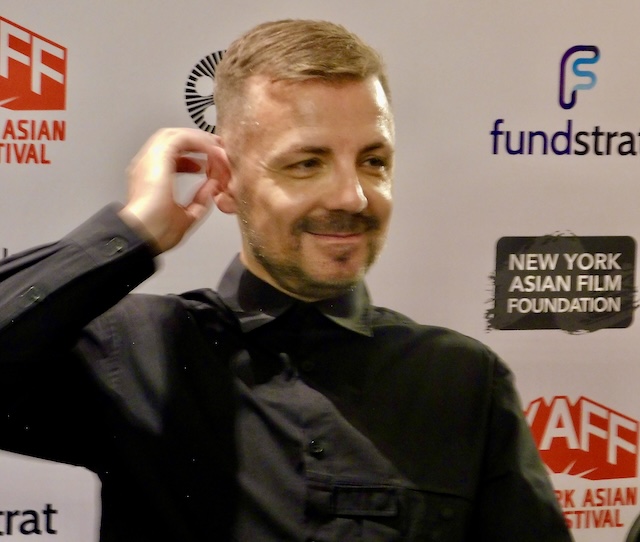
Exclusive Interview with Writer/Director Mark Gill and Actor Tadanobu Asano
Q : Mark, your debut feature was ‘England is Mine’ which was the early life of Morrissey, but this film is about the life of Japanese photographer, Masahisa Fukase, I’m curious to know how did you come to know Fukase and what are the key elements that made you decide to tackle his life?
Mark Gill : Just a lot of research, a lot of time spending talking with Yoko and some of the family members and a lot of his friends who were still alive. So I was just collecting as much information as I could, and finding out which bits are the best to create a character in a story. So, that’s just a lot of years of research.
Q : Asano-san, I heard that you had an opportunity to see the Fukase-san’s photo exhibition at the Tokyo Metropolitan Museum of Photography in Ebisu. What’s your impression of from Fukase’s photographs that you incorporated into your acting?
Tadanobu Asano : I wasn’t fully understanding many aspects of Mr. Fukase until I saw the photos at the Tokyo Metropolitan Museum of Photography. Although the script did a great job of depicting Mr. Fukase’s life, there were certain aspects of his relationship with Ms. Yoko that could not be fully understood from the script alone.
However, when I saw Ms. Yoko’s photos, I felt a strange sense of discomfort. In the photos of the two of them, Yoko appears to be very vibrant on the surface, but I could sense that there was an immense amount of time spent as a couple behind that. After that, when I re-read the script, I could fully grasp that it wasn’t just a bright scene or a happy scene, and from there, I was able to expand my imagination.
Q: I believe Fukase had a lot of influence from his father, since his father own the commercial studio, not just technically learning about the camera, but also mentally pressuring his sprits in a certain way, could you talk about his relation to his father?
Mark Gill : I think like all fathers and sons are similar, Fukase was reacting against Sukezo(Fukase’s father) because Sukezo married into that business. It wasn’t even his business. I don’t remember his job in Japanese word. So, his only job really is to produce a son, an heir for the business, which he does. And then the son rejects him, that’s a universal story that happens all the time all over the world.
But I think in Japan, maybe there’s a slight more pressure because of that. And also that Sukezo wanted to fight in the war and failed his medical. So, he’s seen this young son reject Japan in a way and embrace like an American dream. So I think that kind of conflict is unique for that generation, I think.
And clearly both men couldn’t express themselves very well. So, he(Fukase) closest he gets to an apology in the movies when Zukezo gives him the camera back and Fukase expresses all his emotions through photography. So I think the damage that was done to Fukase was quite severe.
©Photo by Ayami Kusumi
Q : Asano-san, do you want to add Fukase’s relation to his father?
Tadanobu Asano: Yeah, I guess so. While I am not familiar with that era, I believe that the more backward you go, the greater the influence of fathers in Japan. Especially outside of Tokyo, the further you go into places like Hokkaido(Where Fukase was born) and other rural areas, the stronger that power of father was.
The intensity of the relationship between the oldest son and his father is beyond my comprehension. If you could adapt to it, it’s alright, but there are chilldrens who can’t, and the father becomes more stubborn, and considering that, it must have been quite challenging. And considering that, it must have been a tough situation.
Q : I was really blown away by the performance of Kumi Takiuchi, who played Yoko. I’ve only came to know her performance last several years, as he she often played a supporting roles, what her essences that made you decide to cast as Yoko?
Mark Gill : I think my casting director, Emi Ueyama sent me a movie, because I kept saying to my producers that I think it’s going to take somebody special to play Yoko. Because the real Yoko is 83 and she’s a real force of nature. She’s very different, very modern lady. So I always thought it would take a very special actress to find to play Yoko. And Emi sent me this video with no subtitles, it’s a Japanese movie with no subtitles
Q: But you get the feeling of that….
Mark Gill : Exactly. And I thought that was really for me. They’re like, “I will find you the subtitle one”…So I went, Nah, let me just watch it. I just want to see what she’s like on camera. And I just couldn’t take my eyes off this woman. And so I said, “OK, I’ll meet her.” And I went to Tokyo, maybe 2022 to do some location scouting. And I went to dinner with Kumi and was immediately struck by her intelligence and her elegance. And I feel right, OK, I’m going to go for it. And, and she’s a huge Asano-san fan as well.
©Photo by Ayami Kusumi
Q : Well, that helps…
Mark Gill : Yeah, it helps in a way. But it also made her very nervous, so I had to kind of manage that. But I always remember the first day of photography, the the day was split. So in the morning, we just had to do the shots from the windows. And then the last shot of the day was Yoko when she walks home in the rain with the suitcase. We had like 4 hours to wait for dark and I thought, “let’s just get the camera and get the shots” because I could see Kumi was nervous and I said let’s just get them to play.
And I think it will help. It’ll give me more footage just in case. And I ended up using it. But I think it would allow Kumi to relax because the next day was the shots where it’s like their first date. So we shot that. Then the second day and so and I think that really relaxed Kumi. And then then it was just a case of just throughout the shoot, whenever I she felt that she needed reassurance, she always knew that she’d come and talk to me, if you’re worried or you’re scared, you’re not just I’m here for you to help you. And sometimes I had to do that just to help her along and tell her she was doing a great job. Asano-san was just amazing every second of the day.
Q : How was the collaboration with Kumi Takiuchi-san?
Tadanobu Asano : I thought that only Kumi-san would have done it. Even though she was well-prepared, actors may not always be capable of executing what they have prepared for. On set of a movie, there are always new ideas from the director and producer, as well as many unexpected events that occur. But She was able to adapt to that at an incredible speed. If you’re not prepared adequately, you won’t be able to adapt.
But Kumi-san perfectly responds to the director’s various ideas and my chaotic acting. And she gives even more in her acting, so I really felt saved by her, just like Fukase-san’s state in the movie.
Q: Even though the film take place in Japan, how did you choose crew to work instead of hiring all Japanese staffs. The film was composed by Paul Lay and Théophile Moussouni. Cinematography was handled by Fernando Ruiz, and editing was done by Chika Konishi and Frank Moderna. So I’m curious to know how did you balance out the Japanese crew and European crew to make a cohesive film like this, because it’s a little bit hassle to be do all that in Japan.
Mark Gill : You just choose who the best people are, I think. And I mean a cinematographer, Fernando is somebody I’ve worked with for 12 years now. So he understands what I want. He likes the kind of style of movies that I make. So that helps on a film set because it makes everything shorter.
And then there were certain requirements on this movie, because it’s co-production that you have to spend money in certain territories. And so all I’m trying to do is find the most talented people I could find. And Paul and Theo were such brilliant collaborators with the music. And Frank, he’s a bit of a strange character, but I think he did a brilliant job with Chika, who also edited it. So but we storyboarded the film a lot. So the editing was quite simple, but Frank really came up with some very special ideas for sure.
©Photo by Ayami Kusumi
Q : This film must have been a monumental work for both of you as well. What kind of conversation you want to have, if Fukase-san is still alive after seeing the complete film?
Mark Gill : I would send Asana to talk to him. What you’re going to speak to?
Tadanobu Asano: Expressing my gratitude is my first priority. We took advantage of Mr. Fukase’s valuable time to paint, but it was really a lot of fun and we had a wonderful time, so I want to express my gratitude for that.
And now, the film brought us all the way to New York. At the time, in the movie, Mr. Fukase didn’t just have good memories of New York; he also felt jealous of her(Yoko). But I’m so grateful to be welcomed by everyone here (the NYAFF staff), and as the director always says, the ravens are always flying. They’re always flying.
It’s like a raven flying into a place where it shouldn’t be, and everyone says, “The raven is back again.” But the other day, when I was being interviewed in Tokyo, I was on the 8th floor of a building, and I was talking about the crow. There was a window behind me, and the person interviewing me said, “Ah,” and there was a raven behind me. It flew in from behind.
Mark Gill : And today…
Tadanobu Asano :(Asano-san showed his camera that raven was resting on top the marquee of the theater where the NYAFF was taking place).
Q : No way…
Tadanobu Asano : I believe that Mr. Fukase is very happy about it, and I am truly grateful.
Mark Gill :So we don’t need to see it, because he’s always with us.
Q : Well, speaking of raven, raven in the film was played by Jose Luiz who was in actually “Don Quixote” movie, so talk about working with him and how do you collaborate to bring out the essence of raven character in this film which was really important.
Mark Gill : I think the casting of Jose is a 2 hour interview in itself, but I think Jose is amazing. Like he’s genuinely really gentle guy and I think it was really important for me to have a physical presence on set for Asano.
(Facing to Asano) Can you imagine VFX? And I took the same approach, I want to see what he’s going to do. There’s no point me telling him, he’s an experienced actor. Let’s see what he’s going to do. But he found wearing the suit was very liberating.
And so I’m sat there thinking, “what’s he going to do?” And then as soon as he speaks, I was like, “It’s done, brilliant!”, so no direction needed. And sometimes we’d have a conversation about some of the intention because his English is quite fantastic. But apart from that my collaboration with actors is basically trust them. And then, sometimes they’ll do something that they don’t realize that is a good idea. So then, I go and tell them, “What you did there was brilliant!” or it might give me an idea, but that’s about as much as we go.
Q : After you have done this film, what are the creative essences that you learned from Fukase-san that you might apply into your life as an artist?
Tadanobu Asano : I guess it’s Sasuke the cat. Even when I imagine and act out my own time with a cat, it’s the same, and Mr. Fukase himself really cherishes Sasuke. When I look at Mr. Fukase’s cat photos, I think, “This is it” (the relationship between Mr. Fukase and Sasuke is evident in the photos).
There’s no clear answer I can put into words, but Fukasawa is truly an artist, sharing something indescribable with the cat, and Sasuke the cat also seems to love Fukasawa deeply. Even if you want to spend time like that with a cat or animal, it’s not something you can easily do, but without spending time like Fukasawa does with the cat, maybe that kind of artistic something just doesn’t emerge, I thought.
Mark Gill : I mean…the things what I took away from after making the movie is that there is more to life than making movies. So, I have family, I have friends, I have a wife. I love what I do, but it doesn’t define me as a person anymore. I think when I was younger, I was obsessed with it(film). Unless I’m successful, I’m worthless, but now I’m a bit more relaxed about it.
And I think with Fukase, he needed recognition from someone. And that’s how I kind of thought, that’s a good answer for that. I kind of thought to myself, because this film took a lot out me personally, you know what I mean? So and that’s not complaining, but there’s just a there’s a physical element to it, a mental elements to it. So I need to spend time with family, so I can dream again.
©Photo by Ayami Kusumi
Q : Well, thank you so much for your time.
If you like the review, share your thoughts below.
Check out more of Nobuhiro’s articles.
Here’s the trailer of the film.