

Photo by Eddy Chen – © courtesy of Black Bear
Boxers have always been symbols of grit in a cinema. They fight not just opponents, but demons of pride, poverty, and identity. From Sylvester Stallone’s underdog triumph in “Rocky“ (1976) to Robert De Niro’s bruising portrait of self-destruction in “Raging Bull“ (1980), the ring becomes a crucible for dreams, failures, and fragile masculinity. These films remain the heavyweights of the boxing genre.
When women step into the ring, the narratives gain another layer—female boxers bring fresh voltage to the genre. Hilary Swank’s portrayal in “Million Dollar Baby“ (2004) is still the benchmark, but Michelle Rodriguez’s in “Girlfight“ (2000) deserves equal recognition. More recently, “The Fire Inside“ (2024) and “Swing Bout“ (2024) explore the battle between inner demons and external obstacles. Now, the new film “Christy” offers another bruising portrait of resilience, in and outside the ring, emerging as a game-changer in the boxing biopic genre.
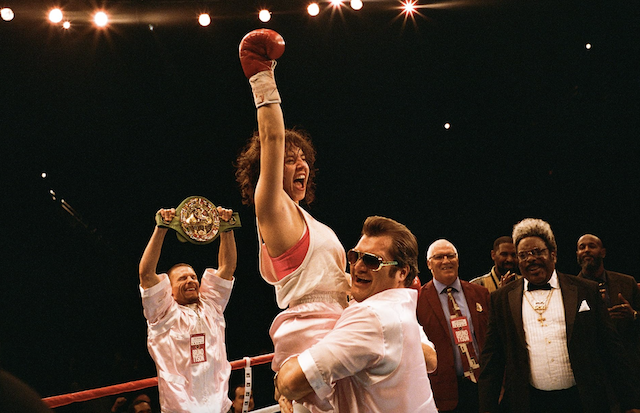
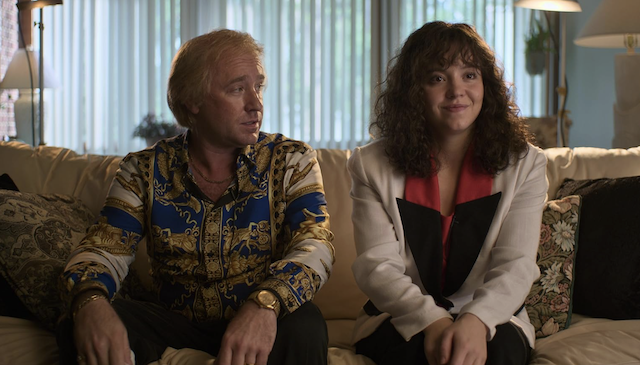
An excellent Sydney Sweeney (“Euphoria“, “The White Lotus“) embodies the pioneer boxer Christy Martin, the world’s first major female boxing superstar. World premiering at the Toronto International Film Festival to a standing ovation and directed by David Michôd, “Christy“ follows the boxer’s rise through the late 1980s and ’90s—every punch, headline, and breakthrough fueled by determination and defiance. Yet the film doesn’t shy away from shadows: her relationship with coach-turned-husband Jim Martin (a nearly unrecognizable Ben Foster) spirals into emotional and physical violence, bringing trauma that almost breaks her.
 ©Courtesy of Black Bear
David Michôd has created an honest, authentic, and powerful biopic—though a little long and occasionally repetitive—that moves you from time to time. The Australian filmmaker burst onto the international stage with “Animal Kingdom“ (2010), which earned Jacki Weaver an Oscar nomination. That searing crime drama about family loyalty and moral entropy had critics comparing him to Martin Scorsese for its emotional rigor and cinematic precision. Michôd’s films are defined by their sober grace: measured pacing, naturalistic performances, and a sense of impending collapse. In “Christy“, the threat of collapse is a constant presence. But the film avoids melodrama and spectacle, going instead for a pacing that mirrors the discipline and repetition of training itself.
Christy Martin rose from small-town West Virginia to become one of the most recognizable female boxers of the 1990s, breaking through in a sport long dominated by men. Known as “The Coal Miner’s Daughter,” she fought with grit and charisma, appearing on the cover of “Sports Illustrated”—a groundbreaking moment for women’s boxing. Outside the ring, however, her life was marked by turmoil: an abusive marriage to her trainer, and a near-fatal attack that almost ended her life. Her survival and comeback turned her into more than a fighter—she became a symbol of resilience, breaking barriers in the sport and reclaiming her own story.
When Christy meets her trainer and later husband—and tormentor—Jim Martin, encouraged by her selfish and conservative mother (Merritt Wever), she is forced to break up with her girlfriend Rosie (Jess Gabor) to pursue her career. Michôd doesn’t sensationalize the suffocating weight of homophobia and misogyny. Instead, he weaves it into the boxer’s daily battles. Christy’s rise coincided with a time when female athletes were often controlled for their sexuality, and the film shows how subtle hostility shadowed her every step. Locker rooms, promoters, her marriage—all become cages, spaces where denial and silence were survival tactics. Martin was forced to conceal her true self while projecting a marketable image of toughness and heteronormative appeal. This tension is one reason why the film feels so powerful.
Sydney Sweeney balances this impressively. She embodies a mix of strength and fragility, grounding the role in lived-in authenticity. If earlier roles marked her as a rising star, “Christy“ confirms her as an actress capable of carrying weighty, layered dramas on her shoulders. She is fierce. She is fragile. She is Christy Martin.
Grade: B
If you like the review, share your thoughts below!
Check out more of Niclas’ articles.
Here’s the trailer of the film.