

©Courtesy of Film Movement
Among the many rising filmmakers from Japan, Hiroshi Okuyama stands out with a distinctive voice—or perhaps, more fittingly, a singular vision. Single-handedly overseeing every stage of production, his earnest determination to realize his artistic vision that is rooted in his background as a cinematographer shines through in his soft, radiant imagery. The writer-director-cinematographer-editor won the New Directors Award at the 2019 San Sebastian International Film Festival for his debut feature, “Jesus”, which he created as a university graduation project at just 22 years old. Now 29, Okuyama has further elevated his profile with his second feature, My Sunshine, which premiered to critical acclaim in the Un Certain Regard section at Cannes last year.
His second feature, “My Sunshine”, opened last week at Quad Cinema with Okuyama’s presence in person, and Cinema Daily U.S. had the opportunity to speak with Okuyama during his brief stay in New York.
 ©Courtesy of Film Movement
Q: Congratulations on the theatrical release of “My Sunshine”. How are you feeling right now?
Hiroshi Okuyama: First and foremost, I’m very happy. It’s quite rare for Japanese films to receive a theatrical release in the United States. Even when they secure U.S. distribution, it’s usually only for streaming. My first feature, “Jesus“, also never had a theatrical release. So I feel incredibly honored to have this opportunity, along with the chance to do Q&As. I’d also love to experience the film as part of the audience myself.
Q: Your previous film “Jesus” was shown at San Sebastián, and this time “My Sunshine” was officially selected for Cannes. You have quite a bit of experience at international festivals. Have you noticed any differences between the reactions of audiences in Japan and abroad?
Hiroshi Okuyama : Yes, I definitely notice differences. Especially when it comes to sensitive themes such as sexuality or stuttering, perceptions vary greatly from country to country—even within Europe, the reactions can differ. And it’s not only about nationality; age also makes a big difference in how people receive the film. For me, those variations in response are fascinating. I think it speaks to the fact that the films has the potential to cross borders, and as a filmmaker, I find that very engaging.
Q: Do overseas audiences react more strongly to sensitive topics?
Hiroshi Okuyama : In some ways, yes. But to be honest, I sometimes feel that Japan has actually become overly sensitive. Maybe this trend exists overseas too, but here there’s a growing sense that if a film might hurt people directly affected—whether those who stutter or LGBTQ people—then trailers should include some kind of trigger warning. There’s also the view that LGBTQ roles should only be played by LGBTQ actors.
In the U.S. and Europe, these debates took place several years ago and the conversation has already matured, but in Japan, I feel we haven’t reached that point yet. The discussion has only just begun, so there are still many different opinions surfacing. From my experience traveling to various European festivals, the impression I get is that people tend to respond to sensitive topics more evenly and answer more straightforwardly.
Q: The criticism that you just mentioned-that roles with a stutter should be played by actors who stutter, and LGBTQ roles should be played by LGBTQ actors. As a director, what do you think about it?
Hiroshi Okuyama : I knew these kinds of voices would be raised and I see it as a rather healthy development. I always create my work with my own thoughts in mind. What I can say for sure is that if a role with a stutter would genuinely be better performed by someone who actually has a stutter—if it would make the work stronger—then it should absolutely be cast that way. I believe casting should be done in whatever way seems most likely to improve the work. At the same time, from another perspective, people with disabilities or LGBTQ people don’t necessarily have the same casting opportunities as others. So in that sense, there’s also an argument that such roles in particular should be offered to them. That’s why I want to keep listening to these opinions as I continue making films.
 ©Courtesy of Film Movement
Q: Is there a particular reason you made the characters a boy with a stutter and a homosexual man?
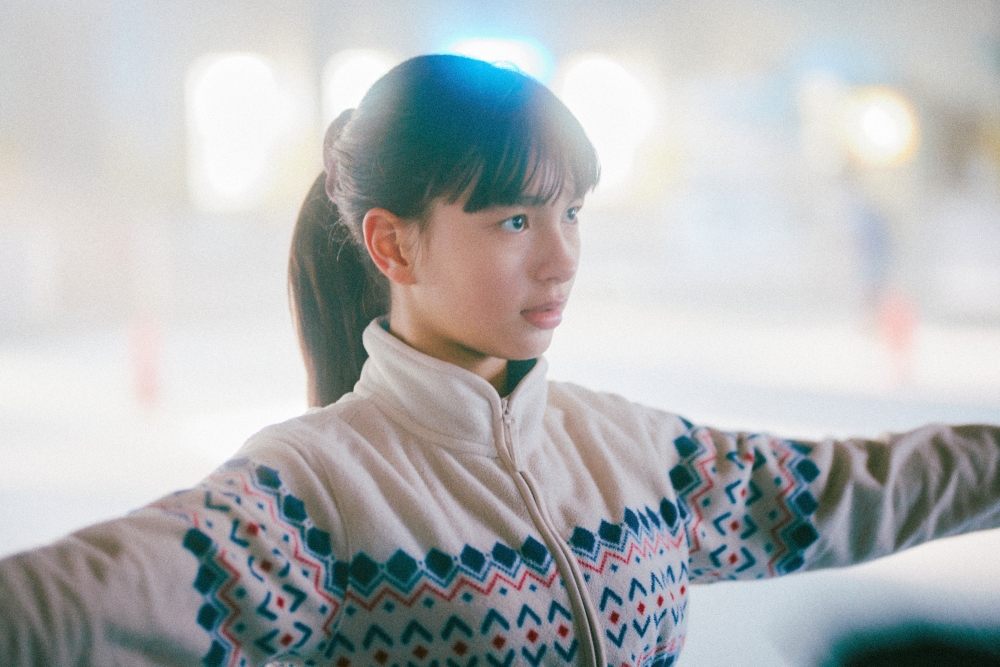
Hiroshi Okuyama: It began with a song called Boku no Ohisama (the Japanese title of “My Sunshine“) by the artist Humbert Humbert, written more than ten years ago. I came across it around the time of the pandemic, when I was thinking about my next film. I had done figure skating for seven years as a child, so I wanted to incorporate some of that personal experience into the script, but I was still unsure what kind of story I wanted to tell. Then I encountered this song.
I can’t say for certain if it was written with stuttering in mind, but the lyrics convey the feeling of not being able to express what you want to say, of words not coming out the way you intend. That struck me deeply. I don’t personally have a stutter, but I do know what it feels like when words don’t come out smoothly—and I think that’s something everyone experiences in one way or another. In that sense, I felt it was a very universal theme, and one that resonated strongly with me. So I decided to draw inspiration from the song as I developed the film, and that’s how the theme of stuttering came into the work.
As for the element of homosexuality, or Sakura’s absent father, those are subtler details you might only notice if you look closely. But ultimately, I think they stem from the same core theme: the difficulty of saying what you truly want to say. That inability to express yourself, and the loneliness it can create, became central to the film. In the end, it all really began with Humbert Humbert’s song.
Q: The struggle and frustration with not being able to articulate oneself feels very present throughout the film, reflecting its image-driven nature. Was that something you intended by making it not dialogue-heavy?
Hiroshi Okuyama : Yes, it was. Since my career began as a cameraman, I feel that I direct more as a cinematographer. For many people, the screenplay is the foundation of filmmaking, but for me, it’s the cinematography that forms the base.
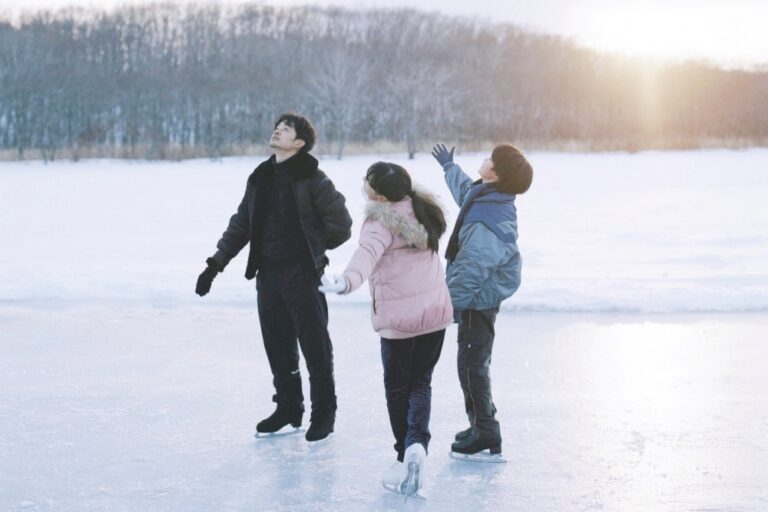
For example, rather than starting with dialogue, I first imagine an image: someone skating on a lake. Then I picture a boy and a girl there, and an adult watching over them. From that image, I start thinking about what kind of story would make sense and how it should unfold afterward. That’s the way I build things—almost like stacking up frames in a picture-story show. That’s why I try to communicate through images rather than words as much as possible. Naturally, that results in fewer lines of dialogue, which makes every single word carry much more weight. So I keep wrestling with what those words should be—right up until just before shooting, and even during shooting itself, I’m still revising and reconsidering them.
Q: You’re the director, screenwriter, cinematographer, and editor of the film. Does your filmmaking process always begin with image-making?
Hiroshi Okuyama : Yes, I think so. An image I want to capture as a cinematographer comes to mind first, and the most practical way to make that happen is by taking on the role of director. Then, in order to realize that image, I need to consider what kind of story would support it—so I also write the script myself. And since I’m the one who shoots it, I know exactly which takes, and even which moments within those takes, work best. So naturally, I end up handling the editing as well.
That said, I’m aware that this approach can be somewhat one-sided, even prone to self-indulgence. That’s precisely why I make a conscious effort to listen to the opinions of others at various stages along the way.
 ©Courtesy of Film Movement
Q: Filmmaking sounds like a solitary process for you. You also have extensive experience outside of feature films—how do you enjoy working on non-film productions?
Hiroshi Okuyama: Between “Jesus“ and “My Sunshine,” I had the opportunity to work on the Netflix series, “The Makanai: Cooking for the Maiko House“, where I co-directed an episode with Hirokazu Kore-eda. Collaborating with him was an invaluable learning experience. I’m glad that what I learned from that collaboration, as well as the relationships I built with the staff on set, carried over into “My Sunshine”. In fact, some of the same staff members actually worked on this film.
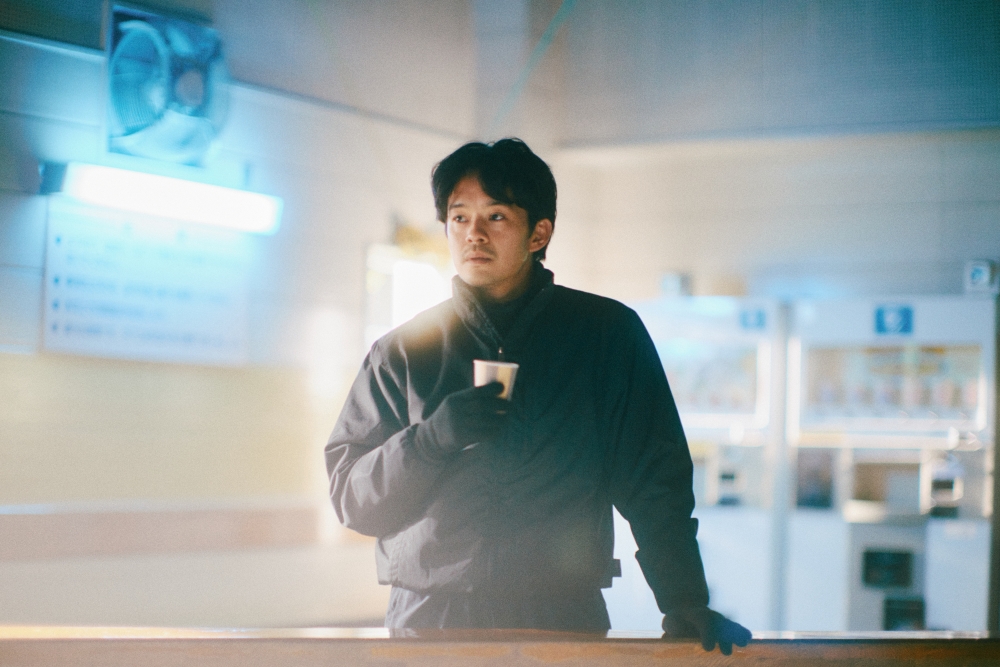
I also worked on a documentary project for Hermès, where I first met Sosuke Ikematsu, who plays Arakawa in “My Sunshine”. Experiences like that—meaningful encounters and unexpected inspirations—often come through projects outside of feature filmmaking, whether commercials, music videos, or television dramas. That’s why I want to continue actively pursuing those kinds of opportunities, even as I prepare for my next film.
Q: In both Jesus and My Sunshine, the performances of the child actors are quite impressive. Especially in My Sunshine, there’s that memorable scene where the kids and Arakawa skate on a frozen pond, which must have required a physically demanding and cautious shoot.
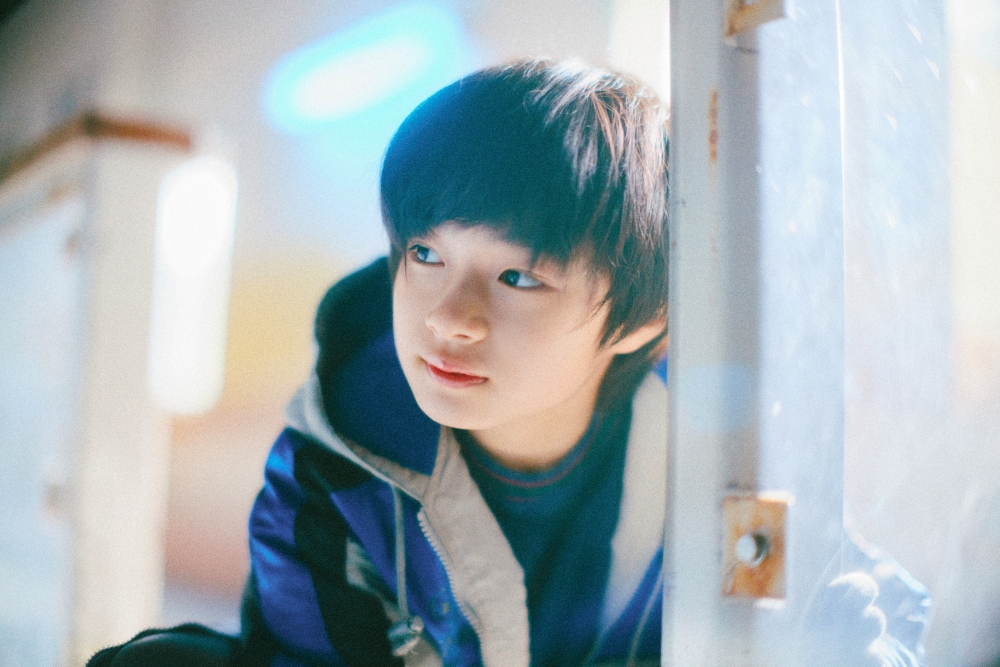
Hiroshi Okuyama : I really want my child actors to enjoy the experience above all else. Kiara Nakanishi (who plays Sakura) and Keitatsu Koshiyama (who plays Takuya) are now growing into professional actors, but they were still little kids when we shot the film. Even in Jesus, which also centers on children, I never thought of filmmaking as a tool for them to “grow” through. Since I’m the one bringing them into the process, I feel responsible for making sure nothing about it hinders their growth—or becomes traumatic.
At the same time, I want to make sure they can simply enjoy themselves on set. That means following basic principles, such as keeping shooting hours short and not allowing anyone on set who yells—obvious things, but essential. What I especially kept in mind for both films was not giving them a script. I didn’t want to hand them something that felt like homework, like “you need to memorize this.” I wanted them to feel that just showing up on set was already a perfect score.
So instead, when it came time to shoot, I would explain for the first time, “This is the kind of scene we’re doing,” and then have them approach the acting from there.
Q: Did you use the same approach in your previous film?
Hiroshi Okuyama: Yes, I did. I gave the adult actors the script, but for the children, I only explained the general story to them orally in advance. I never handed them a script, and I only conveyed the lines verbally when we were about to shoot.
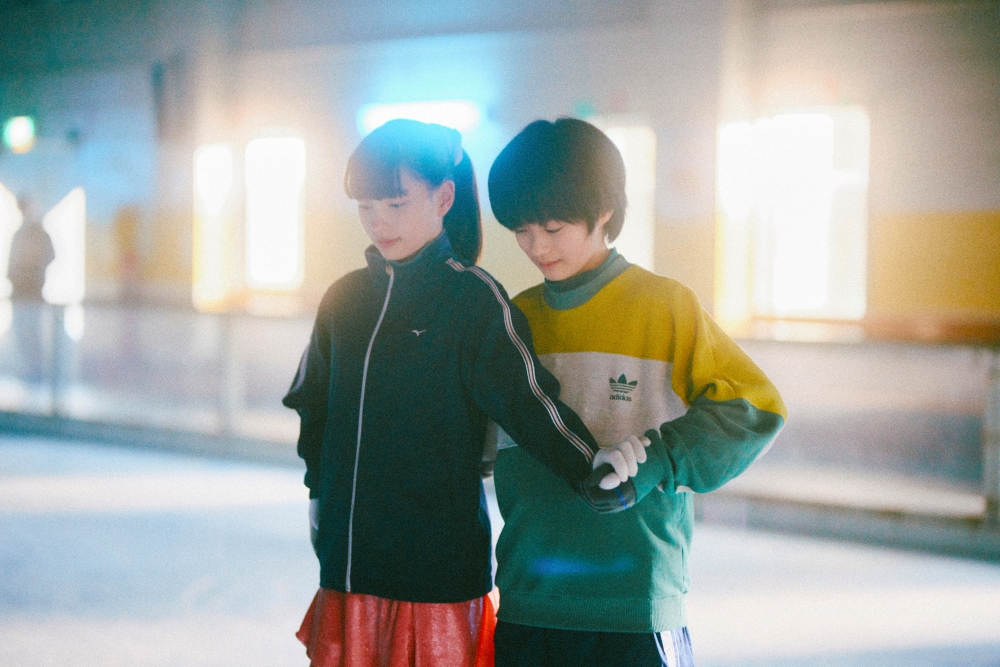
For example, in the scene where Takuya receives a pair of skates from Arakawa in “My Sunshine“, if I had said, “Say ‘thank you’ here,” it would have been no different from giving them a script. The reason I deliberately used this method was that I wanted the words to feel as though they were truly coming from the actors themselves. I didn’t want it to look like they were just repeating lines because an adult told them to memorize them. I wanted it to feel like they were speaking simply because they genuinely wanted to say it.
So instead of telling them the exact line, I would say, “You’re being given skates now, so make sure to express your thanks.” Then it was up to the child how to do that—maybe they’d say “thank you,” maybe they’d just bow. I leave the choice of how to express gratitude entirely up to them.
Q: In recent years, more young Japanese filmmakers in their twenties and early thirties have been gaining international recognition — for example, Yoko Yamanaka (“Desert of Namibia”) and Yui Kiyohara (“Remembering Every Night”). Do you see any commonalities among filmmakers of your generation? Or notable differences compared to older, more established Japanese directors?
Hiroshi Okuyama: I do have some interaction with directors of my generation, each in small ways. With Yamanaka, for instance, we’ve gone out to eat a few times. And of course, I also meet other directors at film festivals. For example, Neo Sora, who directed Happy End, which is currently showing in New York, I first connected with him at a festival.
When I read various reviews and critiques, I see people trying to identify common traits among Japan’s new generation of filmmakers. But to me, those commonalities aren’t really clear yet. My impression is that each of us is still making the films we personally want to make. I think it’s only with the passage of time, when people look back, that they’ll be able to say, “This was the character of that era” or “These were the distinctive traits of that generation.”
That said, I do think it’s wonderful that so many young directors born in the ’80s and ’90s are now emerging, and I hope the trend continues. It motivates me to keep working hard myself, so I don’t fall behind.
 ©Courtesy of Film Movement
If you like the article, share tour thoughts below!
Check out more of Mako’s articles.
Here’s the trailer of the film.