

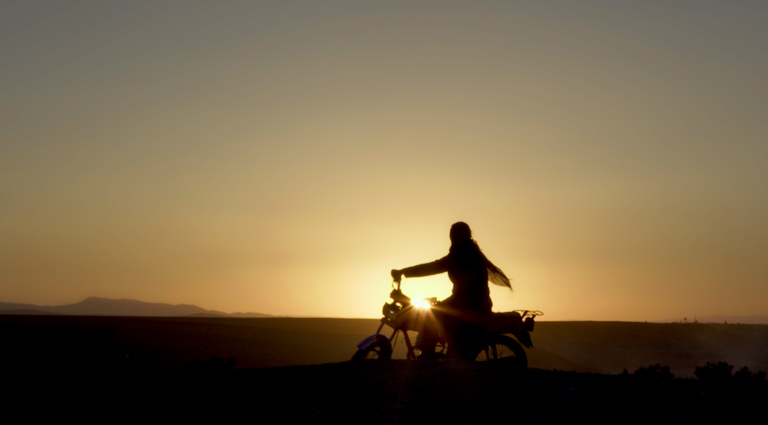
The Latin saying ‘gutta cavat lapidem’ (a drop of water digs through the rock) clearly reflects the spirit of the documentary directed by Sara Khaki & Mohammadreza Eyni. Cutting Through Rocks portrays the feminist fight of a woman in a patriarchal land.
Sara Shahverdi is a former midwife, she is divorced, rides her motorcycle, dresses with men’s clothes and talks to women about the importance of studying before getting married. She represents the nemesis of the conservative ideas that dominate her northwestern Iranian village. As if this weren’t enough she is the first woman ever elected to the local council. Her goal is to break the cycle of empty promises and complacency passed down by the men who came before her. As soon as she starts to become a threat for the sexist status quo, she is summoned to court and her sense of identity is questioned, because in her society a woman should be considerate of the rules and traditions, and is not allowed to do what she wants.
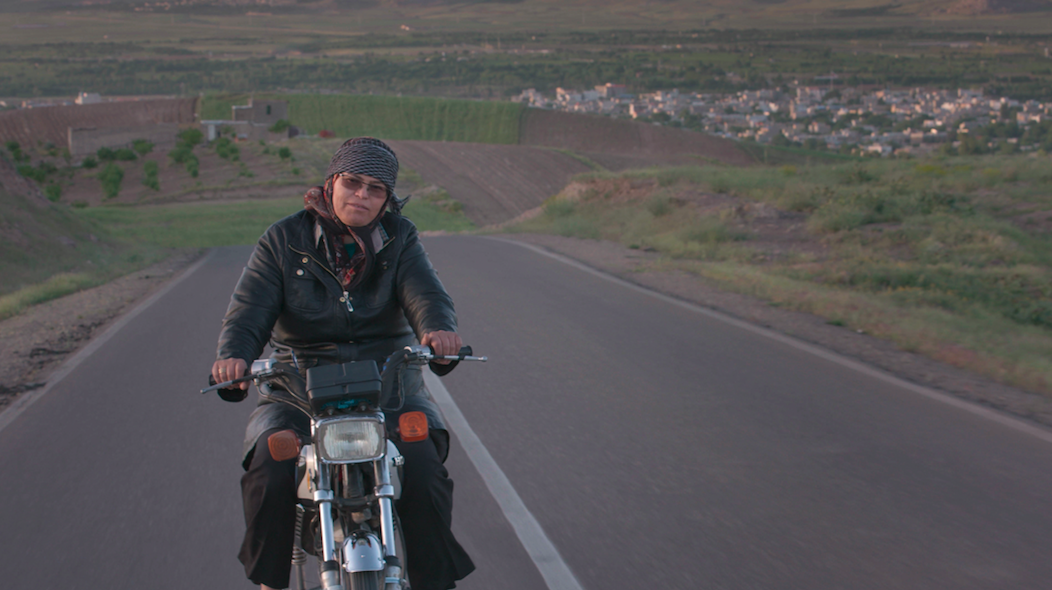
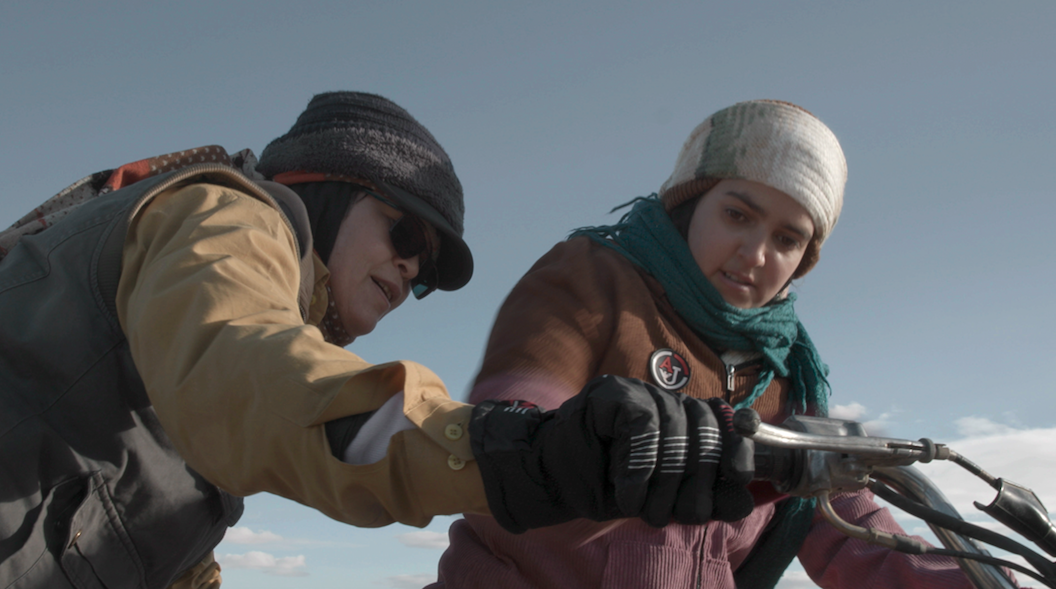
This brave documentary represents a beacon of hope for female empowerment in a land of obscurantism. Sara is unapologetic and strives to fight for bold reforms while teaching teenage girls to ride motorcycles, challenge child marriage and pursue female land ownership. Cutting Through Rocks shows footage of her previous life that made her unhappy, capturing her wedding, and in parallel showing a similar one of a young woman from her village.
The film that is currently part of DOC NYC, has conquered the festival circuit and was bestowed the Grand Jury Award for World Cinema Documentary at the 2025 Sundance Film Festival. It serves as a universal parable tackling gender roles and the way childhood shapes them. In fact, Sara had a father who raised her by taking her on his motorbike, and when he passed away during her teens she became the breadwinner of the family. She learnt empowerment at a very young age and this brought her to become an adult who is changing the way the girls in her village see and start planning their future. All of the female teenagers who have been interviewed express how she is a source of inspiration. Shahverdi genuinely represents a role model who is helping young women shape their lives. She leads by example, showing how a woman may defiantly forge her own path as a leader in her community. But does it suffice to change the rules of the game in a community lead by men, who say that “It won’t work well if women rule over us” and “give girls shoes but not paths”? Change unfortunately does not occur overnight.
The way Sara openly defies patriarchal norms stirs fear in the men of her community who try to silence her voice, by disbelieving her femininity. In her village, women are seen as demure and gentle, whereas she is angry and entitled. Consequently, Sara’s battle becomes intense when her efforts spark backlash and accusations about her motives. The outcome will lead to an understanding that the path to gender equality is still long in her region of the world.
Sara Khaki, as an Iranian American filmmaker and woman of colour, has the proper sensibility to tell this story without it becoming tearjerking or preachy. The same sensitivity applies to co-director Mohammadreza Eyn, who proves how men can be feminists and promoters of gender equality. As someone who was raised in the same Turkish Azeri-speaking region as Sara Shahverdi, he fully grasps the cultural understanding of the community on a local scale and how it reverberates as a global issue.
Cutting Through Rocks isn’t loud in presenting its powerful themes on the silver screen. It quietly projects the tenacious perseverance of a resilient individual who is pushing for social fairness.
Final Grade: A
Photos are Courtesy of Susan Norget